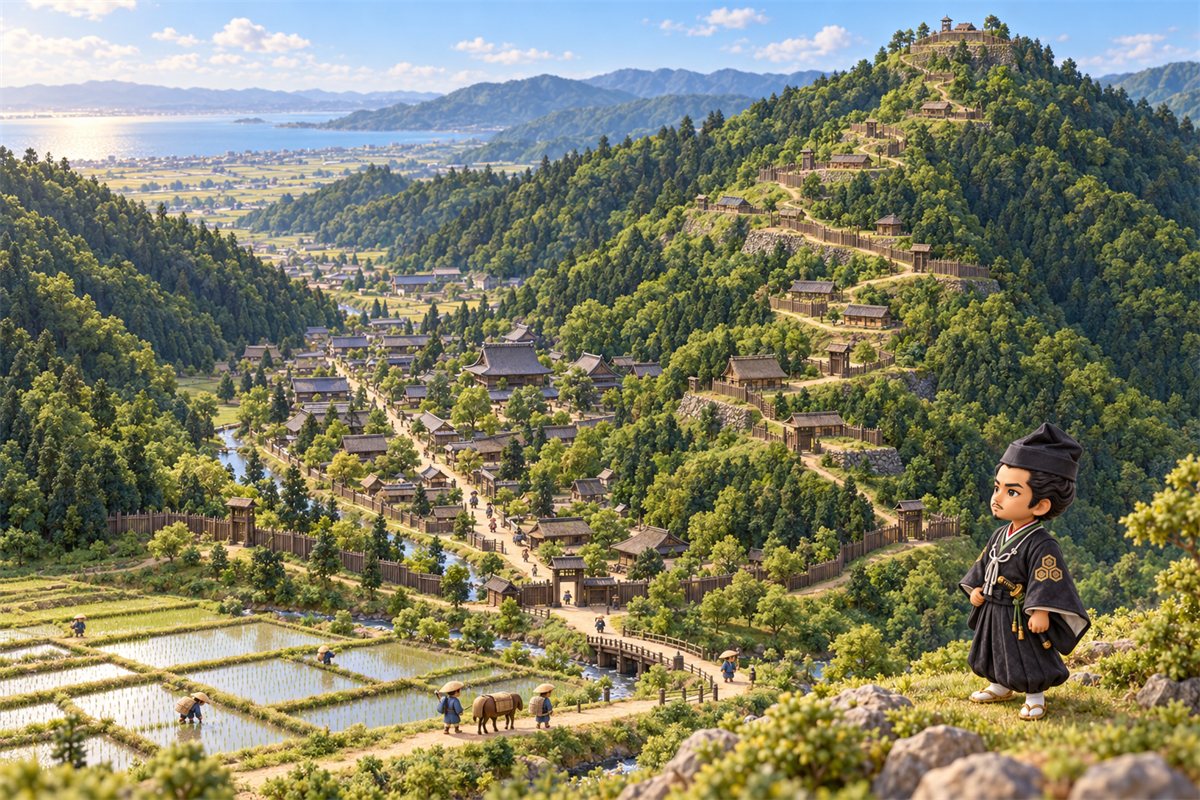
Image: Odani Castle and Kiyomizudani valley in the time of the Azai
Odani Castle was a mountain castle on Mt. Odani in today's Nagahama, Shiga Prefecture. In the Sengoku period it was used for about 50 years by three generations of the Azai family: Sukemasa, Hisamasa and Nagamasa. In 1573 (Tenshō 1) it fell to an attack by Oda Nobunaga, bringing an end to the Azai as a family of regional lords, or daimyo [Fact: Shinchō Kōki].
It is known as the castle where Azai Nagamasa, Oichi and their three daughters, Chacha, Hatsu and Gō, lived. Today the ruins are a National Historic Site and on the list of "Japan's 100 Great Castles."
This article explains, with diagrams and photos, what to see at the ruins, the museum at the foot of the mountain, the walking routes and times, and how the castle fell in the siege of 1573.
For Sengoku-period events, years are given in the Western calendar, while numbered months and days follow the Japanese lunisolar calendar. Modern dates, including visitor information, use the Gregorian calendar. Ages use the traditional Japanese count, in which a person was counted as one at birth and gained a year at the start of each new year in the Japanese calendar.
Key points are tagged: [Fact] confirmed by records from the time or by remains at the site, [Widely accepted] a view widely accepted by researchers, [Debated] accounts or interpretations differ, [Unknown] not established from the sources we checked, and [Legend] stories found in later records or traditions.

I am Uesugi Kenshin. Today our subject is not a person but a castle.

I'm Date Masamune! Odani Castle was Azai Nagamasa's castle, right?

That's right. It is a great mountain castle that uses the whole mountain, and much of it can still be explored on foot.
The Short Answers
- How do you say it? Odani-jō ("jō" means castle)
- Where is it? On Mt. Odani in Nagahama, Shiga Prefecture (the highest point, Ōzuku, is 495 m above sea level). The nearest station is JR Kawake (getting there)
- Who held it? Three generations of the Azai: Sukemasa, Hisamasa and Nagamasa. After its fall, Hashiba Hideyoshi (later Toyotomi Hideyoshi) is thought to have moved in for a time
- When was it built? It is thought to have been built by Azai Sukemasa in the Daiei era (the 1520s). Views on the exact year differ, such as around 1523–25
[Debated] - Why is it famous? It was the castle of Azai Nagamasa and Oichi, and it fell to Nobunaga (the siege of Odani Castle)
- What is there today? The National Historic Site "Odani Castle Ruins," No. 49 on the list of Japan's 100 Great Castles. Enclosures (kuruwa) and stone walls survive on the mountain (what to see)
- Did it have a keep? Whether it had a main tower (tenshu), and what it looked like, is not clear
[Unknown](more)
Three Things We Learn by Comparing the Sources
- Father and son cut off from each other: compare the Shinchō Kōki's account of how Hideyoshi took Kyōgokumaru, in the middle of the castle, with a diagram of the castle's layout (more)
- Where did Nagamasa die? The monument at the Akao residence site, and what the records of the time do and do not say (more)
- The Edo-period maps: what old maps of the ruins can tell us, and why they are not pictures of the castle as it was (more)
Jump to the part you want to read:
- What is Odani Castle? Location, name and lords
- What to see at the ruins: Honmaru, Ōhorikiri and the Sannōmaru stone wall
- The Odani Castle Sengoku Historical Museum
- The siege of Odani Castle: how it fell in 1573
- Getting there: walking routes and times
- The layout of Odani Castle: enclosures, stone walls and old maps
- The history of Odani Castle: from its building to its abandonment
- FAQ
What Is Odani Castle? Location, Name and Lords
In a single sentence, Odani Castle was "a great castle built across a whole mountain by the Azai, who ruled northern Ōmi (today's northern Shiga Prefecture)".
| Item | Details |
| Name | Odani-jō (the mountain is Odani-yama) |
| Location | Nagahama, Shiga Prefecture (Kohoku-chō Ibe, Odani Gujō-chō and nearby) |
| Type | Mountain castle (yamajiro). Flat sections (enclosures, or kuruwa) were cut along the ridges, with the lord's residence and retainers' houses in the valley below |
| Lords | Azai Sukemasa, then Hisamasa, then Nagamasa (three generations, about 50 years) |
| Built | Thought to have been built by Azai Sukemasa in the Daiei era (the 1520s) [Widely accepted: Nagahama City preservation plan] |
| Fell | 1573 (Tenshō 1), to Oda Nobunaga's attack [Fact: Shinchō Kōki] |
| National Historic Site | Designated as "Odani Castle Ruins" in 1937; Kiyomizudani valley at the foot was added in 1995 [Fact] |
| Japan's 100 Great Castles | No. 49 (Japan Castle Foundation, announced in 2006) [Fact] |
| Other name | Called one of the "Five Great Mountain Castles of Japan" (a popular name, separate from the national designation) |
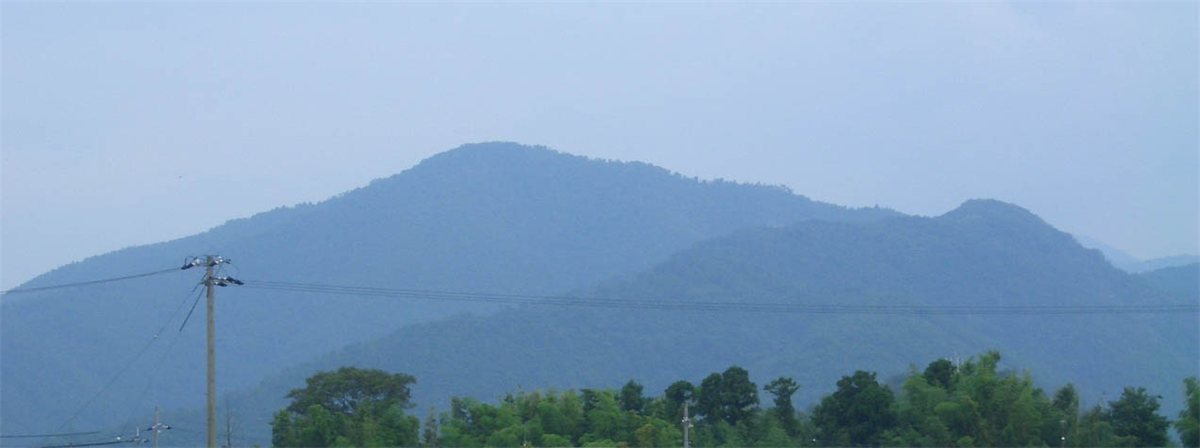
Image: Mt. Odani seen from the south (photographed in 2008). Wikimedia Commons (photo: ブレイズマン, public domain)
Mt. Odani is long from north to south. The heart of the castle was not on the summit but on a ridge running south from it. The highest point, Ōzuku (495 m), rises about 400 m above the foot of the mountain.
The Azai were originally retainers of the Kyōgoku family, who ruled the northern half of Ōmi. The castle began when Azai Sukemasa grew in power and built it on Mt. Odani. It remained the Azai base until the time of his grandson Nagamasa.

Nagamasa married Nobunaga's sister Oichi, didn't he?
Indeed. But Nagamasa later turned against Nobunaga, and the last act of that story was played out here, at Odani Castle.
For Nagamasa's life, see our article on Azai Nagamasa; for Oichi, our article on Oichi.
What to See at the Odani Castle Ruins: Honmaru, Ōhorikiri and the Sannōmaru Stone Wall
At the Odani Castle ruins you can walk from south to north along the enclosures that line the mountain ridge (see the section on the layout). First, let us check how the parts fit together on a diagram.
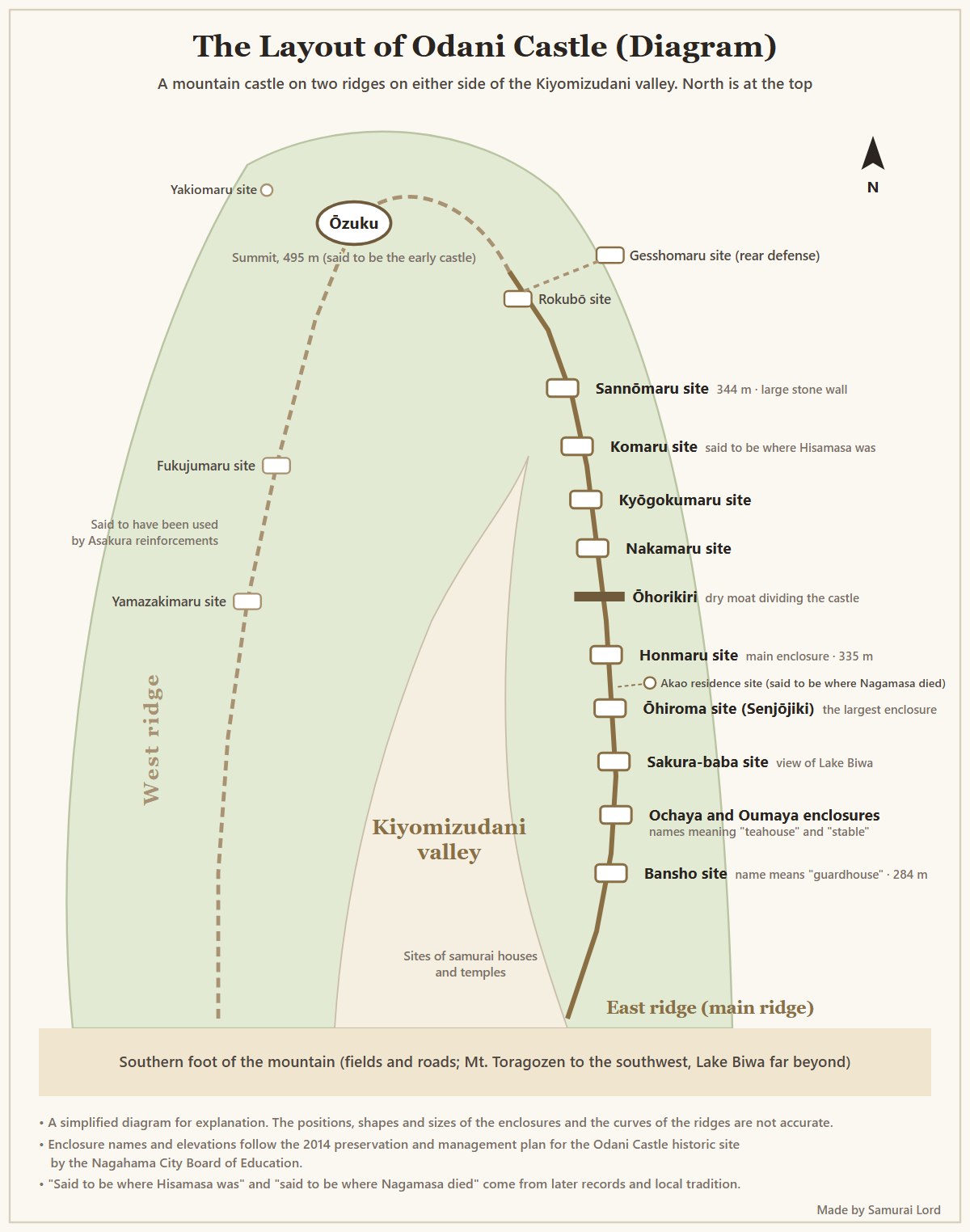
Image: Diagram of the layout of Odani Castle (made by Samurai Lord; positions and shapes are not exact). Tap (click) the image to enlarge it
The castle is shaped by an east ridge (the main ridge) and a west ridge on either side of Kiyomizudani valley at the foot. The main sights stand in order from south to north along the east ridge.
| Sight | What is it? | Highlights |
| Bansho site | The entrance to the core of the castle (284 m) | Reachable by car or shuttle bus; many visitors start walking here |
| Sakura-baba site | An enclosure with a fine view of Lake Biwa | Views over Chikubushima island and the town of Nagahama |
| Ōhiroma site (Senjōjiki) | The largest enclosure in the castle | Building foundation stones and a well have been found |
| Honmaru site and Ōhorikiri | The heart of the castle, and a great dry moat dividing it front from back | Farther north, Hideyoshi's capture of Kyōgokumaru cut Hisamasa off from Nagamasa when the castle fell |
| Akao residence site | Said to be where Nagamasa met his end | A monument marks the spot |
| Kyōgokumaru and Komaru sites | Enclosures north of the Honmaru | The stage of the story of Nagamasa's father Hisamasa and Hideyoshi when the castle fell |
| Sannōmaru stone wall | The highest point of the main ridge (344 m) | A stone wall of large stones, about 5 m high |
| Ōzuku | The summit (495 m), thought to have been the center of the early castle | The path is steep; come prepared for a mountain hike |
| Kiyomizudani | The valley at the foot, where the Azai residence and retainers' houses stood | Flat and easy to walk; the museum is here |
The sizes of the enclosures and the elevations follow the Nagahama City Board of Education's preservation and management plan for the Odani Castle historic site (2014).
The Bansho and Sakura-baba Sites: Views over Lake Biwa
The Bansho site (the name means "guardhouse") is the enclosure at the entrance to the core of the castle. It is at the end of the forest road, with parking and toilets nearby. From here the Ochaya and Oumaya sites follow to the north.
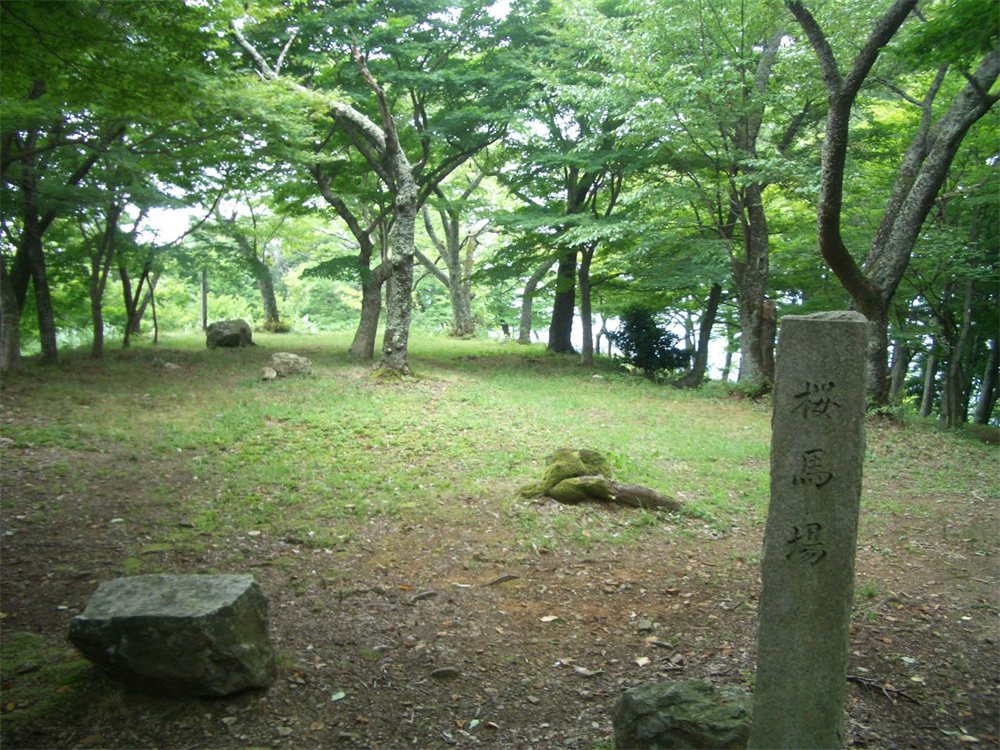
Image: The Sakura-baba site (photographed in 2008). Wikimedia Commons (photo: ブレイズマン, public domain)
Beyond it is the Sakura-baba site, an enclosure known for its fine view. Building foundation stones survive, and a memorial tower to the Azai stands here.
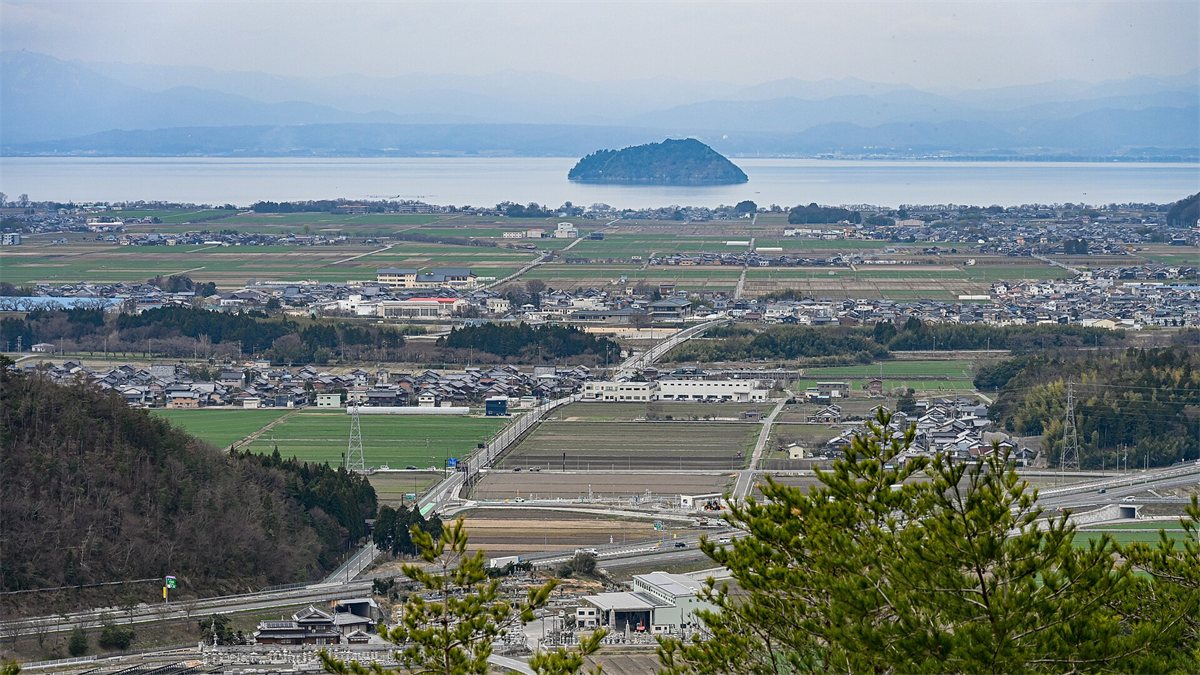
Image: Lake Biwa and Chikubushima seen from the Odani Castle ruins (photographed in 2022). Wikimedia Commons (photo: m-louis .®, CC BY-SA 2.0)
On a clear day you can see Lake Biwa and Chikubushima beyond the town of Nagahama. The Azai may have looked out on the same view.
The Ōhiroma Site (Senjōjiki): The Largest Enclosure
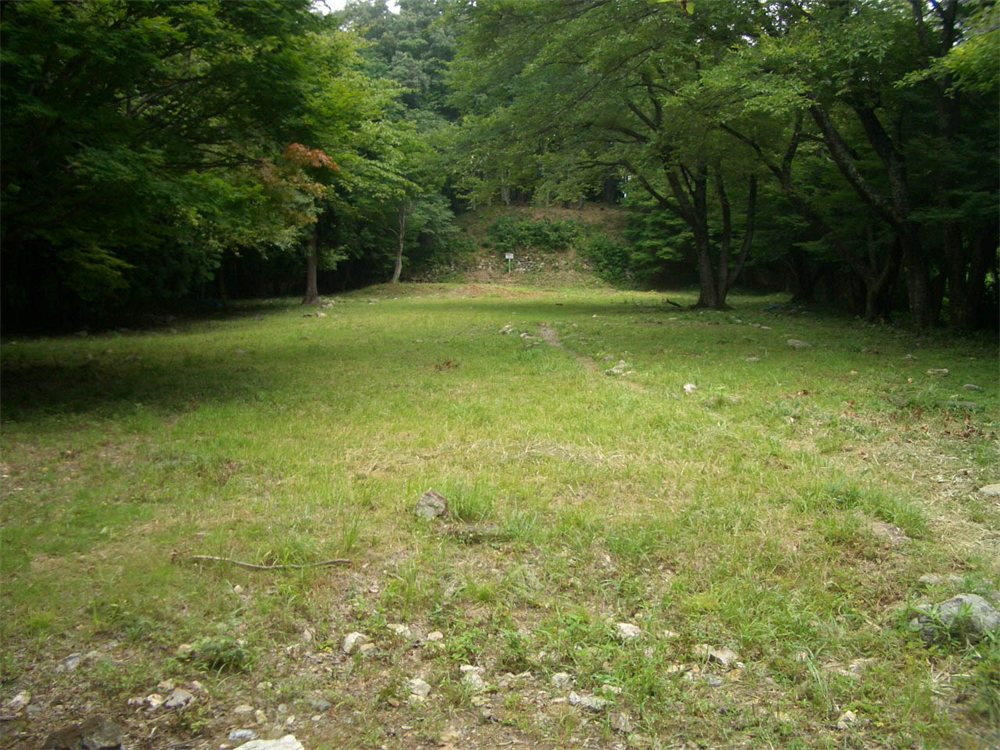
Image: The Senjōjiki (Ōhiroma site) at the Odani Castle ruins (photographed in 2008). Wikimedia Commons (photo: ブレイズマン, public domain)
The Ōhiroma site is the largest enclosure in the castle, about 35 m east to west and 85 m north to south, or about 3,000 m² [Fact: remains]. It is also called the Senjōjiki ("thousand-mat hall").
Excavations have found building foundation stones, a stone-lined well and the remains of a storehouse. Many objects have been unearthed, including more than 30,000 unglazed earthenware dishes (kawarake). It is thought to have been a central place where many people gathered.
3,000 m²? That's bigger than 40 school classrooms, and on top of a mountain!
They cut the ridge flat. Try to imagine the hard work of the people of that time.
The Honmaru Site and the Ōhorikiri: A Dry Moat That Splits the Castle
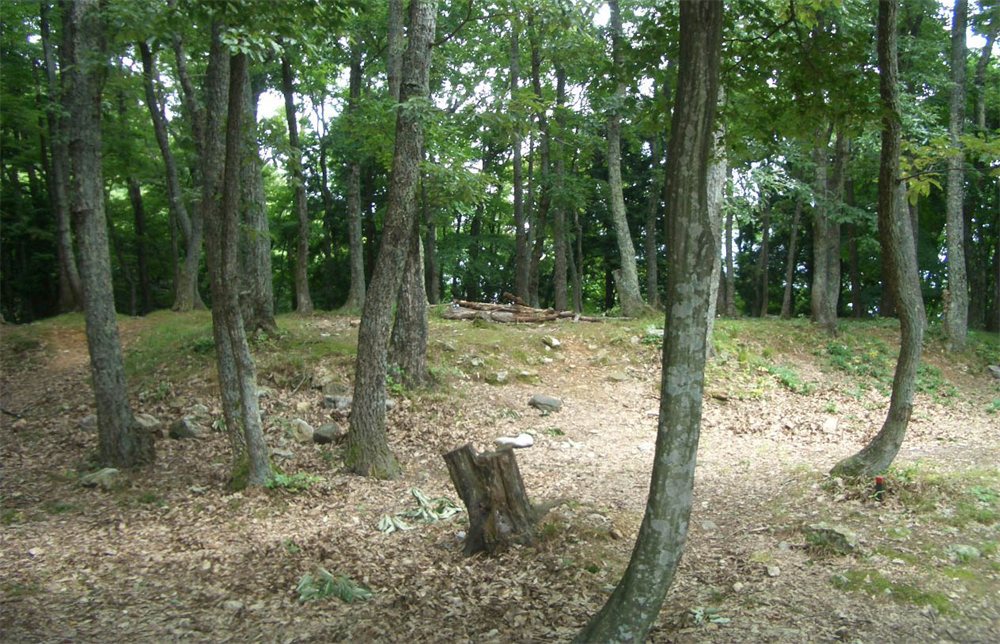
Image: The Honmaru site (photographed in 2008). Wikimedia Commons (photo: ブレイズマン, public domain)
North of the Ōhiroma is the Honmaru site (335 m), the main enclosure. It has an upper and a lower level, with a stone wall at its base. An Edo-period map notes that it was "also called the keep or the bell enclosure," but what kind of building stood here is not known [Unknown].
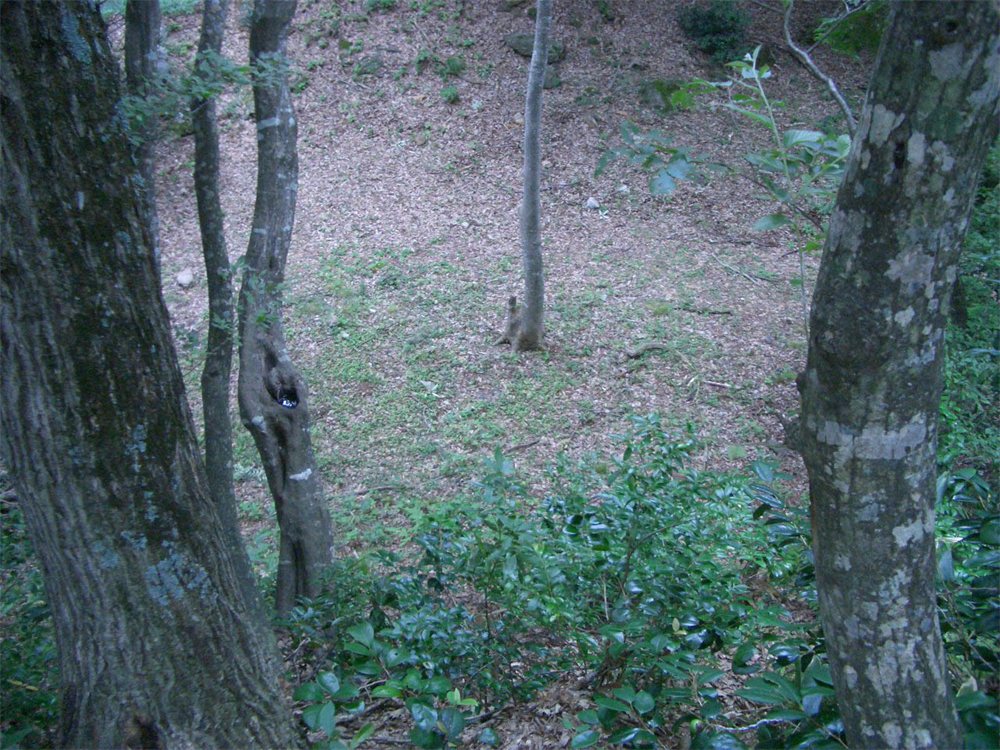
Image: The Ōhorikiri north of the Honmaru site (photographed in 2008; called "Ōkarabori-ato" on Commons). Wikimedia Commons (photo: ブレイズマン, public domain)
North of the Honmaru is the Ōhorikiri, a deep cut through the ridge. This moat divides the castle into a southern "Honmaru side" and a northern "Kyōgokumaru and Komaru side."
When the castle fell in 1573, Hashiba Hideyoshi took Kyōgokumaru, in the middle of the castle, and cut Nagamasa off from his father Hisamasa (see the siege of Odani Castle). Seeing how the enclosures line up along the ridge makes it clear why this mattered.
The Akao Residence Site: Where Nagamasa Is Said to Have Died
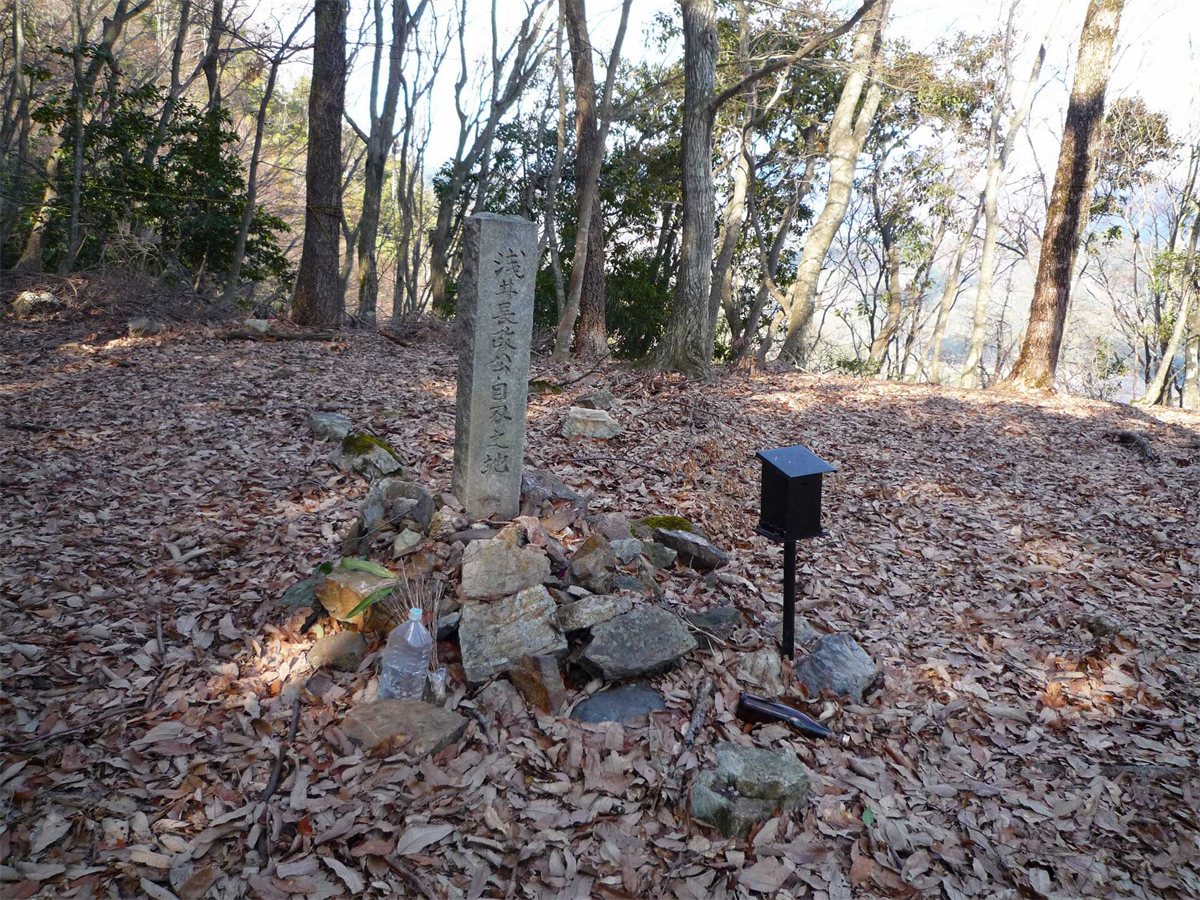
Image: The monument marking where Azai Nagamasa is said to have taken his own life (Akao residence site). Wikimedia Commons (photo: Heartoftheworld, CC BY-SA 3.0)
Below the slope on the east side of the Honmaru and Ōhiroma is the Akao residence site, said to be where the Akao family, senior retainers of the Azai, had their house. Nagamasa is said to have met his end here, and a monument stands on the spot [Legend].
However, the Shinchō Kōki, a chronicle compiled by Ōta Gyūichi, who served Nobunaga, from his own observations and other information, does not say where Nagamasa took his own life. The idea that it was at the Akao residence comes from later records and local tradition.
The Kyōgokumaru, Komaru and Sannōmaru Sites: The Inner Castle and Its Great Stone Wall
North of the Ōhorikiri come the Nakamaru, Kyōgokumaru and Komaru sites. Kyōgokumaru is the second-largest enclosure after the Ōhiroma. Its name is said to come from the Azai having housed their former lords, the Kyōgoku, there [Legend].
Komaru is said to be the enclosure where Nagamasa's father Hisamasa lived in retirement and where he took his own life when the castle fell. The Shinchō Kōki, however, says only "Hisamasa's castle" and does not use the name Komaru. The identification with Komaru comes from later records and notes on Edo-period maps [Widely accepted: Higashi Azai-gunshi and the Nagahama City preservation plan].
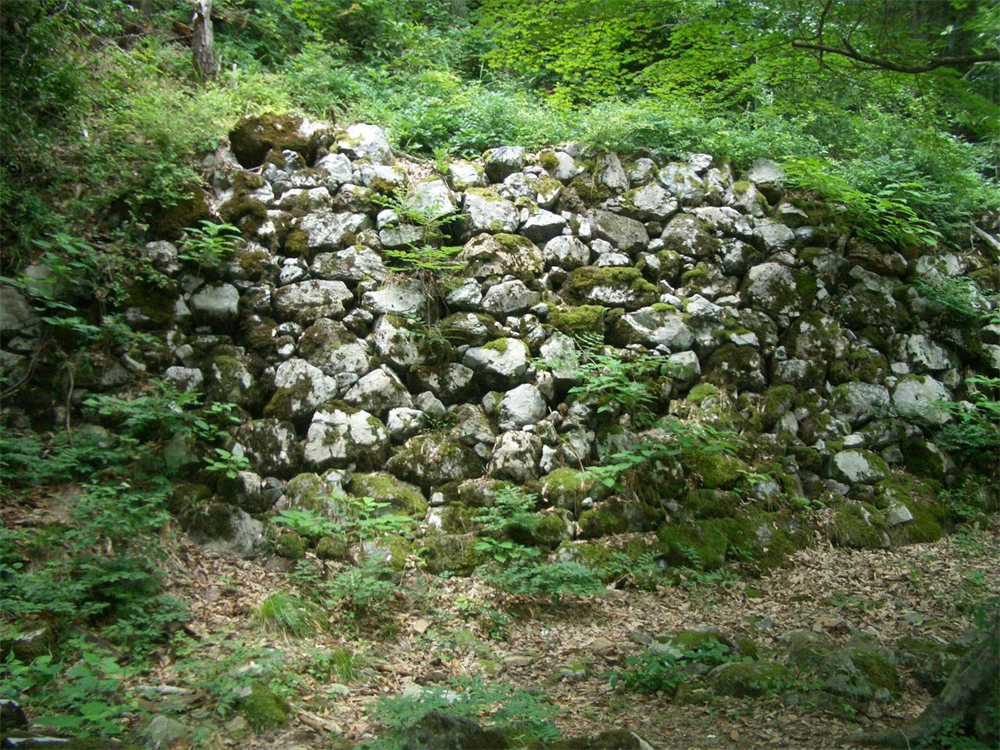
Image: The great stone wall at the Odani Castle ruins (photographed in 2008). Wikimedia Commons (photo: ブレイズマン, public domain)
The highest point of the main ridge is the Sannōmaru site (344 m). A great stone wall about 5 m high, built of large stones, survives here [Fact: remains]. It is thought to have been the enclosure that held the castle's last line of defense. Odani is often pictured as a castle of earthworks, but stone walls were used at important points.
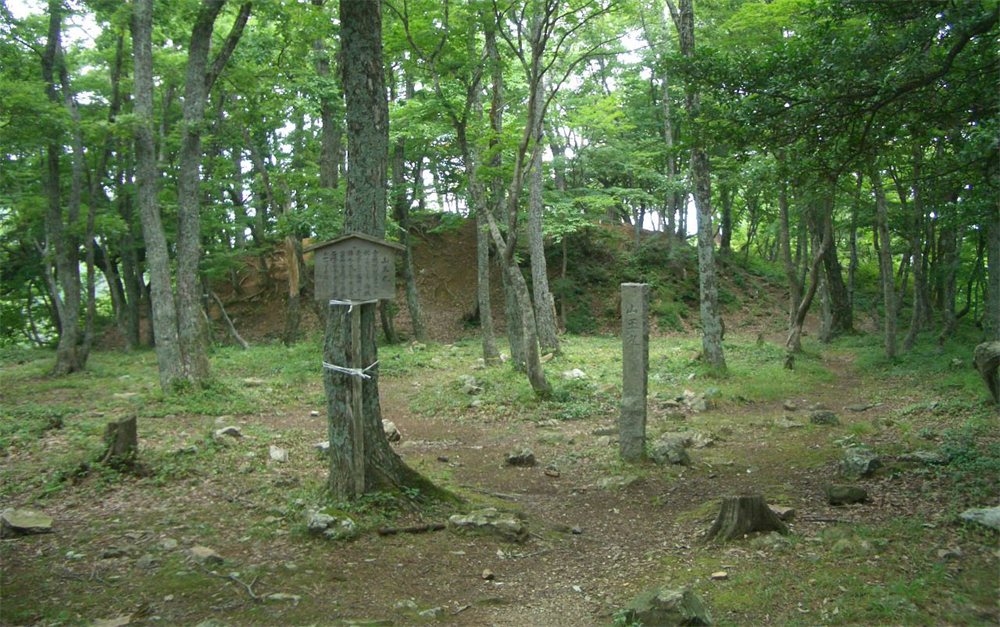
Image: The Sannōmaru site (photographed in 2008). Wikimedia Commons (photo: ブレイズマン, public domain)
In April 2026, Nagahama City announced that a letter in which Hisamasa had his retainers haul stones for the stone walls of Odani Castle had been found again after about 100 years. A copy had been printed in 『東浅井郡志』 (a local history of the Higashiazai district) in 1927, but the original had been lost.
Ōzuku: The Summit, Thought to Be the Center of the Early Castle
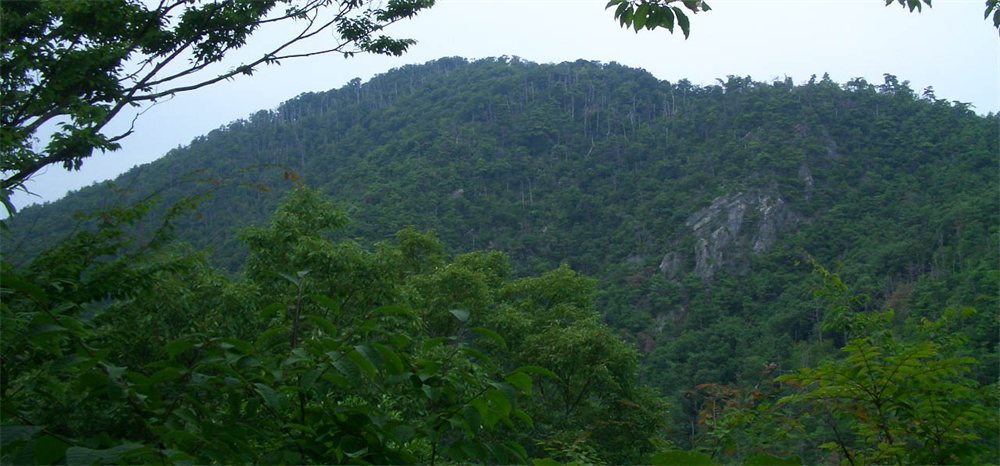
Image: The area around Ōzuku (photographed in 2008; called "Ōzukumaru" on Commons). Wikimedia Commons (photo: ブレイズマン, public domain)
The summit of Mt. Odani, Ōzuku, is 495 m high. Azai Sukemasa is thought to have first built his castle here at Ōzuku [Widely accepted: Nagahama City preservation plan]. Later the center of the castle moved to the ridge of today's Honmaru. When it moved is not known [Unknown].
In the war with Nobunaga, the Asakura army that came to help the Azai held this summit. Beyond the Sannōmaru the path becomes steep, so come prepared for a mountain hike.
The sights stand in a single line along the ridge from south to north. Start at the Bansho site and head for the Honmaru.
I'll check the walking times in the section on getting there!
The Odani Castle Sengoku Historical Museum: Exhibits and Opening Hours

Image: Azai Nagamasa
The Odani Castle Sengoku Historical Museum at the entrance to Kiyomizudani, at the foot of the mountain, is a place to learn about the three generations of the Azai and Odani Castle. Stopping here before you climb makes the sights at the ruins easier to understand.
| Item | Details (basic information checked on the official website on October 15, 2026; New Year closure checked on October 24, 2026) |
| Address | 139 Odani Gujō-chō, Nagahama, Shiga Prefecture (at the entrance to Kiyomizudani) |
| Main exhibits | Portraits of the three Azai lords and Oichi, finds from the castle ruins, an Edo-period map of Odani Castle, illustrations reconstructing the enclosures, and more |
| Opening hours | 9 a.m. to 5 p.m. (last admission 4:30 p.m.) |
| Closed | Tuesdays (the next weekday if Tuesday is a public holiday) and the New Year period. The coming New Year closure is December 28, 2026, to January 5, 2027 (museum notice of October 21, 2026, checked on October 24, 2026) |
| 100 Great Castles stamp | Kept at the museum (we have not confirmed where it is kept on the museum's closing days) |
Opening days and temporary closures are posted on the museum's official website (in Japanese).
The museum building was a children's center built by the town of Kohoku in 1982; it was renovated and opened as the museum in 2007 [Fact: Nagahama City preservation plan]. Nagahama City has announced a plan to build a new facility on the site of the Sengoku Guide Station at the foot of the mountain.
Seeing the old maps and finds at the museum before climbing would make it even more fun!
Indeed. Look at the portraits of the three Azai lords as well. Knowing their faces helps you picture the people who lived here as you walk the ruins.
The Siege of Odani Castle: How It Fell in 1573
Image: Azai Nagamasa in a helmet with golden horns
In a single sentence, the siege of Odani Castle was "the battle in 1573 (Tenshō 1) in which Oda Nobunaga took Odani Castle and the Azai were destroyed as a daimyo family". The war between Nobunaga and the Azai, however, had begun three years earlier.
More Than Three Years of War Between Nobunaga and the Azai
| Date | Event |
| 1570 (Genki 1), 4th month | Azai Nagamasa breaks with Nobunaga and becomes his enemy |
| 1570 (Genki 1), 6th month | On the 21st, Nobunaga burns the town below Odani Castle and pulls back on the 22nd. On the 28th, the Oda and Tokugawa win the Battle of Anegawa. Even then, Nobunaga does not try to storm the high, steep Odani Castle at once [Fact: Shinchō Kōki] |
| 1572 (Genki 3), 7th month | Nobunaga has a fort built on Mt. Toragozen, facing Odani Castle, and later places Hashiba Hideyoshi there to hold it [Fact: Shinchō Kōki] |
| 1573 (Tenshō 1), 8th–9th months | Nobunaga takes Odani Castle, and the Azai are destroyed as a daimyo family [Fact: Shinchō Kōki]. Sources differ on whether Nagamasa died on the 28th day of the 8th month or the 1st day of the 9th month [Debated] |
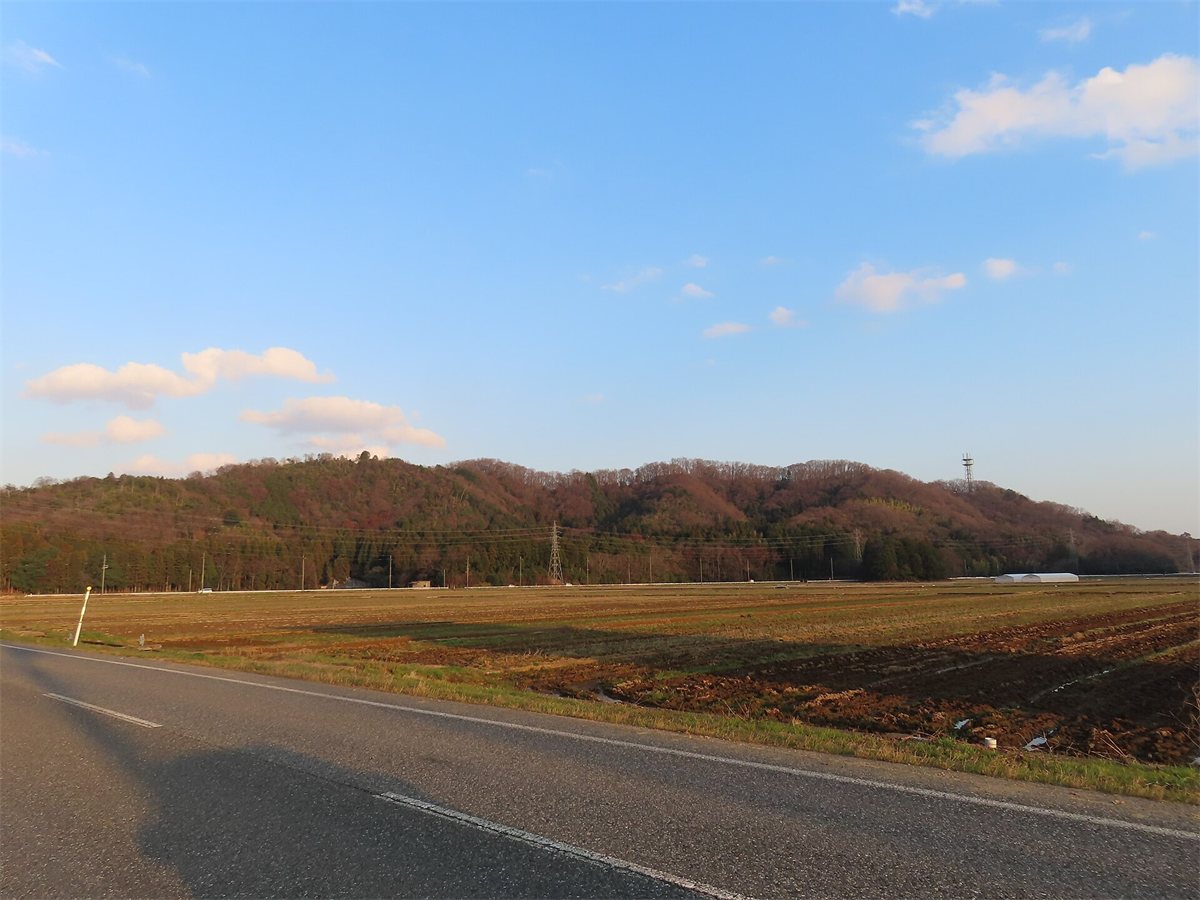
Image: Mt. Toragozen seen from the east (photographed in 2026). Wikimedia Commons (photo: 運動会プロテインパワー, CC BY-SA 4.0)
Mt. Toragozen (Toragozen-yama) is a long, narrow hill southwest of Odani Castle. Nobunaga built a strong fort here as a base for watching Odani Castle. Today it has a lookout and a park, with Mt. Odani directly in view.
According to the Shinchō Kōki, the Azai and Asakura forces holding Ōzuku to the north could be seen from Nobunaga's quarters there. The chronicle describes a direct view of the forces holding Ōzuku.
How the Castle Fell in 1573
Let us follow the course of events to the castle's fall, based on the Shinchō Kōki. All the months and days that follow are in the Japanese lunisolar calendar of the time.
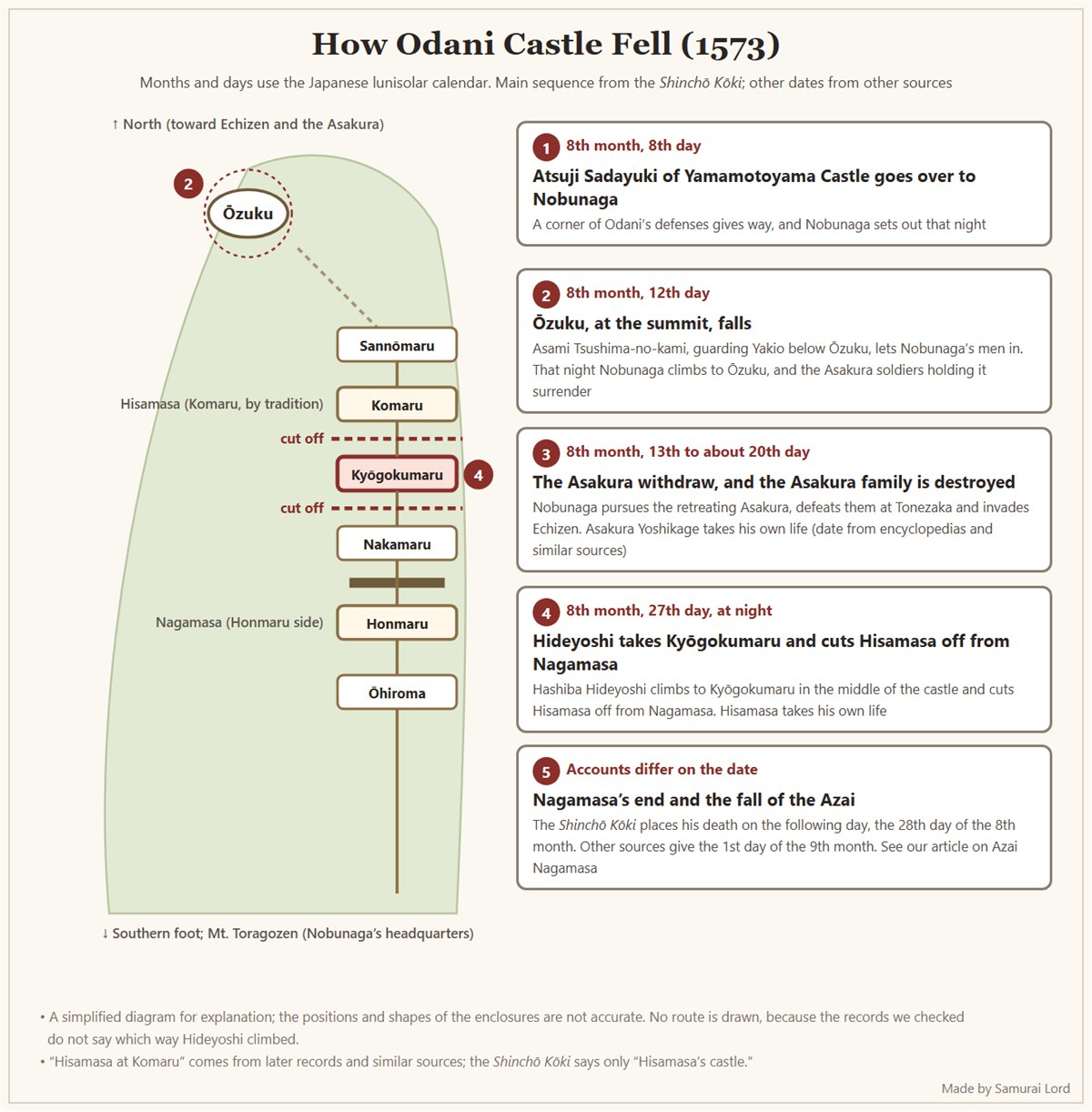
Image: How Odani Castle fell (made by Samurai Lord). Tap (click) the image to enlarge it
| Date | Event |
| 8th month, 8th day | Atsuji Sadayuki, who held Yamamotoyama Castle west of Odani, goes over to Nobunaga. Nobunaga sets out that night [Fact: Shinchō Kōki] |
| 8th month, 12th day | Asami Tsushima-no-kami, holding Yakio below Ōzuku, lets Nobunaga's forces in. Nobunaga himself climbs to Ōzuku, and the Asakura soldiers holding it surrender [Fact: Shinchō Kōki] |
| 8th month, from the 13th | Nobunaga pursues the withdrawing Asakura army and defeats it at Tonezaka (today's Tsuruga, Fukui Prefecture). With Echizen invaded, Asakura Yoshikage takes his own life around the 20th day of the 8th month, and the Asakura family is destroyed [Fact: Shinchō Kōki] (the date of Yoshikage's death is [Widely accepted]) |
| 8th month, 27th day, at night | Hashiba Hideyoshi climbs to Kyōgokumaru and cuts Hisamasa off from Nagamasa. He first takes Hisamasa's enclosure, and Hisamasa takes his own life [Fact: Shinchō Kōki] |
| The next day or later | Nagamasa takes his own life, and the Azai are destroyed. The date is given as the 28th day of the 8th month (Shinchō Kōki) or the 1st day of the 9th month [Debated] |
Source Box: Hideyoshi's Role in the Shinchō Kōki
Source
Ōta Gyūichi, Shinchō Kōki, book 6, 「阿閉謀叛之事」 (Wikisource, from the 我自刊我書 edition)
Original (excerpt)
「八月廿七日 夜中に羽柴筑前守京極つぶらへ取上 浅井下野同備前父子之間を取切 先下野居城を乗取候」
Translation
On the night of the 27th day of the 8th month, Hashiba Chikuzen-no-kami (Hideyoshi) advanced up to the Kyōgoku enclosure, cut off Azai Shimotsuke-no-kami (Hisamasa) from his son Bizen-no-kami (Nagamasa), and first captured Hisamasa's stronghold.
Here tsubura means an enclosure. What this record tells us is that Hideyoshi took Kyōgokumaru, in the middle of the castle, and cut father and son off from each other. It does not say by which path Hideyoshi climbed to Kyōgokumaru [Unknown].
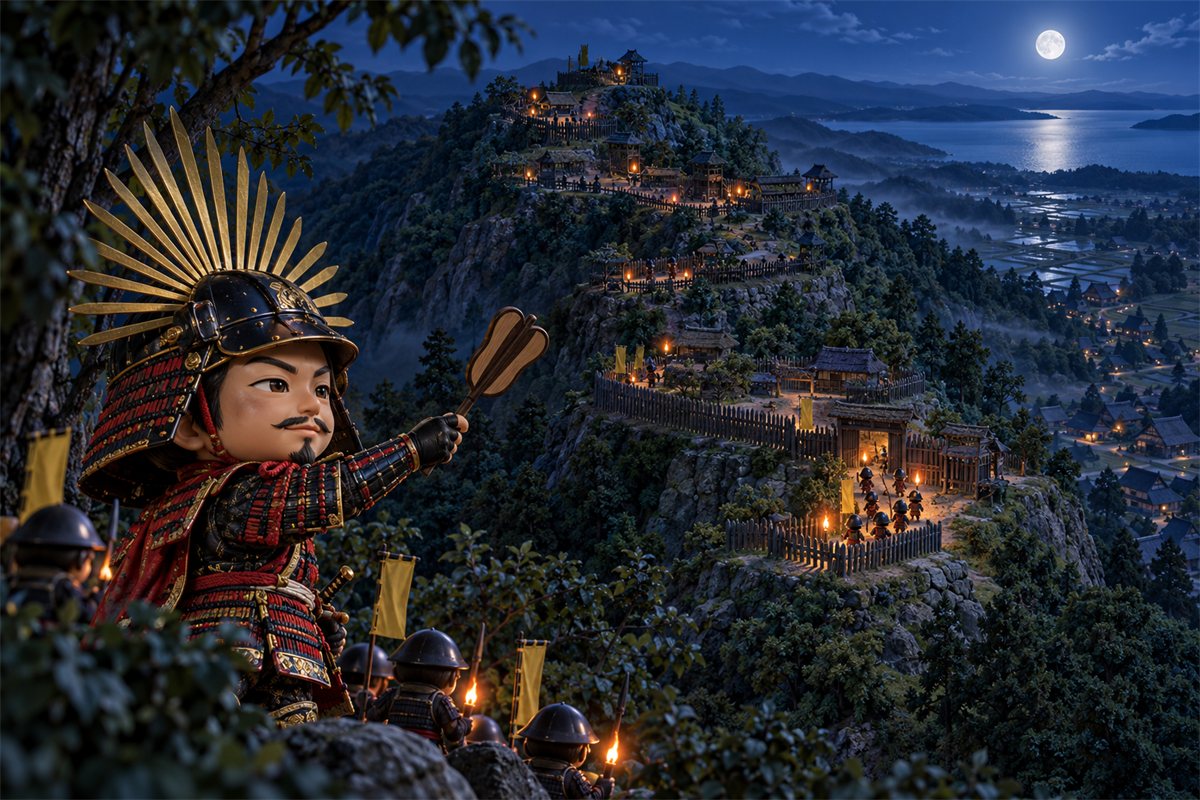
Image: Hashiba Hideyoshi and his soldiers take Kyōgokumaru at night
Losing the middle of the castle must have made it much harder for father and son to stay in contact.
Indeed. With Kyōgokumaru in Hideyoshi's hands, it became much harder for them to support each other.
Why Did Odani Castle Fall?
The war between Nobunaga and the Azai lasted more than three years from 1570. Yet once the 8th month of 1573 began, it was settled in less than a month. Three things seem to have come together.
- Defections: the Atsuji of Yamamotoyama Castle and the Asami at Yakio went over to Nobunaga. The historian Ōta Hiroshi argues that the collapse of the defensive line linking Yamamotoyama Castle and Odani Castle directly led to Odani's fall
- The withdrawal of the Asakura army and the fall of the Asakura house: the Asakura army holding Ōzuku withdrew, and the Asakura family itself was destroyed, so no help could come
[Fact: Shinchō Kōki] - The heart of the castle was split: Kyōgokumaru was taken, and Hisamasa was cut off from Nagamasa
[Fact: Shinchō Kōki]
For the date of Nagamasa's death and his last words, see the section on his death in our article on Azai Nagamasa.
How Did Oichi and Her Daughters Escape from Odani Castle?
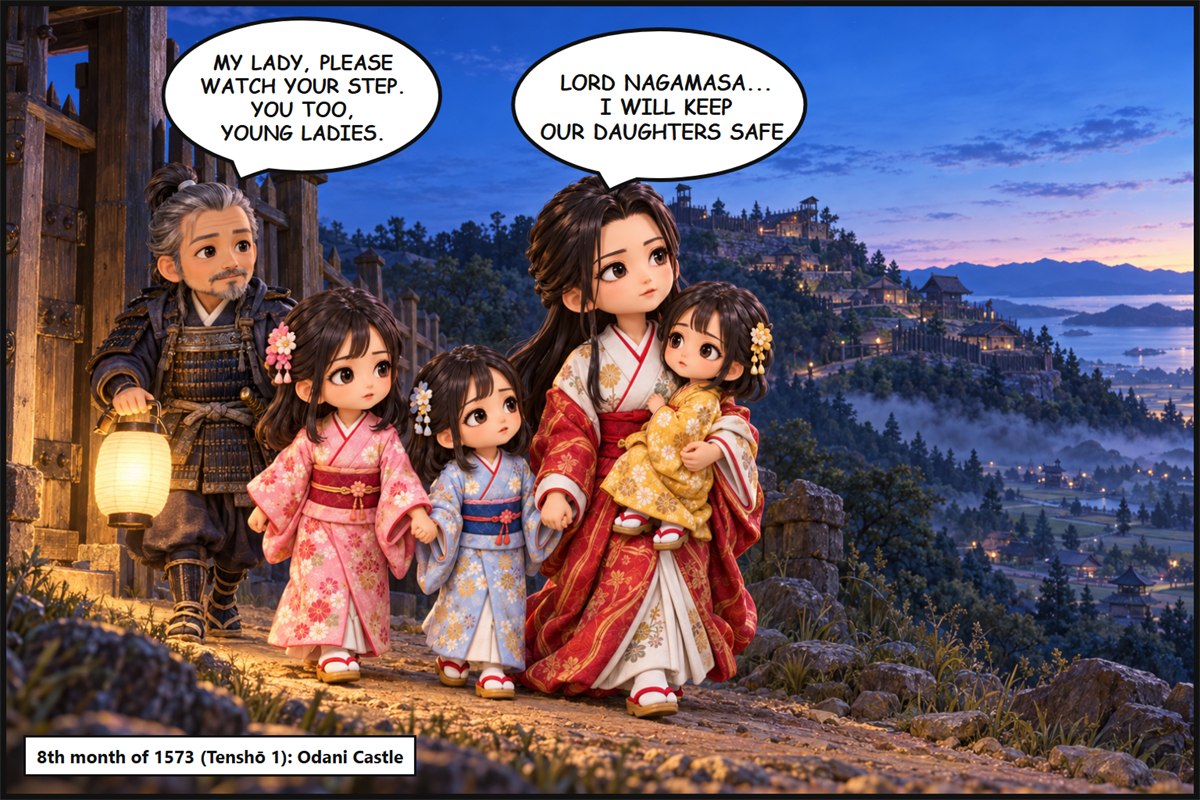
Image: Oichi and her three daughters leave the castle (a story told in later accounts)
Oichi and her three daughters (Chacha, Hatsu and Gō) are thought to have survived the fall of the castle and been taken in by the Oda family [Widely accepted]. The account of Odani's fall in the Shinchō Kōki does not describe their escape.
The Edo-period Asai Sandaiki says that before the castle fell, Nagamasa sent Oichi and their daughters to Nobunaga with his retainer Fujikake Mikawa-no-kami [Legend]. For more, see our article on Oichi.
For what became of Nagamasa's eldest son, Manpukumaru, see our article on Manpukumaru.
Because Oichi and her daughters survived, Chacha (Yodo-dono) and Gō went on to play important roles later in Japanese history!
Getting to the Odani Castle Ruins: Walking Routes and Times
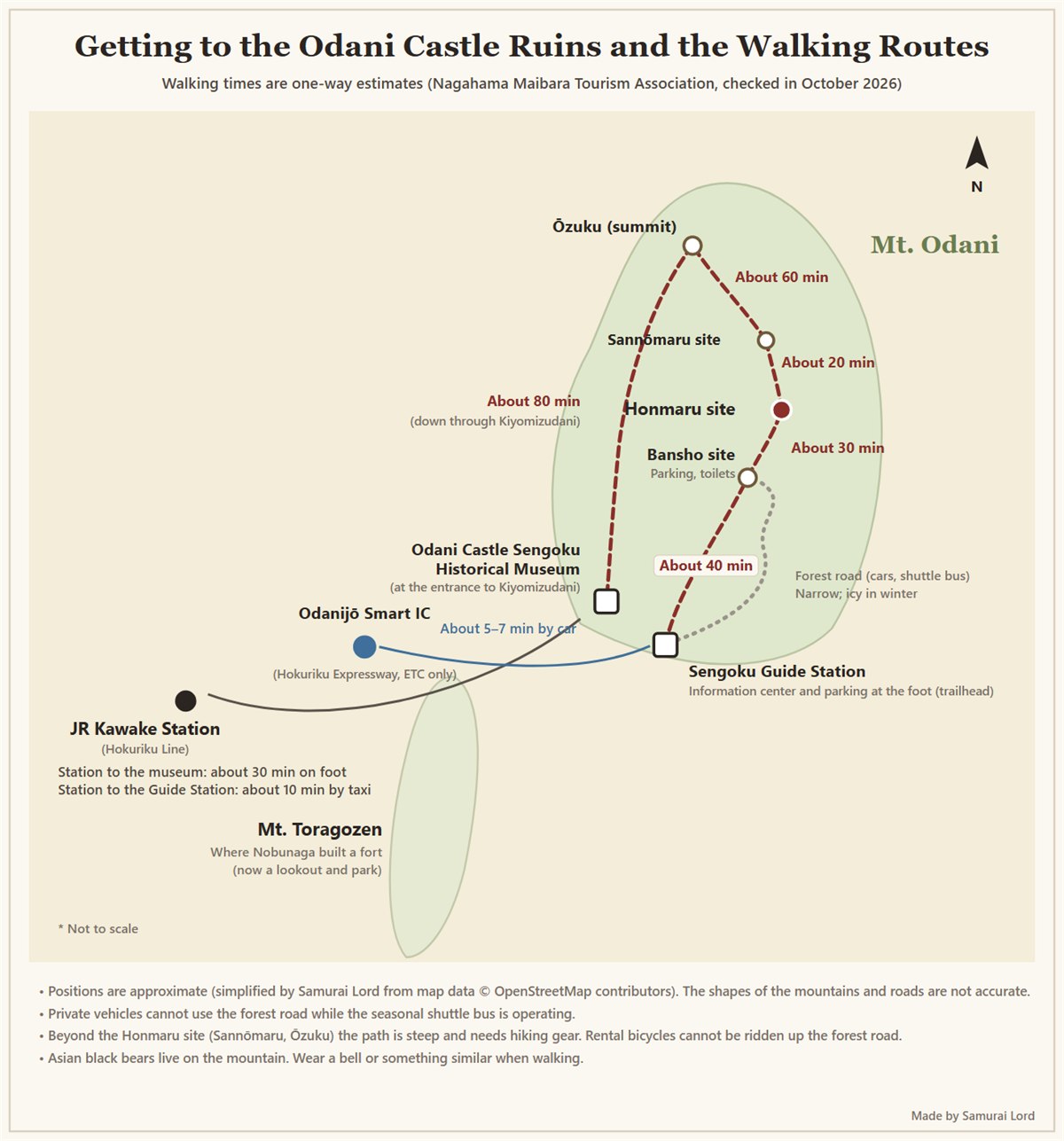
Image: How to get to the Odani Castle ruins and the walking routes (made by Samurai Lord; locations and routes are schematic and not to scale). Tap (click) the image to enlarge it
You can reach the Odani Castle ruins either by walking up from the foot of the mountain or by going by car or shuttle bus to the Bansho site partway up. The details below were checked against official information on October 15, 2026.
By Train or Car
| Way | How to get there (approximate) |
| Train | From Kawake Station on the JR Hokuriku Line, about 2.2 km to the Odani Castle Sengoku Historical Museum, about 30 minutes on foot (according to the museum). From Kawake Station to the Sengoku Guide Station, about 10 minutes by taxi (according to the tourism association) |
| Car | From the Odanijō Smart IC (ETC only) on the Hokuriku Expressway, about 5–7 minutes to the Sengoku Guide Station (according to the tourism association; its pages give both 5 and 7 minutes) |
| Shuttle bus | During a limited season, a bus runs between the Sengoku Guide Station at the foot of the mountain and the Bansho site. Operating days and fares are on the Nagahama Maibara Tourism Association's page (in Japanese) |
| Forest road (car) | A forest road leads to the Bansho site. It is narrow, and large buses cannot use it. While the shuttle bus is running, private cars cannot use it. Watch for snow and ice in winter |
The tourism association calls the information center and parking at the foot of the mountain the "Sengoku Guide Station." If you rent a bicycle at Kawake Station, you cannot ride it up the forest road; leave it at the foot and walk.
Walking Routes and Times (One Way)
These are the walking times (one way) given by the Nagahama Maibara Tourism Association.
| Section | Walking time (one way) | Notes |
| Foot (Sengoku Guide Station) → Bansho site | About 40 min | From about 100 m to 284 m above sea level |
| Bansho site → Honmaru site | About 30 min | Passes the Sakura-baba and Ōhiroma; most of the main sights are along this part |
| Honmaru site → Sannōmaru site | About 20 min | Passes the Ōhorikiri, Kyōgokumaru and Komaru |
| Sannōmaru site → Ōzuku | About 60 min | A steep path; hiking gear is needed |
| Ōzuku → Kiyomizudani → museum | About 80 min | Downhill, through Kiyomizudani to the foot |
For example, if you walk from the foot to the Honmaru site and come back the same way, simply doubling the one-way times (40 + 30 = about 70 minutes) gives about 2 hours 20 minutes of walking alone. Allow extra time for looking around.

Image: A family climbing to the Odani Castle ruins today
The paths run through the mountains, so wear comfortable walking shoes and bring something to drink. Asian black bears live on Mt. Odani, so wear a bell or something similar while you walk.
If you drive to the Bansho site, the Honmaru is only about 30 minutes away!
True. But walk up from the foot, and your legs will tell you just how high the castle stood.
The Layout of Odani Castle: Enclosures, Stone Walls and Old Maps
Odani Castle was not just a castle on a mountaintop. It is thought of as one great castle that included the enclosures on the ridges, Ōzuku at the summit, the residences and houses in Kiyomizudani at the foot, and the castle town in front of the valley [Widely accepted: Nagahama City preservation plan].
| Area | Main enclosures and remains | Role |
| East ridge (main ridge) | Bansho, Sakura-baba, Ōhiroma, Honmaru, Nakamaru, Kyōgokumaru, Komaru, Sannōmaru | The heart of the castle, with enclosures in steps |
| Summit | Ōzuku | Thought to have been the center of the early castle; held by the Asakura army in the war with Nobunaga |
| West ridge | Fukujumaru, Yamazakimaru | Enclosures thought to have been built by the Asakura [Widely accepted] |
| Northeast, at the back | 月所丸 | Guarded the castle's back entrance |
| Kiyomizudani | The Azai residence, retainers' houses, temple sites, and a moat closing the mouth of the valley | Where the lord and his retainers lived day to day |
A survey in 1989 found more than 1,100 flat sections, large and small, on the mountain, showing that Odani Castle made use of the whole mountain.
Stone walls were used at important points such as the Ōhiroma (about 4 m high), the site of the Kurogane Gate, the Honmaru and the Sannōmaru (about 5 m high). Elsewhere the castle was defended by earthen banks and slopes cut as steep as cliffs.
Odani Castle in Edo-Period Maps
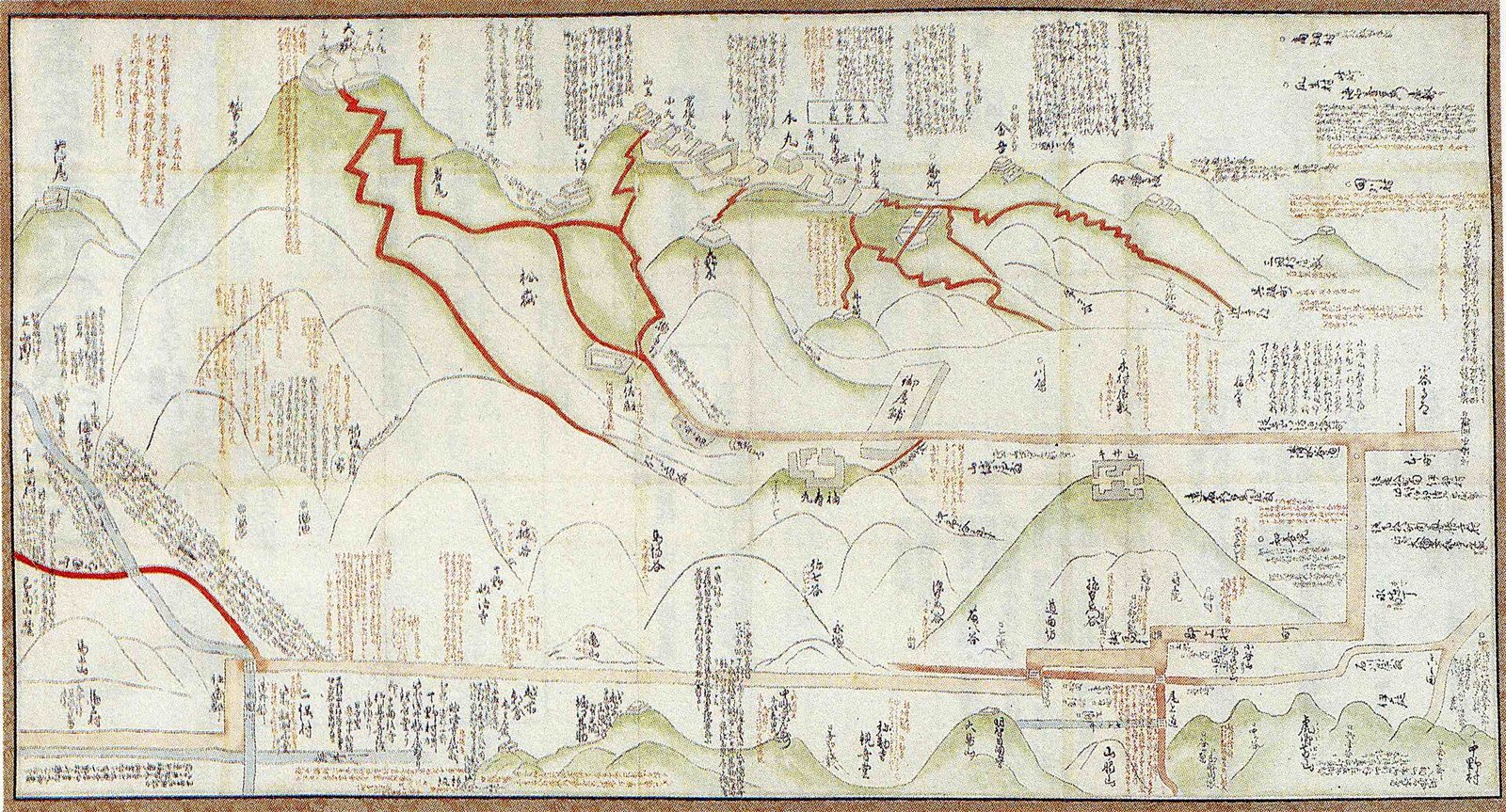
Image: Map of the Odani Castle ruins (owned by the Odani Castle Ruins Preservation Society; a Nagahama City cultural property). Wikimedia Commons (public domain). Tap (click) the image to enlarge it
Several maps showing Odani Castle survive. This one looks down from the western sky on the enclosures lining the ridges and the valley at the foot.
These maps, however, were drawn or copied in the Edo period and do not show the castle exactly as it was in the Sengoku period. Their notes also include many traditions.
Old maps are clues to how people of later times saw the ruins. It is important to read them together with excavations and records.
The History of Odani Castle: From Its Building to Its Abandonment
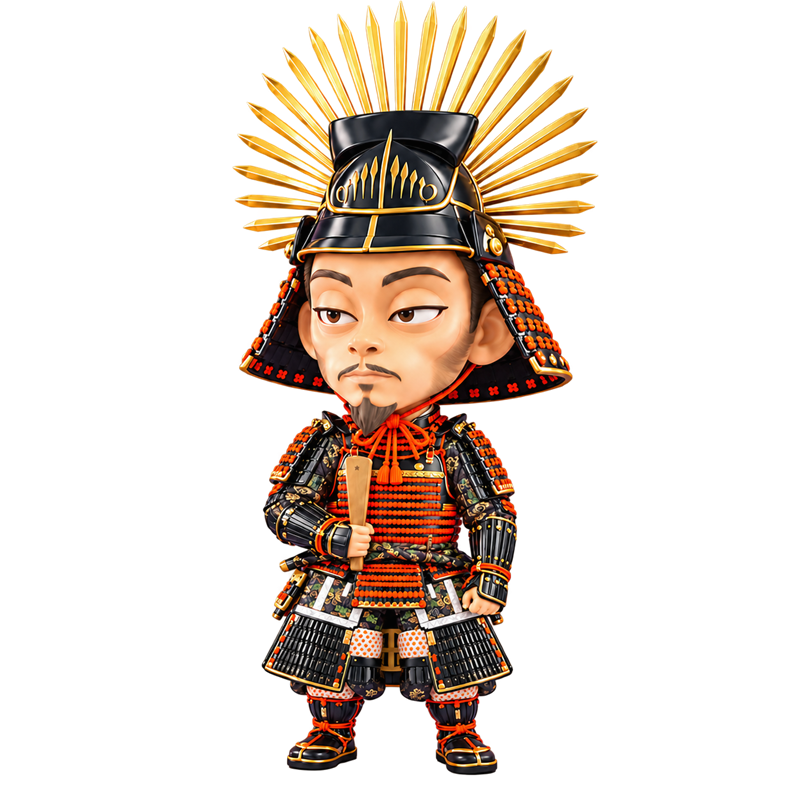
Image: Toyotomi Hideyoshi
| Date | Event |
| The Daiei era (1520s) | Azai Sukemasa builds Odani Castle. Its first center is thought to have been Ōzuku at the summit [Widely accepted] (views on the year differ, such as around 1523–25 [Debated]) |
| 1525 (Daiei 5) | A record says Rokkaku Sadayori of southern Ōmi attacked and Sukemasa was driven from the castle for a time [Fact: records] |
| 1534 (Tenbun 3) | Sukemasa invites his lords, Kyōgoku Takakiyo and his son Takanobu, to his residence and entertains them [Fact] |
| 1570 (Genki 1) | Nagamasa turns against Nobunaga. The Battle of Anegawa |
| 1572 (Genki 3) | Nobunaga builds a fort on Mt. Toragozen. Asakura Yoshikage camps at Ōzuku [Fact: Shinchō Kōki] |
| 1573 (Tenshō 1), 8th–9th months | Odani Castle falls, and the Azai are destroyed as a daimyo family [Fact: Shinchō Kōki]. Sources differ on whether Nagamasa died on the 28th day of the 8th month or the 1st day of the 9th month [Debated] |
| 1573 (Tenshō 1) onward | The Azai lands in northern Ōmi are given to Hideyoshi, who is thought to have moved into Odani Castle [Widely accepted] |
| From around 1574 (Tenshō 2) | Hideyoshi begins building a castle at Imahama (later Nagahama) by Lake Biwa and moves there around 1575–76 (Tenshō 3–4) [Widely accepted] |
| Date unknown | Odani Castle falls out of use (is abandoned) [Unknown] |
| 1937 | Designated a National Historic Site; Kiyomizudani added in 1995 [Fact] |
| 2006 | Selected for the list of Japan's 100 Great Castles (No. 49) [Fact] |
After the fall, Hideyoshi built a new castle at Nagahama, facing Lake Biwa, and left Odani Castle. We could not establish when Odani Castle was abandoned from the sources consulted for this article [Unknown].
There are also stories that "the buildings and stones of Odani Castle were taken to Nagahama Castle" or that "the keep of Odani Castle was moved to Nagahama Castle or Hikone Castle," but these survive as traditions passed down as "it is said," and we could not verify them from the sources consulted for this article [Legend].
For how Hideyoshi rose from here to become a great lord, see our article on Toyotomi Hideyoshi.
So the fall of Odani Castle was what made Hideyoshi the lord of Nagahama Castle!
Indeed. The end of one castle became the beginning of another warrior's rise.
FAQ
What are the "Five Great Mountain Castles of Japan"?
A popular name for five castles: Kasugayama Castle (Niigata), Nanao Castle (Ishikawa), Kannonji Castle (Shiga), Odani Castle (Shiga) and Gassan-Toda Castle (Shimane). It is widely used in tourist information. It is separate from the national designation, and we could not confirm who chose the five or when. Odani Castle is also No. 49 on the Japan Castle Foundation's list of "Japan's 100 Great Castles."
How are Odani Castle and Nagahama Castle connected?
After Odani Castle fell, Hideyoshi, who was given northern Ōmi, built Nagahama Castle at Imahama by Lake Biwa in place of Odani Castle (around 1574–76). The story that materials from Odani Castle were used for Nagahama Castle survives as a tradition.
Did Odani Castle have a keep?
It is not clear. An Edo-period map notes that the Honmaru was "also called the keep or the bell enclosure," but what kind of building it was is not known (see the Honmaru site).
When is the Sengoku festival?
The "Odani Castle Sengoku Festival" is held every year around autumn in the open space in front of the museum. In 2026 it was held on October 4, with a procession of warriors in armor and a matchlock gun demonstration. The date changes from year to year.
Summary: What Is Odani Castle?
Odani Castle was the mountain castle of three generations of the Azai on Mt. Odani in Nagahama, Shiga Prefecture. With enclosures lining the ridges and the lord's residence and retainers' houses in Kiyomizudani at the foot, it was a great castle that used the whole mountain.
In 1573 (Tenshō 1) it fell to Nobunaga's attack, and the Azai were destroyed as a daimyo family. The Shinchō Kōki records that Hideyoshi took Kyōgokumaru, in the middle of the castle, and cut Hisamasa off from Nagamasa. Oichi and her three daughters are thought to have survived and been taken in by the Oda.
Today it is a National Historic Site and on the list of Japan's 100 Great Castles. You can walk to the Ōhiroma and Honmaru sites, the Ōhorikiri and the great stone wall of the Sannōmaru. We recommend visiting the museum at the foot of the mountain before you climb.
For the people and battles connected with the castle, see also our articles on Azai Nagamasa, Oichi, Manpukumaru, the Battle of Anegawa and Toyotomi Hideyoshi.
The enclosures on the mountain, the valley at its foot, and Mt. Toragozen across the way. Know the lie of the land, and the siege of Odani Castle becomes much easier to understand.
Next time I want to walk from the museum all the way to the Honmaru!
Sources & How This Article Was Written
This article is based mainly on the following records and references:
- Record close to the time: Ōta Gyūichi, Shinchō Kōki, books 3, 5 and 6 (Wikisource, from the 我自刊我書 edition; available in English as The Chronicle of Lord Nobunaga, translated by J. S. A. Elisonas and J. P. Lamers, Brill, 2011)
- Later record: Asai Sandaiki (Wikisource)
- Official materials (in Japanese; titles translated by us): Nagahama City Board of Education, preservation and management plan for the Odani Castle historic site (2014); Nagahama City, basic plan for the (provisionally named) Odani Castle Sengoku Experience Museum (2024); Japan Castle Foundation, "Japan's 100 Great Castles"
- Tourist information (checked on October 15, 2026): Odani Castle Sengoku Historical Museum; Nagahama Maibara Tourism Association, "Odani Castle Ruins" and "Odani Castle Shuttle Bus"
- Studies and reference works (in Japanese; titles translated by us): Ōta Hiroshi, "The Sengoku Daimyo Azai Family and the Movements of Its Retainers" (summary of a doctoral dissertation, Meiji University, 2024); Owada Tetsuo, Studies of the Azai of Ōmi; Kotobank (Nihon Daihyakka Zensho, Nihon Rekishi Chimei Taikei and others); news reports on the rediscovery of Hisamasa's letter (April 2026)
- Images: the photos of the Odani Castle ruins (ブレイズマン, public domain; Heartoftheworld, CC BY-SA 3.0), the view of Chikubushima (m-louis .®, CC BY-SA 2.0), Mt. Toragozen (運動会プロテインパワー, CC BY-SA 4.0) and the map of the Odani Castle ruins (public domain) are from Wikimedia Commons. The diagrams, maps, manga panel and illustrations are original works by Samurai Lord
What the Labels Mean
[Fact]Confirmed by sources from the time or by remains at the site ([Fact: …]names the source)[Widely accepted]A view widely accepted by researchers ([Widely accepted: …]names the source)[Debated]Accounts or interpretations differ[Unknown]Not established from the sources we checked[Legend]Stories found in later records or traditions
We keep "what a record says" separate from "what actually happened." Translations of the source excerpts in this article are by the Samurai Lord editorial team.
This article was written by the Samurai Lord editorial team and is revised as new research and reader feedback come in. For tourist information (hours, closing days, buses), we give the date we checked. If you spot an error, please let us know through our contact form (in Japanese) and we will check and correct it.
Read in Japanese
This article is also available in Japanese: 小谷城とは?城跡の見どころや資料館、小谷城の戦いを解説!