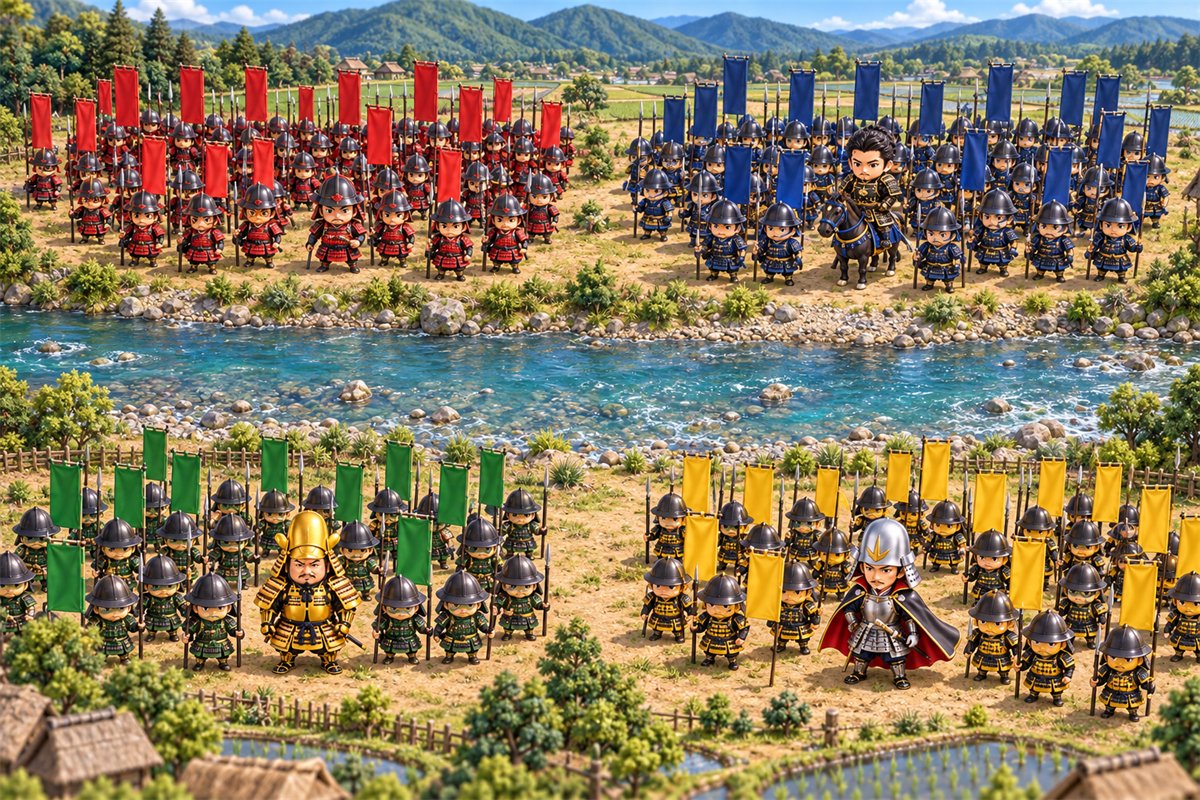
Image: The two sides face each other across the Ane River (the flag colors are used to tell the armies apart)
The Battle of Anegawa was fought on the 28th day of the 6th month of 1570 (Genki 1) on the banks of the Ane River in Ōmi Province (today's Nagahama, Shiga Prefecture). On one side were Oda Nobunaga and Tokugawa Ieyasu; on the other, Azai Nagamasa and the army of the Asakura family. In Japanese it is also called Anegawa no Kassen. The battle ended in victory for the Oda and Tokugawa [Fact: Shinchō Kōki].
This article explains where the armies stood, who won, what Ieyasu did, how Oichi was connected with the battle, and whether the famous stories about Honda Tadakatsu and Magara Naotaka are true, with maps and pictures.
Western years are given with Japanese lunisolar months and days. The full Western date given for the battle uses the Julian calendar; modern dates use the Gregorian calendar. Ages use the traditional Japanese count, in which a person was counted as one at birth and gained a year at the start of each new year in the Japanese calendar.
Key points are tagged: [Fact] confirmed by records from the time, [Widely accepted] a view widely accepted by researchers, [Debated] accounts or interpretations differ, [Unknown] not established from the sources we checked, [Legend] stories found in later records or traditions, [Folk belief] popular claims with little evidence, and [Drama fiction] scenes created for dramas.

I am Uesugi Kenshin. Today our subject is not a warlord but a single battle.

I'm Date Masamune! The Battle of Anegawa was Nobunaga against Azai Nagamasa, right?

That's right, and Ieyasu took part as well. Where was it fought, and how? Let us check the records.
The Short Answers
- When? The 28th day of the 6th month of 1570 (July 30, 1570, in the Julian calendar), in the height of summer
[Fact: Shinchō Kōki] - Where? Along the Ane River in Ōmi. The Azai and Asakura armies took up positions at the villages of Nomura and Mitamura on the north bank
[Fact: Shinchō Kōki], around today's Nomura-chō and Mita-chō in Nagahama (more) - Who fought whom? Oda Nobunaga and Tokugawa Ieyasu against Azai Nagamasa and Asakura Kagetake, a member of Asakura Yoshikage's family (Yoshikage himself was not there) (more)
- Who won? The Oda and Tokugawa. Afterward the Azai castle of Yokoyama surrendered, and Kinoshita Tōkichirō (later Toyotomi Hideyoshi) was put in charge of guarding it
[Fact: Shinchō Kōki](more) - What started it? Two months earlier, while Nobunaga was attacking the Asakura of Echizen, Azai Nagamasa broke with him and became his enemy (more)
- What happened next? The Azai and Asakura were not destroyed at once; they fought on for more than three years, until both families fell in 1573 (Tenshō 1)
[Fact: Shinchō Kōki]
Three Things We Learn by Comparing the Sources
- Ieyasu asked to go first: a letter Nobunaga wrote on the day of the battle says that Ieyasu and Nobunaga's own guards argued over who would lead the first charge, read here in the original (more)
- Nobunaga in danger: one manuscript of the Shinchō Kōki says the Azai crossed the river and came right up to Nobunaga, and a researcher reads this as a moment of real danger (more)
- Heroes and legends: what the records show, and what later books add, about Honda Tadakatsu, Magara Naotaka and Isono Kazumasa (more)
Jump to the part you want to read:
- What was the Battle of Anegawa? Who fought whom?
- Where was it fought? Map and battle formation
- Oichi and the Battle of Anegawa
- What did Ieyasu do? Was he late, or did he flee?
- Who won? The result and what came next
- Why did the battle happen?
- How the battle unfolded: two battlefields, west and east
- Honda Tadakatsu, Magara Naotaka and Isono Kazumasa: fact or legend?
- How many soldiers fought, and how many died?
What Was the Battle of Anegawa? Who Fought Whom?
In a single sentence, the Battle of Anegawa was "the battle in which Nobunaga and Ieyasu defeated Azai Nagamasa, who had broken with Nobunaga, and the Asakura army that came to help him, by the Ane River".
| Item | Oda and Tokugawa (winners) | Azai and Asakura |
| Commanders | Oda Nobunaga (37) and his ally Tokugawa Ieyasu (29) | Azai Nagamasa (26) and Asakura Kagetake, a member of Asakura Yoshikage's family |
| Numbers (Shinchō Kōki) | Not given | Asakura about 8,000; Azai about 5,000 |
| Positions | South of the Ane River. Nobunaga's headquarters at Tatsugahana | North of the Ane River, at Nomura and Mitamura |
All ages are by the traditional count. The numbers in the table come from the Shinchō Kōki, the record of Nobunaga's deeds written by Ōta Gyūichi, who served him, and they differ greatly from record to record (see the section on numbers).
Three Key Points
- ① Nobunaga and Ieyasu against Nagamasa and the Asakura: Azai Nagamasa, the husband of Nobunaga's sister Oichi, broke with Nobunaga and became his enemy. The Asakura family of Echizen (today's Fukui Prefecture) sent an army to help the Azai
[Fact: Shinchō Kōki] - ② The 28th day of the 6th month of 1570: on the 23rd day of the 4th month of that year, the era name changed from Eiroku to Genki. 1570 was ten years after the Battle of Okehazama (1560) and twelve years before the Honnō-ji Incident (1582)
- ③ Victory for the Oda and Tokugawa, but not the end: the Azai and Asakura armies withdrew, but went on fighting Nobunaga for more than three years
[Fact: Shinchō Kōki]
The Battle of Anegawa in Pictures
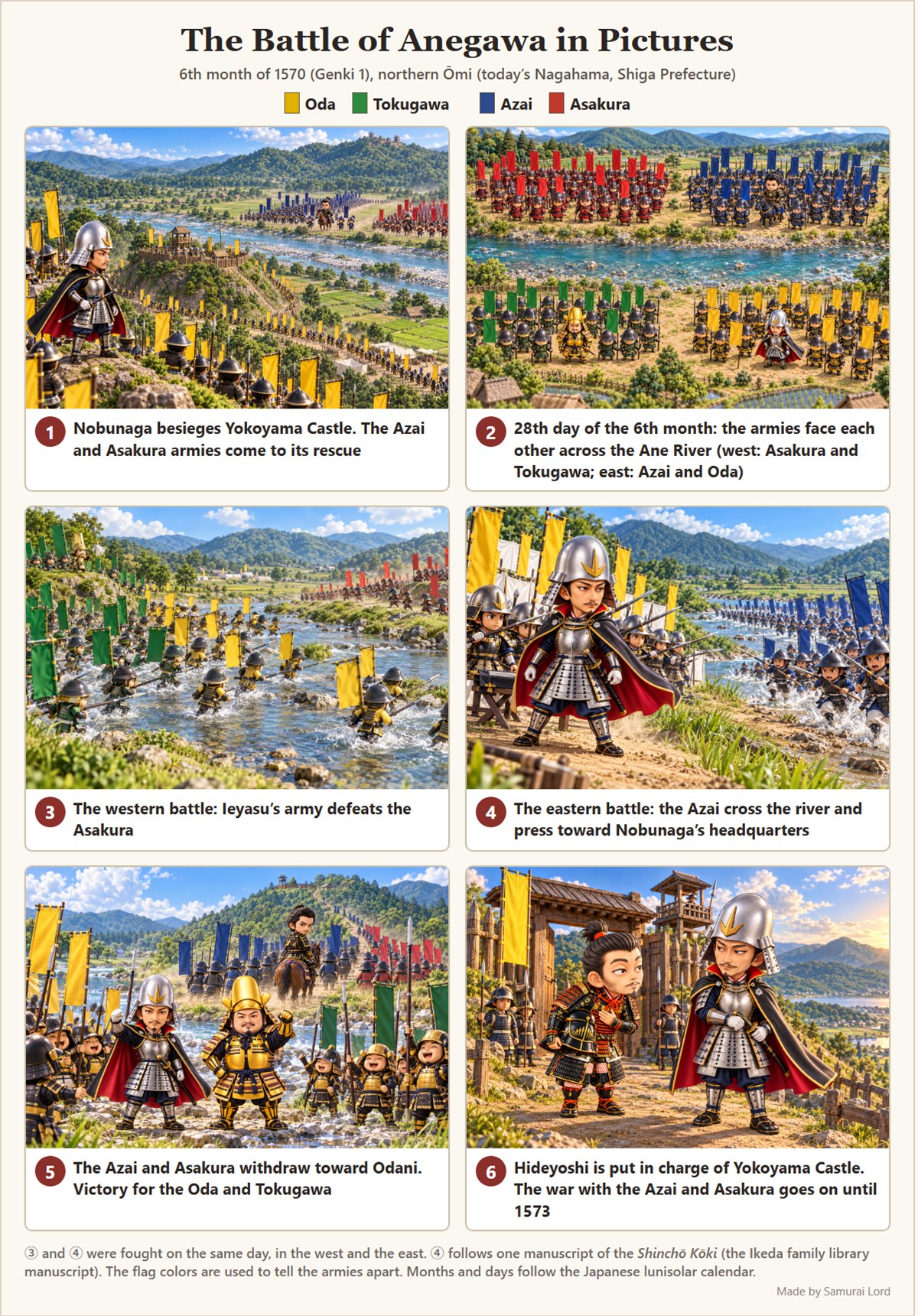
Image: The course of the Battle of Anegawa (made by Samurai Lord). Tap (click) the image to enlarge it
- ① Nobunaga besieges the Azai castle of Yokoyama. The Azai and Asakura armies come to its rescue
- ② On the 28th day of the 6th month, the two sides face each other across the Ane River (west: Asakura and Tokugawa; east: Azai and Oda)
- ③ The western battle: Ieyasu's army defeats the Asakura army
- ④ The eastern battle: the Azai army crosses the river and presses toward Nobunaga's headquarters
- ⑤ The Azai and Asakura withdraw toward Odani: victory for the Oda and Tokugawa
- ⑥ Hideyoshi is put in charge of Yokoyama Castle. The war with the Azai and Asakura goes on until 1573
Each of the six pictures is explained in the sections below. ③ and ④ were fought on the same day, in the west and the east (the numbers do not show which came first).

The pictures make it clear: two pairs of armies fought on either side of the river!
Where Was the Battle of Anegawa Fought? Map and Battle Formation
The battlefield was the Ane River, which flows south of Odani Castle, the Azai base, and the area around it, in today's Nomura-chō and Mita-chō, Nagahama, Shiga Prefecture. The Shinchō Kōki says the Azai and Asakura armies took up positions at Nomura and Mitamura on the north bank of the Ane River [Fact: Shinchō Kōki].
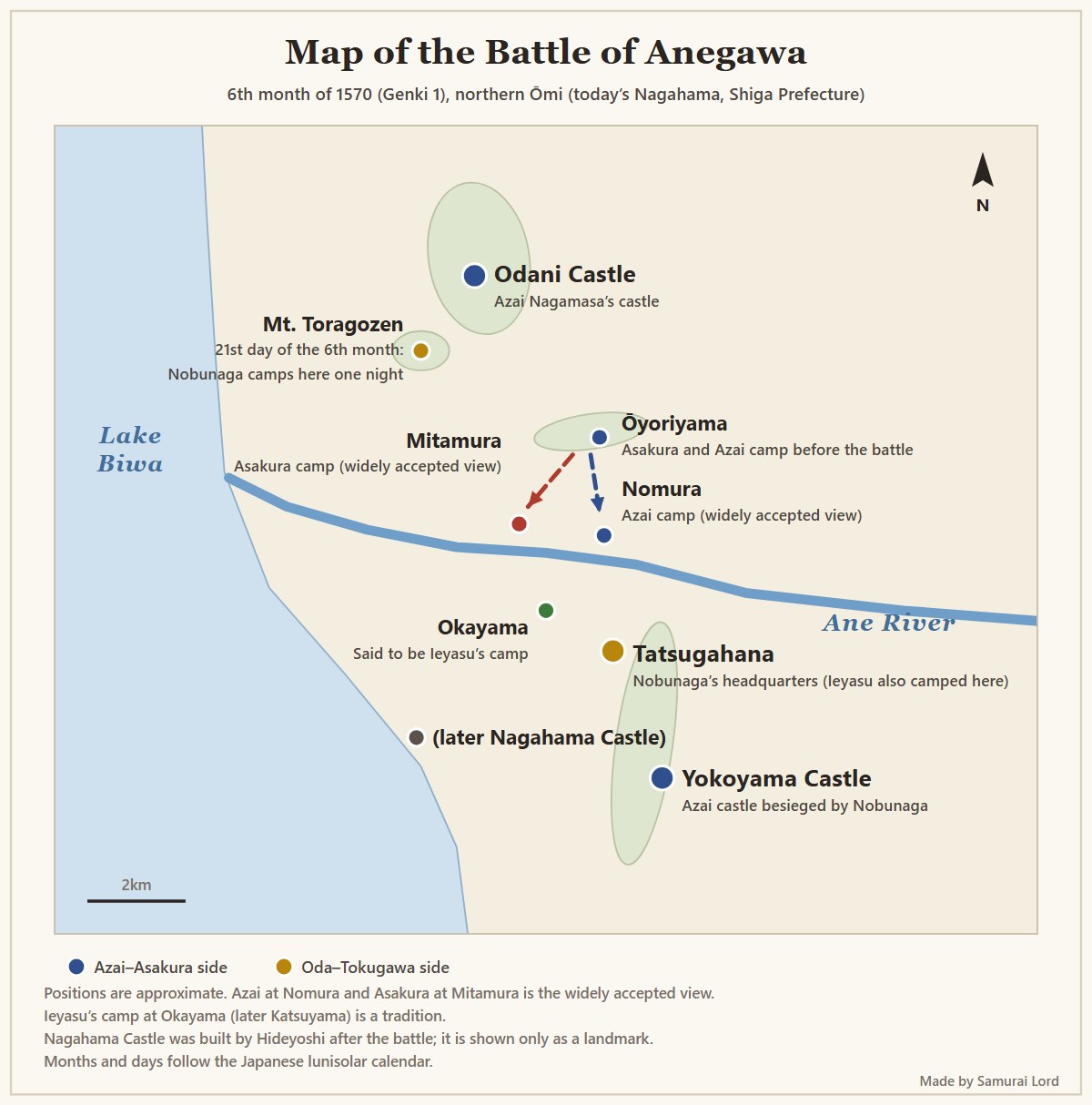
Image: Map of the Battle of Anegawa (made by Samurai Lord; positions are approximate). Tap (click) the image to enlarge it
- Odani Castle: Azai Nagamasa's castle, written 「大谷」 in the Shinchō Kōki
- Ōyoriyama: a long east–west hill southeast of Odani Castle, where the Asakura and Azai armies camped before the battle
[Fact: Shinchō Kōki] - Nomura and Mitamura: villages on the north bank of the Ane River. On the day of the battle, the Azai and Asakura armies came out and took up positions here
[Fact: Shinchō Kōki] - Tatsugahana: a low hill at the northern end of the Yokoyama hills. Nobunaga set up his headquarters here, and Ieyasu also camped here
[Fact: Shinchō Kōki] - Yokoyama Castle: an Azai castle about 9 km southeast of Odani Castle. Nobunaga was besieging it
[Fact: Shinchō Kōki]
The Battle Formation: Who Stood Where?
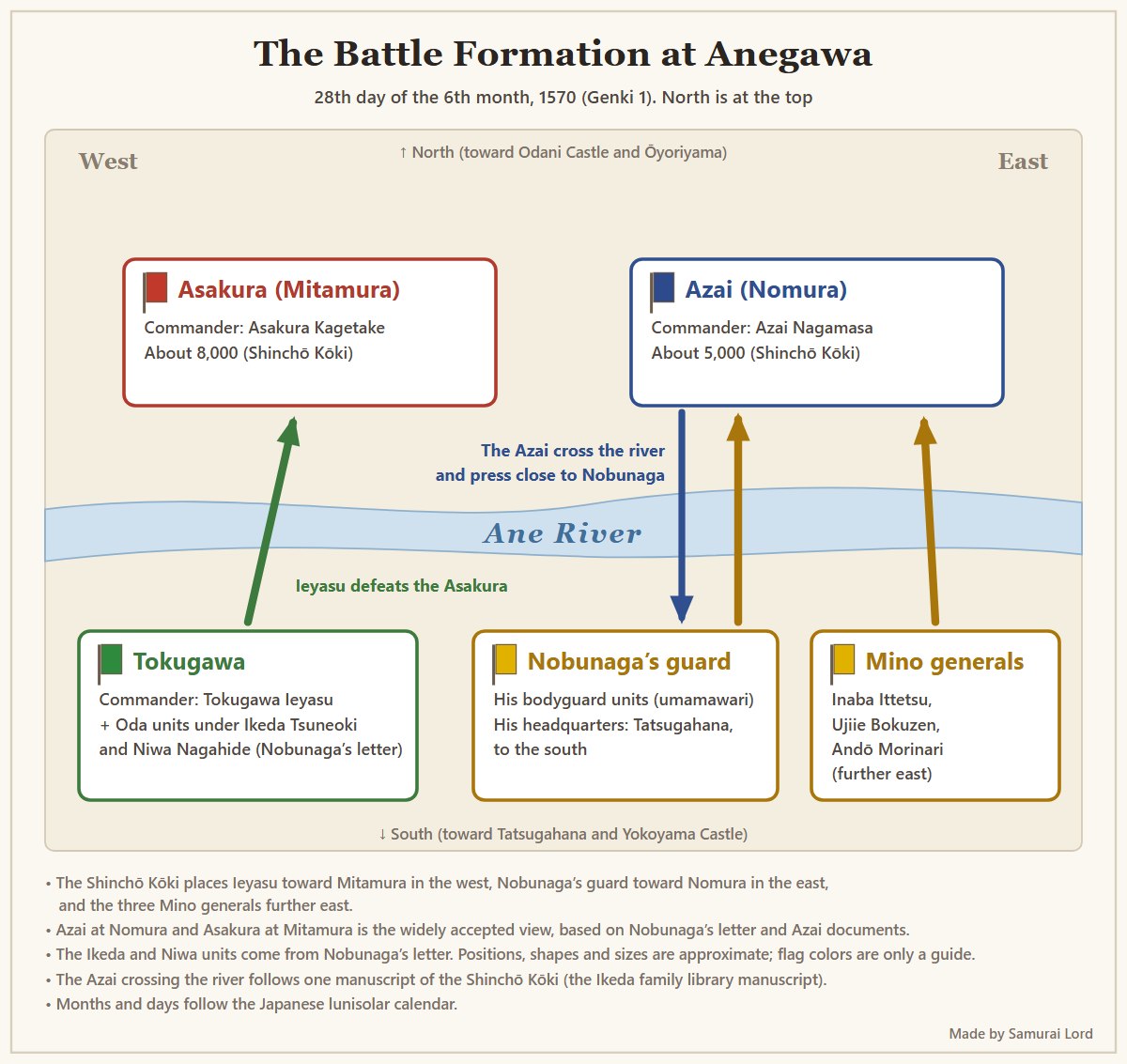
Image: The battle formation at Anegawa (made by Samurai Lord; positions and shapes of the units are approximate, not exact). Tap (click) the image to enlarge it
According to the Shinchō Kōki, the Azai and Asakura armies, with the Ane River in front of them, split into two groups, at Nomura and Mitamura. Against them, Ieyasu advanced toward Mitamura in the west, Nobunaga's umamawari (the warriors who served close to their lord and guarded him on the battlefield) toward Nomura in the east, and further east the units of three generals from Mino (Inaba Ittetsu, Ujiie Bokuzen and Andō Morinari, known as the Mino Sanninshū) attacked all at once [Fact: Shinchō Kōki].
Source Box ①: The Battle Formation in the Shinchō Kōki
Source
Ōta Gyūichi, Shinchō Kōki, book 3, "The Battle of Anegawa" (Wikisource, from the 我自刊我書 edition)
Original (excerpt)
「姉川を前にあて野村の郷三田村両郷へ移り二手に備候 西は三田村口一番合戦家康公むかはせられ 東は野村の郷そなへの手へ信長御馬廻」
Translation
(The Azai and Asakura armies,) with the Ane River in front of them, moved to the two villages of Nomura and Mitamura and formed up in two groups. In the west, toward Mitamura, Lord Ieyasu went to fight the first engagement. In the east, against the force at Nomura, went Nobunaga's umamawari.
Notes
The Shinchō Kōki does not say which village the Azai held and which the Asakura held. Nobunaga's letter on the day of the battle says Ieyasu defeated the Asakura, and an Azai document says they fought at Nomura, so it is thought that the Azai were at Nomura (east) and the Asakura at Mitamura (west) [Widely accepted]
The Battlefield Today
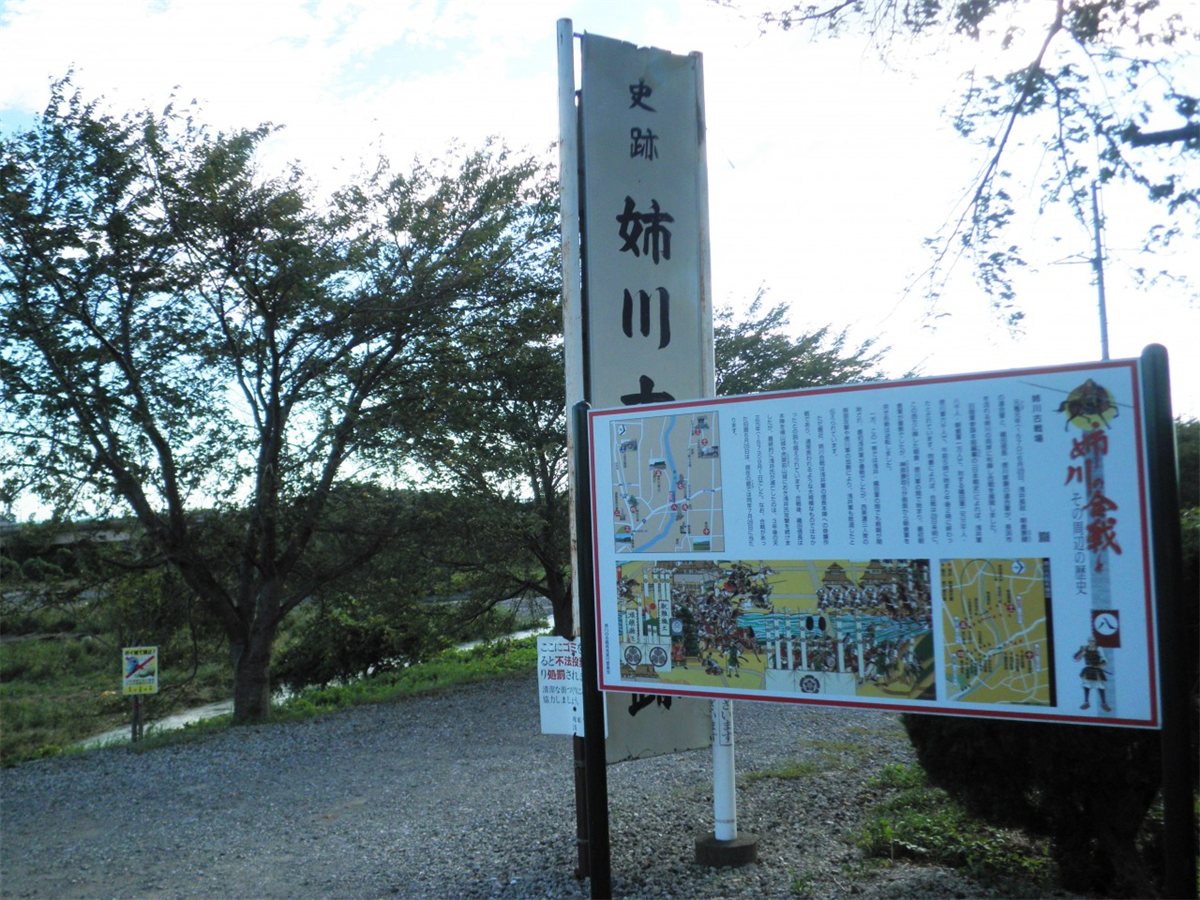
Image: The Anegawa battlefield (Nagahama, Shiga Prefecture). Wikimedia Commons (photo: 立花左近, CC BY-SA 3.0)
At the foot of Nomura Bridge over the Ane River (Nomura-chō, Nagahama) stand a marker post and an explanation board for the battlefield, along with a monument to those who died.
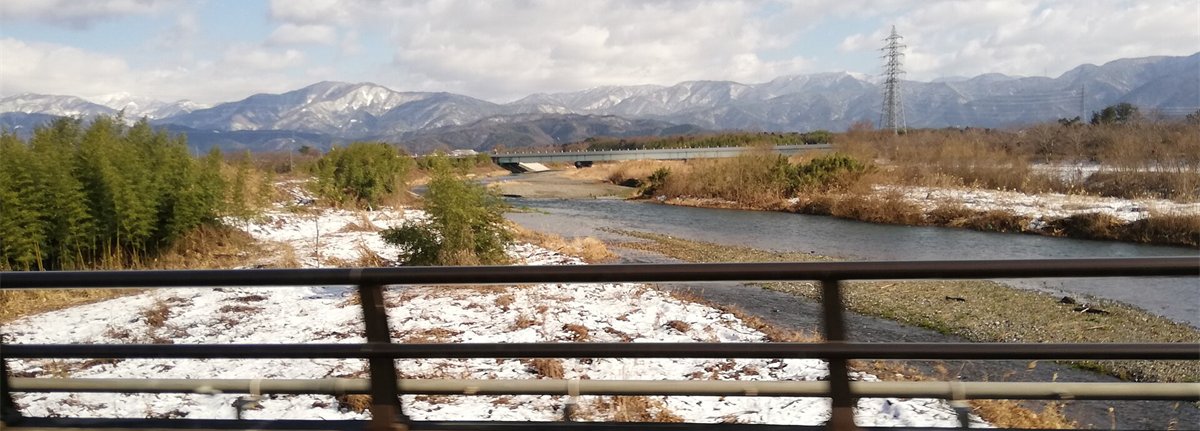
Image: The Ane River today, seen from Kunitomo Bridge (photographed in January 2021). Wikimedia Commons (photo: 先従隗始, CC0)
The Ane River flows out of the Ibuki Mountains into Lake Biwa. It is a quiet river today, but one summer more than 450 years ago, a great battle was fought here.
The Azai and Asakura north of the river, the Oda and Tokugawa south of it. The map shows clearly that the Azai and Asakura came out to save Yokoyama Castle.
Oichi and the Battle of Anegawa: Her Brother Against Her Husband
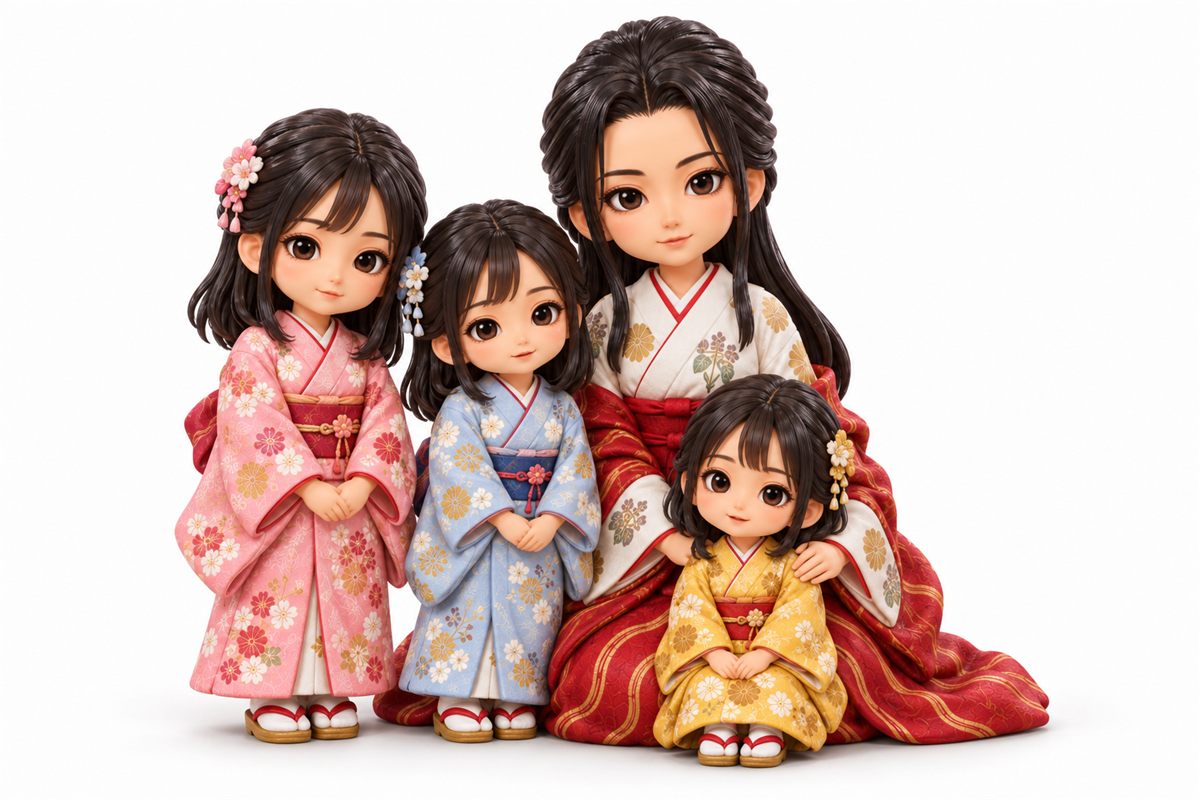
Image: Oichi and her three daughters
Oichi was Oda Nobunaga's younger sister and Azai Nagamasa's wife. For her, the Battle of Anegawa was a battle between her brother and her husband.
However, the sources we checked do not tell us where Oichi was or what she did on the day of the battle [Unknown]. Neither the Anegawa account in the Shinchō Kōki nor Nobunaga's letter dated the day of the battle mentions her.
The famous story that Oichi sent Nobunaga a bag of red beans tied at both ends, warning him that he would be trapped between the Azai and the Asakura, belongs to Kanegasaki (the 4th month), two months before Anegawa, and is a tradition found in Edo-period books [Legend]. For more, see our article on Oichi.
Her brother and her husband fighting each other... That must have been hard for Oichi.
The sources we checked do not tell us what she did that day. Perhaps that is why people's imaginations run so freely.
What Did Tokugawa Ieyasu Do at Anegawa? Was He Late, or Did He Flee?
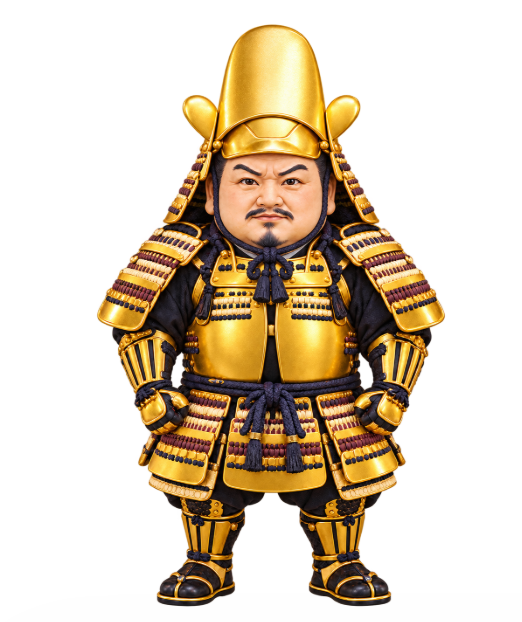
Image: Tokugawa Ieyasu in armor
Ieyasu was the daimyo (regional lord) of Mikawa (today's eastern Aichi Prefecture) and Nobunaga's ally. At Anegawa, he attacked and defeated the Asakura army in the west, toward Mitamura, together with the units of Nobunaga's retainers Ikeda Tsuneoki and Niwa Nagahide [Fact: Nobunaga's letter].
This can be confirmed from a copy of a letter that Nobunaga sent to Hosokawa Fujitaka, a close aide of the shogun Ashikaga Yoshiaki, dated the day of the battle. Its postscript says the following.
Ieyasu Asked to Lead the First Charge
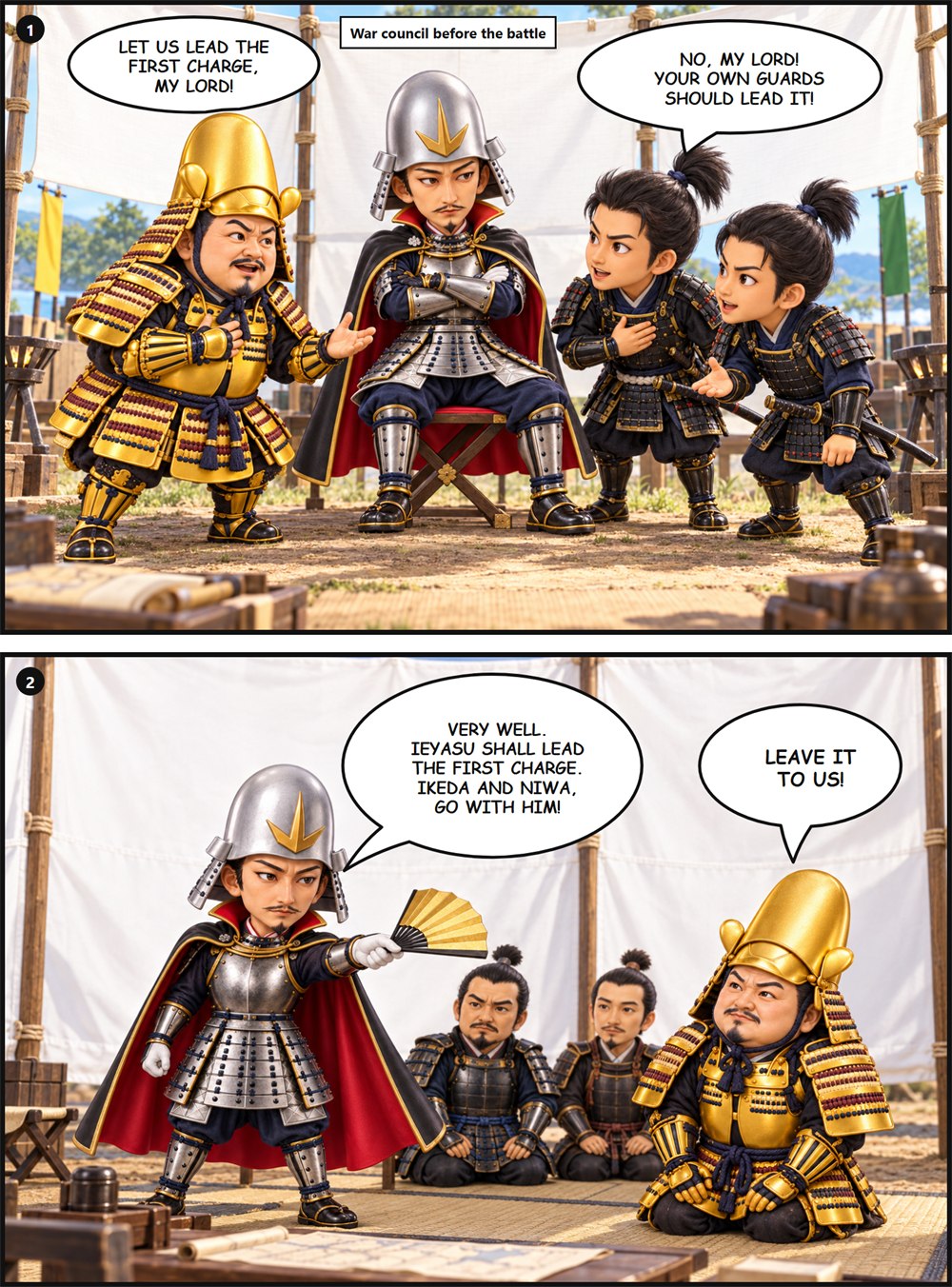
Image: At a war council before the battle, Ieyasu asks to lead the first charge, and Nobunaga gives him the task
According to Nobunaga's letter, before the battle Ieyasu and the warriors of Nobunaga's personal guard argued over who would fight the "first engagement" (lead the first charge against the enemy), and Nobunaga gave the task to Ieyasu. Ieyasu, joined by the Ikeda and Niwa units, then attacked the Echizen army and broke it [Fact: Nobunaga's letter].
Source Box ②: Nobunaga's Letter on the Day of the Battle (Postscript)
Source
A copy of a letter from Oda Nobunaga to Hosokawa Fujitaka, dated the 28th day of the 6th month of Genki 1 (in Dai Nihon Shiryō, series 10, vol. 4; transcribed in 佐藤圭, "A Historical Study of the Facts of the Battle of Anegawa," 『若越郷土研究』, vol. 59, no. 1, 2014; title translated by us)
Original (excerpt)
「今度岡崎家康出陣、我等手廻之者共一番合戦之儀、論之候間、家康被申付候、池田勝三郎、丹羽五郎左衛門相加、越前衆ニ懸候而切崩候」
Translation
This time Ieyasu of Okazaki took the field. [He and] the men of my personal guard disputed who would fight the first engagement, so I assigned the task to Ieyasu. Joined by Ikeda Shōzaburō and Niwa Gorōzaemon, he attacked the Echizen forces and broke their formation.
Notes
The words in square brackets are supplied in translation, following 佐藤圭's reading. Ikeda Shōzaburō is Ikeda Tsuneoki, and Niwa Gorōzaemon is Niwa Nagahide. This is a report Nobunaga sent on the day of the battle to a man close to the shogun. It confirms, from a record of the same day, that Ieyasu was eager to lead the first charge and that he defeated the Asakura army
The Mikawa Monogatari, written in the Edo period by Ieyasu's retainer Ōkubo Tadataka, also says that Ieyasu insisted that he must be allowed to go first [Legend]. This roughly agrees with Nobunaga's letter.
Was Ieyasu Late?
We found no record saying that Ieyasu arrived late for the battle, on purpose or otherwise. In the 2026 NHK historical drama Toyotomi Kyōdai!, episode 15 shows Ieyasu deliberately arriving late, but this is the drama's invention [Drama fiction].
In its entry for the 24th day of the 6th month, when Nobunaga surrounded Yokoyama Castle, the Shinchō Kōki says that "Ieyasu also took the field and camped at the same Tatsugahana," but the day Ieyasu arrived is unclear. Edo-period books variously say he arrived on the 24th or on the 27th, the day before the battle [Debated].
Did Ieyasu Run Away?
In the sources we checked, we could not confirm that Ieyasu fled at Anegawa. On the contrary, Nobunaga's letter says Ieyasu defeated the Asakura army.
Some records describe a moment when it was Nobunaga's side that was pushed back. One manuscript of the Shinchō Kōki says the Azai army crossed the Ane River and came right up to Nobunaga (see how the battle unfolded).
Why Did Ieyasu Come to Anegawa?
The researcher 佐藤圭 argues that behind Ieyasu's part in this battle lay not only Nobunaga's wishes but also his ties with the shogun Ashikaga Yoshiaki [Debated]. In the 9th month of that year, Yoshiaki sent Ieyasu a letter asking him to come at once, as promised [Fact].
In the Edo period, books by Tokugawa retainers made much of Ieyasu's great deeds. Some researchers even think there may have been no full-scale fighting between the Asakura and Tokugawa armies (the view of Ōta Hiroshi, as introduced in 佐藤圭's paper) [Debated].
We don't know if he was late, but Nobunaga's letter does say Ieyasu argued to go first!
Indeed. What is remarkable is that a letter dated the day of the battle records even that exchange.
Who Won the Battle of Anegawa? The Result and What Came Next
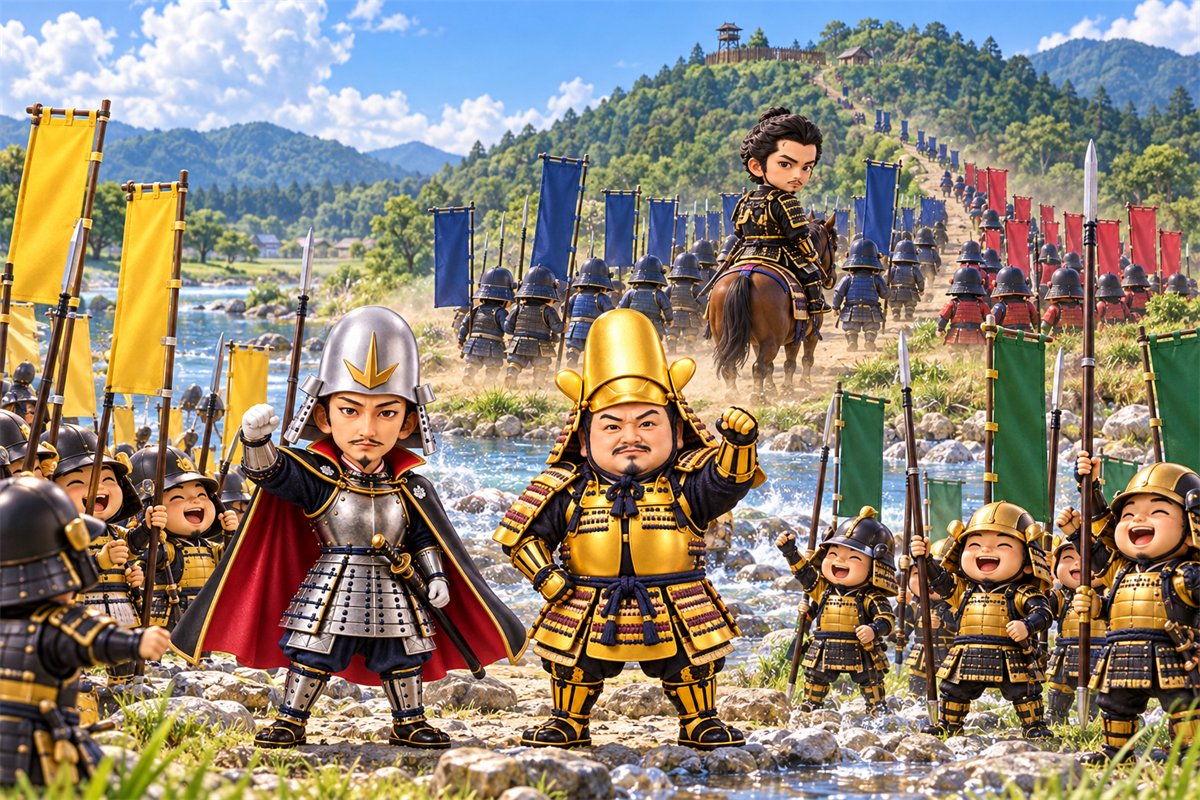
Image: The Azai and Asakura armies withdraw toward Odani as the Oda and Tokugawa armies raise a victory cry
The Battle of Anegawa was a victory for the Oda and Tokugawa [Fact: Shinchō Kōki]. The Azai and Asakura armies withdrew, and Nobunaga's army pursued them about 5.5 km (50 chō) to the foot of Odani Castle. But because Odani was a high, steep mountain castle, Nobunaga did not try to storm it at once and returned to Yokoyama [Fact: Shinchō Kōki].
| Item | Details | Reliability |
| Who won? | The Oda and Tokugawa | [Fact] |
| The Azai and Asakura? | Withdrew toward Odani | [Fact] |
| Yokoyama Castle? | Surrendered; Kinoshita Tōkichirō (later Toyotomi Hideyoshi) was put in charge of guarding it | [Fact: Shinchō Kōki] |
| How big a victory? | Views differ on whether it dealt the Azai and Asakura a heavy blow | [Debated] |
Hideyoshi Takes Charge of Yokoyama Castle
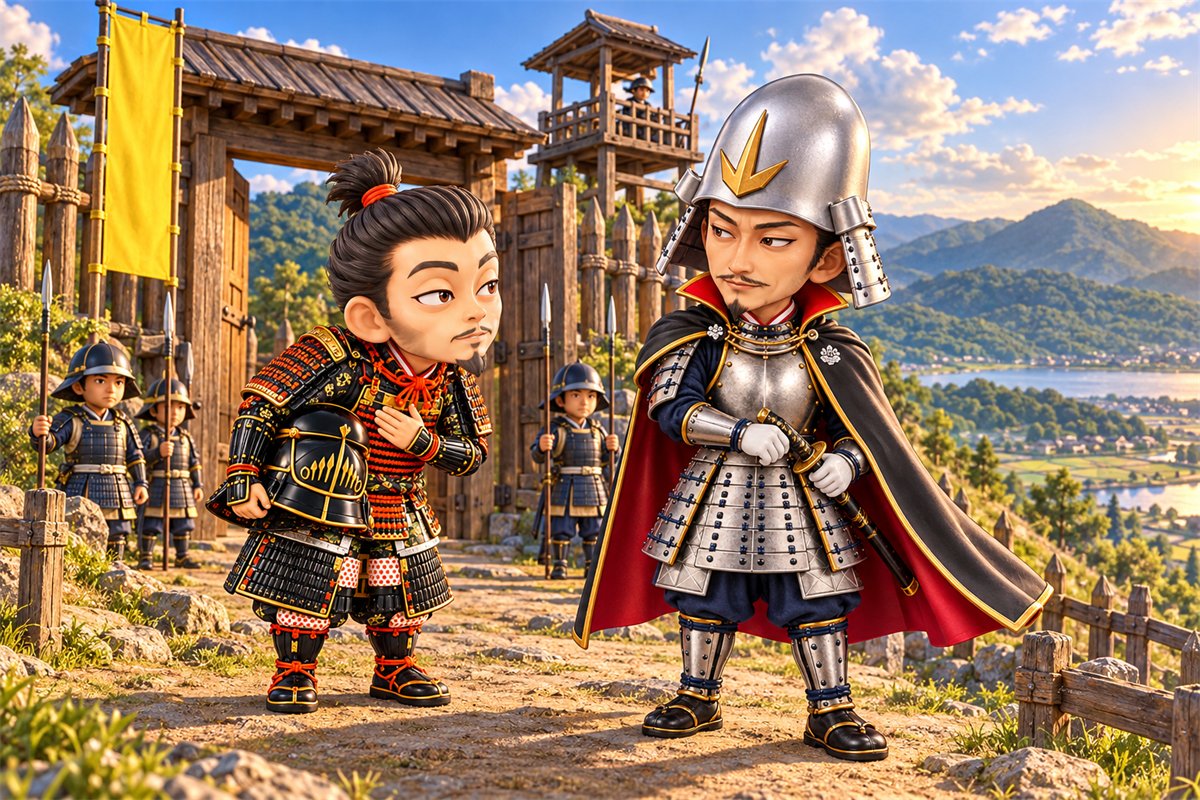
Image: Kinoshita Tōkichirō (Hideyoshi) is put in charge of guarding Yokoyama Castle
After the battle, the Azai castle of Yokoyama surrendered. Nobunaga placed Kinoshita Tōkichirō (later Toyotomi Hideyoshi) there in charge of its defense [Fact: Shinchō Kōki]. Yokoyama was an important castle for watching Odani, and from here Hideyoshi stood on the front line of the war against the Azai. For more, see our article on Toyotomi Hideyoshi.
A "Great Victory"? Historians Disagree
The battle has often been described as "a great victory for the Oda and Tokugawa that led to the downfall of the Azai and Asakura." Among researchers, however, views differ [Debated].
- Not a decisive blow: the Azai and Asakura went on to counterattack with large armies, so they had not suffered a fatal blow (the view of Ōta Hiroshi, as introduced in 佐藤圭's paper)
- Close to an even fight: judging from the records, the losses on the Azai side and the Oda side were roughly equal, so it can hardly be called a crushing defeat (佐藤圭)
Either way, the Oda and Tokugawa won on the battlefield, and they certainly gained Yokoyama Castle.
Afterward: The Azai and Asakura Fall Three Years Later
| Date | Event |
| 1570 (Genki 1), 9th–12th months | The Azai and Asakura armies advance to Sakamoto (Ōtsu, Shiga Prefecture) on the western shore of Lake Biwa; the Shinchō Kōki gives their strength as about 30,000. They hold out on Mt. Hiei and make peace with Nobunaga in the 12th month (the Shiga campaign) [Fact: Shinchō Kōki] |
| 1571 (Genki 2), 2nd month | Isono Kazumasa, holding the Azai castle of Sawayama (Hikone, Shiga Prefecture), surrenders and hands over the castle [Fact: Shinchō Kōki] |
| 1573 (Tenshō 1), 8th–9th months | The Asakura family is destroyed, then Odani Castle falls and Azai Nagamasa dies [Fact: Shinchō Kōki]. Sources differ on whether he died on the 28th day of the 8th month or the 1st day of the 9th month [Debated] |
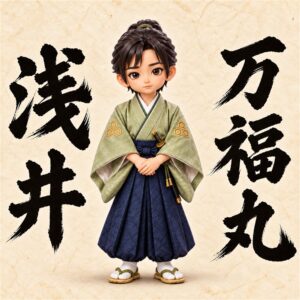
For Nagamasa's end, see our article on Azai Nagamasa; for his son, our article on Manpukumaru.
They won, but it didn't end right away!
Indeed. The Azai and Asakura still had plenty of strength left.
Why Did the Battle of Anegawa Happen? From Kanegasaki to the Siege of Yokoyama Castle
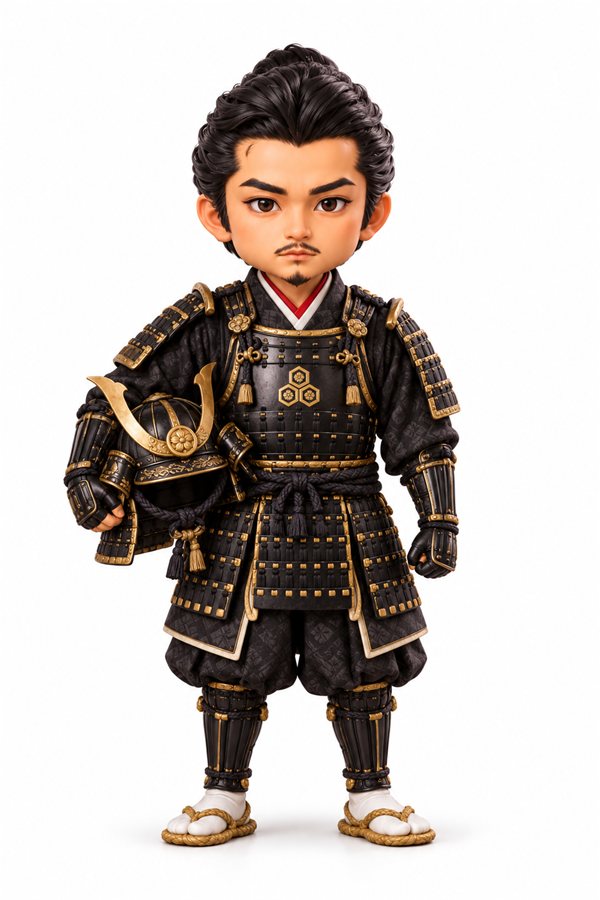
Image: Azai Nagamasa in armor
The road to the Battle of Anegawa can be divided into four stages.
- ① 4th month: Nagamasa breaks with Nobunaga. When Nobunaga attacked Asakura Yoshikage of Echizen and had advanced as far as Kanegasaki Castle in Tsuruga (Fukui Prefecture), news came that Azai Nagamasa had turned against him. To avoid being trapped between the Asakura in front and the Azai behind, Nobunaga withdrew to Kyoto (the retreat from Kanegasaki)
[Fact: Shinchō Kōki] - ② 6th month: Nobunaga invades northern Ōmi. On the 25th day of the 5th month, Nobunaga ordered his retainers to gather at Gifu before the 28th day of the 6th month, and on the 6th day of the 6th month he told an ally that he would attack northern Ōmi on the 28th
[Fact: Nobunaga's letters]. He left Gifu on the 19th and burned the town below Odani Castle on the 21st, but pulled back on the 22nd[Fact: Shinchō Kōki] - ③ The siege of Yokoyama Castle. On the 24th day of the 6th month, Nobunaga surrounded the Azai castle of Yokoyama on all sides and set up his headquarters at Tatsugahana. Ieyasu also camped there
[Fact: Shinchō Kōki] - ④ The Azai and Asakura come out to save the castle. About 8,000 men under Asakura Kagetake arrived at Ōyoriyama and were joined by about 5,000 under Azai Nagamasa. They broke camp at dawn on the 27th, and it seemed they might be withdrawing, but before dawn on the 28th they advanced to the north bank of the Ane River
[Fact: Shinchō Kōki]. Fighting followed later that day; the sources differ on when it began (see how the battle unfolded)
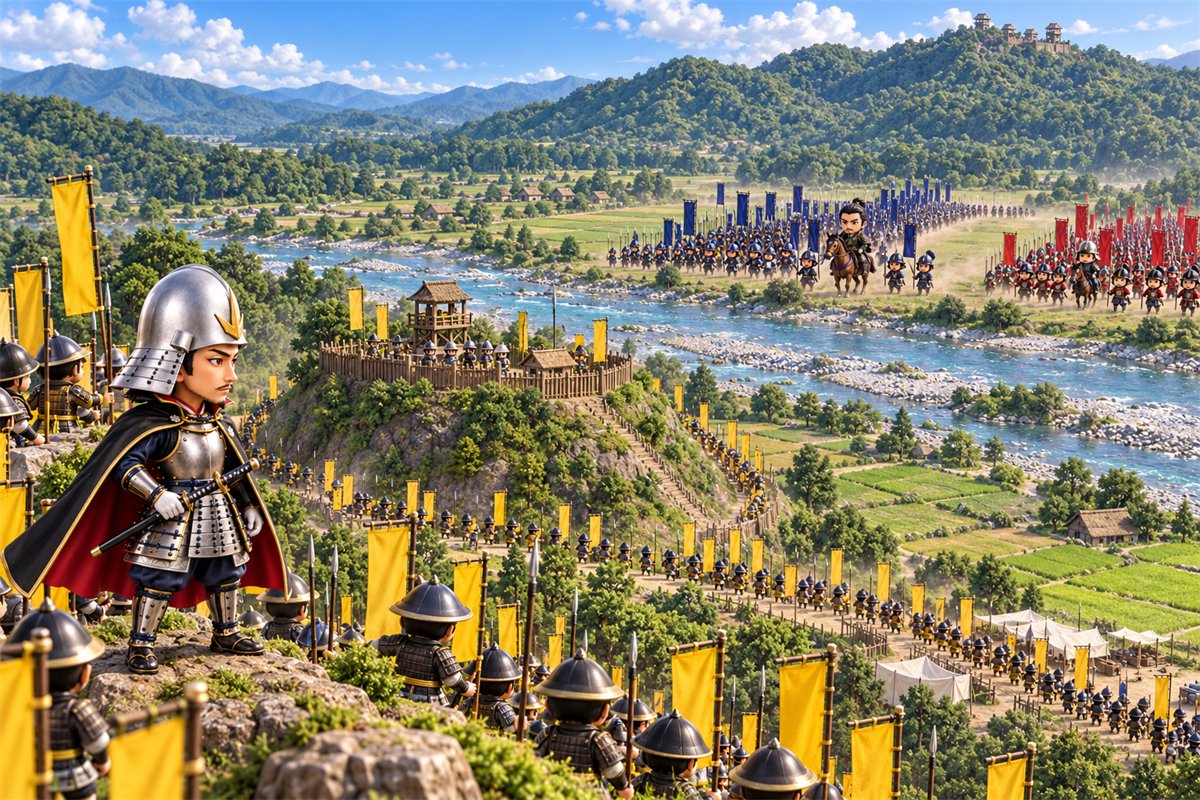
Image: The Oda army surrounds Yokoyama Castle, while the Azai and Asakura armies come to save it
In short, the Battle of Anegawa happened because the Azai and Asakura armies came out to save Yokoyama Castle, which Nobunaga had surrounded.
The News at Kanegasaki
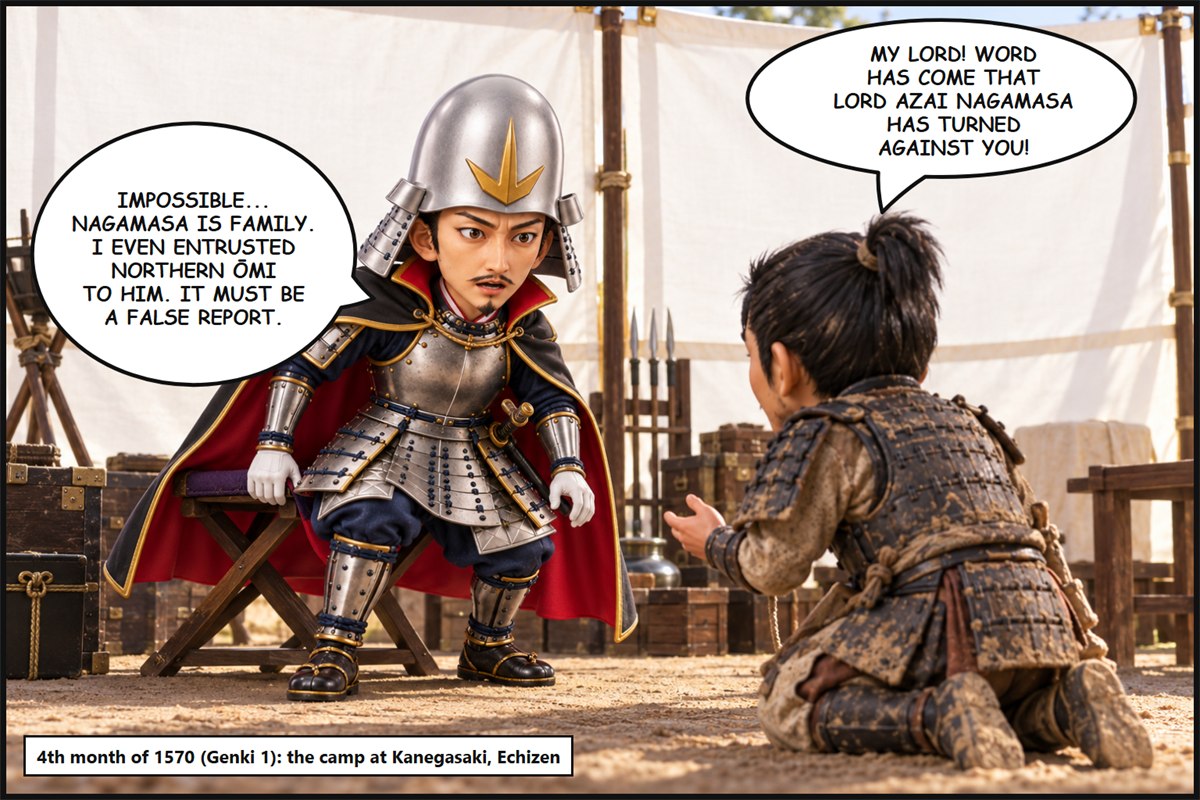
Image: In the 4th month of 1570, at his camp at Kanegasaki, Nobunaga is shocked to hear that Azai Nagamasa has turned against him
According to the Shinchō Kōki, when Nobunaga heard that Nagamasa had turned against him, he at first thought, "The Azai are without doubt my kin, and I have even entrusted northern Ōmi to them. They can have no reason for complaint. This must be a false report." But reports that it was true kept arriving from all sides [Fact: Shinchō Kōki].
The contemporary sources we checked do not clearly explain why Nagamasa broke with Nobunaga [Debated]. For more, see our article on Azai Nagamasa.
The Shogun Was to Take the Field Too
According to Nobunaga's letters and other documents, the shogun Ashikaga Yoshiaki also planned to join this attack on the Azai, advancing from Takashima District (Takashima, Shiga Prefecture) on the western side of Lake Biwa. His departure was postponed again and again and in the end called off [Fact]. For this reason, 佐藤圭 sees the Battle of Anegawa as part of an attack on the Azai planned jointly by Nobunaga and Yoshiaki [Debated].
So Nobunaga had fixed the day in advance: "We attack on the 28th."
And the Azai and Asakura came out to the Ane River on the 28th, too!
How the Battle Unfolded: Two Battlefields, West and East
On the day of the battle, the fighting took place on two fronts: in the west (Mitamura) and in the east (Nomura).
When Did the Fighting Begin?
Records differ on when the fighting began [Debated].
- Shinchō Kōki: on the 28th day of the 6th month, at the hour of the Hare (around dawn), the attack began toward the northeast
- Nobunaga's letter on the day of the battle: today at the hour of the Snake (around 10 a.m.), the Azai and Asakura armies came out as far as Nomura, so at the same hour we attacked
佐藤圭 gives more weight to Nobunaga's letter, written on the day of the battle, and thinks the fighting began around 10 a.m.
The Western Field: Ieyasu Against the Asakura
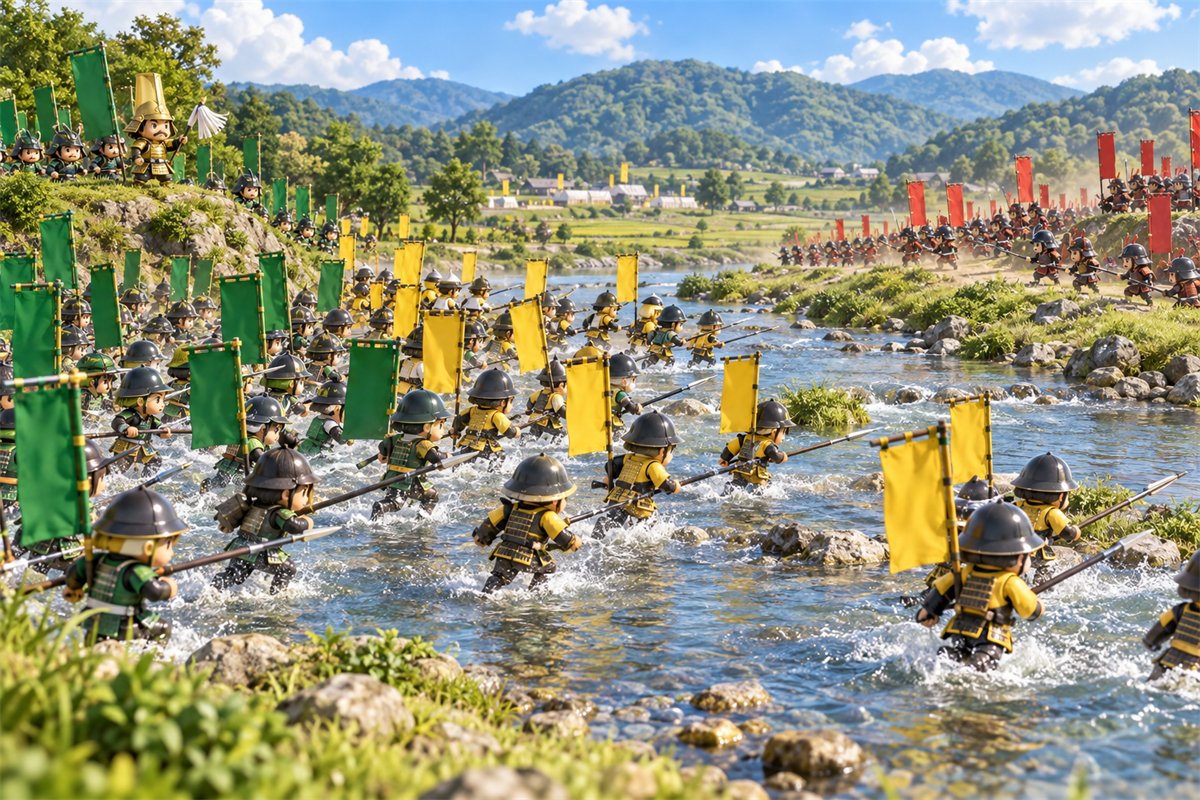
Image: On the western field, the Tokugawa army advances on the Asakura army
In the west, toward Mitamura, Ieyasu's army, together with the Ikeda Tsuneoki and Niwa Nagahide units, attacked the Asakura army, broke its lines and drove it back [Fact: Nobunaga's letter]. For more, see the section on Ieyasu.
The Eastern Field: The Azai Press Toward Nobunaga
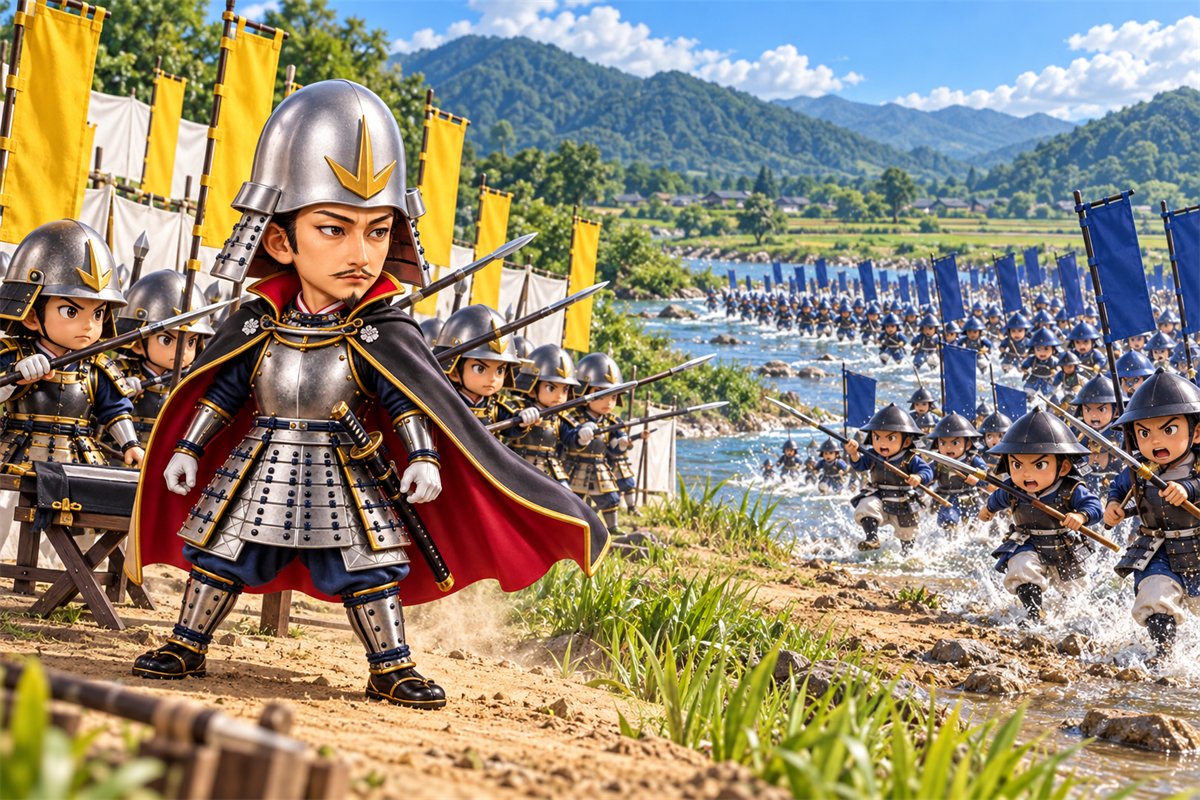
Image: On the eastern field, the Azai army presses toward Nobunaga's headquarters
In the east, toward Nomura, Nobunaga's umamawari (his personal guard) clashed with the Azai army. One manuscript of the Shinchō Kōki says that the Azai army crossed the Ane River and came right up to Nobunaga [Fact: Shinchō Kōki]. Azai documents also say they fought on the riverbank at Nomura and around Tatsugahana, where Nobunaga had his headquarters [Fact].
佐藤圭 reads this passage as showing that there was a dangerous moment for Nobunaga. He suggests that the Azai army pushed Nobunaga's forces back from Nomura to the Nomura riverbank and on to Tatsugahana, closing in on Nobunaga's headquarters [Debated].
Source Box ③: The Azai Close In on Nobunaga
Source
Ōta Gyūichi, Shinchō Kōki (Ikeda family library manuscript), book 3, as transcribed in 佐藤圭's paper
Original (excerpt)
「御敵あね川を越、信長之御手前へさし懸、推つ返しつ散〳〵に入乱れ」
Translation
The enemy crossed the Ane River and pressed close to Nobunaga. The two sides pushed back and forth, their forces intermingling in the fighting.
Notes
In some manuscripts of the Shinchō Kōki, the words about crossing the Ane River and coming right up to Nobunaga are missing, and the text says only that the enemy also attacked at the Ane River
The Oda and Tokugawa Push Back
In the end, the Oda and Tokugawa armies pushed the Azai and Asakura back, and the Azai and Asakura withdrew toward Odani [Fact: Shinchō Kōki]. Nobunaga's letter on the day of the battle says that his personal guard and other units met the Azai army and broke it [Fact: Nobunaga's letter].
Edo-period books, on the other hand, came to tell of the deeds of many warriors. That is the subject of the next section.
So Nobunaga may have been in real danger!
Read the records closely, and you see it was no easy victory.
Honda Tadakatsu, Magara Naotaka and Isono Kazumasa: Fact or Legend?
Many famous stories are told about warriors at the Battle of Anegawa. Most of them, however, spread through books and storytelling from the Edo period onward. Let us separate them from what records of the time can confirm.
| Person | Side | What we know about this battle | Famous story |
| Honda Tadakatsu | Ieyasu's retainer (23) | In the records of the time we consulted, his role in this battle cannot be confirmed | Charged alone into the great Asakura army [Legend]; fought Magara in a duel [Folk belief] |
| Magara Naotaka | Asakura retainer | Was killed in this battle [Fact] | Wielded a huge sword [Legend] |
| Isono Kazumasa | Azai retainer | Handed over Sawayama Castle the next year [Fact] | Led the Azai vanguard and broke through Nobunaga's lines one after another ("breaking eleven of thirteen lines") [Legend] |
| Endō Naotsune | Azai retainer | Was killed in this battle [Fact] | Tried to get close to Nobunaga [Legend] |
Honda Tadakatsu: A Lone Charge and a Duel
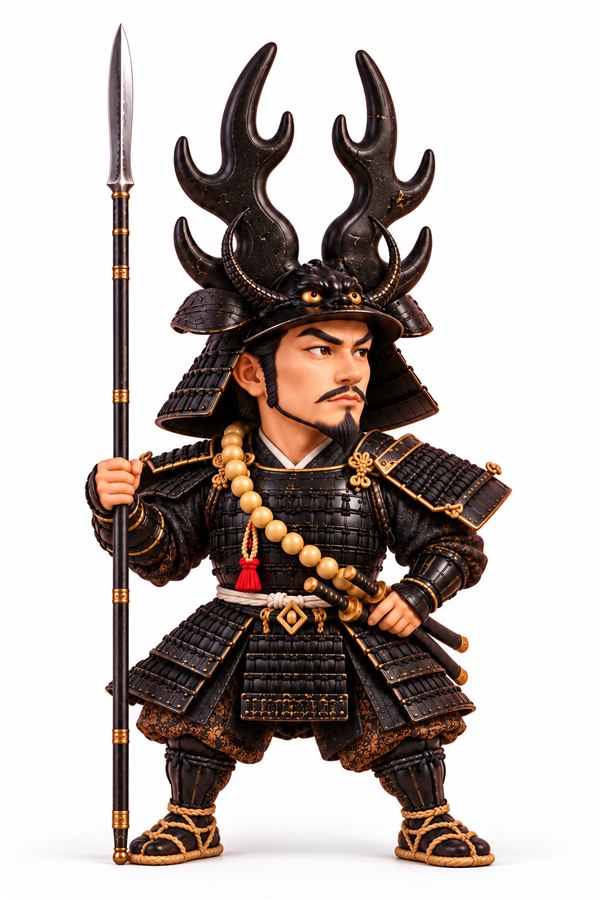
Image: Honda Tadakatsu in a helmet with deer antlers and black armor. His spear is the famous Tonbogiri
Honda Tadakatsu was a warrior who served Ieyasu; he was 23 by the traditional count at this time.
The Edo-period Asai Sandaiki tells how, when Ieyasu saw his men being pushed back and ordered a charge, Honda Heihachirō (Tadakatsu) rode out with his spear and charged alone into the great Asakura army, and the other retainers followed to support him [Legend].
The story that Honda Tadakatsu fought a duel with Magara Naotaka of the Asakura side is also famous, but we could not confirm it in the contemporary sources we checked; it spread through later storytelling and colorful woodblock prints [Folk belief]. Even in the Asai Sandaiki, the men who fought Magara are Tokugawa retainers such as Sagisaka Shikibu. For Tadakatsu's life, his helmet and his spear Tonbogiri, see our article on Honda Tadakatsu.
Magara Naotaka: The Warrior with the Giant Sword
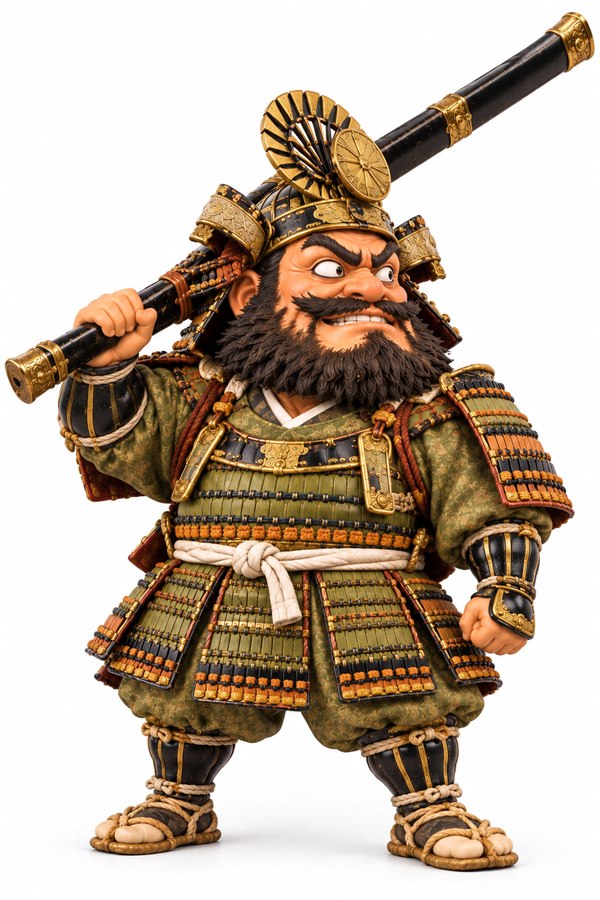
Image: Magara Naotaka carrying a huge sword on his shoulder
Magara Naotaka was a warrior from Magara in Echizen (today's Echizen, Fukui Prefecture) who fought in the Asakura army. He is known by the name Magara Jūrōzaemon.
That Magara was killed at Anegawa is certain, because his name heads the list of enemies killed in the Shinchō Kōki [Fact: Shinchō Kōki]. The man who killed him is given in the Shinchō Kōki (我自刊我書 edition) as 青木所左衛門, thought to be the later Aoki Kazushige. In the Asai Sandaiki, however, the men who fought the father, Jūrōzaemon, are the Tokugawa retainers the Sagisaka brothers, and the one Aoki killed was his son Jūrō [Legend].
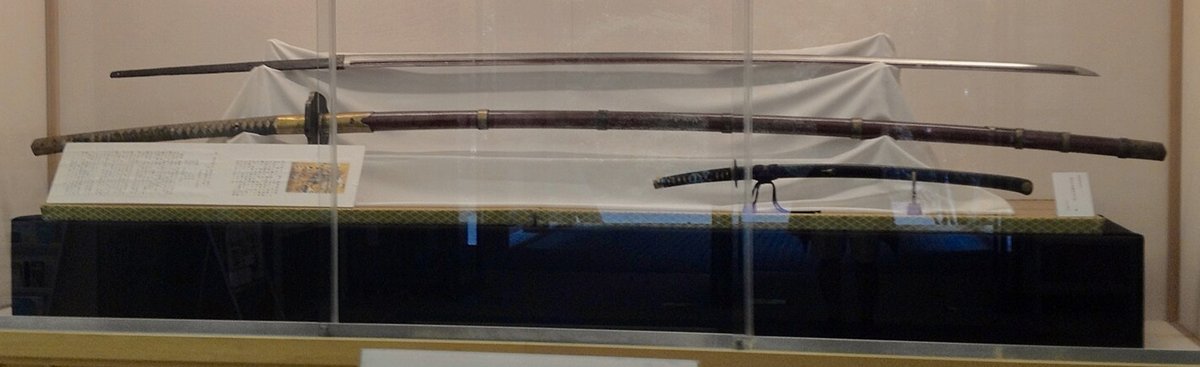
Image: The "Magara sword" on display in the treasure hall of Atsuta Jingū (photographed in 2012). Wikimedia Commons (photo: KKPCW, CC BY-SA 4.0)
Magara is remembered as a giant of a man who fought with a huge sword [Legend]. Atsuta Jingū shrine in Nagoya holds two great swords (the "Magara swords") said to have belonged to Magara Jūrōzaemon Naotaka and his son 直基, displayed in its sword museum, the Kusanagi-kan. The larger is described as about 303 cm long from tip to tang (blade length about 221.5 cm), excluding its mounting. The swords themselves survive, but their ownership by the Magara father and son is a tradition [Legend].
Isono Kazumasa and the "Eleven Lines" Story
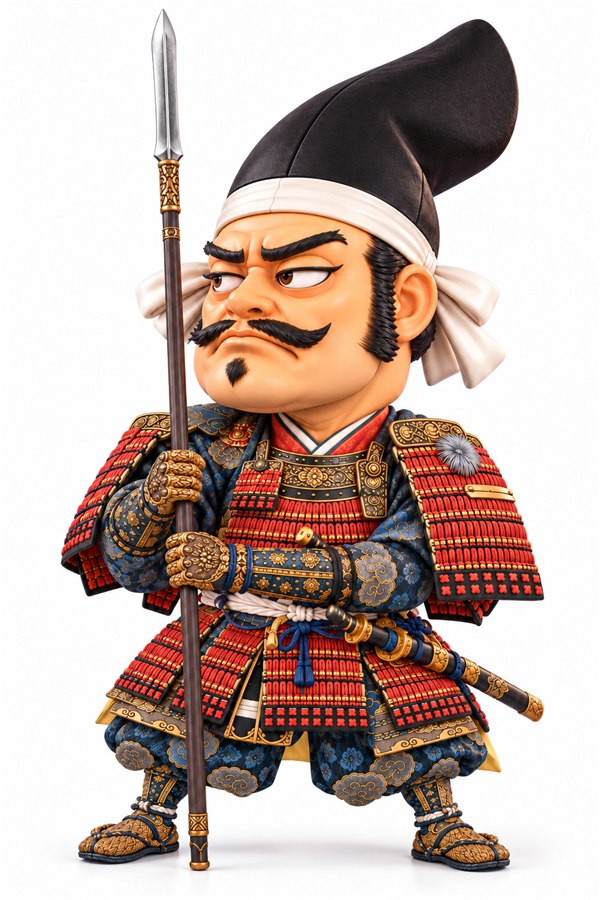
Image: Isono Kazumasa in red armor, holding a spear
Isono Kazumasa was a retainer of the Azai family who held Sawayama Castle (Hikone, Shiga Prefecture).
The Asai Sandaiki tells how Isono Kazumasa, leading the Azai vanguard, drove off one Oda unit after another, and the Azai army following him broke through eleven of the thirteen lines in which Nobunaga had drawn up his army. This is the story known as "breaking eleven lines" (jūichi-dan kuzushi) [Legend]. In the text of the Asai Sandaiki, it is the Azai army as a whole that breaks the eleven lines, with Isono leading the vanguard.
The statement that the Azai army pushed close to Nobunaga is found in one manuscript of the Shinchō Kōki (see how the battle unfolded). That does not, however, confirm that Isono Kazumasa led the way and broke eleven lines. Isono Kazumasa handed over Sawayama Castle to Nobunaga in the 2nd month of the following year, 1571 (Genki 2) [Fact: Shinchō Kōki].
What About Endō Naotsune and Sakakibara Yasumasa?
Endō Naotsune, a retainer of the Azai, was killed in this battle [Fact: Shinchō Kōki]. One manuscript of the Shinchō Kōki says he was killed by Takenaka Kyūsaku, the younger brother of Takenaka Hanbei. The Asai Sandaiki tells how Endō tried to get close to Nobunaga by pretending to be on his side, but was found out [Legend]. For Hanbei, see our article on Takenaka Hanbei.
The story that Ieyasu's retainer Sakakibara Yasumasa attacked the Asakura army from the flank and opened the way to victory is often seen, but in the sources we checked we could not confirm its basis [Unknown].
The Battle in Paint: The Anegawa Battle Screen
The Fukui Prefectural Museum of History holds a folding screen depicting the Battle of Anegawa (Anegawa Kassen-zu Byōbu). It is known for its picture of Magara Jūrōzaemon on horseback, raising his great sword. It was painted in the Edo period, so it is not a direct record of how the battle looked.
A huge sword said to be Magara's still survives today! I'd love to see it.
Enjoy the legends and the records separately, and history becomes even more interesting.
How Many Soldiers Fought at Anegawa, and How Many Died?
The exact numbers of soldiers and of the dead at Anegawa are not known [Unknown]. The figures differ greatly from record to record [Debated].
Numbers of Soldiers
| Record | Azai and Asakura | Oda and Tokugawa |
| Shinchō Kōki | Asakura about 8,000; Azai about 5,000 | Not given |
| Nobunaga's letter on the day of the battle | Asakura about 15,000; Azai 5,000–6,000 | Not given |
| Edo-period books | Vary from book to book | Ieyasu's army: just over 3,000 (Mikawa Monogatari); 5,000 (the biography of Suganuma Sadamasa [菅沼定政] in the Kan'ei Shoka Keizuden, among others) |
佐藤圭 thinks that Nobunaga's letter may have overstated the enemy's numbers to make the victory look larger [Debated]. The reliable sources we checked do not give the size of Nobunaga's own army [Unknown].
Numbers Killed
| Record | Number given | What kind of record? |
| Shinchō Kōki | Over 1,100 leading men of the Azai and Asakura killed | Thought to be copied from a list of enemies killed. Not the total dead on both sides |
| Letter of Asayama Nichijō (a monk who acted as go-between for Nobunaga and the shogun) | About 8,000 of the Azai and Asakura killed | A letter to a distant daimyo, written 18 days after the battle |
| Letter of the missionary Luís Fróis | 6,000 | Something he heard far from the battlefield |
佐藤圭 considers the Shinchō Kōki's figure fairly reliable and, combining it with accounts such as the Asakura Shimatsuki, estimates that about 120 died on the Asakura side and about 1,000 each on the Azai and Oda sides. These are not settled numbers [Debated].
The numbers really are different in every record!
Indeed. When reading numbers, it matters to ask who wrote them, and why.
FAQ
What other names does the Battle of Anegawa have?
In Japanese it is also called Anegawa no Kassen or Anegawa Kassen. The Shinchō Kōki heads its account "The Battle of Anegawa." Azai documents call it the battle on the riverbank at Nomura (Nomura Kawara Kassen), and it is also sometimes called the Battle of Mitamura. 佐藤圭's paper introduces the view that "Anegawa Kassen" was originally the name used on Tokugawa Ieyasu's side.
Who guarded the rear at Anegawa?
Six days before the battle, on the 22nd day of the 6th month, when Nobunaga pulled back from Odani, he placed a unit of 500 guns and about 30 bows at the rear (the shingari, the rearguard) under the command of three men: 簗田左衛門太郎, 中条将監 and Sassa Narimasa (Shinchō Kōki). Two months earlier, in the retreat from Kanegasaki, Kinoshita Tōkichirō (Hideyoshi) was left behind at Kanegasaki Castle.
Summary: What Was the Battle of Anegawa?
The Battle of Anegawa was the battle fought on the 28th day of the 6th month of 1570 by the Ane River in Ōmi (today's Nagahama, Shiga Prefecture), in which the armies of Oda Nobunaga and Tokugawa Ieyasu defeated the armies of Azai Nagamasa and Asakura Kagetake.
Azai Nagamasa, who had broken with Nobunaga, came out with the Asakura army to save Yokoyama Castle, and the two sides fought across the Ane River. In the west, Ieyasu defeated the Asakura army; in the east, according to one manuscript of the Shinchō Kōki, the Azai army pressed close to Nobunaga; in the end the Oda and Tokugawa won. But the Azai and Asakura fought on for more than three years and fell in 1573.
For the people involved, see also our articles on Azai Nagamasa, Oda Nobunaga, Tokugawa Ieyasu and Oichi.
Ieyasu's argument to go first, Nobunaga's moment of danger, and the legendary warriors. Look at the records and the legends separately, and the true shape of the Battle of Anegawa comes into view.
Now I want to visit the Anegawa battlefield!
Sources & How This Article Was Written
This article is based mainly on the following records and references:
- Record close to the time: Ōta Gyūichi, Shinchō Kōki, book 3 (Wikisource, from the 我自刊我書 edition; the Ikeda family library manuscript as transcribed in 佐藤圭's paper; available in English as The Chronicle of Lord Nobunaga, translated by J. S. A. Elisonas and J. P. Lamers, Brill, 2011)
- Documents: a copy of Oda Nobunaga's letter to Hosokawa Fujitaka dated the 28th day of the 6th month of Genki 1, Azai documents, letters of Ashikaga Yoshiaki and others (in Dai Nihon Shiryō, series 10, vol. 4, as transcribed in 佐藤圭's paper)
- Later records: Mikawa Monogatari; Asai Sandaiki (Wikisource)
- Studies and references (in Japanese; titles translated by us): 佐藤圭, "A Historical Study of the Facts of the Battle of Anegawa" (『若越郷土研究』, vol. 59, no. 1, 2014; published online by Fukui Prefectural Library); Ōta Hiroshi, Azai Nagamasa and the Battle of Anegawa (Sunrise Publishing, 2011; as introduced in 佐藤圭's paper); Kotobank (Nihon Daihyakka Zensho, Sekai Daihyakka Jiten, Nihon Rekishi Chimei Taikei and others); Nagahama Tourism Association, "Anegawa Battlefield"; Atsuta Jingū, the Kusanagi-kan sword museum; Fukui Prefecture, "Secret Stories of Sengoku Fukui"; Bijutsuten Navi (April 19, 2026, a review of episode 15 of Toyotomi Kyōdai!)
- Images: the photos of the Anegawa battlefield (立花左近, CC BY-SA 3.0), the Ane River today (先従隗始, CC0) and the Magara sword (KKPCW, CC BY-SA 4.0) are from Wikimedia Commons. The maps, battle formation, manga panels and illustrations are original works by Samurai Lord
What the Labels Mean
[Fact]Confirmed by sources from the time ([Fact: …]names the source)[Widely accepted]A view widely accepted by researchers[Debated]Accounts or interpretations differ[Unknown]Not established from the sources we checked[Legend]Stories found in later records or traditions[Folk belief]Popular claims with little evidence[Drama fiction]Scenes created for dramas
We keep "what a record says" separate from "what actually happened." Translations of the source excerpts in this article are by the Samurai Lord editorial team.
This article was written by the Samurai Lord editorial team and is revised as new research and reader feedback come in. If you spot an error, please let us know through our contact form (in Japanese) and we will check and correct it.
Read in Japanese
This article is also available in Japanese: 姉川の戦いとは?場所や勝敗、家康の役割をわかりやすく解説!