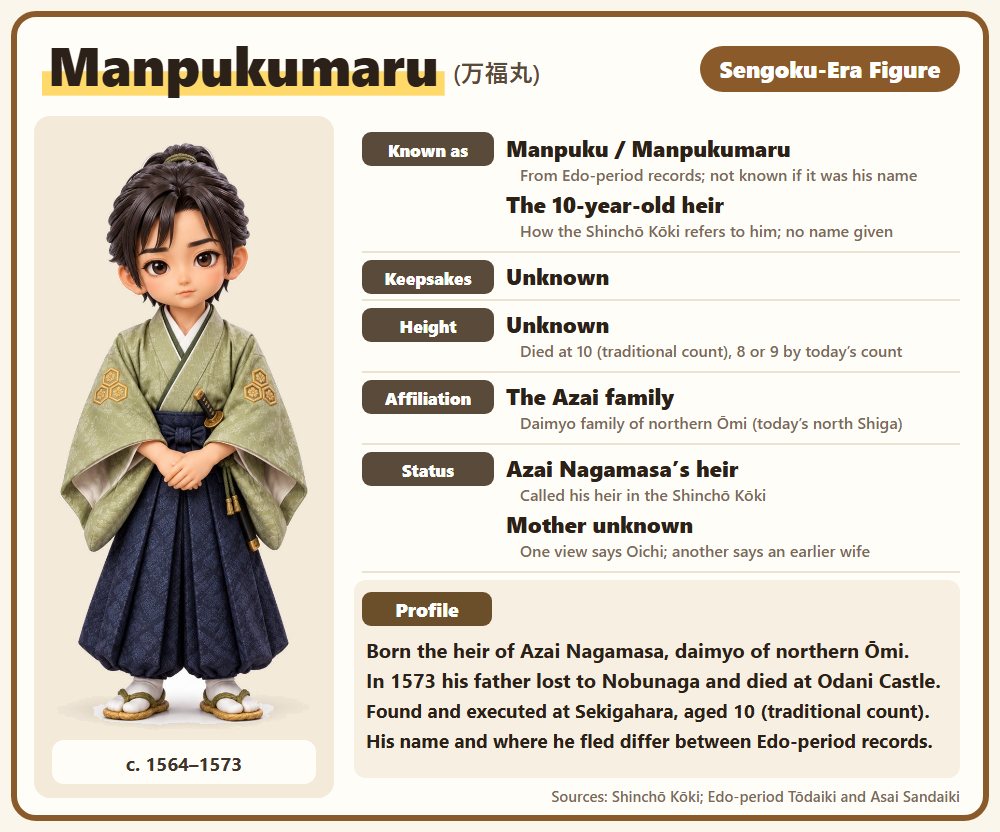
Manpukumaru was the heir of Azai Nagamasa, the Sengoku-period daimyo (regional lord) of northern Ōmi Province (today's northern Shiga Prefecture). In 1573, after his father was defeated by Oda Nobunaga and died at Odani Castle, the boy was searched out and executed. He was 10 by the traditional Japanese count (8 or 9 by today's count).
Stories that he was "impaled" or "killed by Hideyoshi" are well known. But what can be confirmed from records close to his time is limited. This article keeps apart what each record says. Because this is the story of a child's death, we do not describe the painful scenes in detail.
Western years are given with Japanese lunisolar months and days. Ages use the traditional Japanese count, in which a person was counted as one at birth and gained a year at the start of each new year in the Japanese calendar.
Key points are tagged: [Fact] confirmed by records from the time, [Widely accepted] a view widely accepted by researchers, [Debated] accounts or interpretations differ, [Unknown] not established from the sources we checked, [Legend] stories found in later records or traditions, and [Drama fiction] scenes created for dramas.

I am Uesugi Kenshin. Today's story is about the boy who was Azai Nagamasa's heir.

I'm Date Masamune! Manpukumaru... he's Nagamasa's son who showed up in a TV drama, right? What do the records say about him?

The records tell quite different stories. Let us look at them one by one.
The Short Answers
- Who was Manpukumaru? Azai Nagamasa's heir
[Fact: Shinchō Kōki]. The name "Manpukumaru" appears in later records (more) - How did he die? The Shinchō Kōki says that at the age of 10 (traditional count) he was searched out and executed at Sekigahara
[Fact: Shinchō Kōki]. The word "impaled" comes from later books[Legend](more) - Was he killed by Hideyoshi? The order came from Nobunaga
[Fact: Shinchō Kōki]. The story that Hideyoshi was involved appears in an Edo-period war tale[Legend](more) - Who was his mother? Unknown
[Unknown](more)
Three Things We Learn by Comparing the Sources
- Crucified or impaled? A table comparing what three records, the Shinchō Kōki, the Tōdaiki and the Asai Sandaiki, say about his name, where he was found and how he died (more)
- Was it Hideyoshi? What the three records say about Nobunaga's order and Hideyoshi's involvement (more)
- Where did he flee? Three maps showing the different routes told in the three records, which we do not join into one journey (more)
Jump to the part you want to read:
- Who was Manpukumaru? Azai Nagamasa's heir
- How did Manpukumaru die? Was he really impaled?
- Was Manpukumaru killed by Hideyoshi?
- Who was Manpukumaru's mother? Was he Oichi's son?
- Where did Manpukumaru flee? His movements in each record
- His brother and sisters: Manjumaru and the three Azai sisters
- Where is Manpukumaru's grave?
- Manpukumaru in TV dramas
Who Was Manpukumaru? Azai Nagamasa's Heir
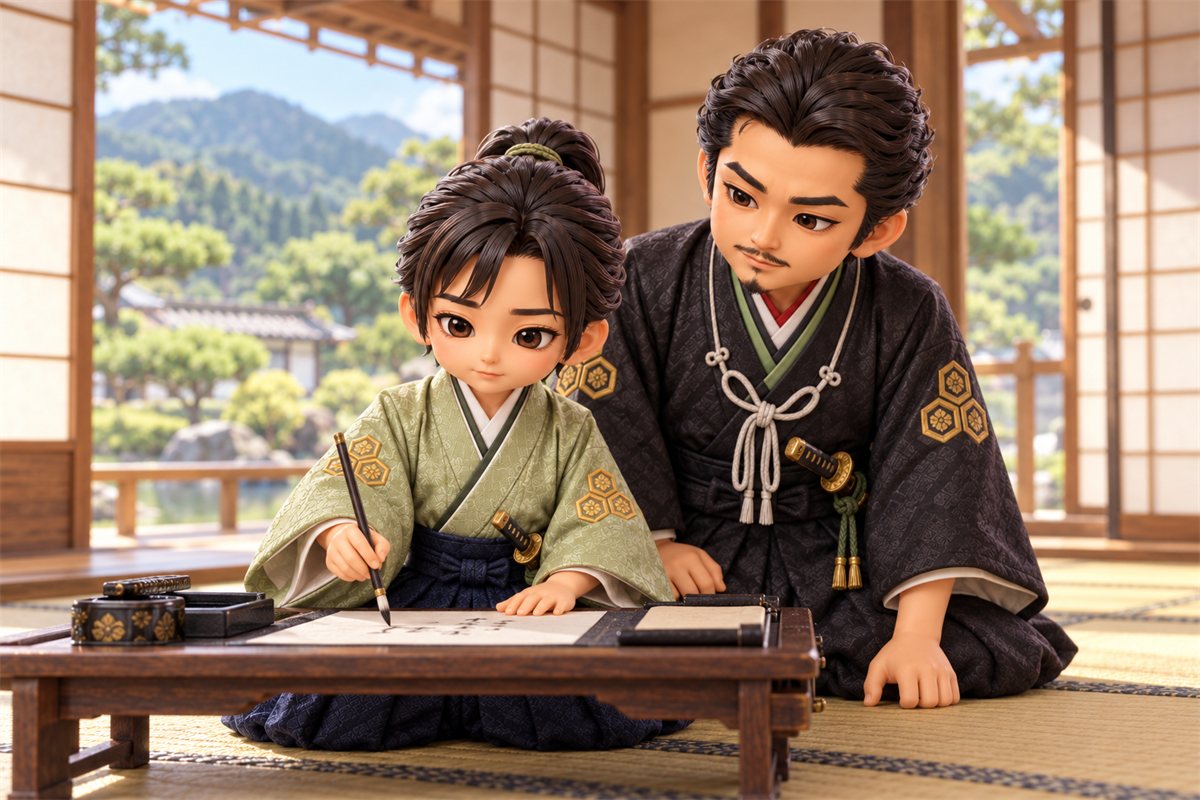
Image: Manpukumaru with his father Nagamasa at Odani Castle
Manpukumaru was the heir of Azai Nagamasa, the third head of the Azai family, whose base was Odani Castle (Nagahama, Shiga Prefecture) [Fact: Shinchō Kōki]. He died in 1573, the year the Azai fought Nobunaga and were defeated, at the age of 10 by the traditional count.
| Item | Details | Reliability |
| Name | Manpukumaru. The Shinchō Kōki gives no name; Edo-period records call him "Manpuku" or "Manpukumaru." The reading is the one commonly used | [Legend] |
| Father | Azai Nagamasa, daimyo of northern Ōmi | [Fact] |
| Mother | Unknown | [Unknown] |
| Position | Heir of the Azai family | [Fact: Shinchō Kōki] |
| Born | Around 1564 (Eiroku 7), worked back from the statement that he died at 10 | Calculated |
| Died | 1573 (Tenshō 1). The date is unknown | Year: [Fact] / Date: [Unknown] |
| Age | 10 by the traditional count (8 or 9 by today's count) | [Fact: Shinchō Kōki] |
| Siblings | Younger sisters Chacha, Hatsu and Gō; a younger brother said to be Manjumaru | Sisters: [Fact] / Brother: [Legend] |
Where Does the Name "Manpukumaru" Come From?
The Shinchō Kōki, written by Nobunaga's retainer Ōta Gyūichi, says only "the 10-year-old heir of Azai Bizen-no-kami (Nagamasa)" and does not give his name. In the sources we checked, the name appears in later records: "Manpuku" in the Tōdaiki, a historical record compiled in the early Edo period, and "Manpukumaru" in the Asai Sandaiki, a war tale of the 1670s. These records alone cannot tell us whether this was the name he actually used. Maru was a common ending for boys' childhood names.
Manpukumaru's Short Life: A Timeline
| Year | Age (traditional count) | Event |
| c. 1564 (Eiroku 7) | 1 | Born (worked back from his age at death) |
| c. 1569 (Eiroku 12) | 6 | His sister Chacha is born [Debated] |
| 1570 (Genki 1) | 7 | His father Nagamasa breaks with Nobunaga. The Battle of Anegawa [Fact] |
| 1573 (Genki 4), 5th month | 10 | A younger brother, said to be the later Manjumaru, is born [Legend: Asai Sandaiki] |
| 1573 (Tenshō 1), 8th–9th months | 10 | Odani Castle falls, and his grandfather Hisamasa and father Nagamasa take their own lives [Fact]. Sources differ on the date of Nagamasa's death [Debated] |
| 1573 (date unknown) | 10 | Searched out and executed at Sekigahara [Fact: Shinchō Kōki] |
How Did Manpukumaru Die? Was He Really Impaled?
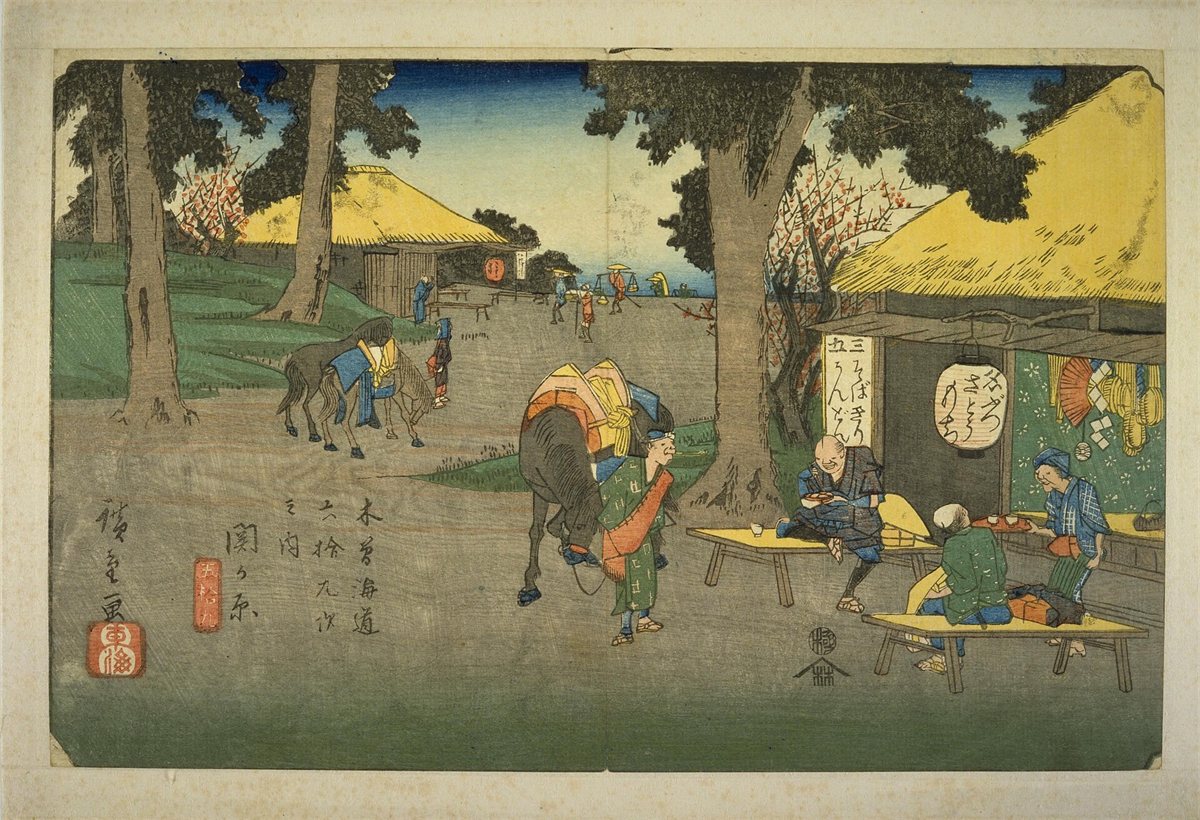
Image: Utagawa Hiroshige, "Sekigahara," from The Sixty-nine Stations of the Kisokaidō (a post town in the late Edo period, not as it looked in 1573). National Diet Library. Wikimedia Commons (public domain)
The Shinchō Kōki says that in 1573 (Tenshō 1), after Odani Castle fell, Nagamasa's 10-year-old heir was searched out and executed at Sekigahara (today's Sekigahara, Gifu Prefecture) [Fact: Shinchō Kōki]. Sekigahara was a post town on the main road, near the border between Ōmi (Shiga) and Mino (Gifu).
Source Box ①: Nagamasa's Heir in the Shinchō Kōki
Source
Ōta Gyūichi, Shinchō Kōki, book 6 (Tenshō 1, 1573)
Original (excerpt)
「浅井備前十歳之嫡男御座候を尋出し関か原と云所に張付に懸させられ年来之被散御無念訖」
Translation
Azai Bizen-no-kami (Nagamasa) had a 10-year-old heir. Nobunaga had him searched out and crucified at a place called Sekigahara, thus putting to rest his long-held resentment. (The subject, Nobunaga, is supplied from the context.)
Notes
The Shinchō Kōki is a biography of Nobunaga that Ōta Gyūichi, who served him, compiled later from what he had seen and heard. It is one of the most important records of the period, but this passage does not give Manpukumaru's name, his mother, the date, or who actually carried out the execution
Crucified or Impaled? Comparing Three Records
The story that he was impaled appears in Edo-period books, above all in the Asai Sandaiki, a war tale compiled in the 1670s, which uses the word kushizashi (impalement) [Legend: Asai Sandaiki].
The Shinchō Kōki, on the other hand, uses the word haritsuke (crucifixion). The records use different words, but the difference in wording alone cannot settle the details of what actually happened [Debated].
| Point | Shinchō Kōki | Tōdaiki | Asai Sandaiki |
| What kind of book | A record compiled by Ōta Gyūichi, who served Nobunaga | A record compiled in the early Edo period (author unclear) | A war tale of the 1670s, said to have been compiled by a monk of a temple in Kinomoto |
| Name | Not given ("the 10-year-old heir") | Manpuku | Manpukumaru |
| Where he was when the castle fell | Not given | A hostage in Echizen (with the Asakura), then hiding in Kaga | Left the castle with a retainer for Tsuruga |
| How he was found | "Searched out" | Came out, relying on his mother or grandmother | Nobunaga learned from Oichi where he was and had him called back |
| Where he died | Sekigahara | Kinomoto | Not given (Hideyoshi receives him at Kinomoto) |
| Word used | Haritsuke (crucifixion) | Says only that he was put to death | Kushizashi (impalement) |
What can be confirmed is the Shinchō Kōki's statement that he was crucified at Sekigahara [Fact: Shinchō Kōki]. The Tōdaiki is an early Edo-period record whose author and origins are unclear, and the Asai Sandaiki is a war tale with much storytelling. Because each tells Manpukumaru's story in its own way, we present them separately from the Shinchō Kōki. Some explanations combine them, saying he was "received at Kinomoto and executed at Sekigahara," but none of the three records says this.
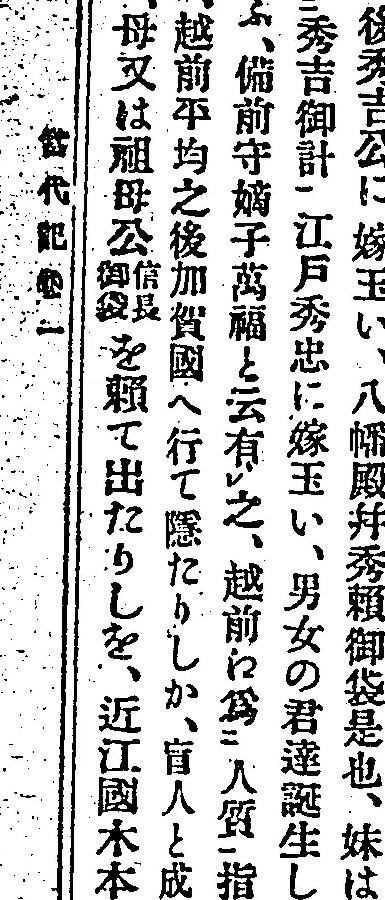
Image: The passage about Manpukumaru in book 1 of the Tōdaiki (Shiseki Zassan, vol. 2, Kokusho Kankōkai, 1911). The third line from the right reads 「備前守嫡子萬福と云有之、越前に爲人質指越」 ("Bizen-no-kami had an heir named Manpuku, who had been sent to Echizen as a hostage"), and the text goes on to say that he was put to death by Nobunaga at Kinomoto in Ōmi. National Diet Library Digital Collections (copyright expired). Tap (click) the image to enlarge it
When Did He Die, and How Old Was He?
In the records we checked, we could not identify the date of his execution [Unknown]. Some explanations online give the 17th day of the 10th month, but we found no record behind it. The Asai Sandaiki says he arrived at Kinomoto on the 3rd day of the 9th month, but that is not the date of his execution [Legend].
His age, from the Shinchō Kōki's "10 years old," was 10 by the traditional count (8 or 9 by today's count) [Fact: Shinchō Kōki].
The records really do tell it in different ways.
Indeed. Which record says what? Keeping them apart is what matters.
Was Manpukumaru Killed by Hideyoshi? Who Gave the Order
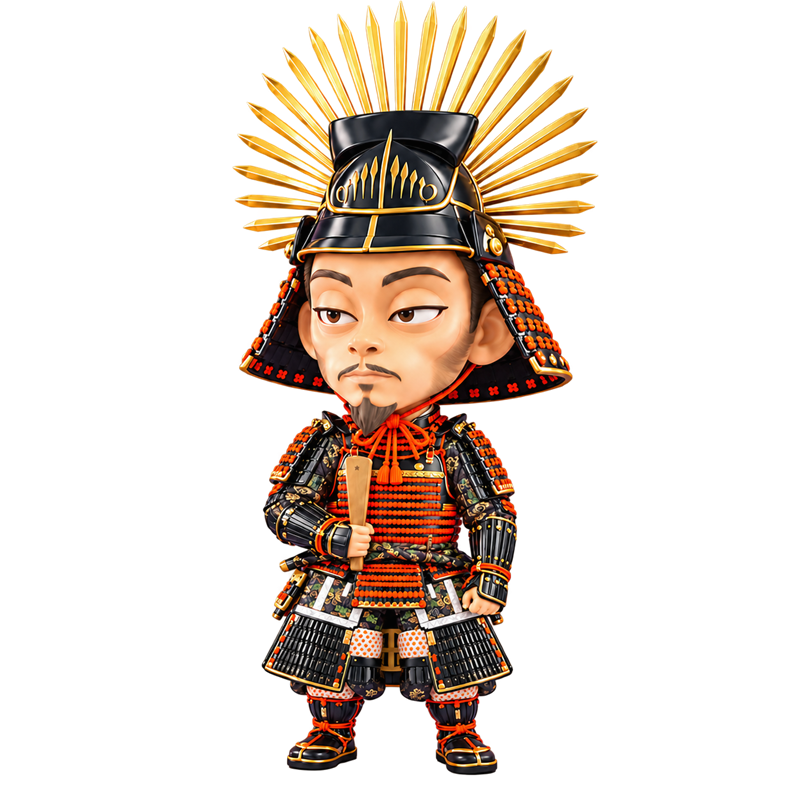
Image: Toyotomi Hideyoshi
The execution was ordered by Oda Nobunaga [Fact: Shinchō Kōki]. The Shinchō Kōki, however, does not name the person who actually carried it out.
| Record | Who gave the order | Does Hideyoshi appear? |
| Shinchō Kōki | Nobunaga | No (right after this passage, it says Nobunaga gave the Azai lands in northern Ōmi to Hideyoshi) |
| Tōdaiki | Nobunaga | No |
| Asai Sandaiki | Nobunaga | Hideyoshi receives Manpukumaru at Kinomoto and informs Nobunaga; it can be read as saying that Nobunaga ordered Hideyoshi to carry out the execution |
The story of Hideyoshi's involvement comes from the Asai Sandaiki of the 1670s [Legend]. Even this book does not go so far as to say that Hideyoshi carried out the execution with his own hands. Later, Hideyoshi took Manpukumaru's sister Chacha as a consort [Fact].
Source Box ②: Hideyoshi in the Asai Sandaiki
Source
Asai Sandaiki, book 18 (a war tale compiled in the 1670s)
Original (excerpt)
「九月三日に江州木之本に着けれは秀吉中にて心得万福丸を請取」
Translation
When they arrived at Kinomoto in Ōmi on the 3rd day of the 9th month, Hideyoshi received Manpukumaru into his custody.
Notes
The Asai Sandaiki is considered to contain much storytelling. We found no record from the time that confirms the story that Hideyoshi received him
Why Was He Killed?
In the records we checked, we found no explanation from Nobunaga himself of why the boy was executed [Unknown]. But the Shinchō Kōki says that by this execution Nobunaga "cleared away the resentment he had held for years." This can be read as showing that its author, Ōta Gyūichi, saw Nobunaga's anger at the Azai, who had turned against him, as very great.
The same book of the Shinchō Kōki also records that the young heir of the Asakura family, who had helped the Azai, was searched out and killed [Fact: Shinchō Kōki]. The Shinchō Kōki writes this boy's name as 阿君丸, while the Fukui Prefectural Ichijodani Asakura Family Site Museum identifies the boy who died at that time as 愛王丸.
The historian Watanabe Daimon interprets the execution as a political decision as well as an expression of Nobunaga's anger: in his view, removing the Azai heir was meant to prevent the house from rising against Nobunaga again. Nagamasa's three daughters, on the other hand, were spared and taken in by the Oda family [Widely accepted].

Only 10 years old...
The age of war was harsh even on children. All the more reason to look carefully at the name the records have left us.
Who Was Manpukumaru's Mother? Was He Oichi's Son?
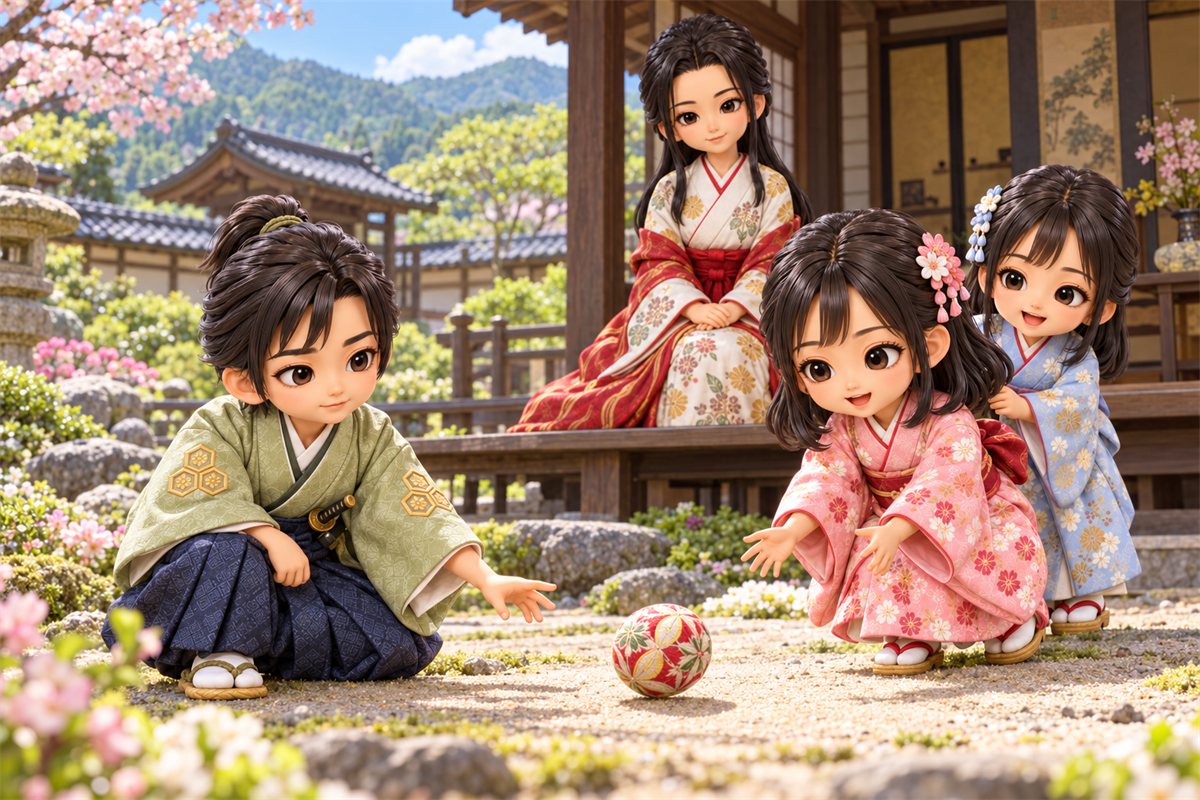
Image: Manpukumaru with Oichi and the little Chacha and Hatsu in a garden at Odani Castle (whether Oichi was his mother is not known)
His mother has not been reliably identified in the sources we checked [Unknown]. Some think he was Oichi's son; others think his mother was another woman.
| Theory | Reasoning | Points to note |
| Oichi's son | If one accepts the theory that Nagamasa and Oichi married early (around 1559–63, Eiroku 2–6), the dates fit | If one takes the marriage date common in encyclopedias (the end of 1567 or early 1568) and a birth around 1564, worked back from his age, the dates do not fit an explanation that he was born after the marriage (though this is not direct evidence about his mother) |
| Son of Nagamasa's first wife, a daughter of 平井定武 | One tradition says Nagamasa's first wife was a daughter of 平井定武, a senior retainer of the Rokkaku family | If one takes the theory that they parted in 1559 (Eiroku 2) and a birth around 1564, the dates do not fit |
| Son of another woman | Some researchers think his mother was a woman other than Oichi | We found no source that reliably identifies this woman or gives further details about her |
The Tōdaiki, from the early Edo period, says that Manpukumaru "came out, relying on his mother or grandmother (Nobunaga's mother)." This could be read as showing that its author thought he was Oichi's son, but it does not settle the question.
Nagamasa's three daughters, Chacha, Hatsu and Gō, were certainly Oichi's children [Fact]. For Oichi, see our article on Oichi.
Where Did Manpukumaru Flee? His Movements in Each Record
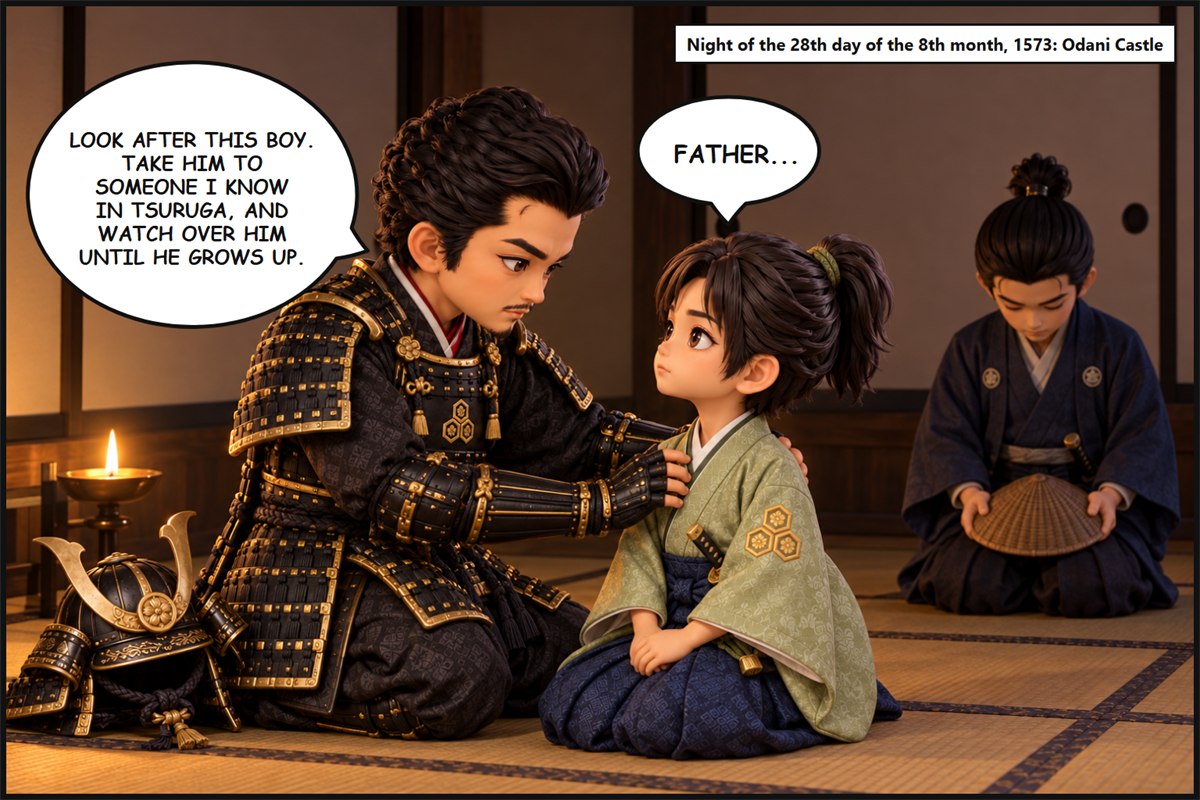
Image: The night before the castle fell, Nagamasa entrusts Manpukumaru to a retainer (a story told in the Asai Sandaiki)
The Asai Sandaiki of the 1670s tells a story that on the night of the 28th day of the 8th month of 1573, before Odani Castle fell, Nagamasa entrusted Manpukumaru to his retainer 木村喜内之介 and sent him away to someone he knew in Tsuruga, Echizen (today's Tsuruga, Fukui Prefecture) [Legend: Asai Sandaiki].
Source Box ③: Nagamasa's Wish in the Asai Sandaiki
Source
Asai Sandaiki, book 18
Original (excerpt)
「越前敦賀郡にしる人あれは彼者許にしのひ居て此若か成人を見立てたへ」
Translation
I know someone in Tsuruga District, Echizen. Hide at his home and watch over this boy until he grows up.
Notes
These words are given to Nagamasa in an Edo-period war tale. We cannot confirm from records of the time whether he really said them
In the Asai Sandaiki, the story goes on: Nobunaga learned from Oichi where the boy was and had him called back by letter, and when Manpukumaru arrived at Kinomoto on the 3rd day of the 9th month, Hideyoshi took charge of him [Legend].
The Tōdaiki of the early Edo period tells a different story: a hostage in Echizen, then hiding in Kaga (today's southern Ishikawa Prefecture), then Kinomoto. And the Shinchō Kōki does not say where he was at all.
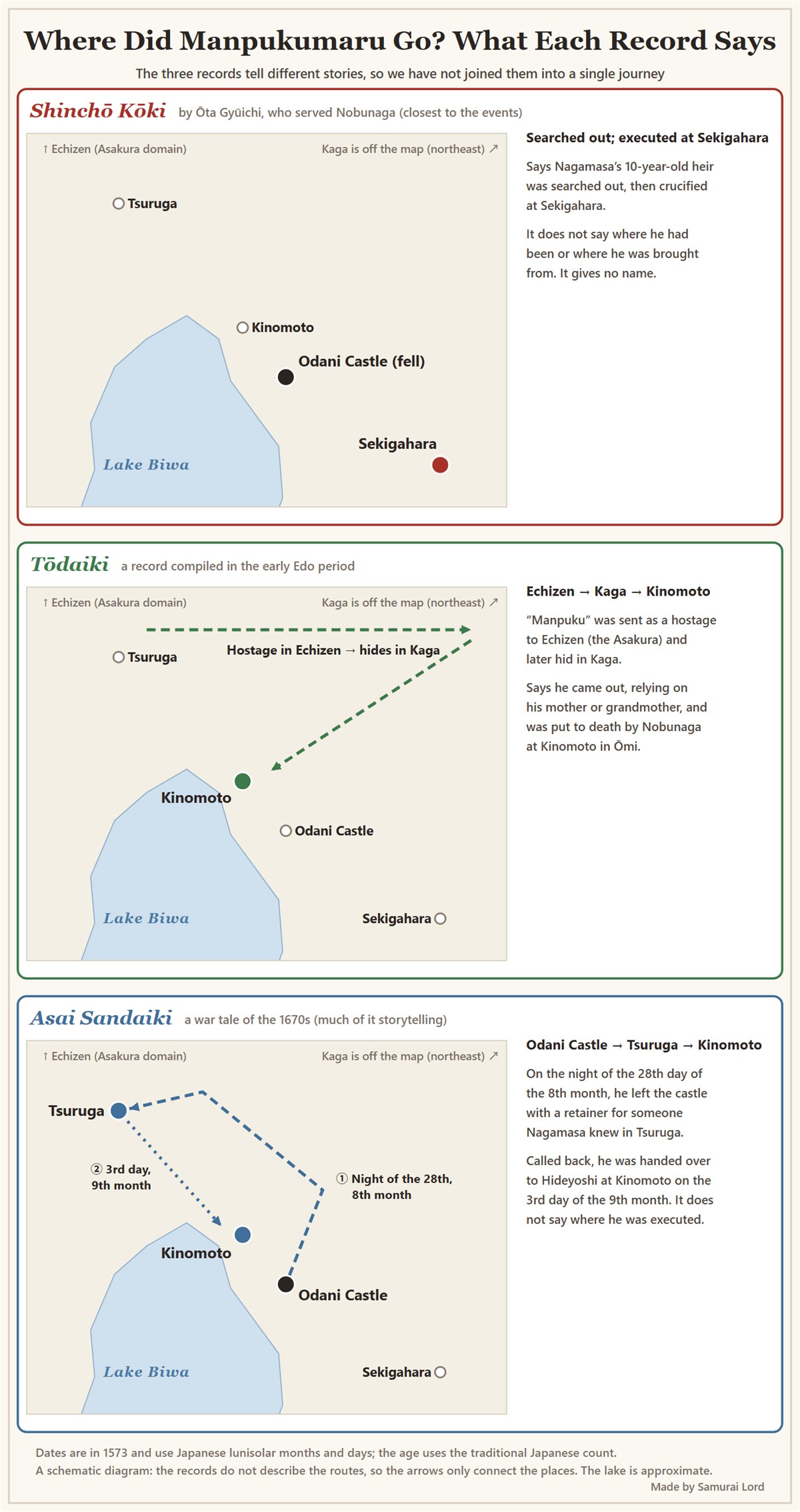
Image: Manpukumaru's movements according to each record (schematic; made by Samurai Lord). The three records tell separate stories, so we have not joined them into a single journey. Tap (click) the image to enlarge it
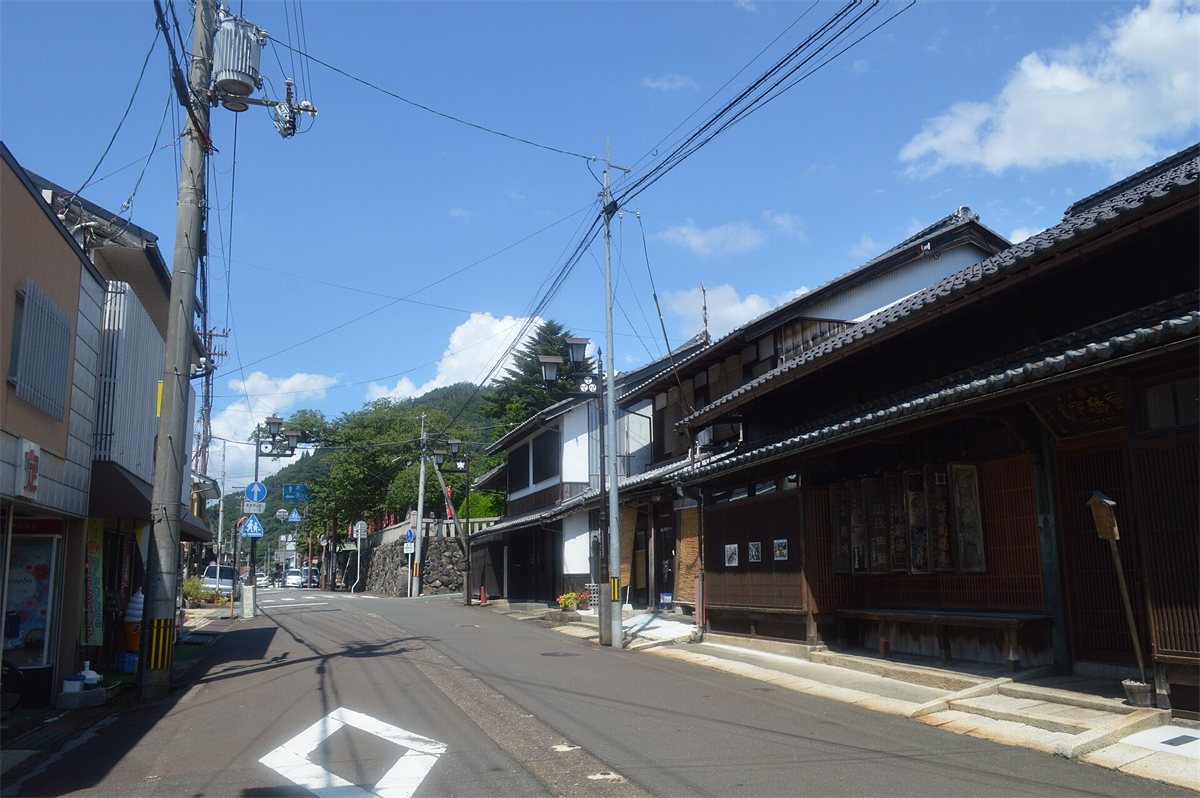
Image: Kinomoto today (Nagahama, Shiga Prefecture), a post town on the Hokkoku Kaidō road that appears in both the Tōdaiki and the Asai Sandaiki. Wikimedia Commons (photo: Asturio Cantabrio, CC BY-SA 4.0)
It's the same boy, but the records don't even agree on where he was!
The temple of the monk who wrote the Asai Sandaiki is said to have been in Kinomoto. Perhaps local stories found their way into the book.
His Brother and Sisters: Manjumaru and the Three Azai Sisters
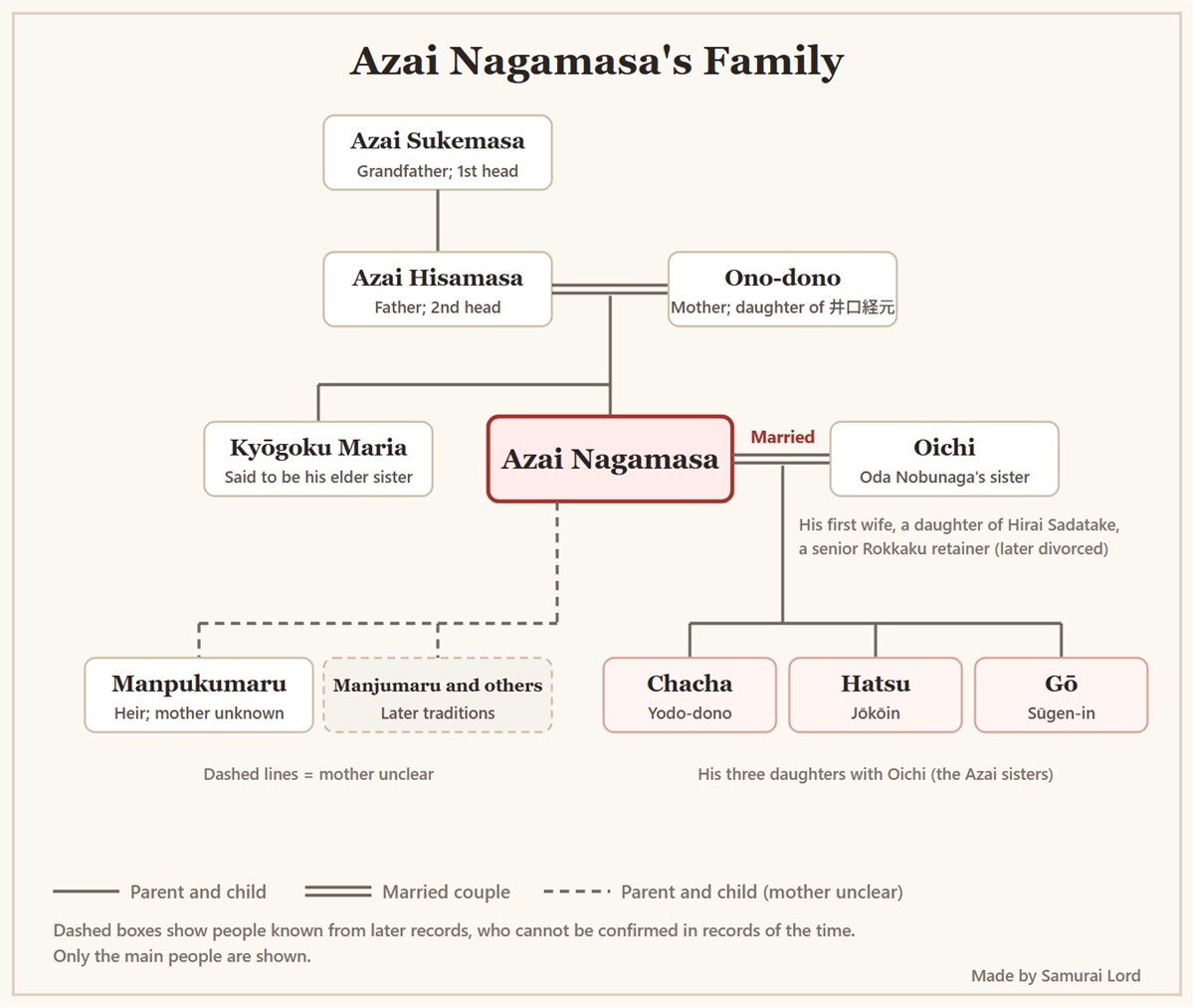
Image: Azai Nagamasa's family (made by Samurai Lord). Tap (click) the image to enlarge it
Did His Younger Brother Manjumaru Survive?
The Asai Sandaiki says that a boy born in the 5th month of 1573 (Genki 4) was entrusted to Fukudenji temple (Maibara, Shiga Prefecture) in Ōmi and survived [Legend]. This boy is thought to be the younger brother later called Manjumaru.
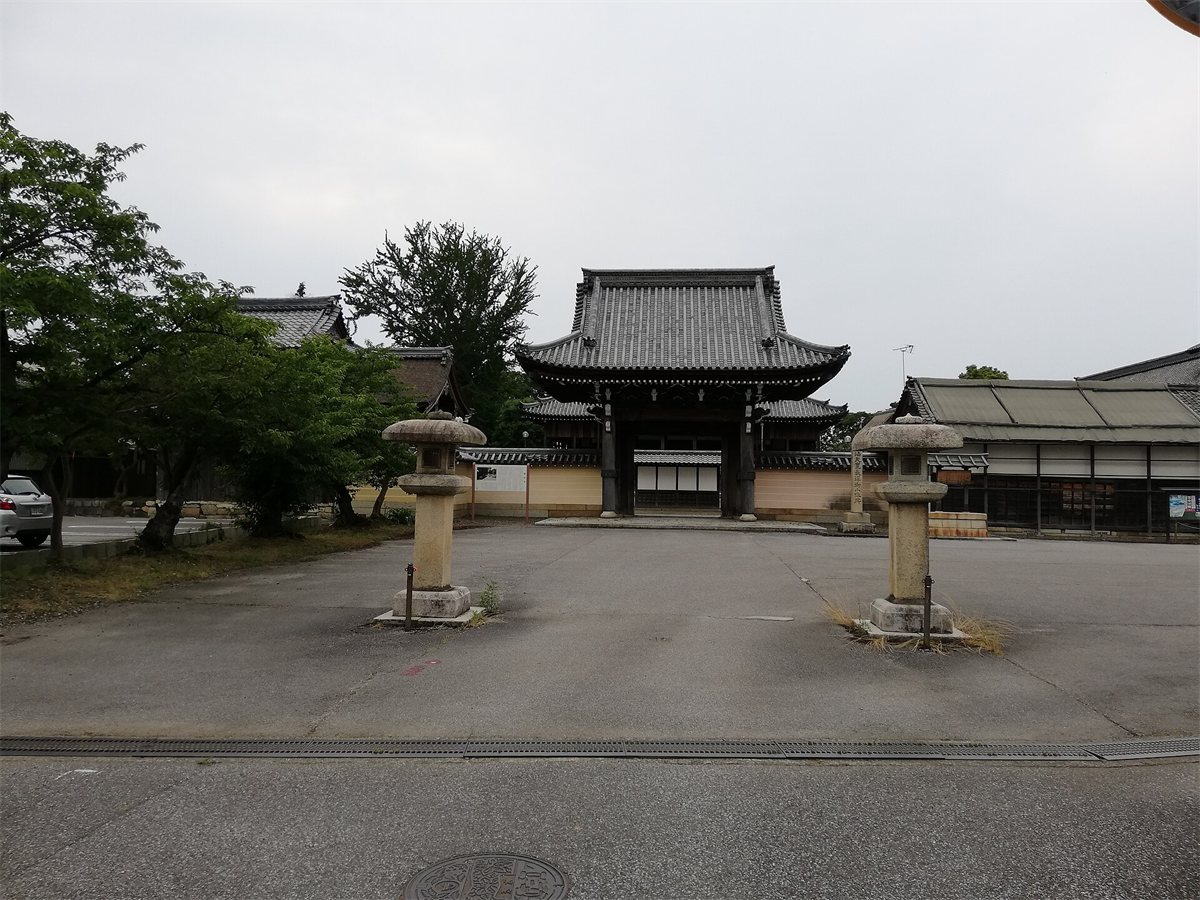
Image: Fukudenji temple (Maibara, Shiga Prefecture), where Manjumaru is said to have been placed. Wikimedia Commons (photo: 先従隗始, CC0)
His Sisters Chacha, Hatsu and Gō
Nagamasa and Oichi had three daughters: Chacha (later known as Yodo-dono), Hatsu (Jōkōin) and Gō (Sūgen-in) [Fact]. If Manpukumaru was born around 1564 and Chacha around 1569, she was about five years younger. But because his mother is unknown, we do not know whether he and his sisters had the same mother [Unknown].
The three sisters were taken in by the Oda family and survived. Chacha became a consort of Toyotomi Hideyoshi, and Gō became the wife of the second Tokugawa shogun, Hidetada. For more, see the section on Oichi's three daughters in our article on Oichi.
Where Is Manpukumaru's Grave? Memorials and Related Places
In the sources we checked, we could not identify a grave reliably established as Manpukumaru's [Unknown]. There is said to be a place in Sekigahara, Gifu Prefecture, where he is traditionally held to have been executed, but this is a local tradition [Legend].
According to Yōgenin temple in Kyoto, it was founded in 1594 (Bunroku 3) at the request of Manpukumaru's sister Chacha (Yodo-dono), to hold memorial services for their father, Azai Nagamasa. However, we found no reliable record showing that memorial services were also held there for her brother Manpukumaru.
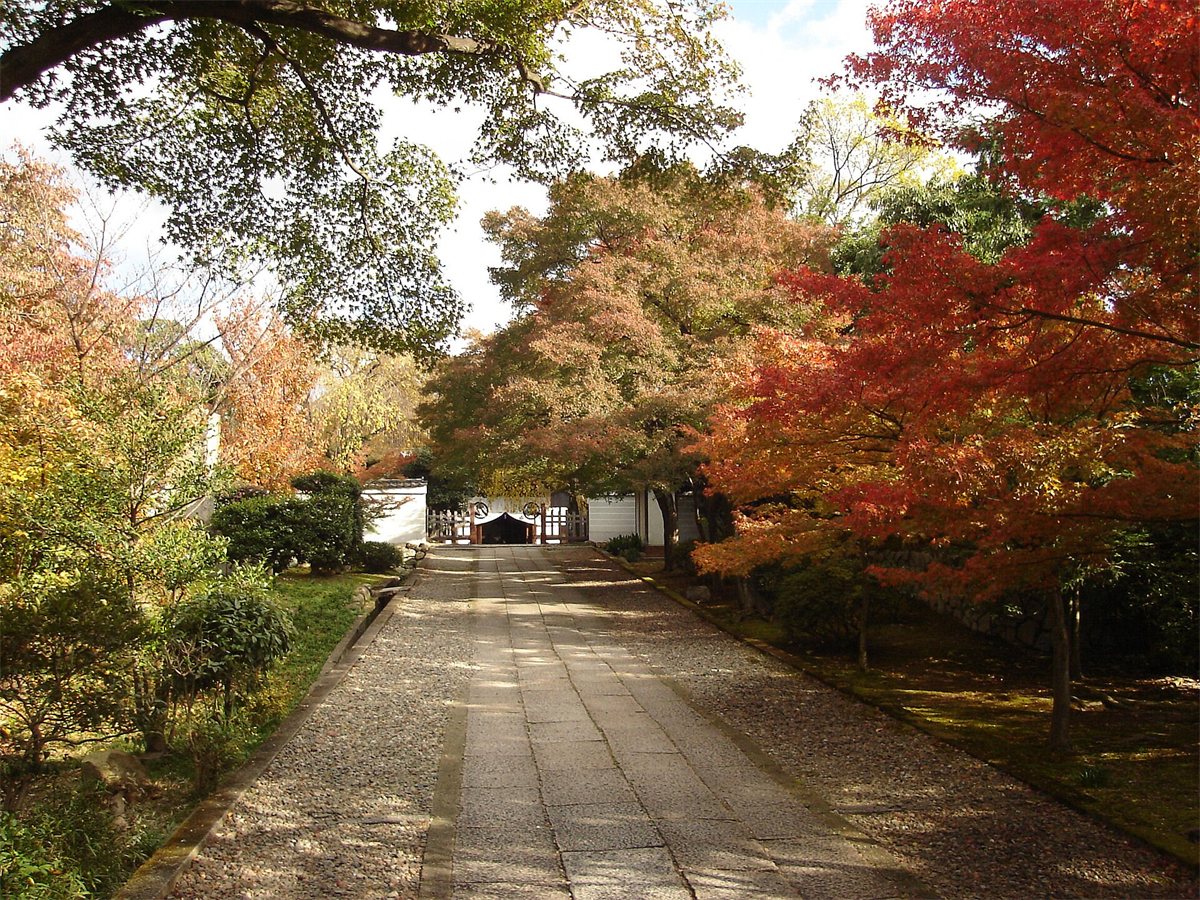
Image: The approach to Yōgenin temple (Higashiyama Ward, Kyoto), founded at Chacha's wish to pray for her father Nagamasa. Wikimedia Commons (photo: PlusMinus, CC BY-SA 3.0)
| Place | Connection with Manpukumaru | Location today |
| Odani Castle ruins | The base of his father, Azai Nagamasa | Nagahama, Shiga Prefecture |
| Kinomoto | A post town that appears in the Tōdaiki and the Asai Sandaiki | Nagahama, Shiga Prefecture |
| Sekigahara | Where the Shinchō Kōki says he was executed | Sekigahara, Fuwa District, Gifu Prefecture |
| Fukudenji | The temple where his brother Manjumaru is said to have been placed | Maibara, Shiga Prefecture |
| Yōgenin | The temple his sister Chacha founded for their father | Higashiyama Ward, Kyoto |
Manpukumaru in TV Dramas
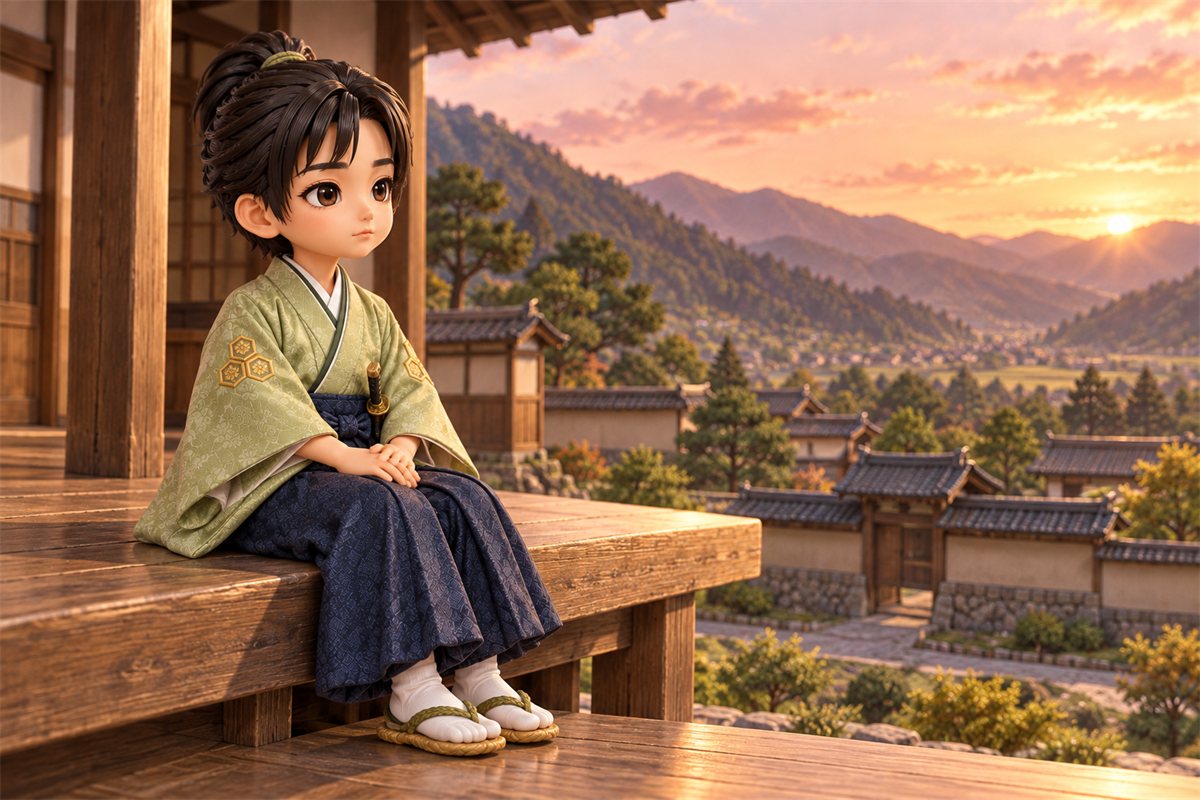
Image: Manpukumaru living as a hostage with the Asakura in Echizen (a story told in the early Edo-period Tōdaiki)
In the 2026 NHK historical drama Toyotomi Kyōdai! (Toyotomi Brothers!), Manpukumaru is portrayed as a hostage of the Asakura family. According to press reports on episode 17, Nagamasa is told that the boy could not be found, and he guesses that his son may already be dead.
The idea that he was a hostage of the Asakura is close to the story in the Tōdaiki. This differs from the account given in episode 17: the Shinchō Kōki says that the boy was searched out and executed after Odani Castle fell [Fact: Shinchō Kōki].
Earlier NHK historical dramas have shown his end in different ways. In Onna Taikōki (1981), Nobunaga orders Hideyoshi to have the boy killed; Hideyoshi tells his retainer Hachisuka Koroku to save him, but Koroku has him executed against Hideyoshi's instructions; in Hideyoshi (1996), Nobunaga gives the order to Shibata Katsuie; and in Kōmyō ga Tsuji (2006), Hideyoshi, on Nobunaga's orders, gives the task to Yamauchi Kazutoyo [Drama fiction]. Who was given the task cannot be confirmed from the records.
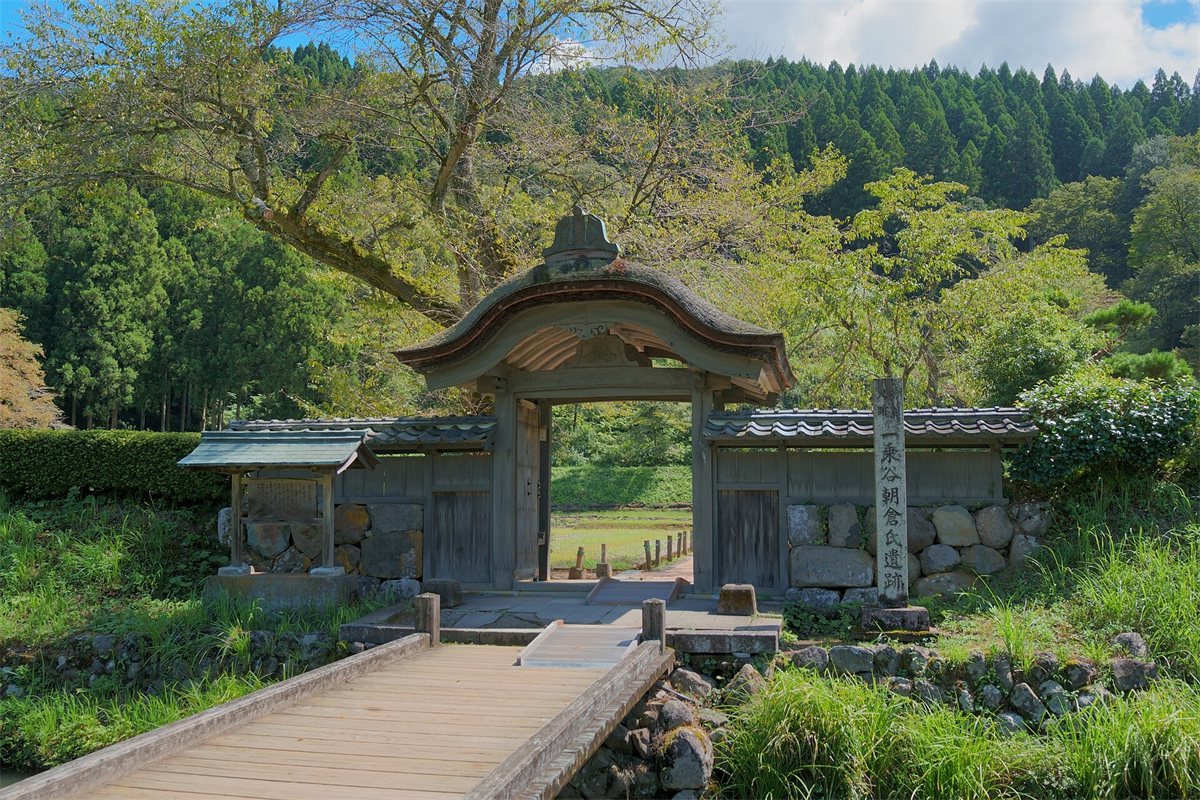
Image: The Karamon gate at the Ichijōdani Asakura Family Site (Fukui City). It stands on the site of the Asakura residence; the present gate is thought to have been built in the Edo period. The Tōdaiki says only that he was a hostage in Echizen, not that he was at Ichijōdani. Wikimedia Commons (photo: 掬茶, CC BY-SA 4.0)
FAQ
How old was Manpukumaru when he died?
He was 10 by the traditional count (8 or 9 by today's count). See the section on his death.
When did Manpukumaru die?
In 1573 (Tenshō 1). In the records we checked, we could not identify the date.
Is there a story that Manpukumaru survived?
In the sources we checked, we found no tradition that Manpukumaru himself survived. The brother said to have survived is his younger brother, Manjumaru.
Summary: Who Was Manpukumaru?
Manpukumaru was Azai Nagamasa's heir, a boy who in 1573, after his father's defeat by Nobunaga, was searched out and executed at Sekigahara at the age of 10 by the traditional count. This much can be confirmed from the Shinchō Kōki.
His name, his mother, where he fled, the "impalement," and Hideyoshi's role all come from Edo-period records, and those records differ from one another. Knowing which story comes from which record lets us picture Manpukumaru more accurately.
For his father, see our article on Azai Nagamasa; for Oichi and his sisters, our article on Oichi; and for Nobunaga and Hideyoshi, who attacked the Azai, our article on Oda Nobunaga and our article on Toyotomi Hideyoshi.
Only a few words about him survive in the records. Yet those few words tell us a great deal.
Comparing the different stories in each record is really interesting!
Sources & How This Article Was Written
This article is based mainly on the following records and references:
- Record close to his time: Ōta Gyūichi, Shinchō Kōki, book 6 (available in English as The Chronicle of Lord Nobunaga, translated by J. S. A. Elisonas and J. P. Lamers, Brill, 2011)
- Later records: Tōdaiki, book 1 (in Shiseki Zassan, vol. 2, Kokusho Kankōkai, 1911; page images checked in the National Diet Library Digital Collections); Asai Sandaiki, book 18
- Studies and references (in Japanese; titles translated by us): Watanabe Daimon, "Why Did Nobunaga Execute a 10-Year-Old Heir?" (Yahoo! News Expert); Kotobank (Nihon Daihyakka Zensho, Sekai Daihyakka Jiten and others); the explanation by Yōgenin; Fukui Prefectural Ichijodani Asakura Family Site Museum, "History of the Asakura Family"; press reports on the NHK historical drama (March–May 2026)
- Historians' views: for researchers' views on Manpukumaru's mother (such as Fukuda Chizuru's Gō no Shōgai [江の生涯]) and on the date of Nagamasa's marriage to Oichi, we referred to articles and encyclopedia entries that introduce historians' views
- Images: Utagawa Hiroshige's "Sekigahara" from The Sixty-nine Stations of the Kisokaidō is published on Wikimedia Commons in the public domain. The photos of Kinomoto (Asturio Cantabrio, CC BY-SA 4.0), the Karamon gate at the Ichijōdani Asakura Family Site (掬茶, CC BY-SA 4.0), Fukudenji (先従隗始, CC0) and Yōgenin (PlusMinus, CC BY-SA 3.0) are also from Wikimedia Commons. The image of the Tōdaiki is from the National Diet Library Digital Collections. The illustrations, manga panel, map and family chart are original works by Samurai Lord
What the Labels Mean
[Fact]Confirmed by sources from the time ([Fact: …]names the source)[Widely accepted]A view widely accepted by researchers[Debated]Accounts or interpretations differ[Unknown]Not established from the sources we checked[Legend]Stories found in later records or traditions ([Legend: …]names the source)[Drama fiction]Scenes created for dramas
We keep "what a record says" separate from "what actually happened." Translations of the source excerpts in this article are by the Samurai Lord editorial team.
This article was written by the Samurai Lord editorial team and is revised as new research and reader feedback come in. If you spot an error, please let us know through our contact form (in Japanese) and we will check and correct it.
Read in Japanese
This article is also available in Japanese: 万福丸とは?浅井長政の嫡男の最期や母、秀吉との関係を解説!