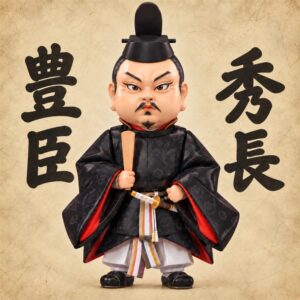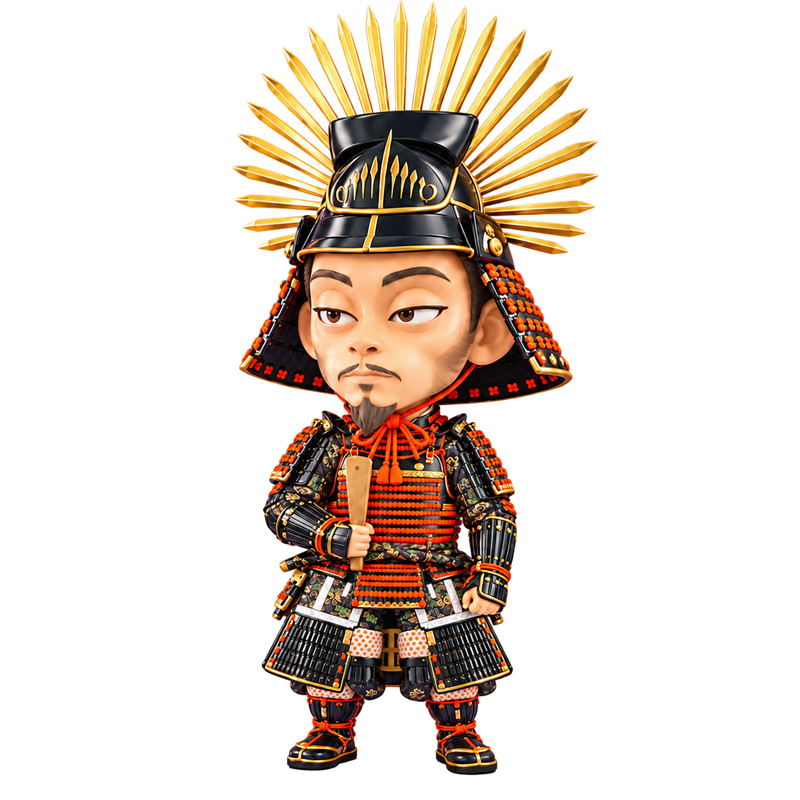
He started out as a low-ranking servant of Oda Nobunaga and ended up ruling all of Japan. That man was Toyotomi Hideyoshi (1537–1598).
Born into a humble family, he climbed to the very top while changing his name along the way—from “Kinoshita Tōkichirō” to “Hashiba Hideyoshi” to “Toyotomi Hideyoshi.”
This article follows what Hideyoshi actually did with a timeline, then looks at how he died, his wives Nene and Chacha, his brother Hidenaga, and the truth behind his “six fingers” and the “Monkey” nickname—separating historical sources from legend.
Key points are tagged: [Fact] confirmed by historical records, [Widely accepted] supported by most historians, [Debated] several competing theories, and [Legend] later stories, dramas, or folklore.
.jpg)
I am Uesugi Kenshin. Today's subject is the man who took the realm after I left this world. As it happens, he once came quite close to me on campaign… but more on that later.
.jpg)
I'm Date Masamune! I actually met Lord Hideyoshi in person—and I was sure I wouldn't survive the meeting. I'll tell you about that later, too!
What Did Toyotomi Hideyoshi Do?
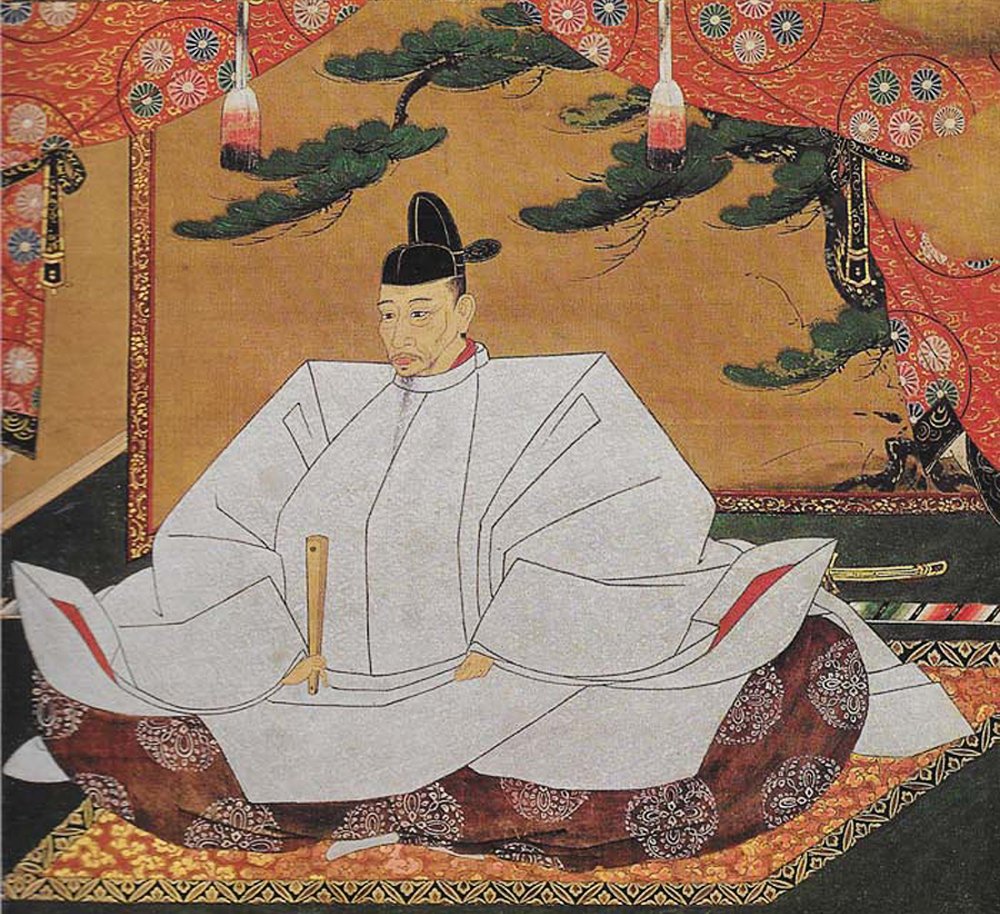
Image: Portrait of Toyotomi Hideyoshi by Kanō Mitsunobu (Kōdai-ji Temple, Kyoto)
In a nutshell, Toyotomi Hideyoshi was “the ruler who ended the Warring States period and brought Japan under one government.”
Key Events
- Born into a humble family, he rose through the ranks serving Oda Nobunaga
- After the Honnō-ji Incident, he defeated Akechi Mitsuhide and won the race to succeed Nobunaga
- Appointed kanpaku (Imperial Regent) by the court, he unified Japan in 1590
- His nationwide land survey and Sword Hunt laid the foundations of a social order that lasted through the Edo period
- In his last years he invaded Korea, and he died of illness at Fushimi Castle while the war was still going on
.jpg)
From a humble home to ruler of Japan! Nobody else in the Warring States period climbed that far.
.jpg)
Indeed. But many of his famous rags-to-riches stories were invented later. Let us see, step by step, which ones hold up.
Profile at a Glance
* The popular claims that he was born on New Year's Day and that his childhood name was “Hiyoshimaru” come from Edo-period popular books and have little support [Legend]. The Kanpaku Ninkanki, written by Ōmura Yūko, a man who served Hideyoshi, gives his birth date as the 6th day of the 2nd month of Tenbun 6 (1537) [Widely accepted].
Toyotomi Hideyoshi's Life: A Timeline
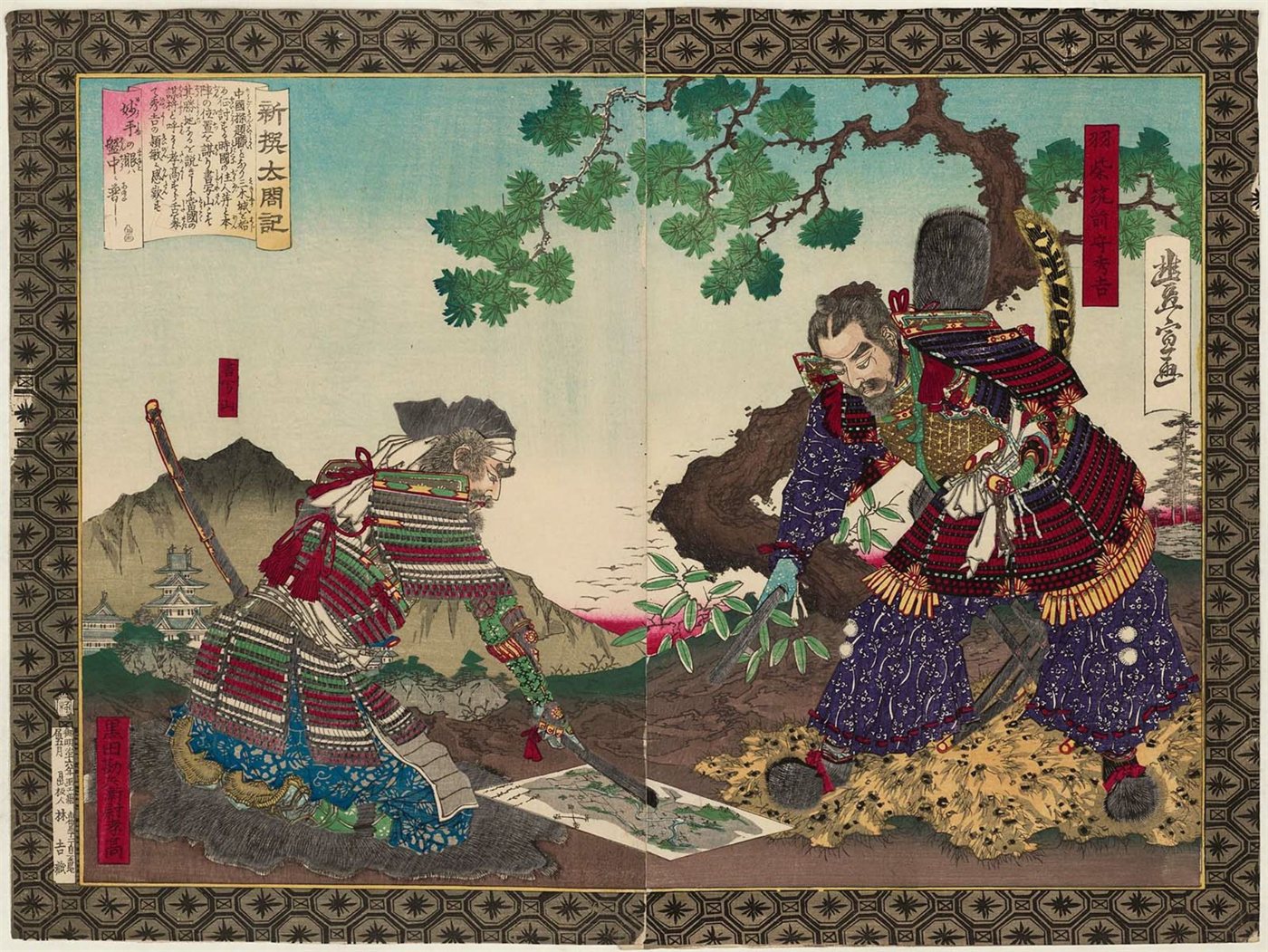
Image: “Hashiba Hideyoshi and Kuroda Kanbei,” woodblock print by Utagawa Toyonobu from the series Shinsen Taikōki (1883)
*Ages are given in the Western way (years since birth). By traditional Japanese counting (kazoedoshi), add one year—so Hideyoshi was 62 by that count when he died.
Now, about that story. In 1577 I fought the Oda army at the Tedori River in the north. Shortly before that, Hideyoshi was serving with the Oda forces there—but he packed up and went home without permission, and Nobunaga was furious. It is recorded in the Shinchō Kōki [Fact: Shinchō Kōki].
Wait—he walked off without permission, and Nobunaga still put him in charge of the western campaign? Nobunaga must have really valued his talent!
Fact Check: Did He Really Warm Nobunaga's Sandals—and Build a Castle Overnight?
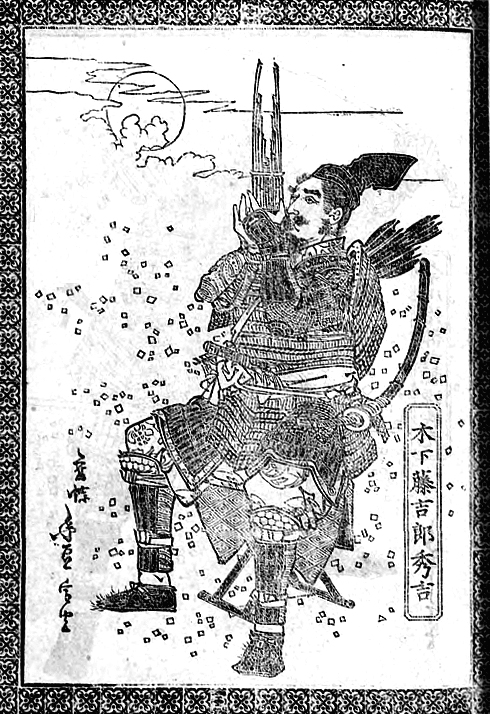
Image: Kinoshita Tōkichirō Hideyoshi, illustrated by Okada Gyokuzan in Ehon Taikōki (1798). Rags-to-riches tales such as the sandal story spread through popular Edo-period books like this one.
History vs. Legend
[Fact]Hideyoshi was promoted from humble status and rose through Nobunaga's ranks[Legend]On a cold day, he warmed Nobunaga's sandals inside his robe (spread by Edo-period books such as Ehon Taikōki)[Debated]He built a castle at Sunomata in a single night (the main source, Bukō Yawa, is widely doubted as a historical record)
The sandal story spread through books such as Ehon Taikōki, published about 200 years after Hideyoshi's death. It does not appear in any record from his own lifetime [Legend].
As for the “one-night castle” at Sunomata, the Shinchō Kōki—written by one of Nobunaga's own retainers—never says Hideyoshi built it. Most of the details come from the Bukō Yawa, whose wording and format have been criticized as not matching documents of the period [Debated].
His rise was so remarkable that later storytellers couldn't resist embellishing it. But the core is true: he was raised up from humble status—and that alone is extraordinary.
Hideyoshi's Achievements: Unification, the Land Survey, and the Sword Hunt
① He unified Japan
-e1790779290893.png)
In 1590, eight years after the Honnō-ji Incident, Hideyoshi defeated the Hōjō clan at Odawara and brought the lords of northern Japan to heel. With that, he achieved the unification of Japan [Fact].
He banned the regional lords (daimyo) from making war on each other and made himself the judge of their territorial disputes—an attempt to end the “take it by force” world of the Warring States period [Widely accepted].
During the Odawara campaign, I held back for a long time and showed up late before Lord Hideyoshi [Fact]. I honestly thought I was finished…
There is also a tale that you appeared dressed all in white, ready to die. That story likely picked up some embellishment in later times [Legend].
② The Taikō land survey: measuring the whole country by one standard
Hideyoshi had fields across Japan re-measured using the same measuring rods and the same size of rice measure, and recorded each plot's value as the amount of rice it could produce (kokudaka, measured in koku) [Fact]. The farmer actually working each plot was entered in a land register and made responsible for paying its tax [Fact].
The surveys began around 1582, and the system of measuring land—and a lord's power—in koku carried straight over into the Edo period [Fact].
③ The Sword Hunt: disarming the farmers
With the Sword Hunt edict of 1588, Hideyoshi confiscated swords, spears, guns, and other weapons from farmers [Fact]. The edict itself claims the collected blades would be used for nails and fittings for a great Buddha statue being built in Kyoto [Fact: the Sword Hunt edict].
It is usually seen as a key step toward separating warriors from farmers [Widely accepted]. However, some research shows that villages did not lose all their weapons, and that the real point was taking away the sword as a symbol of status [Debated].
④ Osaka Castle: a new center of power
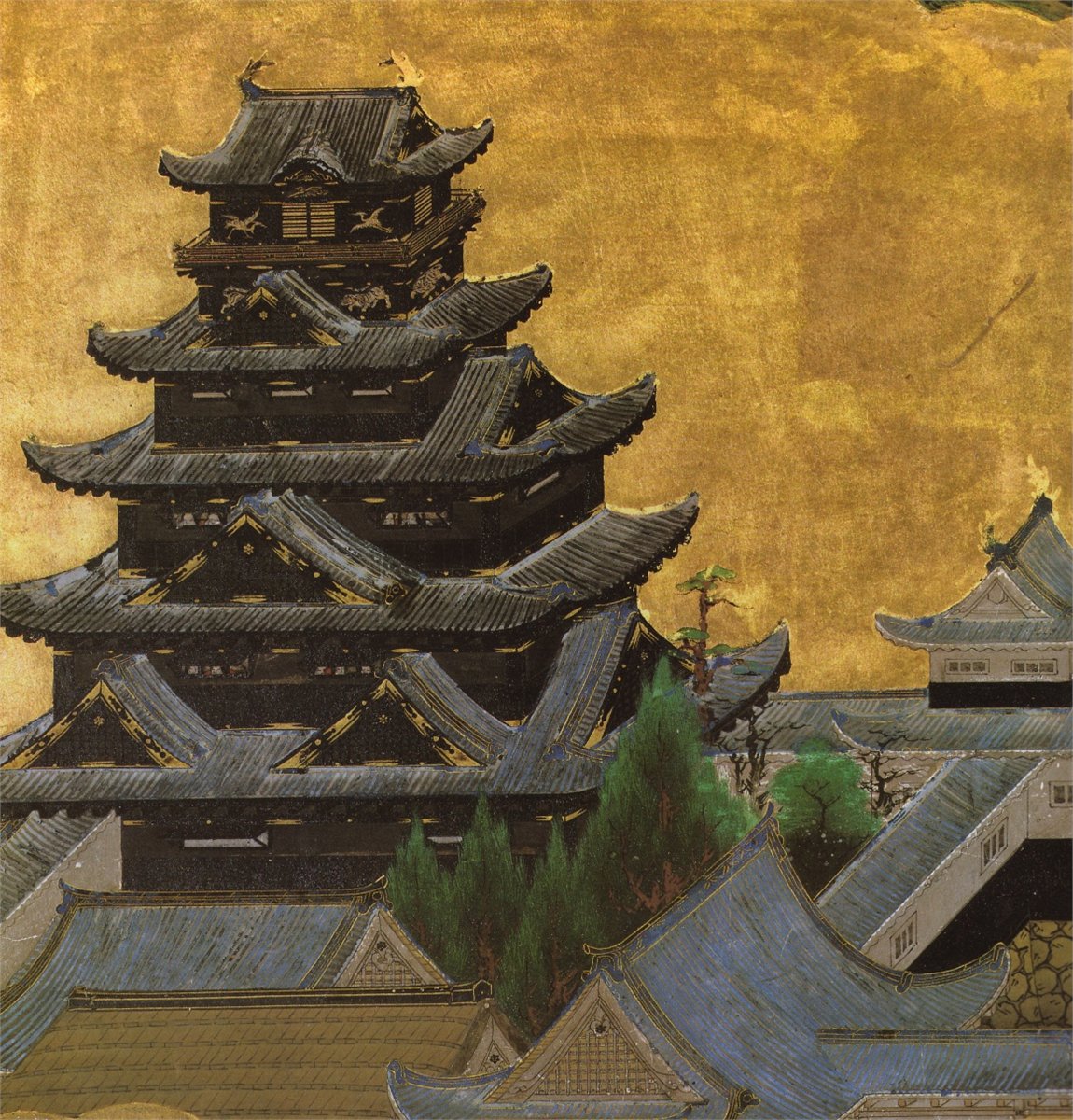
Image: Toyotomi-era Osaka Castle as depicted on the Osaka Summer Campaign Screens (detail, Osaka Castle Museum)
In 1583, Hideyoshi began building Osaka Castle on the site of the former Ishiyama Hongan-ji temple, making it the political and economic heart of his government [Fact].
Note that the main keep you can visit today was rebuilt in 1931. Hideyoshi's original castle burned down in the Summer Siege of Osaka in 1615, and the Tokugawa shogunate built a new castle on top of it [Fact].
So the land survey and the Sword Hunt laid the groundwork for the Edo period. He wasn't just a great general—he built the system that ran the country!
Hideyoshi's Family: Brother Hidenaga, Wife Nene, and Consort Chacha (Yodo-dono)
His younger brother, Toyotomi Hidenaga: the right-hand man
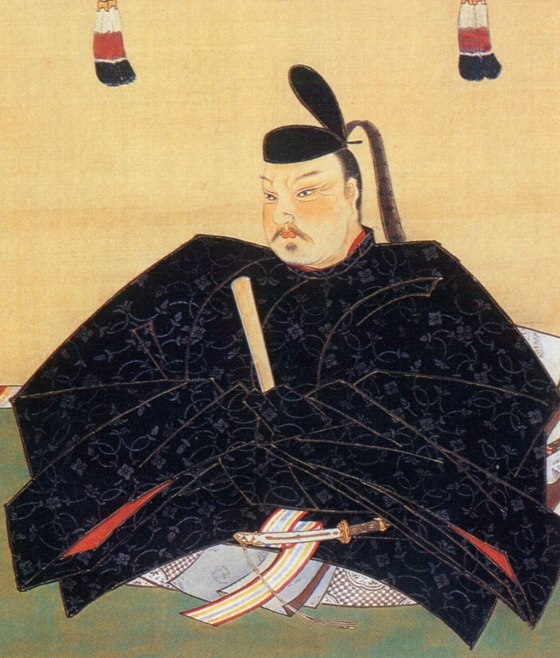
Image: Portrait of Toyotomi Hidenaga
Toyotomi Hidenaga was Hideyoshi's younger brother—and the main character of NHK's 2026 historical drama Toyotomi Kyōdai! (roughly, “The Toyotomi Brothers!”).
He fought alongside his brother across Japan and eventually became a great lord ruling Yamato (Nara), Kii (Wakayama), and other provinces, earning the name “Yamato Dainagon” (the Grand Counselor of Yamato) [Fact].
When the Kyushu lord Ōtomo Sōrin visited Osaka Castle, Hidenaga told him that “private matters go through Sen no Rikyū, and public matters through me.” Sōrin wrote this down, showing how central Hidenaga was to the government [Fact: Ōtomo Sōrin's letter].
Hidenaga died of illness in 1591 [Fact]. Because harsh events followed soon after—Rikyū's forced suicide, the Hidetsugu Incident, and the invasion of Korea—many people say that “things would have been different if Hidenaga had lived” [Debated].
Hideyoshi and Hidenaga have long been described as half-brothers with different fathers, but some recent research argues they shared the same father [Debated].
For more on his wife, children, and death, see Who Was Toyotomi Hidenaga? Hideyoshi's Brother, Wife, Death & Family Tree.
Principal wife: Nene (Kita no Mandokoro)
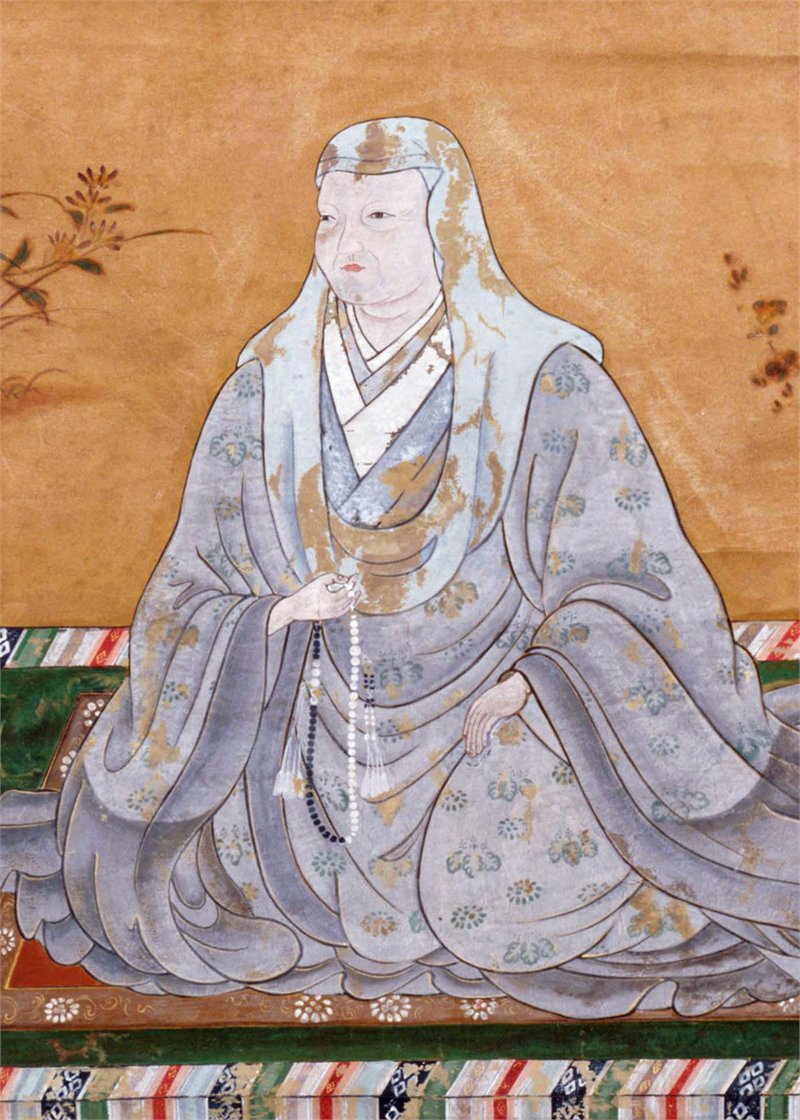
Image: Portrait of Kōdai-in (Nene)—a copy; the original is at Kōdai-ji Temple, Kyoto
Hideyoshi's principal (official) wife was Nene (also called One). They are said to have married around 1561 [Widely accepted].
The couple had no children, but once Hideyoshi became regent she was known as “Kita no Mandokoro” and supported the government from the inside [Fact]. After his death she became a Buddhist nun, took the name Kōdai-in, and founded Kōdai-ji Temple in Kyoto [Fact].
A letter from Nobunaga to Nene also survives. Comforting her over her husband's affairs with other women, Nobunaga writes, in effect, that “that bald rat will never find another woman as fine as you”—famously calling Hideyoshi a “bald rat” (hage-nezumi) [Fact].
Consort: Chacha (Yodo-dono)
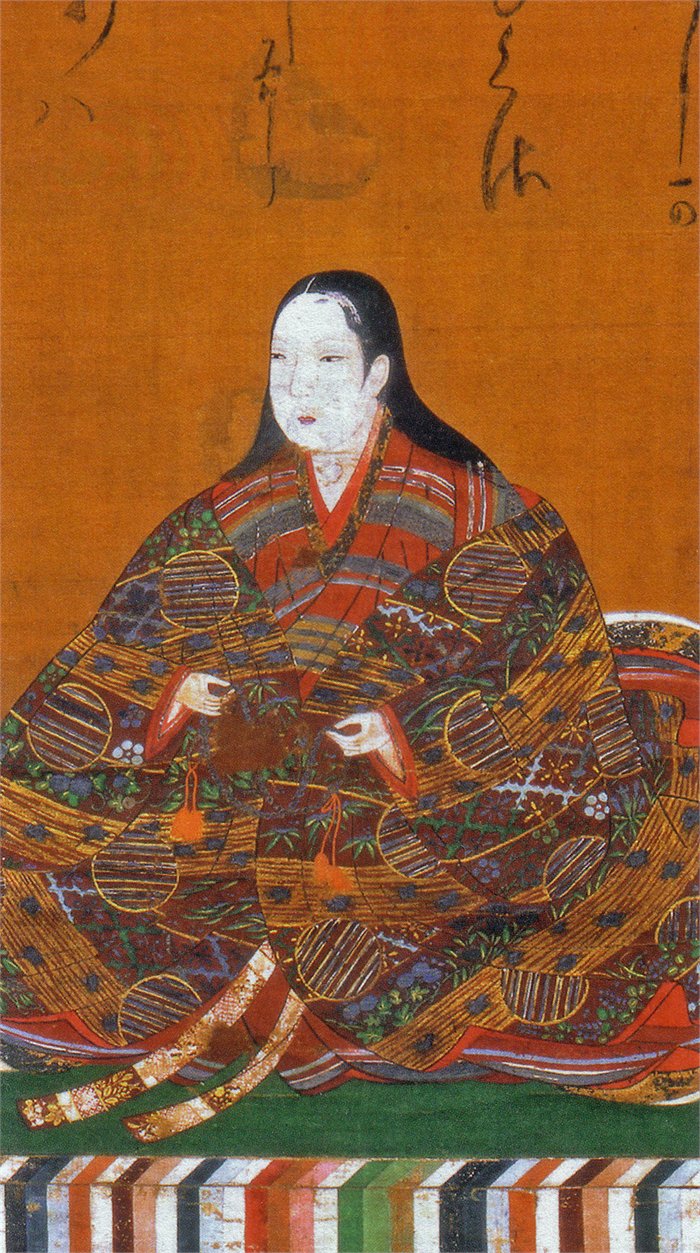
Image: Portrait traditionally identified as Yodo-dono (detail)
Chacha was the daughter of Azai Nagamasa, a lord of northern Ōmi, and Oichi, Nobunaga's younger sister [Fact]—which made her Nobunaga's niece.
As Hideyoshi's consort she bore Tsurumatsu (who died in early childhood) and Hideyori [Fact]. Because she was given Yodo Castle, she is known as “Yodo-dono.” After Hideyoshi's death she wielded great influence at Osaka Castle as the heir's mother, but she died together with Hideyori in the Summer Siege of Osaka in 1615 [Fact].
Hideyoshi also had several other consorts, including Kyōgoku Tatsuko (Matsu no Maru-dono) [Fact].
A principal wife and a consort held very different positions. Lump Nene and Chacha together as “wives,” and you miss the balance of power inside Hideyoshi's household.
From Kinoshita Tōkichirō to Toyotomi Hideyoshi: How His Name Changed
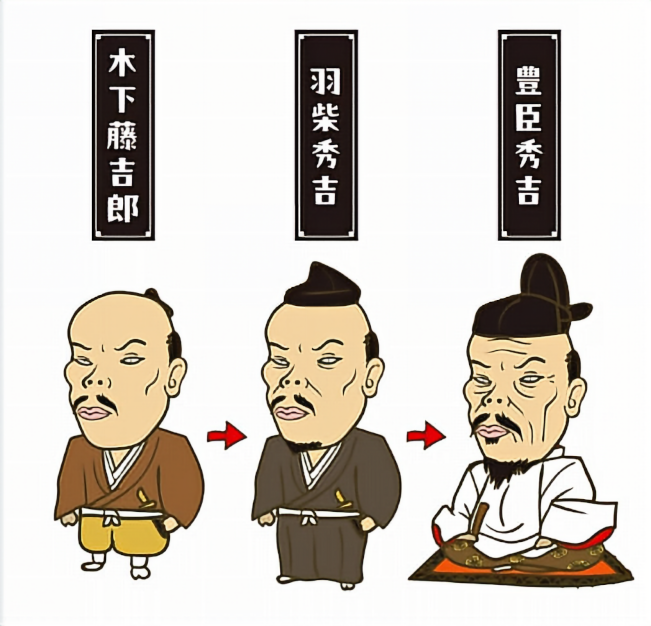
Image: From left, Kinoshita Tōkichirō → Hashiba Hideyoshi → Toyotomi Hideyoshi
Where did the name “Hashiba” come from?
A famous explanation says he took one character each from the names of two senior Oda generals: the “ha” (羽) of Niwa Nagahide and the “shiba” (柴) of Shibata Katsuie. However, this story comes from the Hōkan, written in the early Edo period, and scholars have pointed out that it conflicts with letters from Hideyoshi's own time [Debated].
“Toyotomi” wasn't actually his surname
Surprisingly, “Toyotomi” is not a family surname but a clan name (uji) granted by the imperial court—in the same category as the ancient clan names Minamoto, Taira, and Fujiwara. Hideyoshi's surname remained “Hashiba” to the end of his life [Fact].
He handed out both the Hashiba surname and the Toyotomi clan name to powerful lords, using them to build a hierarchy with himself at the top [Fact].
So by surname, he stayed “Hashiba Hideyoshi” all the way to the top. Confusing—but fascinating!
What Was Hideyoshi Like? The “Monkey” Nickname and the Six-Finger Mystery
.png)
A born charmer
Hideyoshi was friendly and remarkably good at winning people over. He rewarded even former enemies generously with land and gifts to bring them onto his side, and he is often described as a hitotarashi—a man who could charm anyone [Widely accepted].
In his final years, however, his decisions grew harsh: the forced suicide of Sen no Rikyū, the execution of his nephew Hidetsugu's family, the persecution of Christians, and the invasion of Korea [Fact]. Some historians believe old age and fear of dying before his young son Hideyori grew up played a part [Debated].
Was he really called “Monkey”?
“Monkey” (Saru) is Hideyoshi's most famous nickname, but there is almost no reliable evidence from his lifetime that Nobunaga actually called him that. The image spread mainly through Edo-period popular books [Legend].
What we do have is Nobunaga's letter to Nene, mentioned above, in which he calls Hideyoshi a “bald rat” [Fact].
Did Hideyoshi really have six fingers?
What the Sources Say
- The Jesuit missionary Luís Fróis wrote in his Historia de Japam that Hideyoshi “had six fingers on one hand”
- The Kokuso Yuigon, a Kaga domain record said to preserve the recollections of Maeda Toshiie, states that his right hand had an extra thumb—six digits in all
- Kang Hang, a Korean scholar taken to Japan as a captive, also wrote in his Ganyangnok that Hideyoshi had six fingers
Because three independent sources—Japanese, European, and Korean—agree, it is widely accepted that Hideyoshi had an extra finger on his right hand (polydactyly) [Widely accepted].
The Kokuso Yuigon even says Nobunaga nicknamed him “Mutsume” (“Six”). The sources disagree, however, on whether he later had the extra finger removed [Debated]. His official portraits do not show six fingers.
How tall was Hideyoshi?
Fróis described Hideyoshi as “short” and not particularly impressive to look at [Fact: Fróis's account]. He was certainly short, but estimates of his exact height—around 140 to 150-something cm (roughly 4'7" to 4'11")—are only guesses [Debated].
Short, and still ruler of the realm. You really can't judge people by their looks… Though “bald rat” is a pretty harsh nickname!
Why Did Hideyoshi Invade Korea? (The Imjin War, 1592–1598)
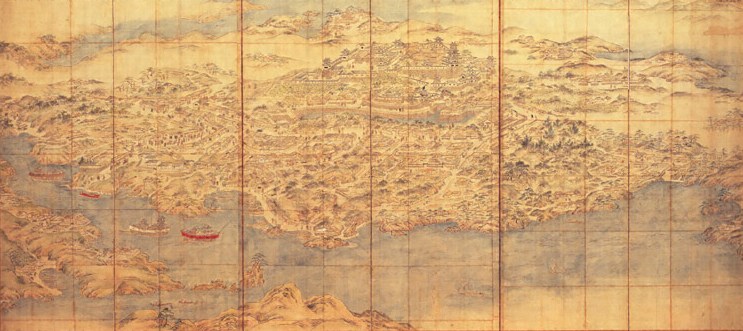
Image: Hizen Nagoya Castle Screen, attributed to Kanō Mitsunobu (Saga Prefectural Nagoya Castle Museum)
After unifying Japan, Hideyoshi sent huge armies to the Korean Peninsula twice, in 1592 and 1597. In Japan these campaigns are called the Bunroku and Keichō campaigns; in Korea they are known as the Imjin War (Imjin Waeran) and the Jeongyu Jaeran [Fact]. Nagoya Castle in Hizen (today's Karatsu, Saga Prefecture), on the northern tip of Kyushu, was built as the base of operations [Fact].
Why did he invade?
Hideyoshi himself described, in letters and other documents, a plan to “conquer Ming China” [Fact]. But why he went that far is still debated among historians [Debated].
Main Theories
- Ambition to conquer Ming China: after unifying Japan, he dreamed of ruling much of East Asia
- A shortage of land to reward his lords: with no more wars at home, he needed new territory to hand out
- Trade and international standing: he wanted to reopen trade with Ming China and raise Japan's position in East Asia
- Keeping the lords under control: keeping them mobilized helped stabilize his regime
Most historians think several of these motives overlapped, rather than just one [Widely accepted].
How did it end?
The war brought enormous suffering to Korea: many people were killed and the land was devastated. Large numbers of Koreans were also taken to Japan, including skilled potters [Fact]. Korean naval forces led by Admiral Yi Sun-sin repeatedly cut Japanese supply lines, and Ming China sent armies to support Korea [Fact]. Japan also lost many soldiers, and after Hideyoshi's death in 1598 all Japanese forces withdrew [Fact].
The war also deepened divisions among Hideyoshi's own retainers—such as the feud between Katō Kiyomasa's camp and Ishida Mitsunari's camp—which is thought to have paved the way for the Battle of Sekigahara after his death [Widely accepted].
How Did Hideyoshi Die? His Final Days and Death Poem
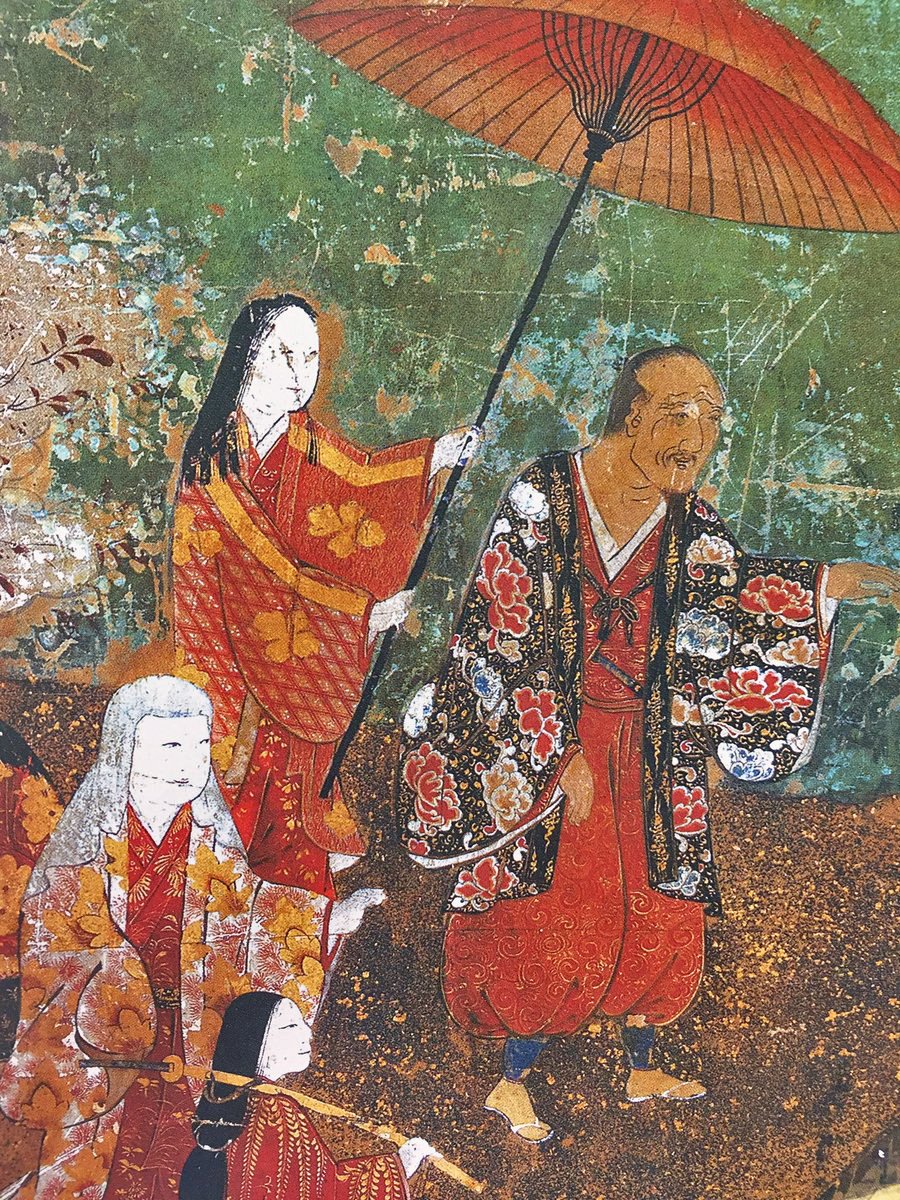
Image: Daigo Flower-Viewing Screen (detail). The man walking under the parasol is thought to be Hideyoshi.
Hideyoshi died at Fushimi Castle in Kyoto on September 18, 1598 (the 18th day of the 8th month of Keichō 3). He was 61—62 by traditional Japanese counting [Fact].
That spring he had hosted a lavish cherry-blossom party at Daigo-ji Temple in Kyoto—said to have had about 1,300 guests—known as the Daigo flower-viewing. Soon afterward his health began to fail [Fact].
What was the cause of death?
Leading Theories on the Cause of Death
- A digestive illness such as stomach or colon cancer
- Beriberi (kakke)
- A lung disease such as tuberculosis
- Syphilis
- Poisoning (though there is little evidence)
[Folk belief]
In his last months Hideyoshi grew thin and his condition kept worsening. But because few records from the time describe his symptoms in detail, the exact disease remains unknown [Debated].
His last wish: take care of Hideyori
Shortly before his death, Hideyoshi repeatedly begged the Five Elders—including Tokugawa Ieyasu and Maeda Toshiie—and the Five Commissioners, including Ishida Mitsunari, to look after his young son Hideyori (just five years old, six by Japanese count). His will repeats, again and again, words to the effect of “I beg you, take care of Hideyori” [Fact].
His death was kept secret for a time so that Japanese troops could be withdrawn safely from Korea [Fact].
His death poem
The following poem has come down to us as Hideyoshi's jisei, or farewell poem written at the end of life [Widely accepted]:
Tsuyu to ochi / tsuyu to kienishi / waga mi kana / Naniwa no koto mo / yume no mata yume
“Like dew I fell, like dew I vanish. Even Naniwa (Osaka) and all I achieved there are but a dream within a dream.”
Even the man who conquered the realm spent his last days worrying about his child's future. Perhaps that is what a human life comes to in the end.
Does Hideyoshi Have Living Descendants?
In short, Hideyoshi's direct line has died out [Fact].
- His son Hideyori died with his mother Yodo-dono in the Summer Siege of Osaka in 1615
- Hideyori's son Kunimatsu was captured and executed the same year
- Hideyori's daughter became a nun (Tenshū-ni) at Tōkei-ji Temple in Kamakura and died in 1645
However, the bloodline of Hideyoshi's elder sister, Tomo, continues. Tomo's son Toyotomi Hidekatsu married Gō (Chacha's younger sister), and their daughter Sadako married into the aristocratic Kujō family. Some trace a line through the Kujō family to Japan's present imperial family, though other genealogists read the family tree differently [Debated].
Nene's birth family, the Kinoshita, did survive as feudal lords through the Edo period—but that line descends from Nene's brother and is not related to Hideyoshi by blood [Fact].
Family Crest, Castles, and Grave
The paulownia crests: Go-shichi no kiri and Taikō-giri
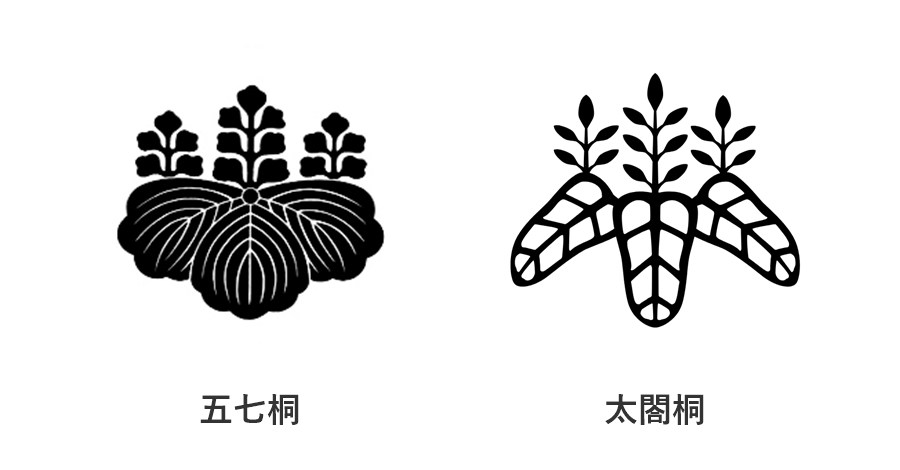
Image: Left, the Go-shichi no kiri (5-7 paulownia); right, the Taikō-giri
Hideyoshi's best-known crest is the paulownia (kiri). He used the “Go-shichi no kiri” (5-7 paulownia), which the imperial court allowed him to use, and later also a design of his own, the “Taikō-giri” [Widely accepted].
The Go-shichi no kiri is still used today as the emblem of the Government of Japan—you can spot it on the podium at the Prime Minister's press conferences [Fact]. It is also said that in his younger days he used an arrowhead-plant (omodaka) crest [Debated].
Castles and sites to visit
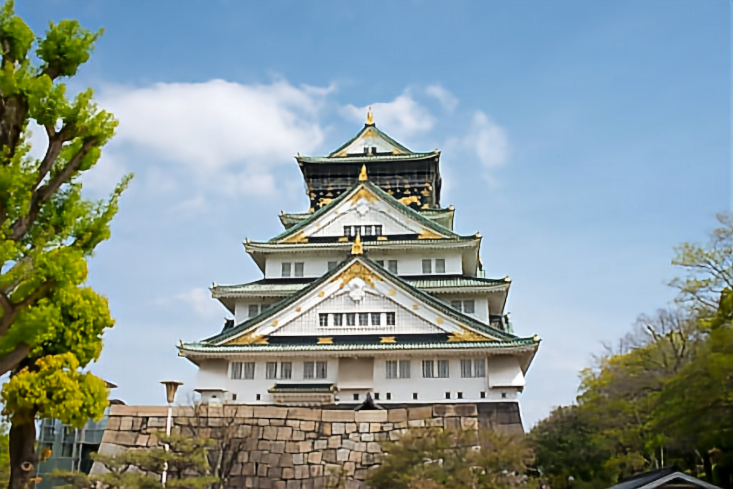
Image: Osaka Castle's main keep today (a reconstruction built in 1931)
- Nakamura Park (Nakamura Ward, Nagoya): said to be Hideyoshi's birthplace, with a shrine dedicated to him (Toyokuni Shrine)
- Nagahama Castle (Shiga): where he first became a castle lord
- Himeji Castle (Hyōgo): his base for the western campaign (the famous keep standing today was built later)
- Osaka Castle (Osaka): the seat of Hideyoshi's power (today's keep is a 1931 reconstruction)
- Nagoya Castle ruins (Saga): the base for the invasions of Korea
- Fushimi Castle (Kyoto): where Hideyoshi died
Hideyoshi's helmet
Hideyoshi is said to have favored a striking helmet with a fan of barin (a kind of iris) leaves radiating from the back: the “Ichi-no-tani barin ushirodate-tsuki kabuto.” It looks like a blazing sun with rays of light—instantly recognizable as Hideyoshi's [Legend].
His grave: Hōkoku-byō
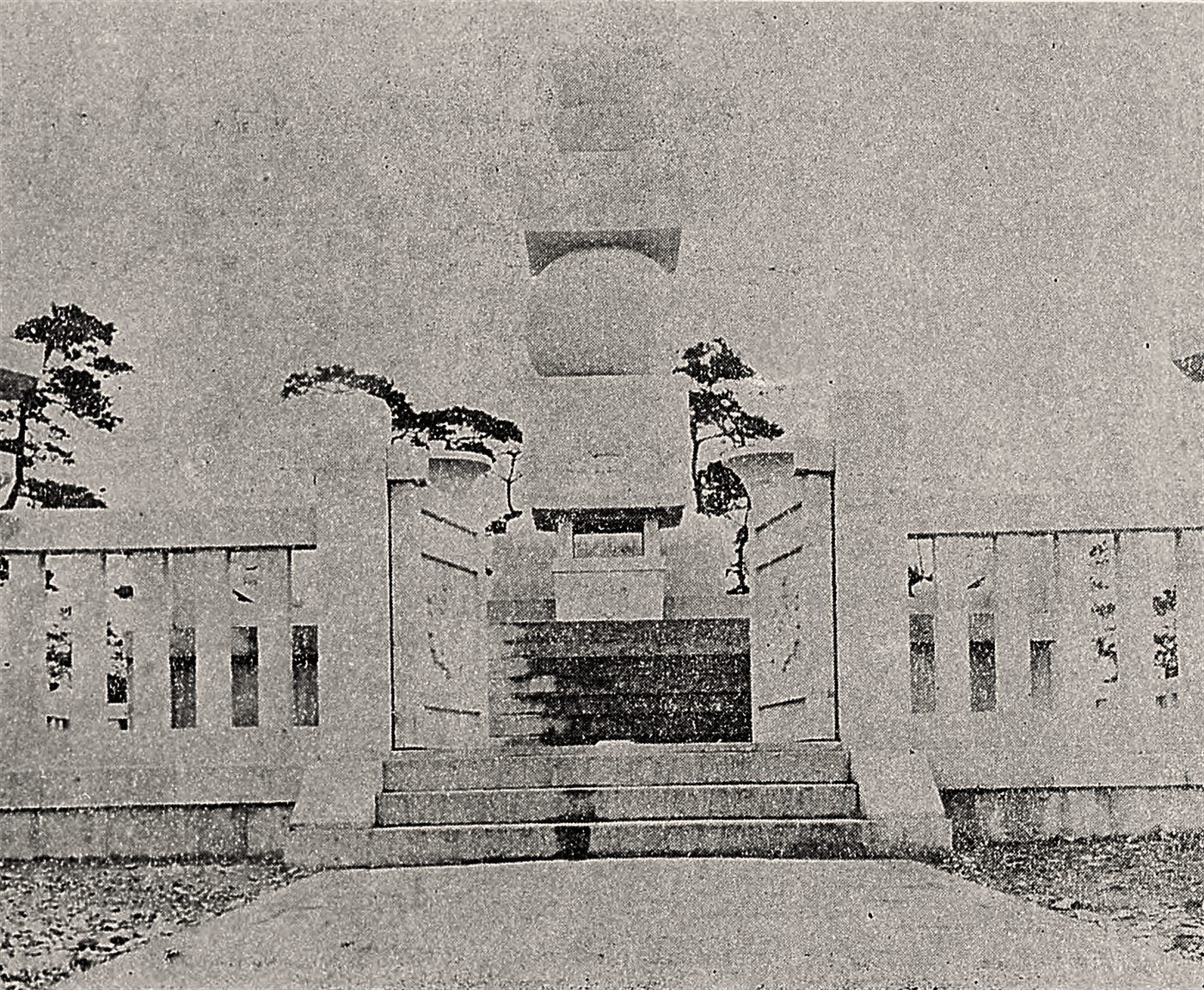
Image: Hōkoku-byō in the Meiji era (from Kyō Meisho Shashinchō, 1903)
Hideyoshi's grave is Hōkoku-byō, on Mount Amida-ga-mine in eastern Kyoto. After his death he was deified as “Hōkoku Daimyōjin” [Fact]. The site was neglected and damaged under the Tokugawa shogunate, and rebuilt in the Meiji era [Fact].
Key Retainers—and the “Three Unifiers” of Japan
Hideyoshi's key retainers
Nobunaga, Hideyoshi, and Ieyasu: the Three Unifiers
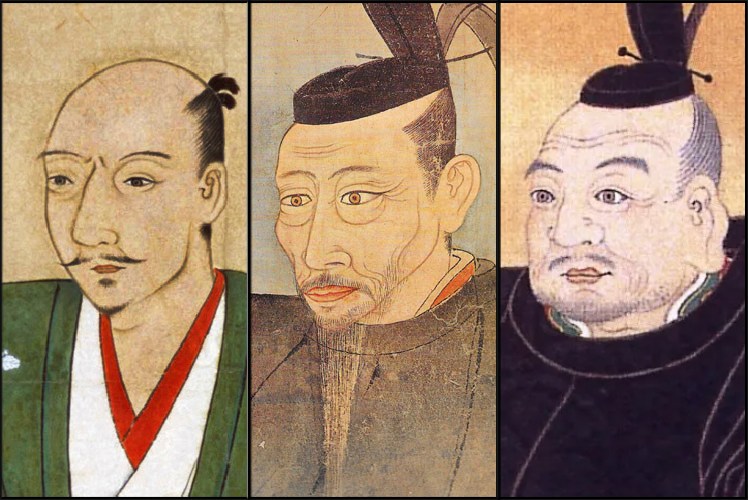
Image: From left, portraits of Oda Nobunaga, Toyotomi Hideyoshi, and Tokugawa Ieyasu (details)
Hideyoshi rose as a retainer of Oda Nobunaga and, after Nobunaga's death, won the position of his successor. He fought Tokugawa Ieyasu at the Battle of Komaki and Nagakute in 1584 and later brought him under his authority [Fact].
Nobunaga, Hideyoshi, and Ieyasu are known as Japan's “Three Unifiers” (san-eiketsu). A satirical verse from the Edo period sums up their roles [Legend]:
“Oda pounded the rice, Hashiba kneaded the dough, and Tokugawa, without lifting a finger, ate the rice cake of the realm.”
In other words, Nobunaga began the work of unification, Hideyoshi completed it, and Ieyasu reaped the rewards. The famous line “If the cuckoo won't sing, make it sing” was also invented in the Edo period as a way to describe Hideyoshi's character—he never actually said it [Fiction].
To learn more about Nobunaga, read Who Was Oda Nobunaga? Life, Death, Personality & Yasuke Explained.
Frequently Asked Questions (FAQ)
What did Toyotomi Hideyoshi do?
He ended Japan's Warring States period and unified the country in 1590. His nationwide land survey and Sword Hunt also laid the foundations of the social order of the Edo period.
When did Hideyoshi live?
From 1537 to 1598, during Japan's Sengoku (Warring States) and Azuchi-Momoyama periods.
Where was Hideyoshi born?
In Nakamura, Owari Province—today's Nakamura Ward in Nagoya. Nakamura Park, said to be his birthplace, has a shrine dedicated to him.
How did Hideyoshi die?
He died of illness at Fushimi Castle in 1598. The exact disease is unknown; theories include stomach or colon cancer, beriberi, and tuberculosis.
How old was Hideyoshi when he died?
He was 61 by Western count (62 by traditional Japanese counting).
Who was Hideyoshi's wife?
His principal wife was Nene (Kita no Mandokoro). His consorts included Chacha (Yodo-dono), the mother of his heir Hideyori.
Did Hideyoshi have a brother?
Yes—his younger brother Toyotomi Hidenaga, who supported his rise to power. Hidenaga is the main character of NHK's 2026 historical drama Toyotomi Kyōdai!
Did Hideyoshi really have six fingers?
Very likely. Three independent sources mention it: Luís Fróis's Historia de Japam, the Kokuso Yuigon (said to record Maeda Toshiie's recollections), and Kang Hang's Ganyangnok.
Was Hideyoshi really nicknamed “Monkey”?
There is almost no reliable evidence from his lifetime that Nobunaga called him “Monkey.” In a surviving letter to Nene, Nobunaga calls him a “bald rat” instead.
Does Hideyoshi have living descendants?
His direct line died out. However, some trace the bloodline of his elder sister Tomo through the Kujō family to Japan's present imperial family.
What's the difference between “Hashiba Hideyoshi” and “Toyotomi Hideyoshi”?
They are the same person. “Hashiba” was his surname, while “Toyotomi” was a clan name (uji) granted by the imperial court. He kept Hashiba as his surname to the end.
Is the “Taikō” in Shōgun based on Hideyoshi?
Yes. In James Clavell's novel Shōgun and its TV adaptations, the late “Taikō” is modeled on Toyotomi Hideyoshi, just as Lord Toranaga is modeled on Tokugawa Ieyasu. The characters and events, however, are fictionalized.
Sources & How This Article Was Written
This article is based mainly on the following records and research:
- Shinchō Kōki (Ōta Gyūichi): a chronicle by a man who served Nobunaga—for example, on Hideyoshi's unauthorized return from the northern front
- Kanpaku Ninkanki (Ōmura Yūko): a biography by a writer in Hideyoshi's service; the source for his birth date (it also flatters Hideyoshi, so it must be read with care)
- Luís Fróis, Historia de Japam: the account of a Jesuit missionary who met Hideyoshi—on his appearance and six fingers
- Kokuso Yuigon: a Kaga domain record said to preserve Maeda Toshiie's recollections—on the six fingers and the nickname “Mutsume”
- Kang Hang, Ganyangnok: the account of a Korean scholar taken to Japan as a captive
- Documents issued by Hideyoshi himself: the Sword Hunt edict, letters, and his will
- Edo-period popular books (Taikō Sosei-ki, Ehon Taikōki, Hōkan, Bukō Yawa, and others): the source of the sandal, one-night castle, and “Monkey” stories, which this article labels
[Legend]or[Debated] - Recent research: for example, on the father of Hideyoshi and Hidenaga (Kuroda Motoki, Hashiba Hideyoshi to Sono Ichizoku, 2025)
- Images: the Kōdai-ji portrait of Hideyoshi, the Osaka Summer Campaign Screens, the Daigo Flower-Viewing Screen, the Hizen Nagoya Castle Screen, Utagawa Toyonobu's print, the Ehon Taikōki illustration, the copy of Kōdai-in's portrait, and others are public-domain images from Wikimedia Commons
What the Labels Mean
[Fact]Confirmed by sources from the period[Widely accepted]The view held by most historians[Debated]Historians disagree[Legend][Fiction][Folk belief]Stories created later, or claims with little evidence
This article was written by the Samurai Lord editorial team and is revised as new research and reader feedback come in. If you spot an error, please let us know through our contact form (in Japanese) and we will check and correct it.
Summary: Who Was Toyotomi Hideyoshi?
Toyotomi Hideyoshi was a man of humble birth who became Nobunaga's successor and went on to unify Japan.
His land survey and Sword Hunt shaped the social order of the next era, but his later years also had a dark side—the invasions of Korea and harsh treatment of those close to him. And the sheer number of stories invented about him later, from the sandal-warming tale to the “Monkey” nickname, shows just how much he has captured people's imaginations.
From humble birth to ruler of Japan—that rise was real. But the truly interesting part is the gap between the legendary Hideyoshi and the Hideyoshi the sources reveal.
Next, I want to learn about his younger brother, Toyotomi Hidenaga, who supported him every step of the way. He's the hero of the 2026 NHK drama, after all!
Read his story in Who Was Toyotomi Hidenaga? Hideyoshi's Brother, Wife, Death & Family Tree.
Read in Japanese
This article is also available in Japanese: 豊臣秀吉とは何をした人?死因・妻と弟・6本指の真相を史実で解説