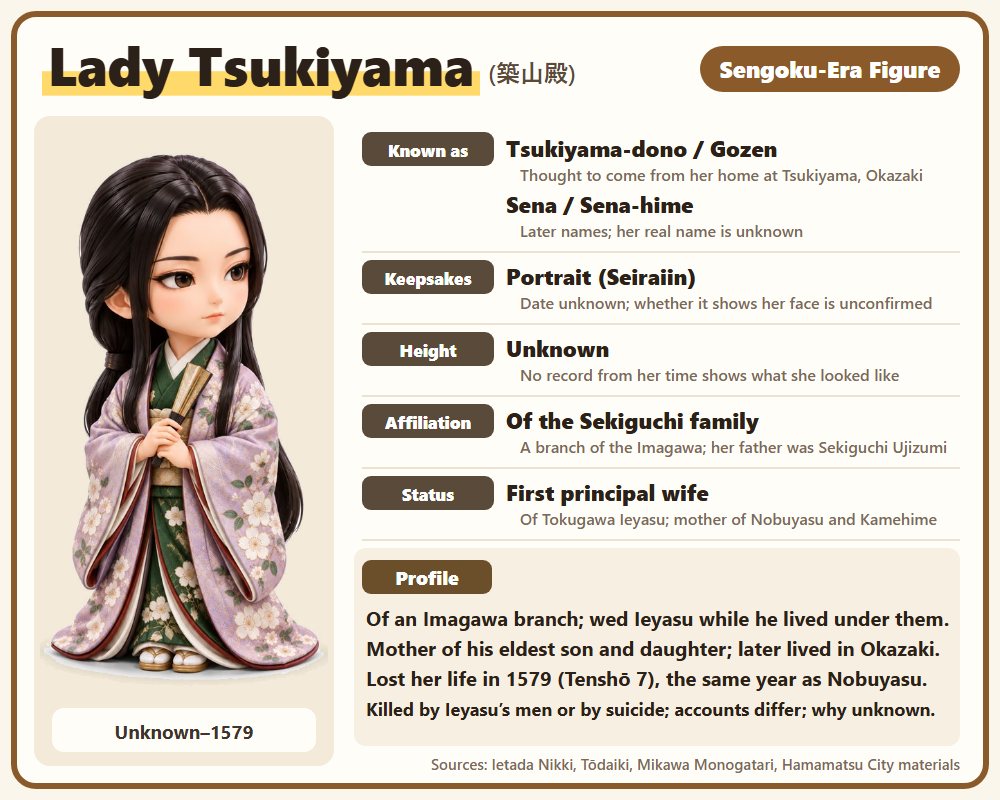
Lady Tsukiyama (Tsukiyama-dono; "-dono" is a respectful title) was the first principal wife of Tokugawa Ieyasu. She married him while he was living under the Imagawa family, and bore his eldest son, Nobuyasu, and his eldest daughter, Kamehime. She is also called "Sena" or "Sena-hime," but these names are thought to come from later times.
In 1579 (Tenshō 7), Lady Tsukiyama lost her life in the same year as her son Nobuyasu. This is known as the "Tsukiyama incident" (or the Nobuyasu incident). Views on why it happened differ, and accounts of her end are not the same. Her reputation as a "wicked woman" needs to be examined in light of the later accounts that helped shape it.
This article explains who she was, why the incident happened, how she died and where her kubizuka (a mound traditionally associated with the burial of her head) is said to be, her image as a villain or a beauty, and her marriage to Ieyasu, keeping apart records from her time and stories from later times.
Historical dates give the Western year with the Japanese era; months and days follow the Japanese lunisolar calendar unless otherwise stated. Modern dates use the Gregorian calendar. Ages use the traditional Japanese count, in which a person was counted as one at birth and gained a year at the start of each new year in the Japanese calendar.
Key points are tagged: [Fact] confirmed by records from the time, [Widely accepted] a view widely accepted by researchers, [Debated] accounts or interpretations differ, [Unknown] not established from the sources we checked, [Legend] stories found in later records or traditions, and [Folk belief] popular claims with little evidence.

I am Uesugi Kenshin. Today's story is about Lady Tsukiyama, Ieyasu's first wife.

I'm Date Masamune! I've seen her as "Sena" in a TV drama. What was she really like?

In truth, much about her is unknown. Let us separate what the records say from the stories of later times.
The Short Answers
- Who was she? Tokugawa Ieyasu's first principal wife, a daughter of the Sekiguchi, a branch of the Imagawa family (more)
- Her real name? Unknown
[Unknown]. "Sena" and "Sena-hime" are thought to be names from later times - Her children? Her eldest son, Matsudaira Nobuyasu, and her eldest daughter, Kamehime (family)
- How did she die? She is said to have died on the 29th day of the 8th month of 1579 (Tenshō 7) at Tomitsuka in Tōtōmi (today's Hamamatsu, Shizuoka Prefecture). Accounts describe her as having been killed by Ieyasu's retainers; there is also a theory that she took her own life
[Debated](more) - Why is she known? For the "Tsukiyama incident," in which Ieyasu lost his wife and eldest son. The reason is not clear (more)
- Her grave? Seiraiin temple in Hamamatsu (the Gekkutsu-byō mausoleum). Her head mound is said to be at Yabashira Shrine in Okazaki (related places)
Three Things We Learn by Comparing the Sources
- A diary from the time: what the Ietada Nikki, kept by one of Ieyasu's kinsmen, records about Nobuyasu's removal from Okazaki, with a short Japanese excerpt and an English translation (more)
- Did Nobunaga order it? How the Mikawa Monogatari, written more than 40 years later, differs from other records (more)
- How the "villain" was made: a table of seven records showing how she came to be written about in more detail, and more harshly, over time (more)
Jump to the part you want to read:
- Who was Lady Tsukiyama (Sena-hime)?
- What was the Tsukiyama incident, and why did it happen?
- How did Lady Tsukiyama die? Her end and her head mound
- Was she a villain? Was she beautiful?
- Lady Tsukiyama and Ieyasu: their marriage
- Her family and children
- Her grave and related places
- FAQ
The labels such as [Fact] and [Debated] show how certain each point is (their meanings are listed at the end of the article).
Who Was Lady Tsukiyama (Sena-hime)?
In a single sentence, Lady Tsukiyama was "Ieyasu's first principal wife, whom he married while he was still under the Imagawa, and who lost her life in 1579 (Tenshō 7), the same year as her eldest son, Nobuyasu".
| Item | Details |
| Name | Tsukiyama-dono (also Tsukiyama Gozen); Lady Tsukiyama |
| Husband | Tokugawa Ieyasu (called Matsudaira Motonobu around the time of the marriage) [Fact] |
| Father | Sekiguchi Ujizumi, of the Imagawa family (also written 関口親永 in later genealogies) [Widely accepted] |
| Mother | Later genealogies connect her with Imagawa Yoshimoto or Ii Naohira; her parentage, including possible adoptive ties, is unclear [Debated] |
| Born | Not clear. Many encyclopedias give around 1542 (Tenbun 11) [Unknown] |
| Children | Eldest son Matsudaira Nobuyasu; eldest daughter Kamehime |
| Where she lived | Sunpu (today's Shizuoka City), then Okazaki (today's Okazaki, Aichi Prefecture) |
| Died | 1579 (Tenshō 7). Many encyclopedias give her age as 38 by the traditional count (only a guide, since her birth year is unclear) |
Where the Name "Tsukiyama-dono" Comes From
"Tsukiyama-dono" is not her real name but a name taken from where she lived. After Ieyasu returned to Okazaki Castle, she is thought to have lived in a residence at a place called Tsukiyama near the castle, and so came to be called by that name [Widely accepted]. An article on Okazaki City's tourism site introduces the area near Okazaki Castle as the presumed site of the "Tsukiyama residence."
Was Her Real Name Sena?
Her real name is not known [Unknown].
Dramas and novels often call her "Sena" or "Sena-hime," but these are thought to be names from later times. The mid-Edo-period Butoku Hennen Shūsei (1740) says of her father's house that it was "called Sekiguchi, or Sena," so "Sena" appears there as the name of her father's family. Examples calling her herself "Sena-hime" can be found in books of the Meiji period.

So no one has confirmed that "Sena" was really her name!
Indeed. In this article we will call her Lady Tsukiyama, the name we use throughout.
What Was the Tsukiyama Incident, and Why Did It Happen?
The Tsukiyama incident was the event of 1579 (Tenshō 7) in which Ieyasu's principal wife, Lady Tsukiyama, and his eldest son, Nobuyasu, lost their lives one after the other. Researchers often call it the "Matsudaira Nobuyasu incident" or the "Nobuyasu incident."
To give the conclusion first: records from the time confirm that Ieyasu sent Nobuyasu out of Okazaki Castle. But the true reason the two lost their lives is not clear [Debated].
The Events of 1579
Months and days follow the Japanese lunisolar calendar of the time.
| Date | Event |
| 6th month, 4th day | Ieyasu comes from Hamamatsu to Okazaki and reconciles Nobuyasu with another person. That person's name cannot be read, because the diary is worm-eaten at that point [Fact: Ietada Nikki] |
| 7th month, 16th day | Ieyasu's senior retainer Sakai Tadatsugu presents horses to Oda Nobunaga at Azuchi [Fact: Shinchō Kōki]. The Tōdaiki says that in the 7th month, word about Nobuyasu was passed privately to Nobunaga through Tadatsugu |
| 8th month, 3rd day | Ieyasu comes from Hamamatsu to Okazaki [Fact: Ietada Nikki] |
| 8th month, 4th day | Nobuyasu leaves Okazaki Castle and is moved to Ōhama (today's Hekinan, Aichi Prefecture) [Fact: Ietada Nikki] |
| 8th month, 8th day | A copy survives of a letter with this date from Ieyasu to Nobunaga's retainer Hori Hidemasa (the year is estimated to be 1579). Researchers introduce it as a letter informing Nobunaga's side that Nobuyasu had been sent out of Okazaki |
| 8th month, 9th day | Nobuyasu is moved from Ōhama to Horie Castle in Tōtōmi (today's Hamamatsu) [Fact: Ietada Nikki] |
| 8th month, 10th day | Warriors of Mikawa write pledges that they will not secretly contact Nobuyasu [Fact: Ietada Nikki] |
| 8th month, 29th day | Lady Tsukiyama dies, it is said [Widely accepted]. The place is said to have been Tomitsuka near Hamamatsu |
| 9th month, 15th day | Nobuyasu takes his own life at Futamata Castle in Tōtōmi (today's Tenryū Ward, Hamamatsu), it is said [Widely accepted]. He was 21 by the traditional count |
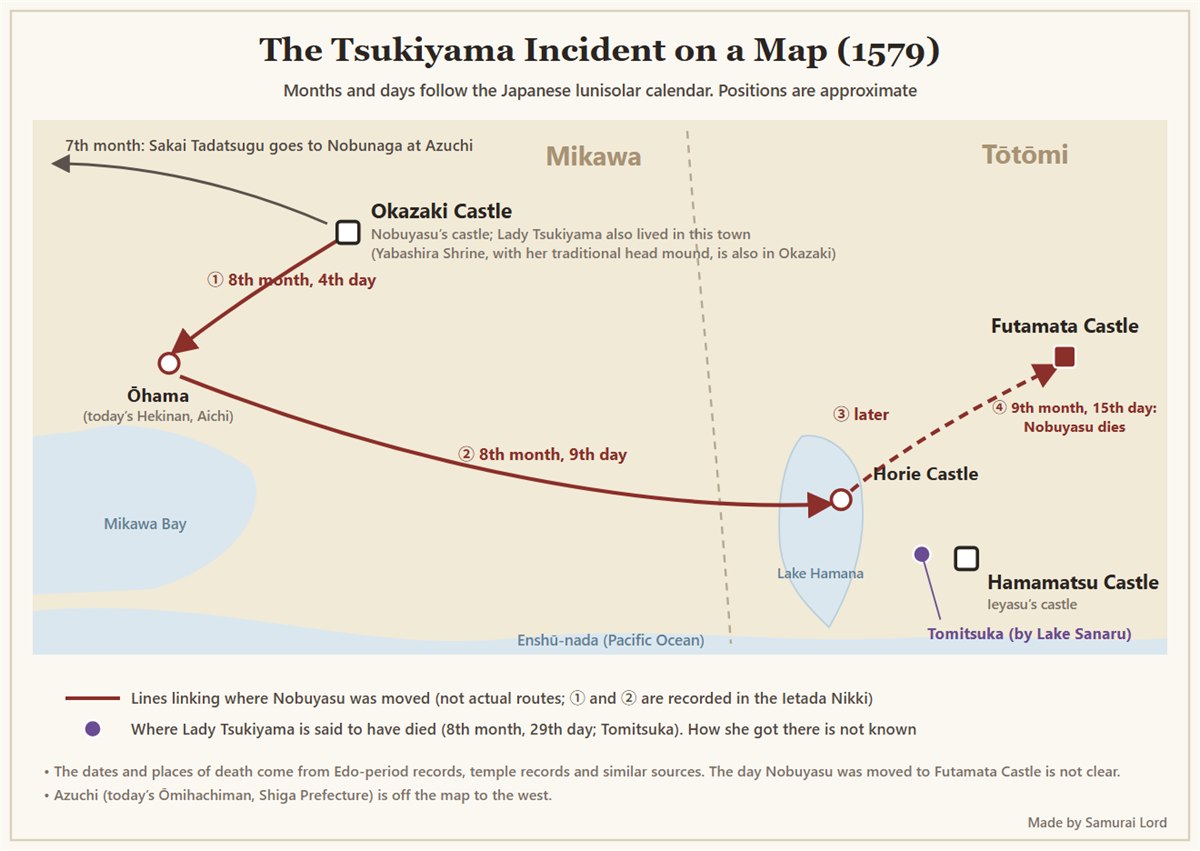
Image: Map of the Tsukiyama incident (made by Samurai Lord; positions are approximate). Tap (click) the image to enlarge it
Most of the entries from the 6th month to the 10th day of the 8th month come from the Ietada Nikki, the diary kept by Matsudaira Ietada, a warrior of Ieyasu's family. It is a very important record written at the time. This diary, however, does not record the deaths of Lady Tsukiyama and Nobuyasu.
Source Box ①: The 4th Day of the 8th Month in the Ietada Nikki
Source
Matsudaira Ietada, Ietada Nikki, entry for the 4th day of the 8th month of Tenshō 7 (the reading of the original follows Iwasawa Yoshihiko, "On the Original of the Ietada Nikki," in the bulletin of the Historiographical Institute, University of Tokyo, no. 2; title translated by us)
Original
「御親子被仰様候て、信康大濱へ被退候」 (as transcribed by Iwasawa; where Ietada wrote "Nobunaga" and corrected it to "-yasu," we give "Nobuyasu." The edition printed in the Meiji period reads 「御親子被仰談候て、信康大濱江御返候」)
Translation
There was an exchange of words between father and son (Ieyasu and Nobuyasu), and Nobuyasu withdrew to Ōhama.
Notes
The wording of this entry differs slightly between editions. The researcher Iwasawa Yoshihiko interprets the wording as indicating a quarrel followed by a parting. The entry does not record what father and son said [Unknown]
Who Decided Their Fate? Did Nobunaga Order It?
It used to be common to explain that "on Nobunaga's orders, Ieyasu reluctantly had his wife and son put to death." The source of this story is the Mikawa Monogatari, written in the early Edo period by Ieyasu's retainer Ōkubo Tadataka.
Source Box ②: The "Twelve Articles" in the Mikawa Monogatari
Source
Ōkubo Tadataka, Mikawa Monogatari, last volume (around 1626, Kan'ei 3; Wikisource, from the Kokumin Bunko edition)
Original (excerpt)
「信康之御前様寄、信康をさゝへさせ給ひて、十二ヶ条かき立被成而、坂井左衛門督にもたせたまひて、信長へつかわし給ふ」「腹をきらせ給へと、家康へ可被申」
English summary of the excerpt
Nobuyasu's wife (Tokuhime, Nobunaga's daughter) wrote twelve articles of complaint against him and sent them to Nobunaga through Sakai Tadatsugu. Nobunaga then told Tadatsugu to tell Ieyasu to have Nobuyasu commit seppuku (ritual suicide).
Notes
The passage concerns Nobuyasu only and does not mention Lady Tsukiyama
The Mikawa Monogatari, however, was written more than 40 years after the incident. This passage deals only with Nobuyasu and does not mention Lady Tsukiyama, and it also gives the year as 1578 (Tenshō 6), one year off from other records.
The Tōdaiki, another record from the early Edo period, says that when Ieyasu passed word privately to Nobunaga through Sakai Tadatsugu, Nobunaga replied, "as Ieyasu sees fit." A researcher's paper also cites the Azuchi Nikki, a record by Nobunaga's retainer Ōta Gyūichi, as saying that there were rumors of Nobuyasu's "treacherous intent" and that he was driven out to the edge of the province on the 4th day of the 8th month.
From such records, some research places more weight on Ieyasu's own decision about how to deal with Nobuyasu [Debated]. But the reasons the two lost their lives, and how far Nobunaga was involved, are still debated. The historian Kuroda Motoki, for example, counts consideration for Nobunaga among Ieyasu's reasons; this view does not mean that "Nobunaga had nothing to do with it."
Why Did It Happen? The Main Theories
| Theory | What it says | Label |
| Secret contact with the Takeda | Sees as the background to the 1579 decision that Lady Tsukiyama had been in contact with the Takeda side in the Ōoka Yashirō affair of 1575 (Tenshō 3), which later came to Nobunaga's knowledge. Considers Nobuyasu unlikely to have been involved in the 1575 plot (the view of Kuroda Motoki) | [Debated] |
| A split over policy within the family | Sees a split between Ieyasu at Hamamatsu and those around Nobuyasu at Okazaki over whether to keep fighting the Takeda or come to terms with them (introduced as the view of researchers such as Iwasawa Yoshihiko and Shiba Hiroyuki) | [Debated] |
| Quarrels within the family | Blames quarrels between Nobuyasu and his wife Tokuhime, or bad feeling between Lady Tsukiyama and Tokuhime. Emphasized in Edo-period accounts | [Debated] |
| Nobunaga feared Nobuyasu's talent | Says Nobunaga wanted to get rid of Nobuyasu because he outshone Nobunaga's own sons. Considered to have little basis | [Folk belief] |
For none of these theories have we found a decisive record from the time. The sources checked for this article are not enough to narrow the reason down to one. What the Ietada Nikki and similar records do show is the course of events by which Ieyasu sent Nobuyasu out of Okazaki.
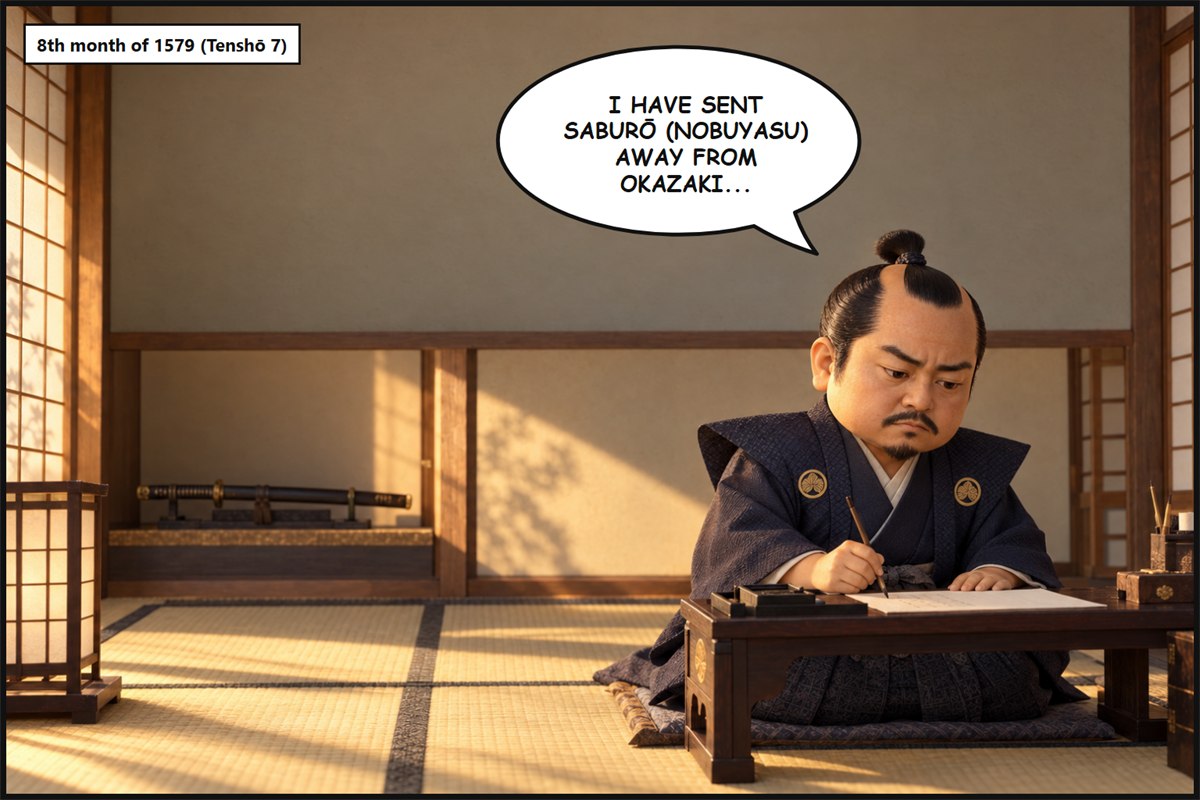
Image: Ieyasu writing a letter in the 8th month of 1579
Did Nobunaga give the order, or did Ieyasu decide? The records tell it differently!
Indeed. Who decided what is still partly unknown. That is why it matters to compare what each record says.
Comparing the Records: What Does Each Book Say?
| Record | When written | What it says |
| Ietada Nikki | At the time (diary of Matsudaira Ietada, of Ieyasu's family) | Nobuyasu left Okazaki Castle and was moved to Ōhama and Horie; the pledges of the Mikawa warriors. It does not record the two deaths |
| Ieyasu's letter | At the time (dated the 8th day of the 8th month; the year is estimated to be 1579; a copy survives) | Introduced as informing Nobunaga's side that Nobuyasu had been sent out of Okazaki |
| Azuchi Nikki | A record by Nobunaga's retainer Ōta Gyūichi | Rumors of Nobuyasu's "treacherous intent"; he was driven out on the 4th day of the 8th month (as quoted in a researcher's paper) |
| Tōdaiki | Early Edo period | Nobunaga replied, "as Ieyasu sees fit." His mother (Lady Tsukiyama) was also put to death at Hamamatsu (no date or method given). Gives the 5th day of the 8th month for his removal |
| Mikawa Monogatari | Around 1626 (Kan'ei 3) | Tokuhime's twelve articles of complaint; Nobunaga ordered seppuku (this passage concerns Nobuyasu only) |
| Matsudaira-ki | Early Edo period | Lady Tsukiyama was close to a Chinese physician and was in secret contact with the Takeda |
| Butoku Hennen Shūsei | 1740 (Genbun 5) | Portrays Lady Tsukiyama as a jealous woman |
The table shows that the later the record, the more detail it gives about Lady Tsukiyama, and the worse she is made to look. But later books sometimes drew on older records, so it is not true that "everything in a newer book is false."
How Did Lady Tsukiyama Die? Her End and Her Head Mound
Lady Tsukiyama is said to have died on the 29th day of the 8th month of 1579 (Tenshō 7) at Tomitsuka in Tōtōmi (today's Chūō Ward, Hamamatsu, near Lake Sanaru) [Widely accepted]. This date comes from the records of the temple where her grave is, encyclopedias and similar sources.
As for how she died, accounts describe her as having been killed by Ieyasu's retainers, and there is also a theory that she took her own life [Debated]. The early Edo-period Tōdaiki says only that she "was put to death at Hamamatsu" and does not say how.
Many encyclopedias give her age as 38 by the traditional count, but this is only a guide, since her birth year is unclear.
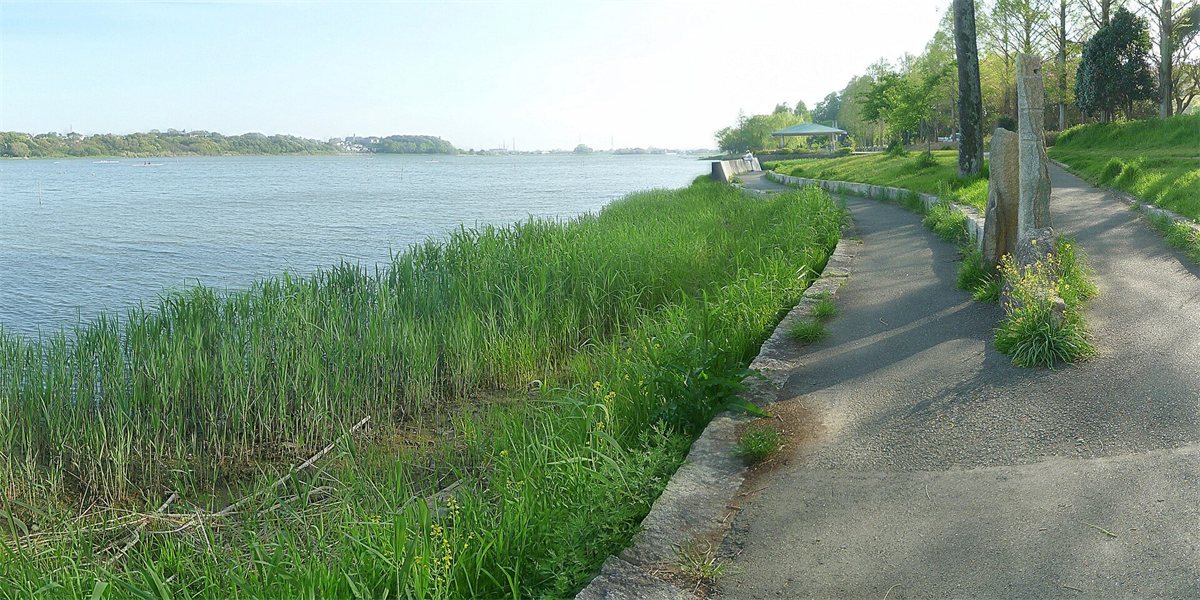
Image: Lake Sanaru today (photographed in 2010). Wikimedia Commons (photo: sewmew, public domain)
In Hamamatsu there is a tradition that Lady Tsukiyama came into Lake Sanaru by boat and was struck down when she stepped ashore. Hamamatsu City also introduces this story as a "legend" [Legend].
Her head mound is said to be at Yabashira Shrine in Okazaki, and her grave at Seiraiin temple in Hamamatsu [Legend]. They are introduced in related places.
Local people still take good care of these places today!
Indeed. They are places the people of the area still hold dear.
Was Lady Tsukiyama a Villain? Was She Beautiful?
To give the answer first: the sources we checked do not establish what Lady Tsukiyama was like as a person or what she looked like [Unknown]. Her image as a "wicked woman" spread mainly from later records. Whether she was beautiful has not been confirmed either.
Image: Lady Tsukiyama reading a letter
Where Did the "Villain" Image Come From?
The records that portray Lady Tsukiyama badly are from the Edo period.
- Matsudaira-ki (early Edo period): tells how she was close to a Chinese physician who had come from Kai and was in secret contact with the Takeda
[Legend] - Butoku Hennen Shūsei (1740): portrays her as a twisted, jealous woman
[Legend] - Kaisei Mikawa Gofudoki (1837): the story grows further, with tales such as her writing a letter full of resentment toward Ieyasu
[Legend]
Such stories were also used in novels and dramas of the Shōwa era, spreading the image of Lady Tsukiyama as a "jealous villain." Some interpret these portrayals as attempts to shift blame from Ieyasu onto Lady Tsukiyama [Debated].
Was She Really in Secret Contact with the Takeda?
In 1575 (Tenshō 3), Ōoka Yashirō, a town magistrate (official) of Okazaki, and others are thought to have plotted to go over to the Takeda side (the Ōoka Yashirō affair) [Widely accepted].
Whether Lady Tsukiyama was involved, however, is a point on which researchers disagree [Debated]. Kuroda Motoki thinks she was involved, but we have not found any record from the time that clearly shows she was in secret contact with the enemy.
Was She Beautiful?
We have not found any record from her time that shows what she looked like [Unknown]. A portrait of her is kept at Seiraiin in Hamamatsu, but the sources we checked do not establish when it was painted or whether it preserves her actual appearance.
So there's no clear proof that she was a villain, or that she was beautiful!
Indeed. To say "we do not know" when we do not know is the proper way for a student of history.
Lady Tsukiyama and Ieyasu: What Was Their Marriage Like?
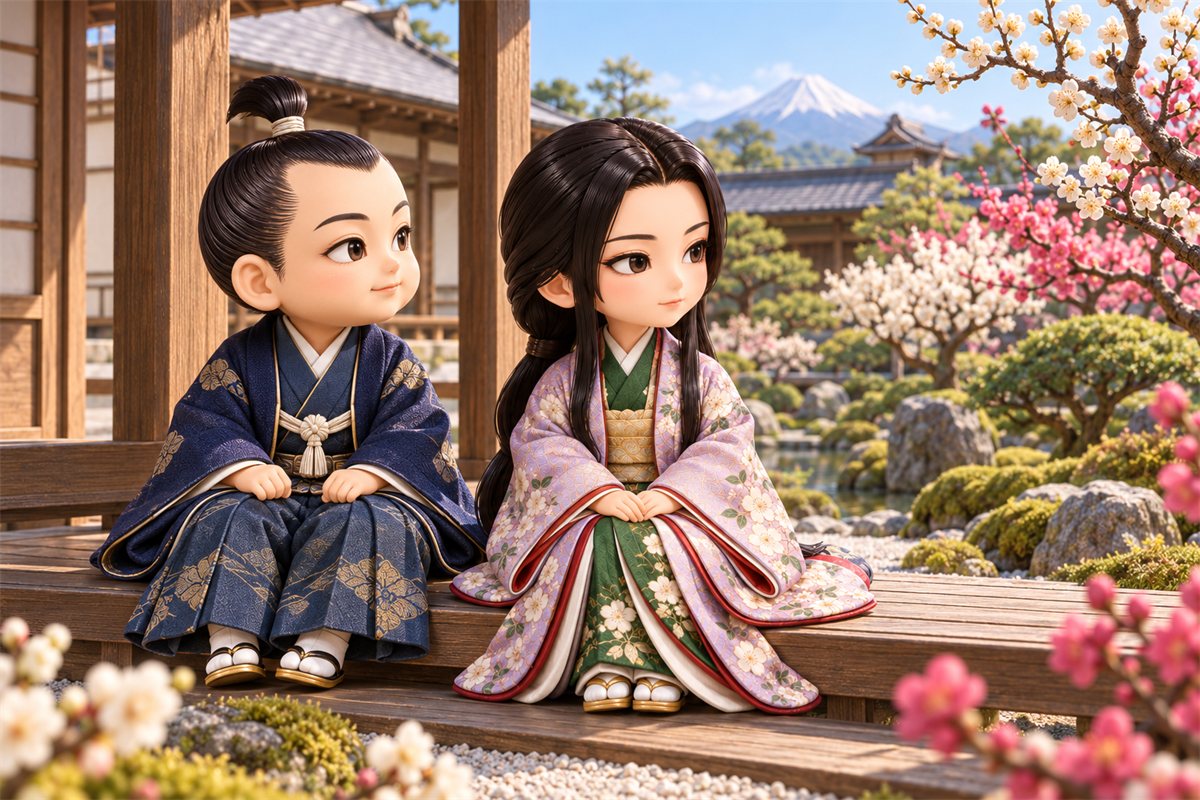
Image: The young Ieyasu and Lady Tsukiyama at Sunpu
As a boy, Ieyasu lived as a hostage of the Imagawa at Sunpu (today's Shizuoka City). He is said to have married Lady Tsukiyama around 1556–57 (Kōji 2–3), when he was about 15 or 16 by the traditional count [Debated]. The marriage linked Ieyasu to a branch of the Imagawa family.
After the Battle of Okehazama in 1560 (Eiroku 3), Ieyasu returned to Okazaki and broke away from the Imagawa. Lady Tsukiyama and the children are thought to have moved to Okazaki around 1562 (Eiroku 5) [Widely accepted]. There is also a story that they were brought to Okazaki in an exchange of hostages, but it comes from Edo-period records [Legend].
A Couple Who Lived Apart
In 1570 (Genki 1), Ieyasu moved to Hamamatsu Castle in Tōtōmi. Lady Tsukiyama stayed at Okazaki, and the two came to live apart [Widely accepted].
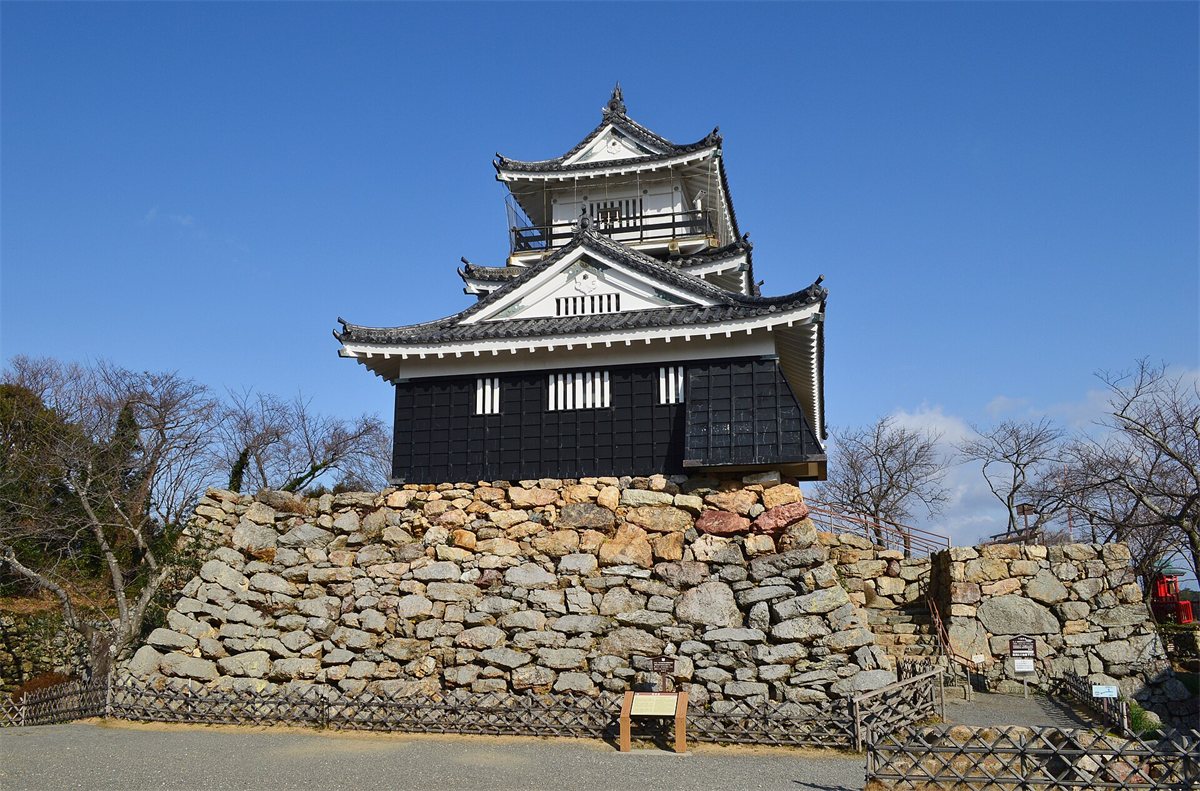
Image: Hamamatsu Castle (the present keep was built in the Shōwa era). Wikimedia Commons (photo: Saigen Jiro, CC0)
The Ietada Nikki records that in the 2nd month of 1578 (Tenshō 6) "word came from Nobuyasu's mother" [Fact: Ietada Nikki]. This suggests that Lady Tsukiyama kept up ties with retainers while at Okazaki.
She is generally regarded as Ieyasu's principal wife until her death, and while she lived he took no other principal wife [Widely accepted]. He married his second principal wife, Lady Asahi (Toyotomi Hideyoshi's younger sister), in 1586 (Tenshō 14). From this alone, however, we cannot tell whether the two got on well or badly [Unknown].
For Ieyasu's life, see our article on Tokugawa Ieyasu.
Lady Tsukiyama's Family and Children
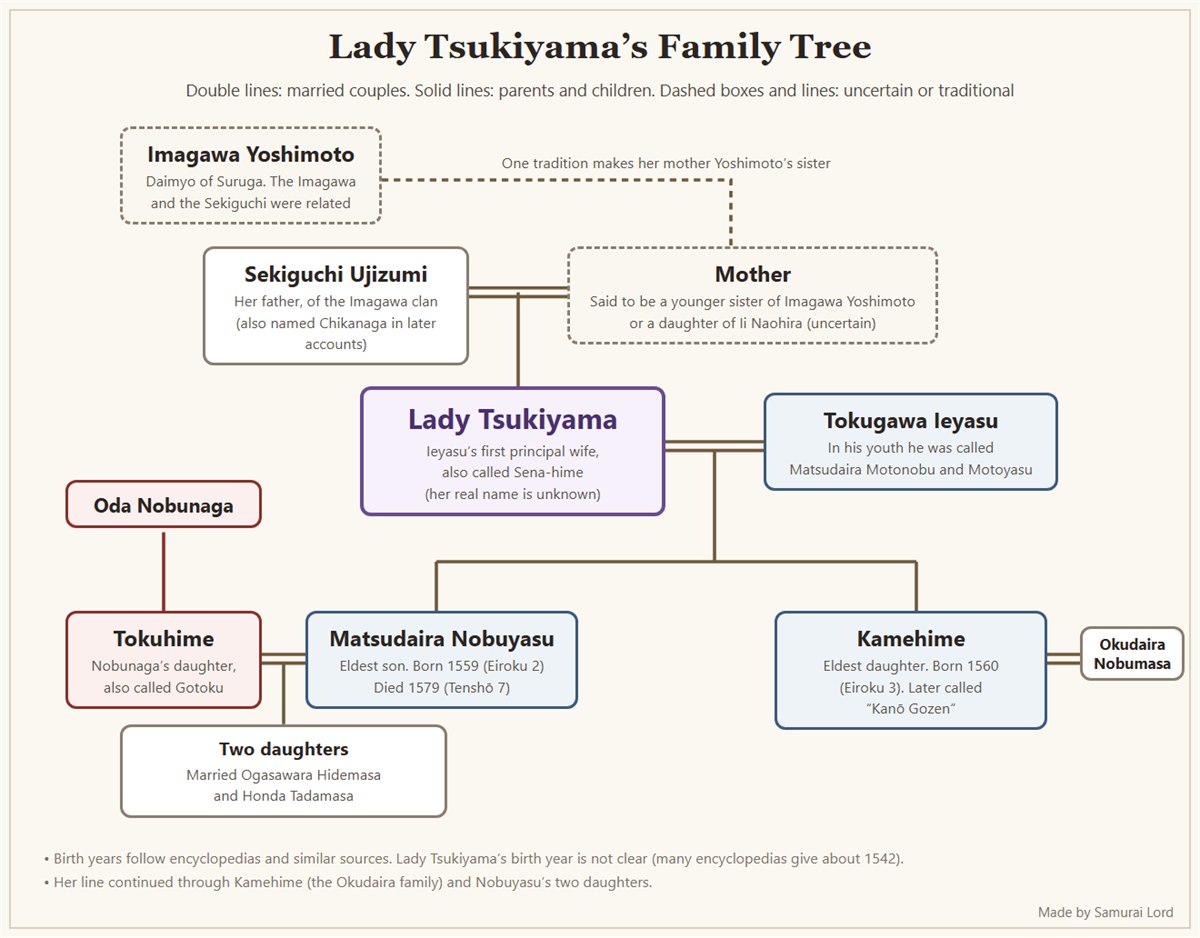
Image: Lady Tsukiyama's family tree (made by Samurai Lord). Tap (click) the image to enlarge it
Her father was Sekiguchi Ujizumi, of the Imagawa family [Widely accepted]. The well-known name 関口親永 is the one most often found in later genealogies. As for her mother, later genealogies give differing accounts of her connections with Imagawa Yoshimoto and Ii Naohira; her parentage, including possible adoptive ties, remains unclear [Debated].
| Child | Born | Later life |
| Eldest son: Matsudaira Nobuyasu | 1559 (Eiroku 2) | Married Nobunaga's daughter Tokuhime and became lord of Okazaki Castle, but died in 1579 (Tenshō 7) at 21 by the traditional count |
| Eldest daughter: Kamehime | 1560 (Eiroku 3) | Married Okudaira Nobumasa. Died in 1625 (Kan'ei 2) at 66 by the traditional count |
Nobuyasu and Tokuhime had two daughters, who later married Ogasawara Hidemasa and Honda Tadamasa. Lady Tsukiyama's bloodline continued into later times through Kamehime and Nobuyasu's daughters.
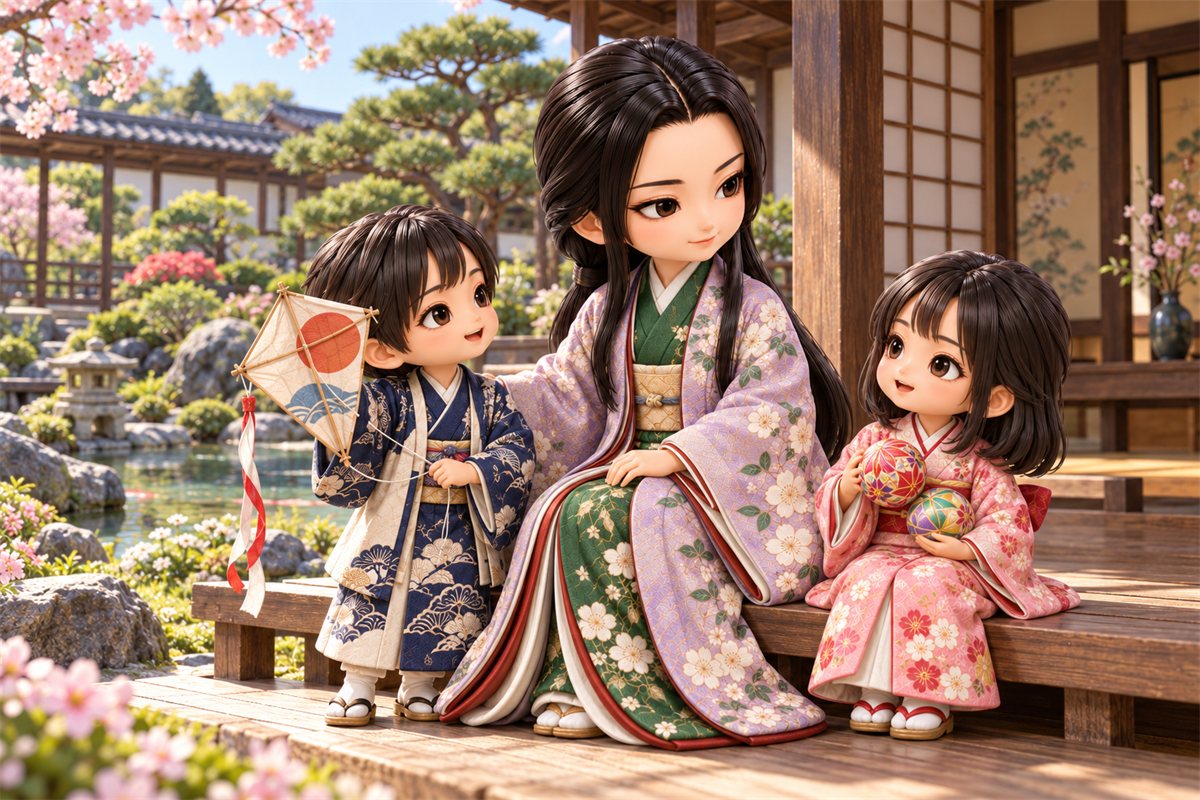
Image: Lady Tsukiyama with her children
Nobuyasu's daughter married Tadamasa, the son of Honda Tadakatsu!
Indeed. Her family was also linked to that of Honda Tadakatsu.
Where Is Lady Tsukiyama's Grave? Related Places
| Place | What is it? | Location |
| Seiraiin (Gekkutsu-byō) | The temple said to hold her grave, with her mausoleum, the Gekkutsu-byō | Chūō Ward, Hamamatsu, Shizuoka Prefecture |
| Yabashira Shrine (head mound) | A shrine with a mound said to be her head mound | Okazaki, Aichi Prefecture |
| Yūdenji | The temple where the head mound is said to have first stood | Okazaki, Aichi Prefecture |
| Lake Sanaru and the Tachiarai Pond monument | A lake and a former pond where the legend of her end is told | Chūō Ward, Hamamatsu, Shizuoka Prefecture |
| Presumed site of the Tsukiyama residence | The area of "Tsukiyama," where she is said to have lived | Okazaki, Aichi Prefecture (near Okazaki Castle) |
| Futamata Castle ruins and Seiryūji | The castle where Nobuyasu died, and the temple with his mausoleum | Futamata-chō, Tenryū Ward, Hamamatsu, Shizuoka Prefecture |
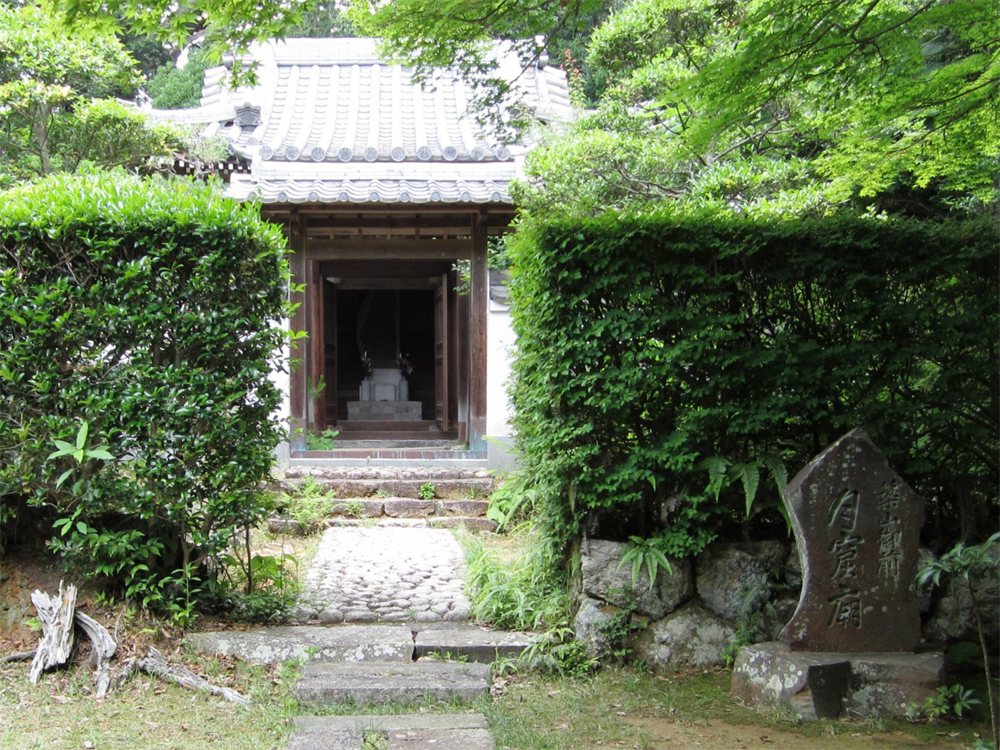
Image: The Gekkutsu-byō at Seiraiin (Hamamatsu). Wikimedia Commons (photo: 立花左近, CC BY-SA 3.0)
Seiraiin temple in Hamamatsu has Lady Tsukiyama's mausoleum, the Gekkutsu-byō. The present building was rebuilt in 1978.
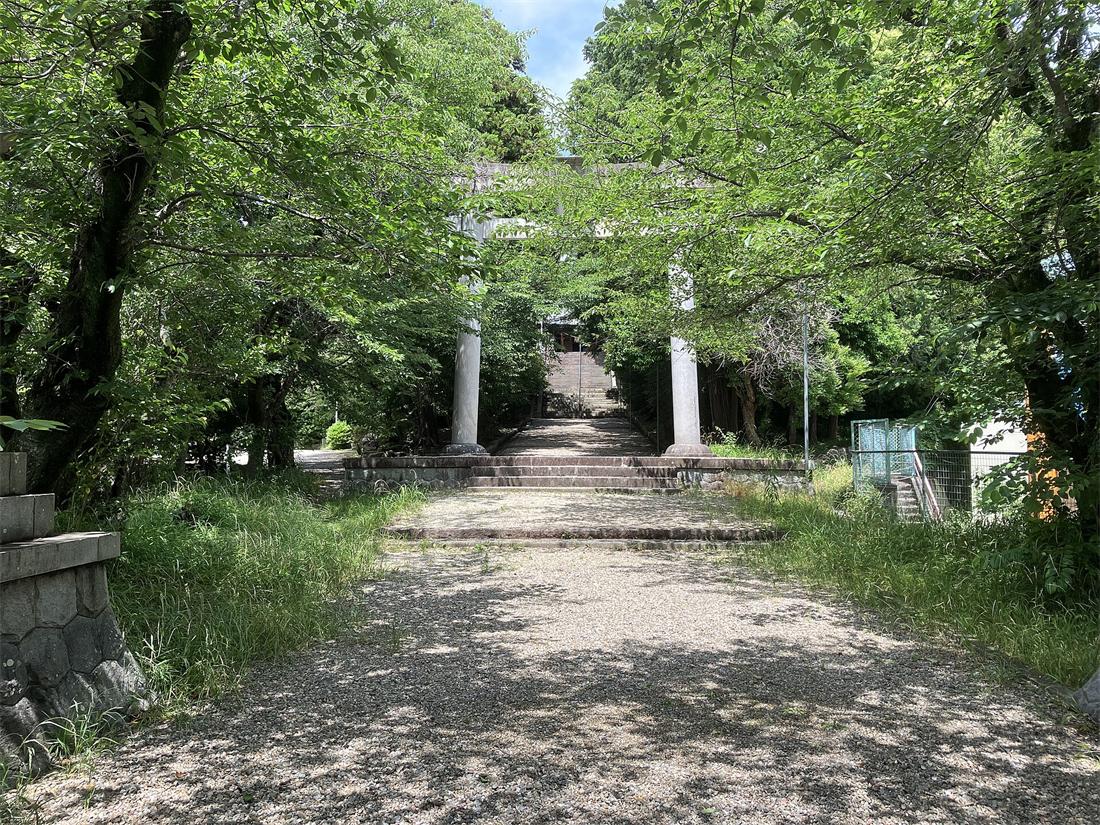
Image: Yabashira Shrine (Okazaki). Wikimedia Commons (photo: ネコチャーン, CC BY-SA 4.0)
In the grounds of Yabashira Shrine in Okazaki is a mound said to be Lady Tsukiyama's head mound. It is said to have stood first at Yūdenji temple and to have been moved in 1646 (Shōhō 3) to the place that is now inside the shrine grounds [Legend]. In 1934 the shrine itself moved to this place and came to enshrine the "Tsukiyama Shinmeigū," which honors Lady Tsukiyama. The present tower was rebuilt in 1977.
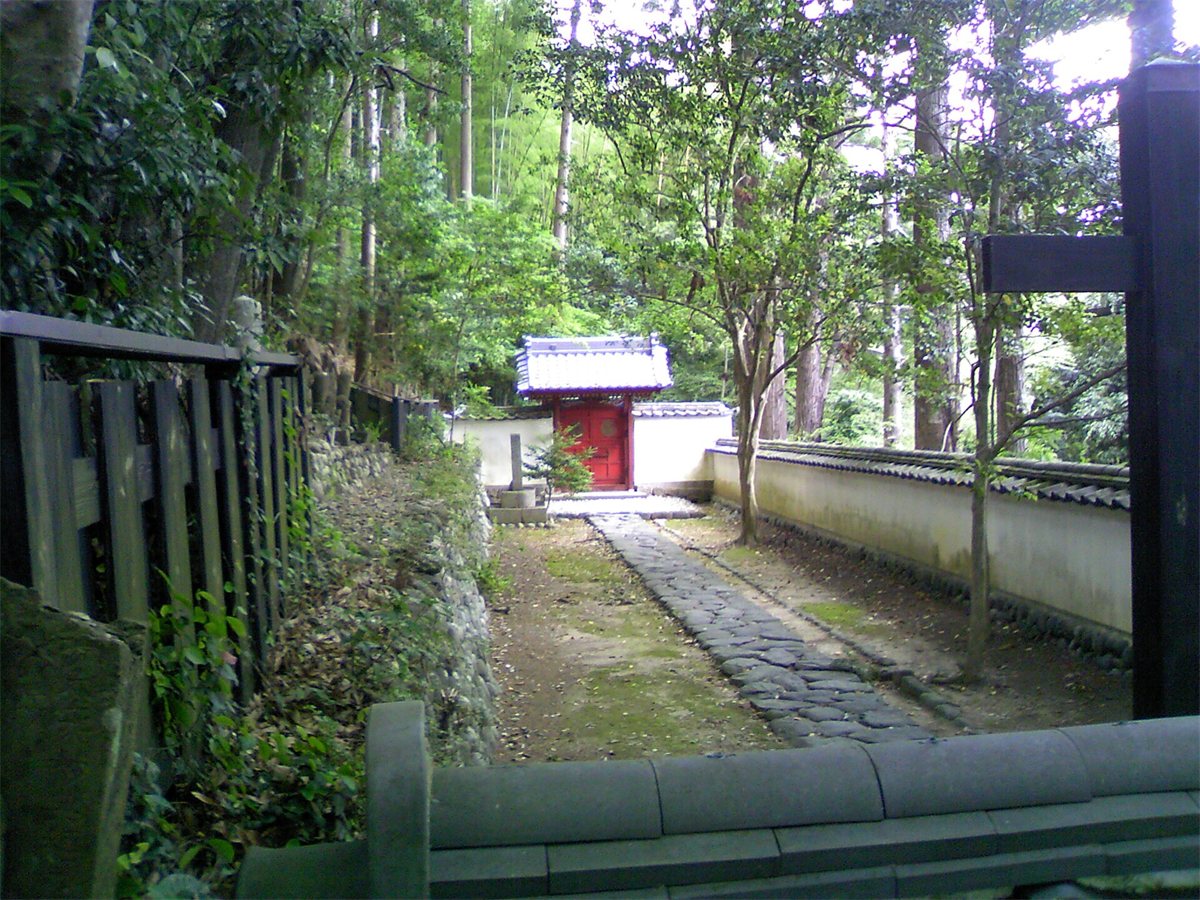
Image: The gate of Nobuyasu's mausoleum at Seiryūji (Tenryū Ward, Hamamatsu). Wikimedia Commons (photo: ホンダ, CC BY-SA 4.0)
Near Futamata Castle, where Nobuyasu died, is Seiryūji temple, with Nobuyasu's mausoleum. A memorial service for Nobuyasu is held there every year on September 15 in the modern calendar.
FAQ
Was Lady Tsukiyama's real name "Sena"?
Her real name is not known. "Sena" and "Sena-hime" are thought to be names from later times, spread by dramas and novels (more).
Where is Lady Tsukiyama's head mound?
It is said to be in the grounds of Yabashira Shrine in Okazaki, Aichi Prefecture. It is said to have first stood at Yūdenji temple, also in Okazaki, and to have been moved to its present place in the Edo period (related places).
Is the Lady Tsukiyama of TV dramas true to history?
In the NHK historical drama Dōsuru Ieyasu (2023), she appears as "Sena," seeking a land without war; this is the drama's invention. That she died in 1579 (Tenshō 7), the same year as Nobuyasu, agrees with history.
Summary: Who Was Lady Tsukiyama?
Lady Tsukiyama was Tokugawa Ieyasu's first principal wife. A daughter of the Sekiguchi, a branch of the Imagawa family, she bore his eldest son, Nobuyasu, and eldest daughter, Kamehime. "Sena" and "Sena-hime" are thought to be names used in later times; her real name is unknown.
In 1579 (Tenshō 7), Ieyasu sent Nobuyasu out of Okazaki Castle. Lady Tsukiyama is said to have died near Hamamatsu on the 29th day of the 8th month, and Nobuyasu at Futamata Castle on the 15th day of the 9th month. It used to be said that Nobunaga ordered their deaths, but some research places more weight on Ieyasu's own decision. The true reason, however, is not known.
Her image as a "wicked woman" spread mainly from Edo-period records. The sources we checked do not establish her character or appearance, and much about her remains unknown.
For the people involved, see also our articles on Tokugawa Ieyasu, Oda Nobunaga and Honda Tadakatsu.
Separate what is in the records from the stories of later times, and you come a little closer to the real Lady Tsukiyama.
Next time I watch a drama, I want to compare it with the records!
Sources & How This Article Was Written
This article is based mainly on the following records and references:
- Records from the time: Matsudaira Ietada, Ietada Nikki (Bunka Daigaku Shishi Sōsho edition, 1897; National Diet Library Digital Collections); Iwasawa Yoshihiko, "On the Original of the Ietada Nikki" (bulletin of the Historiographical Institute, University of Tokyo, no. 2; in Japanese; the quotation from the Azuchi Nikki also follows this paper); a copy of a letter of Tokugawa Ieyasu (dated the 8th day of the 8th month, to Hori Hidemasa; The Tokugawa Institute for the History of Forestry, "Catalogue of Tokugawa Ieyasu's Documents," no. 3006; in Japanese); Ōta Gyūichi, Shinchō Kōki, book 12 (Wikisource; available in English as The Chronicle of Lord Nobunaga, translated by J. S. A. Elisonas and J. P. Lamers, Brill, 2011)
- Later records: Tōdaiki (in Shiseki Zassan, vol. 2, 1911); Ōkubo Tadataka, Mikawa Monogatari (Wikisource); Matsudaira-ki; Kimura Takaatsu, Butoku Hennen Shūsei (National Archives of Japan Digital Archive); Kaisei Mikawa Gofudoki
- Studies (in Japanese; titles translated by us): Kuroda Motoki, "Why Did Tokugawa Ieyasu Have His Principal Wife and Heir Take Their Own Lives?" (PRESIDENT Online, April 14, 2023); Kotobank (Nihon Daihyakka Zensho, Sekai Daihyakka Jiten, Nihon Jinmei Daijiten and others)
- Official materials (in Japanese): Hamamatsu City, plan for maintaining and improving historic scenery; Hamamatsu City, "Ieyasu's Walks"; Tenryū Ward, Hamamatsu, on the memorial service for Matsudaira Nobuyasu at Seiryūji; Okazaki Tourism Association, "Yabashira Shrine"; Okazaki City promotion, "The place that gave Tsukiyama-dono her name"; the inscriptions on the shrine's history and head-mound monuments at Yabashira Shrine (checked through photos on Wikimedia Commons)
- Images: the photos of Lake Sanaru (sewmew, public domain), Hamamatsu Castle (Saigen Jiro, CC0), the Gekkutsu-byō at Seiraiin (立花左近, CC BY-SA 3.0), Yabashira Shrine (ネコチャーン, CC BY-SA 4.0) and the gate of Nobuyasu's mausoleum at Seiryūji (ホンダ, CC BY-SA 4.0) are from Wikimedia Commons. The map, family tree, manga panel and illustrations are original works by Samurai Lord
What the Labels Mean
[Fact]Confirmed by sources from the time ([Fact: …]names the source)[Widely accepted]A view widely accepted by researchers[Debated]Accounts or interpretations differ[Unknown]Not established from the sources we checked[Legend]Stories found in later records or traditions[Folk belief]Popular claims with little evidence
We keep "what a record says" separate from "what actually happened." Translations of the source excerpts in this article are by the Samurai Lord editorial team.
This article was written by the Samurai Lord editorial team and is revised as new research and reader feedback come in. If you spot an error, please let us know through our contact form (in Japanese) and we will check and correct it.
Read in Japanese
This article is also available in Japanese: 築山殿(瀬名姫)とは?死因や事件の理由、家康との仲を解説!