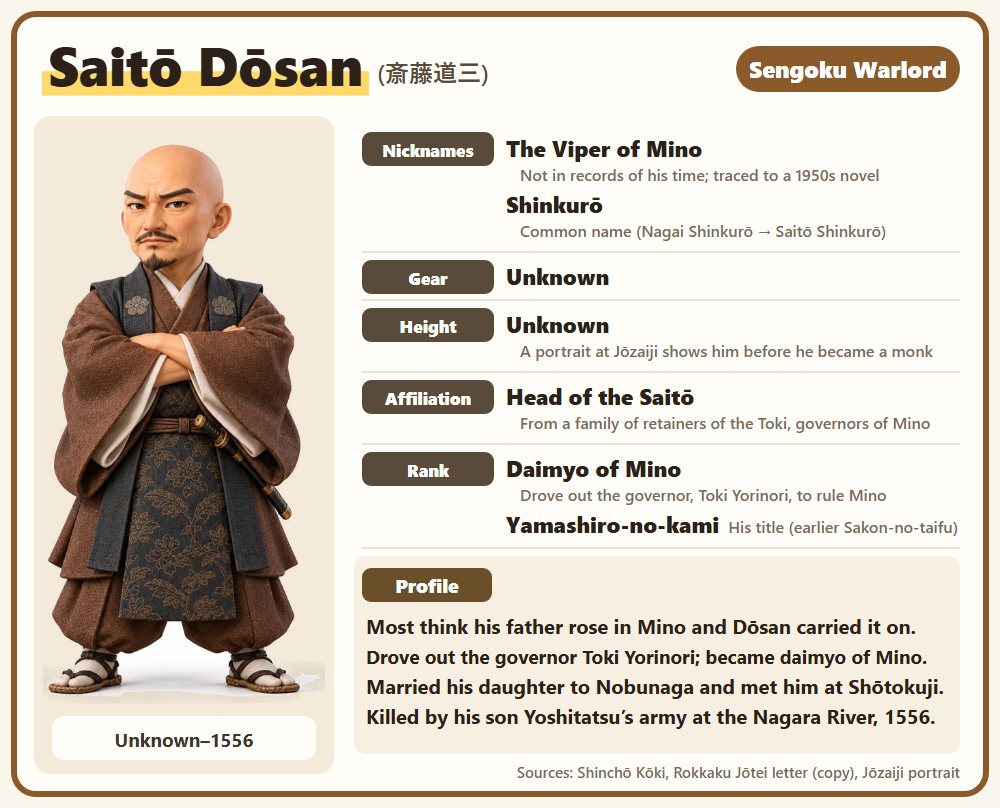
Saitō Dōsan (died 1556) was a Sengoku-period daimyo (regional lord) who ruled Mino Province (today's southern Gifu Prefecture). He married his daughter to Oda Nobunaga, which made him Nobunaga's father-in-law. In the end he was killed fighting the army of his own son, Yoshitatsu, by the Nagara River [Fact].
He is famous as "the Viper of Mino," the man who "rose from oil seller to lord of a province in a single lifetime." Current research, however, favors the view that this rise was the work of two generations, Dōsan and his father [Widely accepted].
This article covers what Dōsan did, how he died, his conflict with his son, his daughter Nōhime and his ties to Nobunaga, and the real story of his "seizure of a province," checking each story against the date of the record that tells it.
Western years are given with Japanese lunisolar months and days. The full Western date given for Dōsan's death uses the Julian calendar; modern dates use the Gregorian calendar. Ages use the traditional Japanese count, in which a person was counted as one at birth and gained a year at the start of each new year in the Japanese calendar.
Key points are tagged: [Fact] confirmed by records from the time, [Widely accepted] a view widely accepted by researchers, [Debated] accounts, interpretations or ways of counting differ, [Unknown] not established from the sources we checked, [Legend] stories found in later records or traditions, [Folk belief] popular claims with little evidence, and [Drama fiction] scenes created for dramas and novels.

I am Uesugi Kenshin. Today's subject is Saitō Dōsan, "the Viper of Mino."

I'm Date Masamune! He's the one who went from oil seller to daimyo, the ultimate self-made man, right?

So the story goes. But it may really have been the story of a father and son, two generations.
The Short Answers
- How do you say his name? Saitō Dōsan ("sigh-toh doh-sahn"); sometimes read "Dōzan"
- What did he do? From a family of retainers of the Toki, the governors of Mino, he rose to rule Mino as a daimyo (more)
- How did he die? He was killed by his son Yoshitatsu's army at the Battle of the Nagara River on the 20th day of the 4th month of 1556 (Kōji 2) (more)
- How old was he? Unclear. Theories say 63 or 53 by the traditional count (more)
- Why did he fight his son? Dōsan clashed with Yoshitatsu, who had succeeded him as head of the family, and Yoshitatsu killed two of his younger brothers (more)
- His daughter? One daughter (Nōhime) became Oda Nobunaga's principal wife (more)
- Was he really an oil seller? That story comes from Edo-period books. The view that the rise took two generations is widely accepted (more)
- His family crest? Known as nitō tatsunami ("two rising waves") (more)
- His castle and grave? His base was Inabayama Castle (later Gifu Castle); Dōsanzuka in Gifu City is traditionally regarded as his grave (more)
Three Things We Learn by Comparing the Sources
- One generation or two? A stage-by-stage chart comparing the familiar one-man story with the father-and-son view based on a letter of 1560 (more)
- Where the "oil seller" and "viper" came from: a timeline showing when these stories appear in the sources examined here, from 1669 to a novel of the 1950s (more)
- The Battle of the Nagara River on a map: the movements of Dōsan's and Yoshitatsu's armies as described in the Shinchō Kōki (more)
Jump to the part you want to read:
- Who was Saitō Dōsan? What did he do?
- How did Saitō Dōsan die? The Battle of the Nagara River
- Why did Dōsan fight his son Yoshitatsu?
- His daughter Nōhime and his ties to Oda Nobunaga
- One generation or two? The oil seller and "the Viper of Mino"
- Dōsan in novels and TV dramas
- Saitō Dōsan's family crest
- His castle, grave and related places
- Family tree and descendants
- FAQ
Who Was Saitō Dōsan? What Did He Do?
In a single sentence, Saitō Dōsan was "a man from a family of retainers of the Toki, the governors of Mino, who drove out the governor and became the daimyo ruling Mino". He made Inabayama Castle (later Gifu Castle) his base, fought the Oda family of Owari and then made peace with them, and married his daughter to Oda Nobunaga.
He was long described as having "seized a province in one generation, starting as an oil seller," but current research holds that his path included his father's activities as well, and the view that he achieved it over two generations, father and son, is widely accepted [Widely accepted] (more).
Here is his life in broad outline:
- His father's rise: his father, once a monk at a Kyoto temple, came to Mino, served the Nagai family and rose in rank
[Widely accepted] - Dōsan's rise: succeeding his father, Dōsan took the Saitō surname and built up his power with Inabayama Castle as his base
- Lord of Mino: he drove out the governor, Toki Yorinori, and ruled Mino
- Marriage alliance with Nobunaga: he made peace with the Oda of Owari, with whom he had fought, and married his daughter to Nobunaga
- Conflict with his son, and death: he clashed with his son Yoshitatsu, who had succeeded him as head of the family, and was killed fighting him by the Nagara River
| Item | Details |
| Names | Nagai Shinkurō Norihide → Saitō Toshimasa → Dōsan after becoming a monk (more) |
| Born | Unknown. Theories include 1494 (Meiō 3) and 1504 (Eishō 1) [Debated] |
| Father | Nagai Shinzaemon-no-jō (once a monk of Myōkakuji in Kyoto) [Widely accepted] |
| Base | Inabayama Castle (later Gifu Castle) [Fact] |
| Main children | Yoshitatsu, and the daughter who married Nobunaga (Nōhime) [Fact]. The Shinchō Kōki also mentions Magoshirō and Kiheiji |
| Died | 20th day of the 4th month of 1556 (Kōji 2) [Fact] |
| Cause of death | Killed by Yoshitatsu's army at the Battle of the Nagara River [Fact] |
| Grave | Dōsanzuka (Nagara-Fukumitsu, Gifu City) |
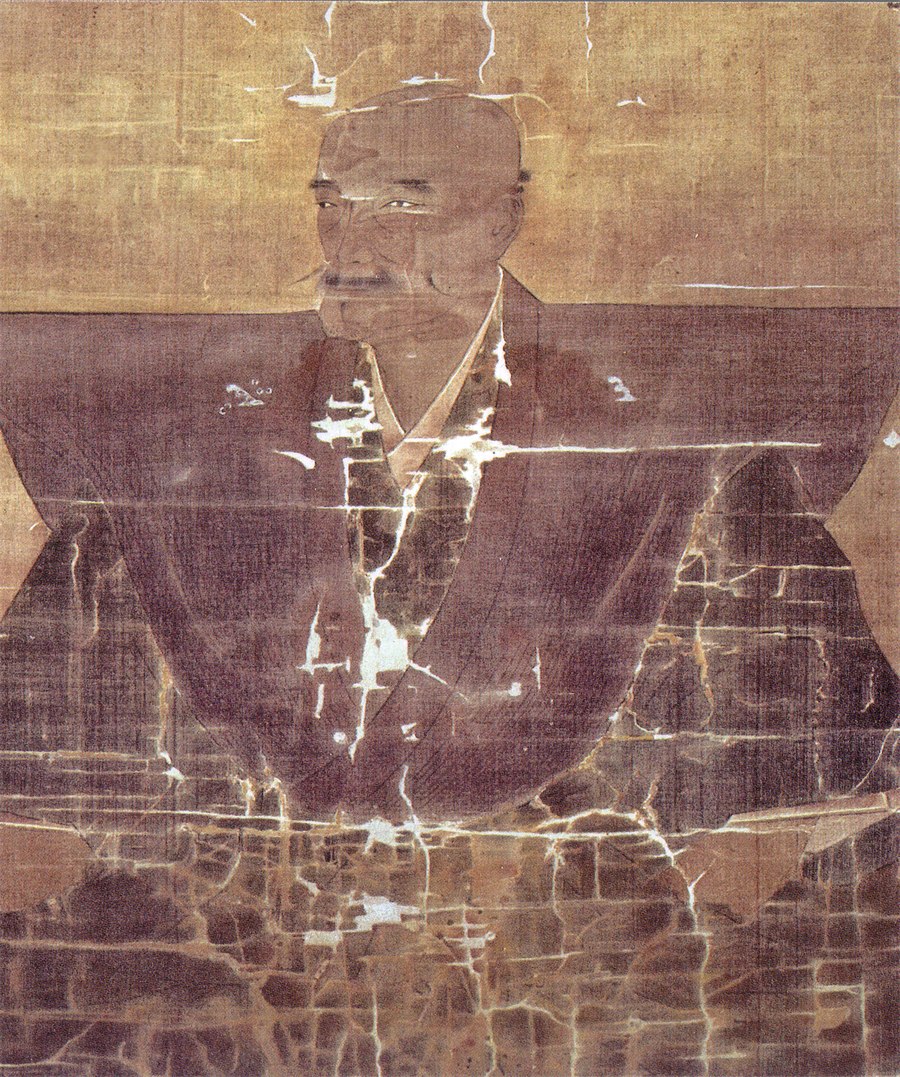
Image: Portrait of Saitō Dōsan (detail). Kept at Jōzaiji temple in Gifu City and designated an Important Cultural Property of Japan. Wikimedia Commons (public domain)
The portrait bears the date of Dōsan's death, written as "the 20th day of the 4th month of the 2nd year of Kōji." According to Gifu Prefecture's explanation, it shows him before he shaved his head as a monk and is thought to have been painted during his lifetime or shortly after his death.
How Did Saitō Dōsan Die? The Battle of the Nagara River
In short, Saitō Dōsan was killed in battle. On the 20th day of the 4th month of 1556 (Kōji 2; May 28, 1556, in the Julian calendar), he fought his son Yoshitatsu's army by the Nagara River and was killed [Fact]. This battle is known as the Battle of the Nagara River (Nagaragawa).
Some time before, Dōsan had left Inabayama Castle and withdrawn north toward Yamagata (today's Yamagata City, Gifu Prefecture). On the 18th day of the 4th month, he set up camp at Tsuruyama, north of the Nagara River (around today's Uchikoshi, Gifu City), from where he could look out over the province.
Source Box ①: The Battle of the Nagara River in the Shinchō Kōki
Source
Ōta Gyūichi, Shinchō Kōki, opening book. Gyūichi was a retainer of Nobunaga, and the opening book, covering Nobunaga's early years, was compiled later (we follow the 1881 printed edition on Wikisource)
Quotation (excerpt, with spelling adjusted for readability)
「四月廿日辰剋…新九郎義龍人数を出し候、道三も鶴山をおり下り、奈加良川端迄人数を出され候」
Translation
On the 20th day of the 4th month, at the hour of the dragon (about 7 to 9 a.m.), Yoshitatsu (Shinkurō) sent out his troops. Dōsan, too, came down from Tsuruyama and sent his troops as far as the bank of the Nagara River.
What it tells us, and what it does not
Dōsan's and Yoshitatsu's armies fought by the Nagara River. It does not give the exact place of the fighting or the total strength of either army (it gives Yoshitatsu's first wave as about 600 men)
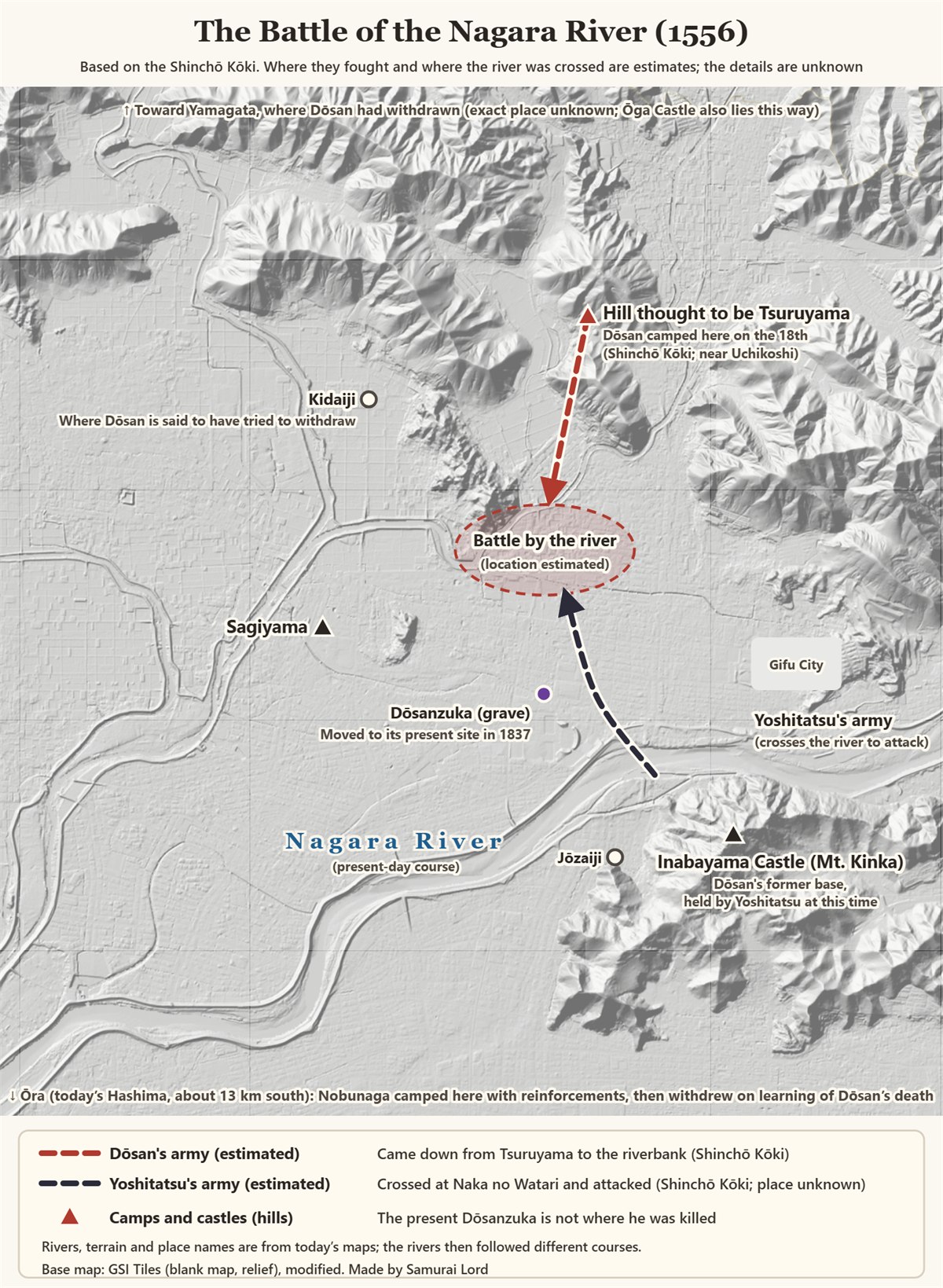
Image: The Battle of the Nagara River (made by Samurai Lord based on the Shinchō Kōki. Where the fighting took place and how the armies moved are estimates. Base map: GSI Tiles)
According to the Shinchō Kōki, Yoshitatsu's first wave crossed the river at a place called Naka no Watari and attacked Dōsan's camp. Dōsan's side drove back this first wave but was then pushed back as more and more of Yoshitatsu's men crossed the river.
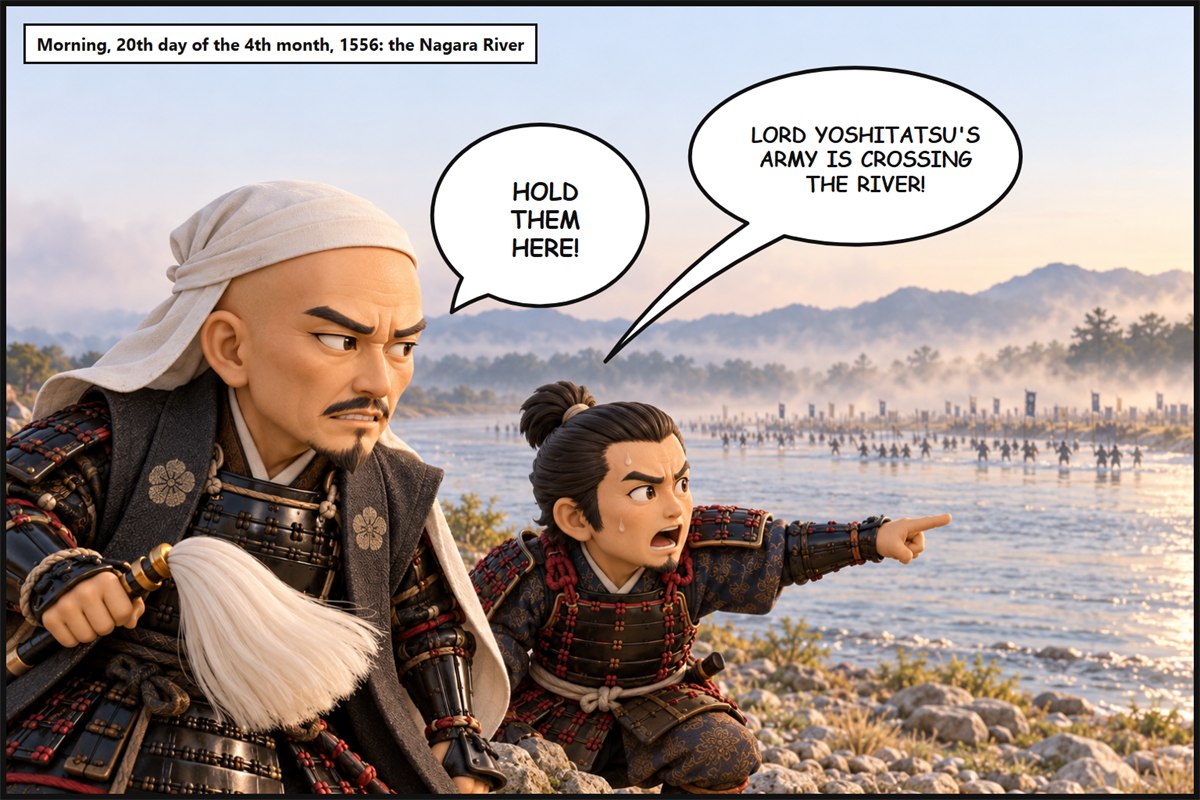
Image: Dōsan receiving word that Yoshitatsu's army is crossing the Nagara River
Who Killed Dōsan?
According to the Shinchō Kōki, Nagai Chūzaemon, on Yoshitatsu's side, grappled with Dōsan to take him alive, but Komaki Genta (spelled 小真木源太 in the Shinchō Kōki) ran up and killed him.
However, some later books name a different warrior. In the Shinchō Kōki's account, Yoshitatsu commands the opposing army, while Komaki Genta delivers the fatal blow.
Nobunaga's Reinforcements Came Too Late
According to the Shinchō Kōki, Dōsan's son-in-law Nobunaga also sent troops from Owari to help him, crossed the Kiso River by boat and camped at Ōra (around today's Hashima, Gifu Prefecture). But on hearing that Dōsan had been killed, he withdrew, guarding the rear himself as his men crossed the river back to Owari.
How Old Was Dōsan When He Died?
We found no record from his time that gives Dōsan's birth year [Unknown]. His age at death is therefore given either as 63 (if born in 1494) or 53 (if born in 1504) by the traditional count [Debated]. Both figures are calculated from later books.
The date of his death, on the other hand, is thought to be the 20th day of the 4th month of 1556 (Kōji 2), based on the date in the Shinchō Kōki and the date written on his portrait at Jōzaiji.
"Dōsanzuka," where Dōsan is said to be buried, still survives in Gifu City (more).
What We Know / What We Don't Know
- We know: he died fighting Yoshitatsu's army by the Nagara River on the 20th day of the 4th month of 1556
- We don't know: the exact place of the fighting, the number of troops, or his age at death
Why Did Dōsan Fight His Son Yoshitatsu?
Around 1554 (Tenbun 23), about two years before his death, Dōsan is thought to have transferred leadership of the family, together with Inabayama Castle, to his eldest son, Yoshitatsu [Widely accepted]. Some researchers think this was not by choice but because his retainers pushed him into retirement. Even after stepping down, Dōsan kept his power, and a rift opened between father and son.
The Shinchō Kōki describes how the conflict began:
- Dōsan was convinced that his eldest son Yoshitatsu was a fool, and favored only his younger sons, Magoshirō and Kiheiji, as clever
- The younger brothers came to look down on their elder brother Yoshitatsu
- Yoshitatsu pretended to be ill and shut himself away in the inner rooms of his residence, and on the 22nd day of the 11th month of Kōji 1 (January 1556 in the Julian calendar) he summoned his two brothers and had his retainers kill them
- When Dōsan learned of this, he was shocked, gathered his troops, left Inabayama and withdrew into the mountains of Yamagata to the north
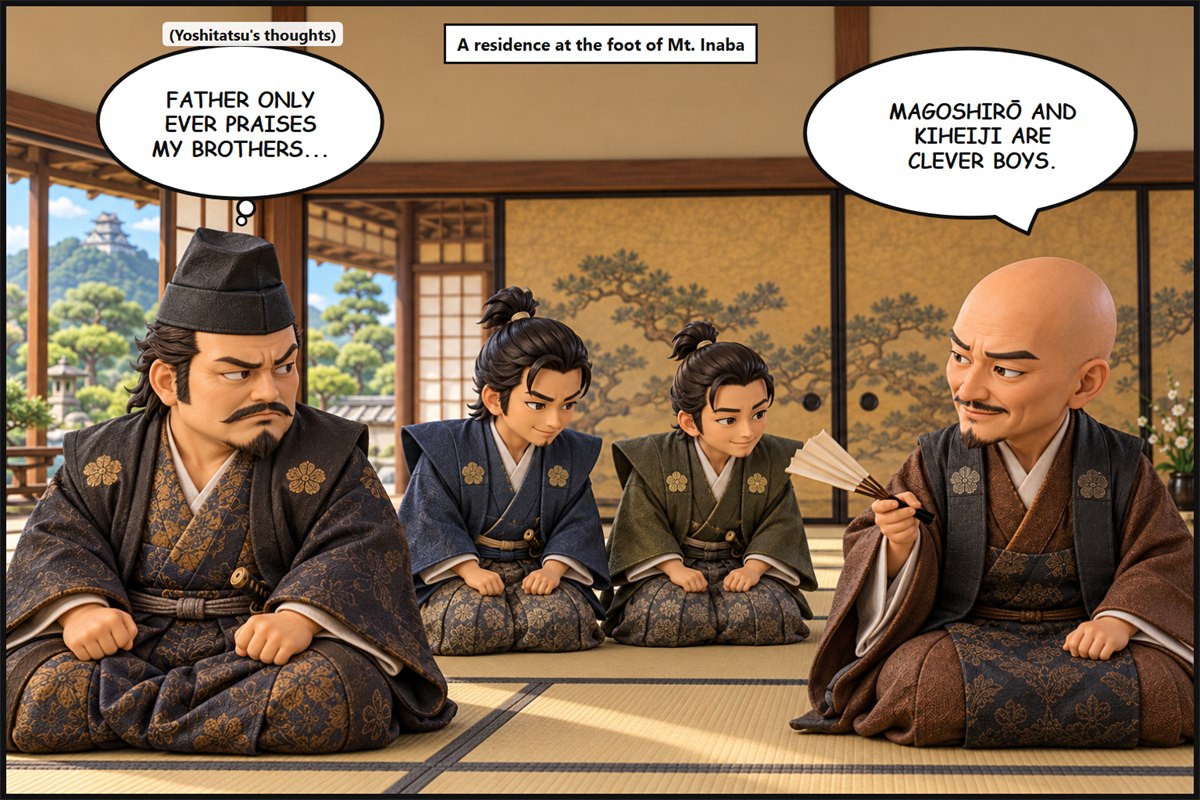
Image: Dōsan praising only his younger sons, while Yoshitatsu looks on
Was Yoshitatsu Not Really Dōsan's Son?
There is a story that "Yoshitatsu was really the son of Dōsan's lord, Toki Yorinori, which is why he fought Dōsan." This story appears in Edo-period books [Folk belief], and historians such as Kinoshita Satoshi regard it as a later invention. A letter from Rokkaku Jōtei dated to 1560, after Dōsan's death but during Yoshitatsu's lifetime, treats Yoshitatsu as Dōsan's son. The letter survives in a copy.
What Became of Yoshitatsu and the Saitō?
Yoshitatsu, who defeated Dōsan, ruled Mino but died of illness in 1561 (Eiroku 4). His son and successor, Tatsuoki (Dōsan's grandson), lost Inabayama Castle to Nobunaga in 1567 (Eiroku 10) and with it control of Mino. Tatsuoki went on fighting Nobunaga and was killed in battle in Echizen (today's Fukui Prefecture) in 1573 (Tenshō 1).
In Tatsuoki's time, his retainer Takenaka Hanbei, together with his father-in-law Andō Morinari, briefly seized Inabayama Castle (see our article on Takenaka Hanbei).
What We Know / What We Don't Know
- We know: the Shinchō Kōki reports that Yoshitatsu had his two younger brothers killed and later fought Dōsan
- We don't know: what Dōsan and Yoshitatsu each really thought
His Daughter Nōhime and His Ties to Oda Nobunaga
Dōsan fought Oda Nobuhide (Nobunaga's father) of Owari (today's western Aichi Prefecture) many times over Mino. On the 22nd day of the 9th month, he routed Nobuhide's army, which had advanced to the foot of Inabayama Castle, as it withdrew (Shinchō Kōki; the year is given as either 1544 or 1547).
Later the two houses made peace, and as a sign of it, Dōsan's daughter married Nobunaga [Fact: Shinchō Kōki]. This was around 1548 or 1549. She is the woman later known as "Nōhime" or "Kichō." For her names and her later life, see our article on Nōhime (Kichō).
The Meeting at Shōtokuji: He Went to See What His Son-in-Law Was Like
As a young man, Nobunaga walked the streets in flamboyant clothes and was called ō-utsuke ("great fool") by those around him. Dōsan decided to meet this son-in-law he had heard so much about. The meeting place was Shōtokuji temple in Tomida, Owari (today's Ichinomiya, Aichi Prefecture).
According to the Shinchō Kōki, before the meeting Dōsan secretly hid in a hut on the edge of town and watched Nobunaga's procession go by. The procession included some 500 soldiers carrying long vermilion spears and some 500 with bows and guns.
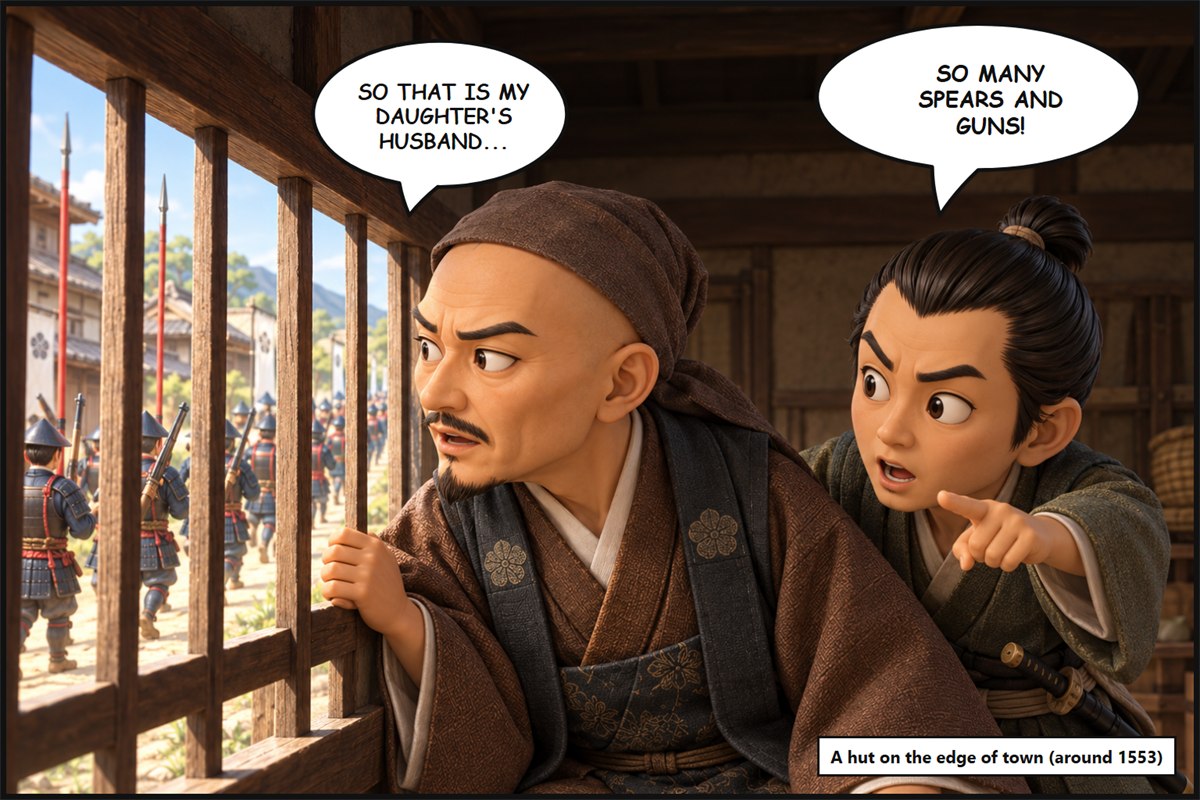
Image: Dōsan hiding in a hut and watching Nobunaga's procession
What is more, Nobunaga, who arrived in his usual eccentric dress, redid his hair and changed into formal clothes before the meeting. The meeting ended without incident, and Dōsan returned to Mino.
Source Box ②: The Way Home from the Meeting in the Shinchō Kōki
Source
Ōta Gyūichi, Shinchō Kōki, opening book (1881 printed edition on Wikisource)
Quotation (excerpt, with spelling adjusted for readability)
「されば無念なる事に候。山城が子共、たわけが門外に馬を繋ぐべき事、案の内にて候」
Context
Dōsan is replying to his retainer Inoko Hyōsuke, who has said, "However you look at it, Kazusa-no-suke [Nobunaga] was a fool."
Translation
"It is regrettable, then. My children will tie their horses outside that fool's gate. It is as I expected."
Interpretation
Tying their horses outside his gate means serving him as retainers
What it tells us, and what it does not
The Shinchō Kōki goes on to say that after this, no one called Nobunaga a fool in Dōsan's presence. However, it does not give the year of the meeting, which is generally thought to have been around 1553 (Tenbun 22) [Debated]
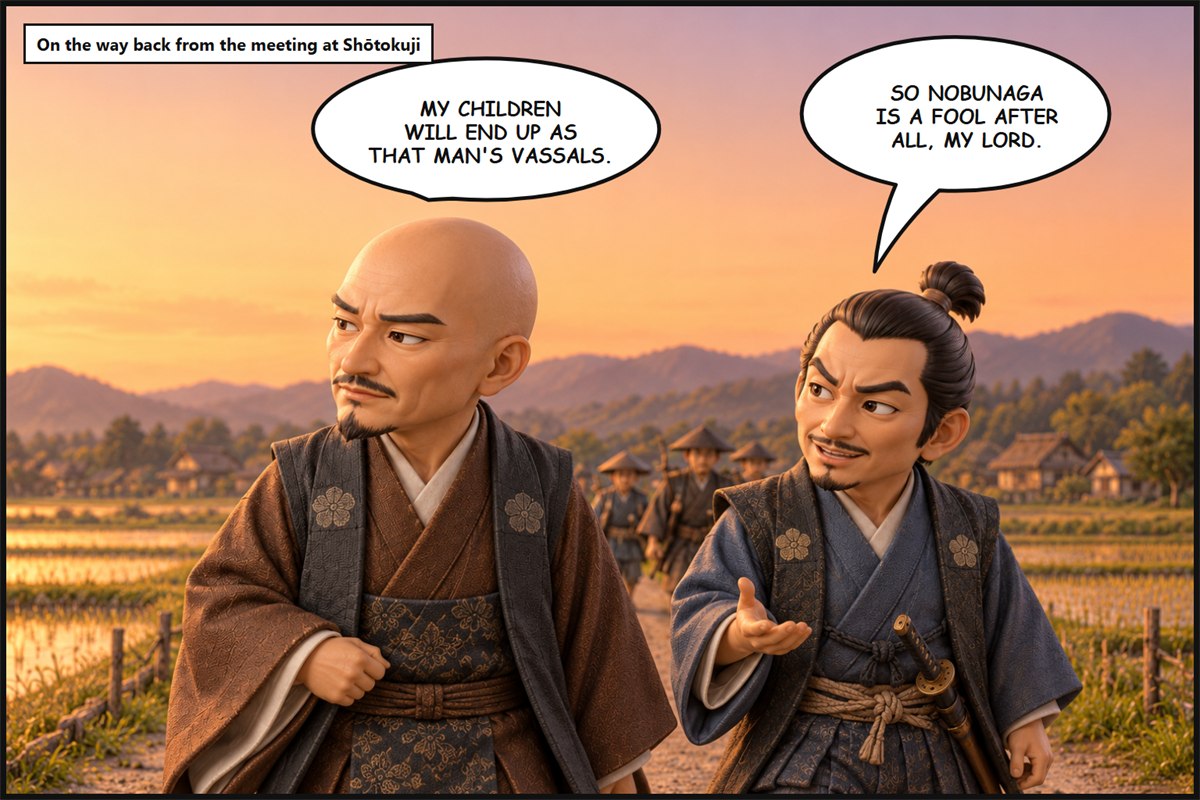
Image: Dōsan talking with Inoko Hyōsuke on the way home from the meeting at Shōtokuji
For young Nobunaga around the time of the meeting, see also our article on Oda Nobunaga.
The "Letter of Cession": Did He Leave Mino to Nobunaga?
There is a famous story that on the day before the Battle of the Nagara River, Dōsan wrote a letter "ceding Mino to Nobunaga." This is called the kuniyuzurijō (letter of cession), but three things need to be kept separate:
| Item | What is known |
| A letter of cession addressed to Nobunaga | Does not survive [Unknown] |
| A will addressed to one of his children | A letter dated the 19th day of the 4th month of 1556 (Kōji 2), addressed to a child who was to become a monk. Copies survive at Myōkakuji in Kyoto and elsewhere. It says, "I have given the letter of cession to Nobunaga" |
| Is the will genuine? | It is thought to be a copy, and researchers disagree about whether it is genuine [Debated] |
Source Box ③: Dōsan's Will (Copy)
Source
A letter from Saitō Dōsan to one of his children, dated the 19th day of the 4th month of 1556 (Kōji 2) (copies kept at Myōkakuji in Kyoto and elsewhere; we follow the transcription in the Gifu Shishi, 1928)
What it says (summary)
I have given the letter of cession (entrusting Mino) to Nobunaga. Nobunaga will soon march to the southern entrance of Mino. As promised, you are to enter Myōkakuji in Kyoto and become a monk, and so on
Caution
Whether this will is genuine is debated, so we cannot say for certain that Dōsan actually gave Nobunaga a letter of cession. Also, Nobunaga took Mino only in 1567 (Eiroku 10), eleven years after Dōsan's death, as a result of his war with Tatsuoki
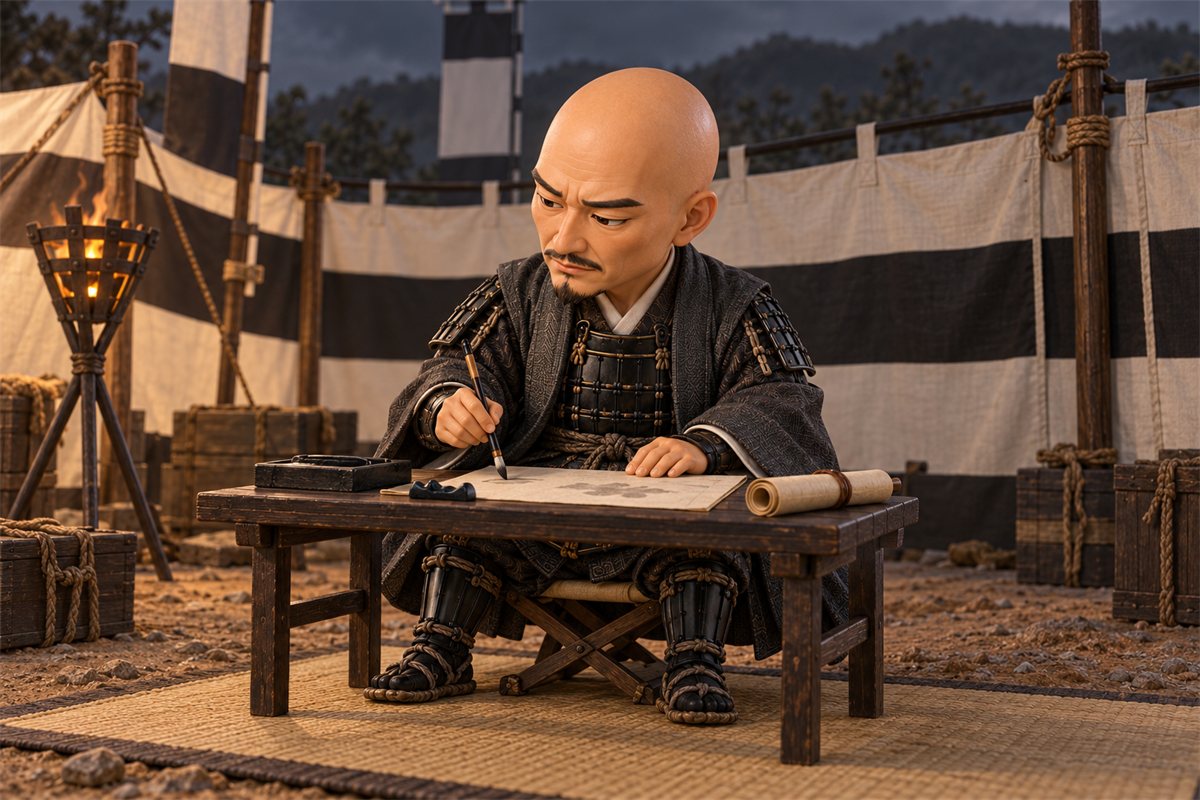
Image: Dōsan writing a letter in his camp (whether the will is genuine is debated)
What We Know / What We Don't Know
- We know: Dōsan's daughter married Nobunaga, and Dōsan and Nobunaga met at Shōtokuji
- We don't know: whether Dōsan really wrote that he was "ceding Mino to Nobunaga"
One Generation or Two? The Oil Seller and "the Viper of Mino"
Dōsan is famous for the story that he "started out as an oil seller and seized the province of Mino in a single lifetime." Current research, however, holds that the career long told as Dōsan's alone also included the activities of his father, Nagai Shinzaemon-no-jō [Widely accepted]. That does not mean the oil-seller and coin stories have been confirmed [Legend].
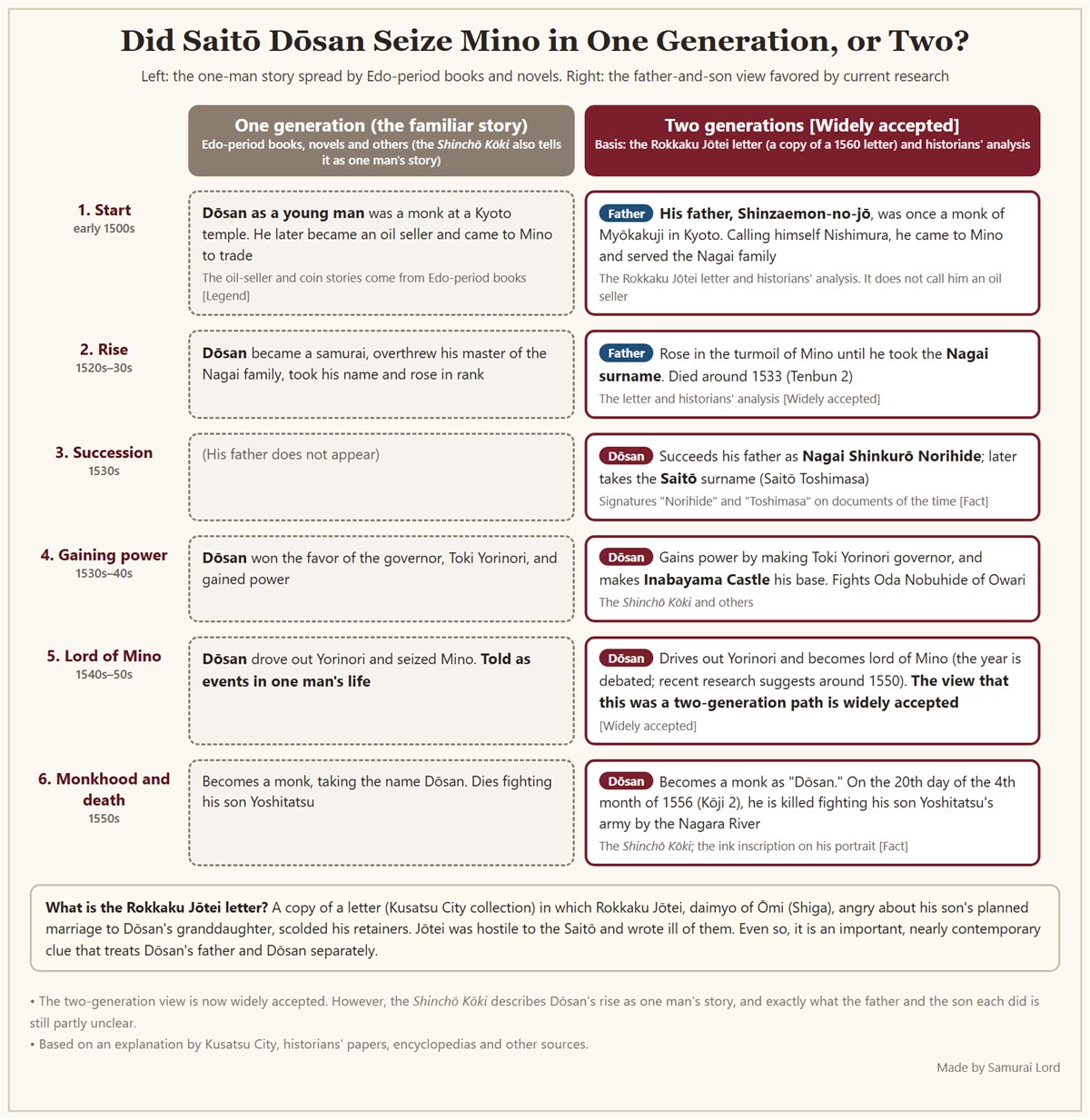
Image: Saitō Dōsan's rise compared as a one-generation story and a two-generation view (made by Samurai Lord based on an explanation by Kusatsu City, historians' papers and other sources)
An important clue is a copy of a letter attributed to Rokkaku Jōtei, daimyo of Ōmi (today's Shiga Prefecture), and dated to 1560 (Eiroku 3).
Source Box ④: The Rokkaku Jōtei Letter (Copy)
What kind of letter?
A copy of a letter in which Rokkaku Jōtei, opposing his son's planned marriage to Dōsan's granddaughter, scolded the retainers attached to his son. The beginning is missing. It is owned by Kusatsu City, Shiga Prefecture (Kasuga family documents)
What it says (summary based on Kusatsu City's explanation)
Dōsan's father (Yoshitatsu's grandfather), Nagai Shinzaemon-no-jō, was once a monk in Kyoto and rose in Mino. Dōsan inherited the position his father had built and, through repeated schemes, rose even higher
Points to read with care
Jōtei was hostile to the Saitō and had reason to write ill of them. Even so, it is an important, nearly contemporary clue that treats Dōsan's father and Dōsan separately
The letter became known in the course of compiling the Gifu Kenshi (history of Gifu Prefecture) in the Shōwa era. As historians reconstruct it, the father was once a monk of Myōkakuji in Kyoto who came to Mino, served the Nagai family and rose until he took the Nagai surname, and died around 1533 (Tenbun 2), when Dōsan succeeded him [Widely accepted]. Gifu Prefecture's cultural property explanation also says that Dōsan "built up his power on the foundation of the position his father, Nagai Shinzaemon-no-jō, had established in Mino."
Today the two-generation view is widely accepted. However, the Shinchō Kōki describes the rise as one man's story, and exactly what the father and the son each did remains partly unclear.
His Changing Names
Dōsan used several names. Some can be confirmed in documents of his time, while others appear only in later books.
| Type of name | Name | Reliability |
| Personal name | Norihide → Toshimasa | Signed on documents of the time [Fact] |
| Surname and common name | Nagai Shinkurō → Saitō Shinkurō | [Fact] |
| Titles | Sakon-no-taifu → Yamashiro-no-kami (a provincial governor's title, not proof that he governed Yamashiro) | [Fact] |
| Buddhist name after becoming a monk | Dōsan | [Fact] |
| Names found only in books | Minemaru, Hōrenbō, Matsunami Shōgorō, Hidetatsu and others | Names that Edo-period books give as Dōsan's [Legend] |
| Name now assigned to his father | Nishimura Kankurō | Given as Dōsan's name in Edo-period books, but recent research identifies it as a name used by his father, Nagai Shinzaemon-no-jō [Widely accepted] |
When Did the "Oil Seller" and "Coin" Stories Begin?
We found no account of Dōsan as an oil seller in the contemporary sources examined for this article. An early surviving account appears in the Itsuya no Kakimono, written in 1669 (Kanbun 9) in the Edo period, which says Dōsan "was an oil dealer of Yamazaki in Yamashiro" [Legend].
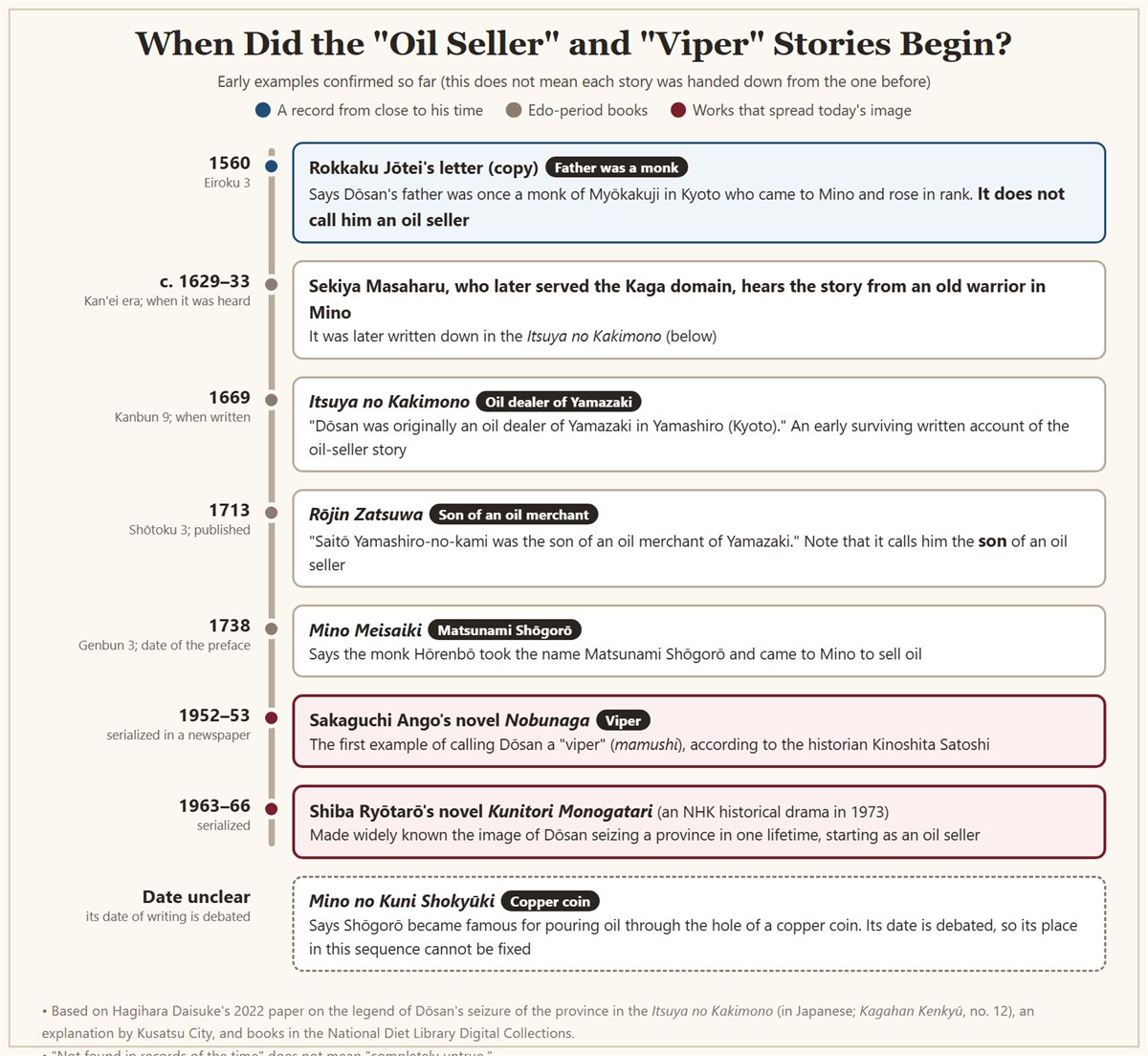
Image: Timeline of the books in which the "oil seller" and "viper" stories appear (made by Samurai Lord based mainly on Hagihara Daisuke's 2022 paper)
The famous story of "pouring oil through the hole of a coin" appears in the Edo-period Mino no Kuni Shokyūki. The oil seller Shōgorō, without using a funnel, poured oil through the square hole of a copper coin and said, "If I spill any, it's free," which made him famous [Legend].
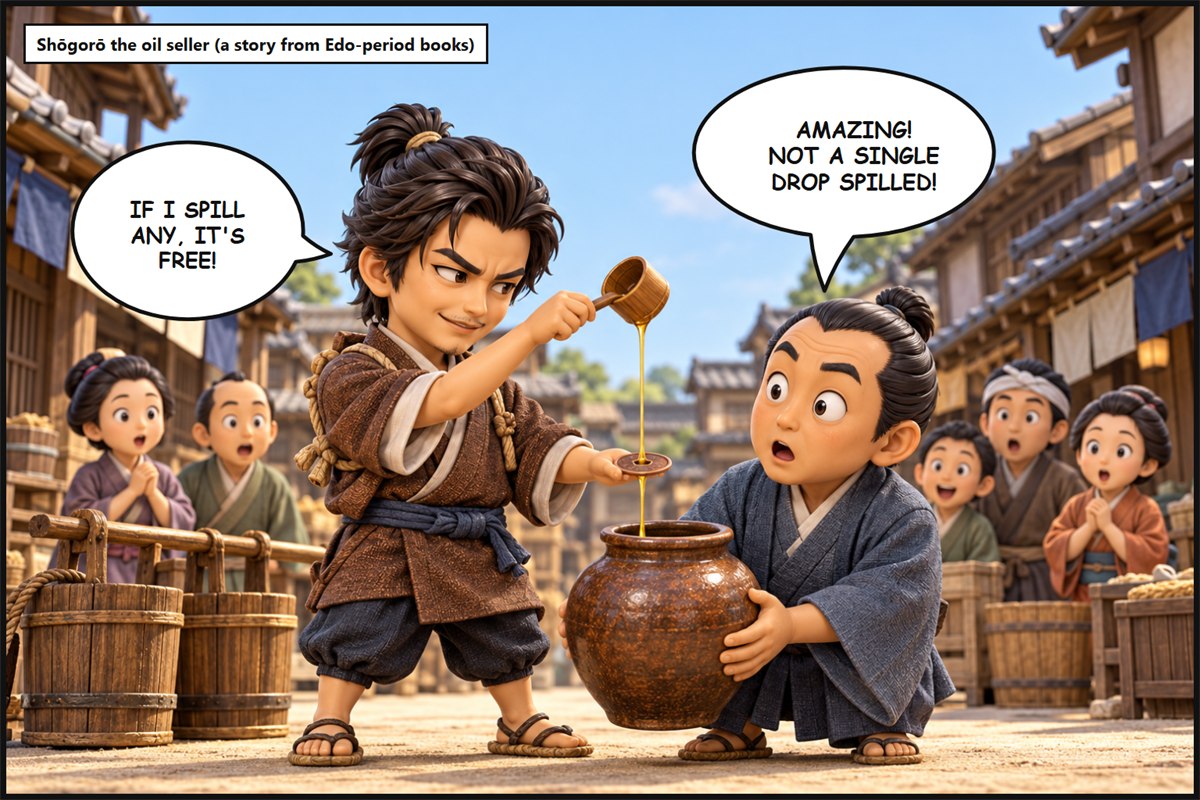
Image: The oil seller Shōgorō pouring oil through the hole of a coin (a story told in Edo-period books)
Why Is He Called "the Viper of Mino"?
We found no use of the nickname "the Viper of Mino" in those contemporary sources either. According to Hagihara Daisuke's paper, the historian Kinoshita Satoshi identifies the first example of calling Dōsan a "viper" (mamushi) as Sakaguchi Ango's novel Nobunaga (serialized in a newspaper in 1952–53). Today the nickname is tied to the image of Dōsan as a schemer who expanded his power by cunning.
That said, the Shinchō Kōki does say that Dōsan imposed heavy punishments even for minor crimes. At least in the Shinchō Kōki, Dōsan is portrayed as a harsh man.
Driving Out Toki Yorinori to Become Lord of Mino
In the succession struggles of the Toki, the governors of Mino, Dōsan built up his power by backing Toki Yorinori as governor. In the end he drove out that same Yorinori and became master of Mino [Fact: Shinchō Kōki]. Dates for Yorinori's expulsion range from 1542 (Tenbun 11) to 1552 (Tenbun 21), and recent research suggests around 1550 (Tenbun 19) [Debated].
The Shinchō Kōki also says that Dōsan made a member of the Toki family named Jirō his son-in-law and then poisoned him. It even records a lampoon condemning Dōsan for harming his lord and son-in-law ("To cut down your lord and kill your son-in-law brings ruin. Once it was Osada, now it is Yamashiro [Dōsan]"). However, this account alone does not confirm the poisoning, and some historians think Jirō died of illness [Debated].
What We Know / What We Don't Know
- We know: Dōsan came from a family of retainers of the Toki and became master of Mino; his father was once a monk in Kyoto and rose in Mino
- We don't know: exactly what the father and Dōsan each did, or whether the oil-seller story has any truth in it
Dōsan in Novels and TV Dramas
Dōsan has long been a popular figure in novels and TV dramas. Here are some of the main works:
| Work (year) | How he is portrayed | Difference from history |
| The novel Kunitori Monogatari (serialized 1963–66) | Dōsan seizes Mino in a single lifetime, starting as an oil seller; he is the protagonist of the first half | Written before the two-generation view was known. The oil-seller setting is based on Edo-period legend, and the conversations and detailed scenes include the novelist's inventions |
| NHK historical drama Kunitori Monogatari (1973) | A drama based on the novel. The decision to broadcast it led to the start of the "Dōsan Festival" in Gifu the year before, in 1972 | Conversations and scenes include dramatic invention [Drama fiction] |
| NHK historical drama Kirin ga Kuru (2020) | Appears in the first half as the lord whom Akechi Mitsuhide serves | We found no contemporary evidence establishing that Mitsuhide served Dōsan |
| Kinoshita Masaki's novel Mamushi Sandaiki (2020) | A novel that adopts the two-generation seizure of the province | The details of the story are the novelist's invention |
In NHK's 2026 historical drama Toyotomi Kyōdai! (Toyotomi Brothers!), Dōsan appears from episode 5 (broadcast February 1, 2026), portrayed as a senior retainer of the Toki who rose through gekokujō (the overthrow of superiors by those below them) to become the daimyo of Mino.
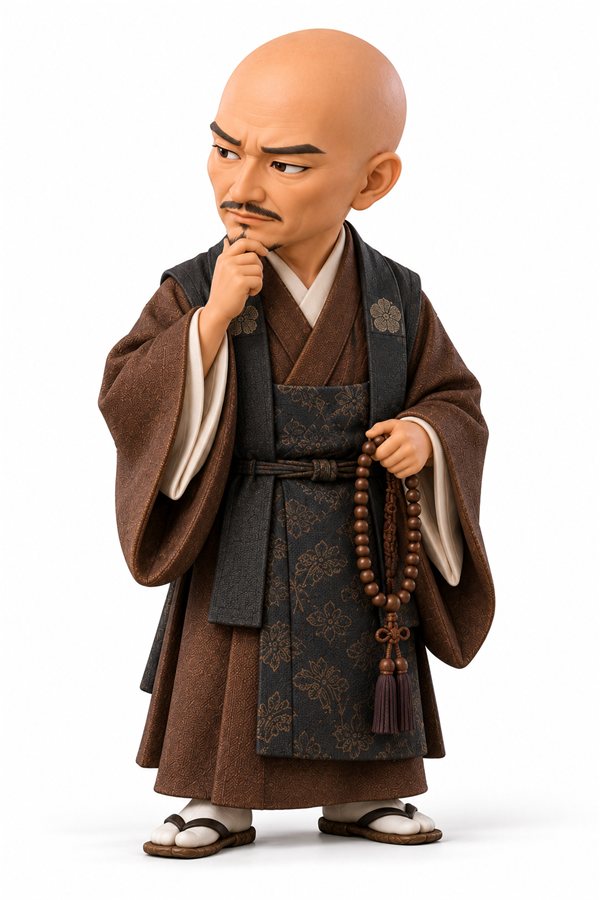
Image: Dōsan looking back on the Dōsan of dramas and novels
Saitō Dōsan's Family Crest
The crest best known as Saitō Dōsan's is nitō tatsunami ("two rising waves"). It shows two great waves rising up, with spray flying.
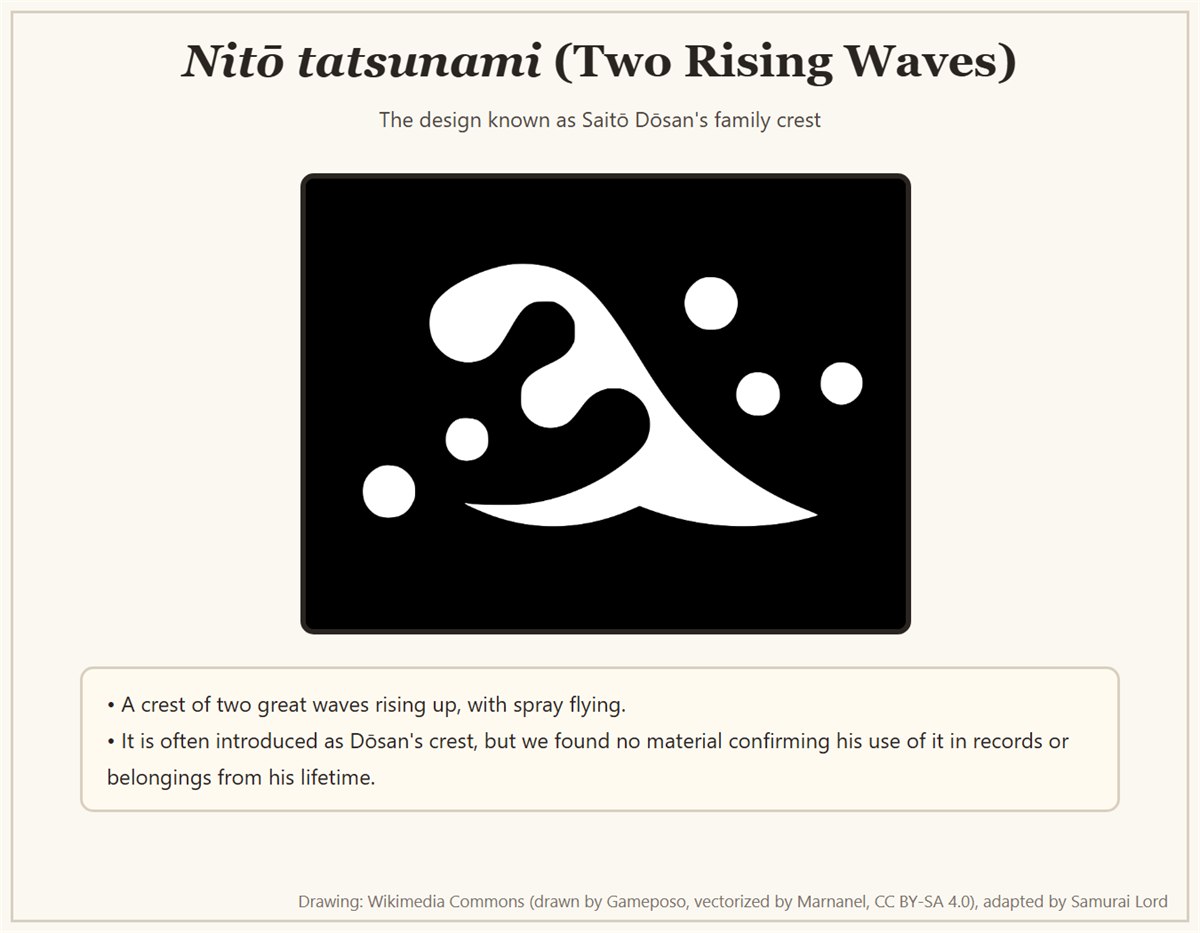
Image: The nitō tatsunami design (made by Samurai Lord using a drawing from Wikimedia Commons by Gameposo and Marnanel, CC BY-SA 4.0)
However, we found no material confirming Dōsan's use of this crest in records or belongings from his lifetime [Unknown]. You may also see the explanation that "Dōsan designed it himself, likening the ebb and flow of the tide to tactics," but this cannot be confirmed either [Legend].
His Castle, Grave and Related Places
Places connected with Dōsan survive mainly in today's Gifu City. We introduce them separately, according to whether the connection is confirmed by records or comes from tradition.
Inabayama Castle (Later Gifu Castle)
Dōsan's base was Inabayama Castle, on top of Mt. Kinka in Gifu City [Fact: Shinchō Kōki]. Dōsan is said to have developed the castle and its town. Later Nobunaga took the castle, renamed the town below it "Gifu," and made it his base for unifying the country. The present keep is a reconstruction built in 1956; it is currently closed for renovation, scheduled until the end of October 2027 (as of October 21, 2026).
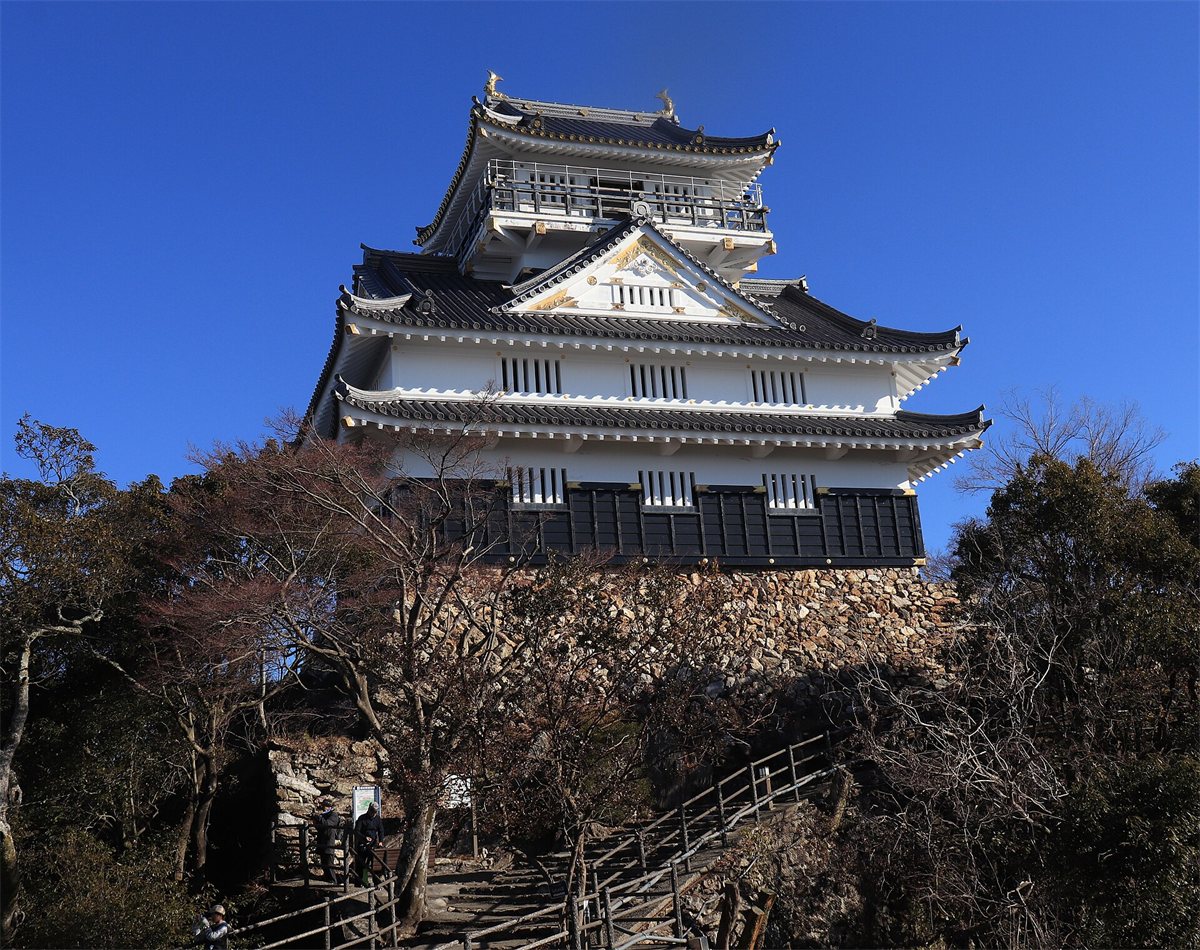
Image: Gifu Castle (formerly Inabayama Castle) on top of Mt. Kinka. Wikimedia Commons (photo: Alpsdake, CC BY-SA 4.0)
Dōsanzuka (His Grave)
In a residential area of Nagara-Fukumitsu, Gifu City, stands Dōsanzuka, where Dōsan is said to be buried. It is a historic site designated by Gifu City. It was originally near Sōfukuji temple; according to local accounts, repeated flooding of the Nagara River led the head priest of Jōzaiji to move it to its present site in 1837 (Tenpō 8). Because the mound was moved, the present site cannot be taken as the spot where Dōsan was killed.
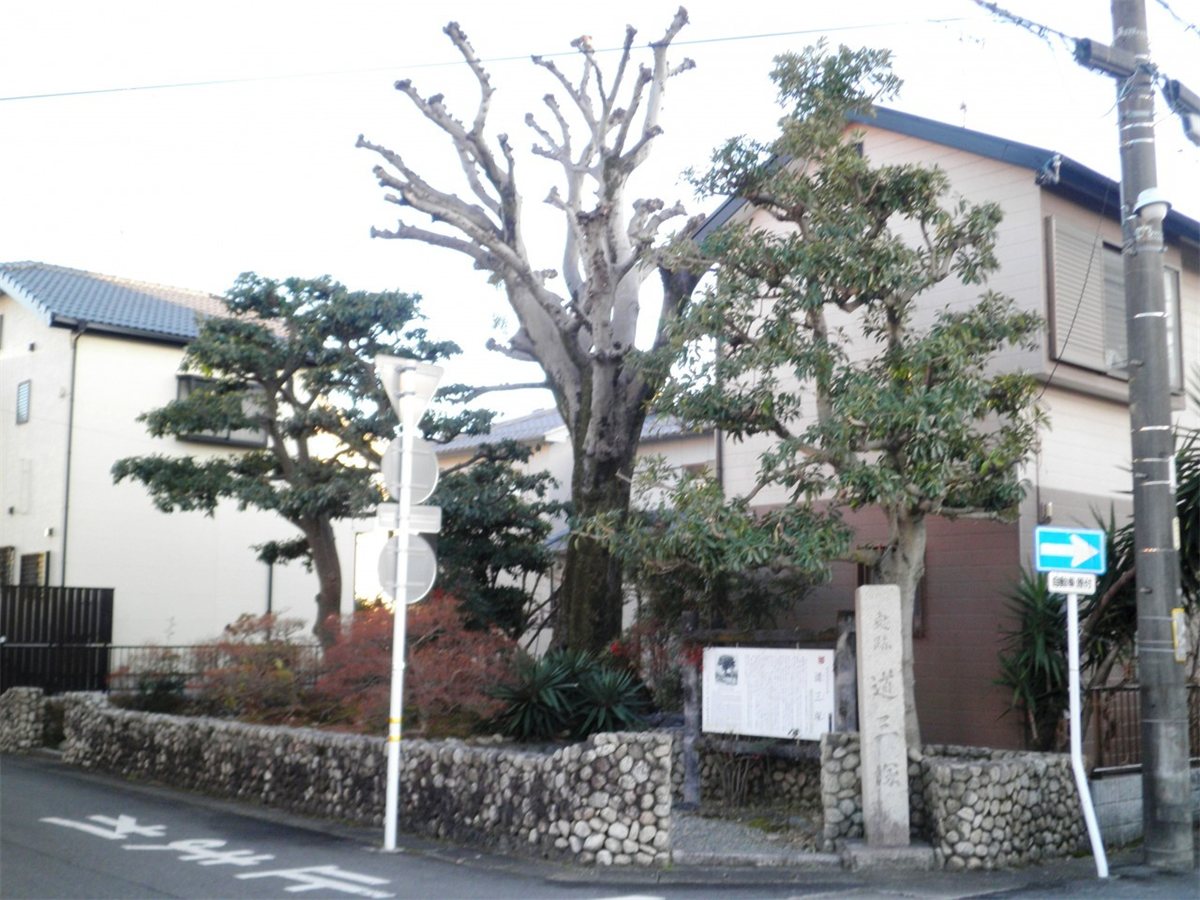
Image: Dōsanzuka in Nagara-Fukumitsu, Gifu City. Wikimedia Commons (photo: 立花左近, CC BY-SA 3.0)
Jōzaiji (the Saitō Family Temple)
Jōzaiji in Kajikawa-chō, Gifu City, is the family temple of the Saitō, where memorial services for their ancestors were held. It keeps the portraits of Dōsan and Yoshitatsu (Important Cultural Properties of Japan), and reproductions are usually on display. There is also a memorial stone for Dōsan in the temple grounds. Every April, during the "Dōsan Festival," events are held in his memory.
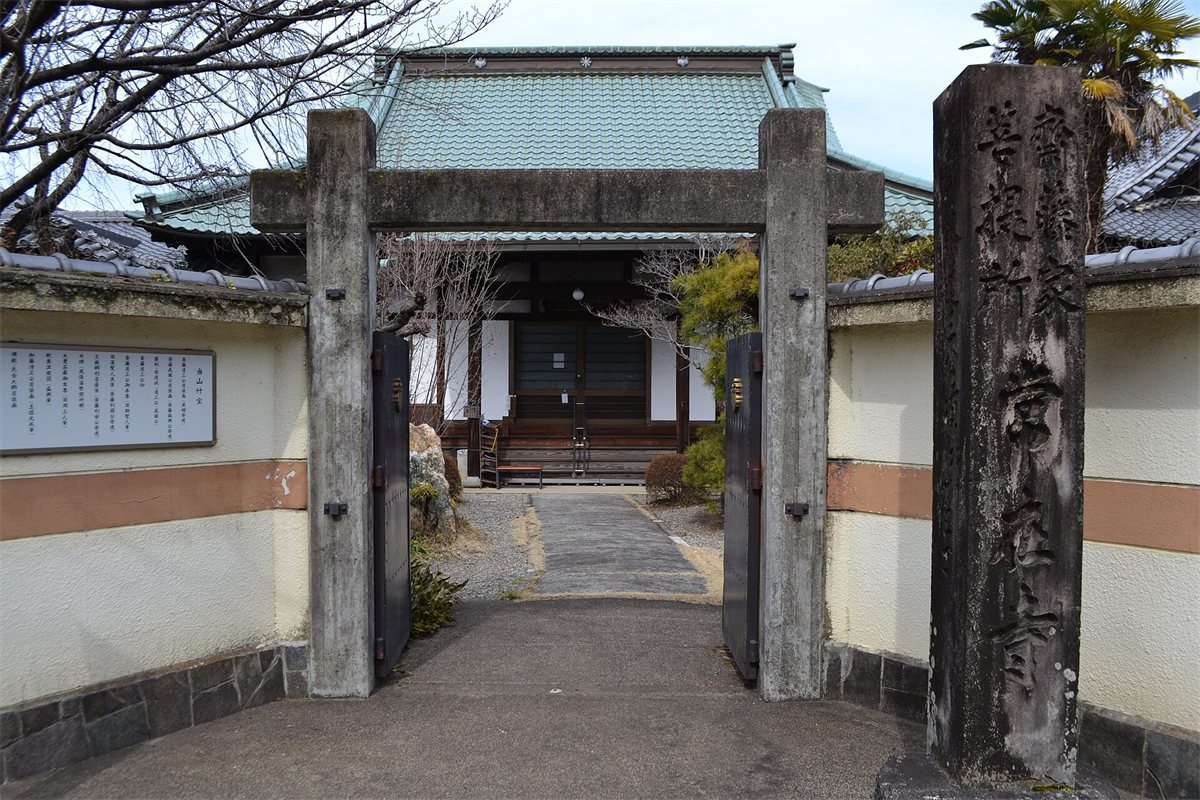
Image: The gate of Jōzaiji temple in Gifu City. Wikimedia Commons (photo: 先従隗始, CC0)
The Sites of Ōga Castle and Sagiyama Castle
Ōga Castle in Yamagata City was the castle of the governor, Toki Yorinori. The Shinchō Kōki says Dōsan drove Yorinori out of it. Mt. Sagiyama in Gifu City is said to have held the castle where Dōsan lived in his later years [Legend]. In January 2026, Gifu City announced that it had found the moat of a Sengoku-period residence at the foot of Mt. Sagiyama, and suggested that it may be the residence Dōsan prepared for Yorinori.
Image: Mt. Kojō in Yamagata City, site of Ōga Castle. Wikimedia Commons (photo: Sendaimo, CC BY-SA 4.0)
| Place | What you can see | Connection with Dōsan |
| Inabayama Castle (Mt. Kinka, Gifu City) | The keep of Gifu Castle and the castle site (a national historic site) | Dōsan's base [Fact] |
| Dōsanzuka (Nagara-Fukumitsu, Gifu City) | A mound and monument (a city historic site) | Said to be where Dōsan is buried [Legend] |
| Jōzaiji (Kajikawa-chō, Gifu City) | Main hall, memorial stone, portraits (reproductions) | The Saitō family temple |
| Site of Ōga Castle (Yamagata City) | A castle site on a mountain | The castle of Toki Yorinori, whom Dōsan drove out |
| Mt. Sagiyama (Gifu City) | A monument on the summit; a residence site at its foot | Said to be where Dōsan lived in his later years [Legend] |
Saitō Dōsan's Family Tree and Descendants
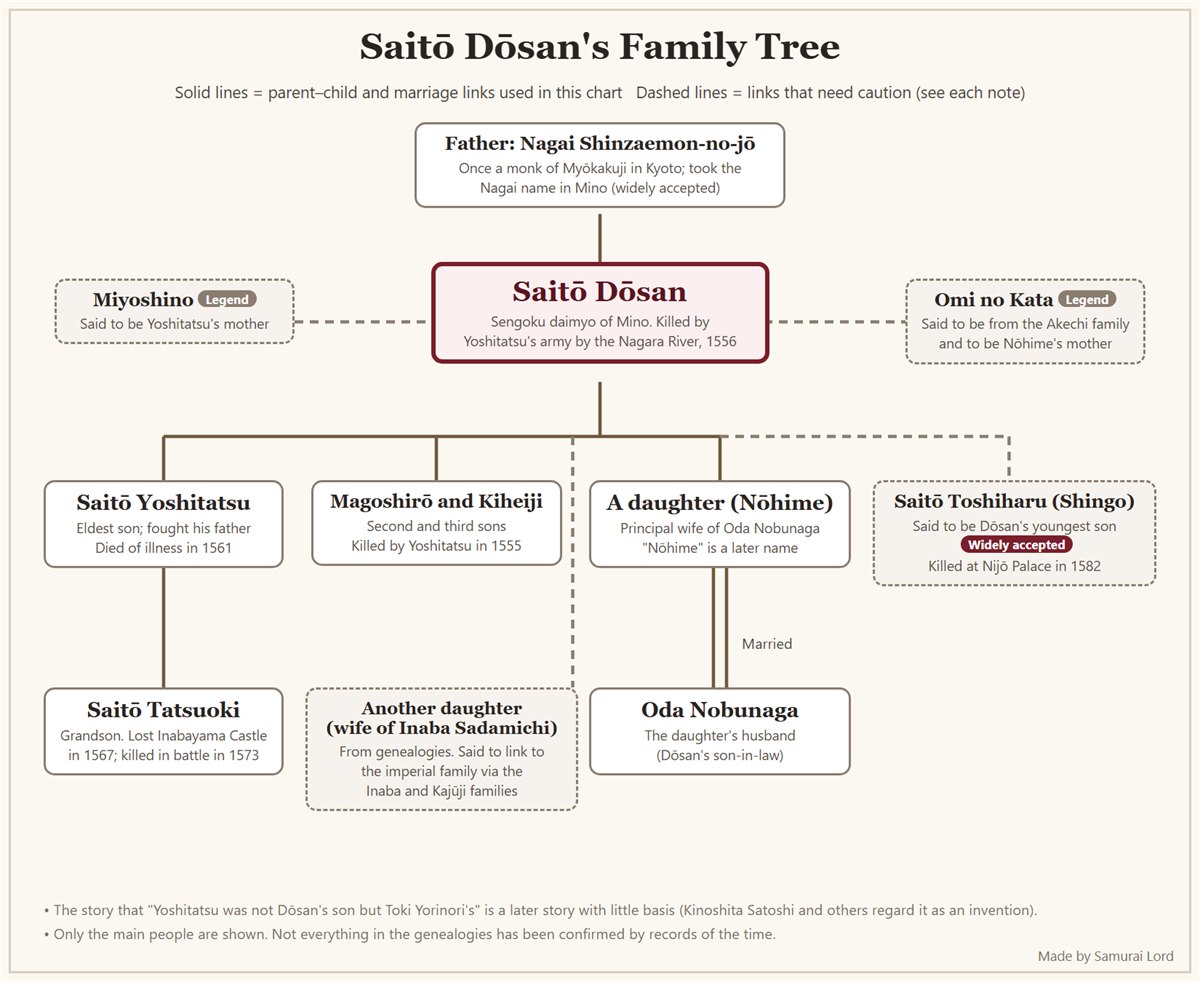
Image: Saitō Dōsan's family tree (solid lines are the parent–child and marriage links adopted in this chart; dashed lines are links that need caution. Made by Samurai Lord)
The sons of Dōsan who appear in the Shinchō Kōki are his eldest son Yoshitatsu, his second son Magoshirō and his third son Kiheiji. Among his daughters was the woman who became Nobunaga's principal wife (Nōhime). Saitō Toshiharu, who served Nobunaga with distinction and was killed at the Nijō Palace during the Honnō-ji Incident, is also thought to have been Dōsan's youngest son [Widely accepted].
As for his wives, names such as Omi no Kata, a daughter of the Akechi family, and Miyoshino, said to have been given to him by Toki Yorinori, are known, but both come from Edo-period books [Legend].
Does Saitō Dōsan Have Living Descendants?
The main line of the family that succeeded Dōsan ended when his grandson Tatsuoki was killed in battle in 1573 (Tenshō 1).
On the other hand, according to research by Gifu City Library, Edo-period genealogies (such as the Kansei Chōshū Shokafu) record a line in which a daughter of Dōsan married Inaba Sadamichi (son of Inaba Ittetsu), and whose descendants connect to the imperial family through the Inaba and Kajūji families. However, this is based on genealogies and does not mean that every link has been confirmed by records of the time.
Was He Related to Akechi Mitsuhide?
Edo-period accounts describe Dōsan's wife Omi no Kata as a member of the Akechi family and Nōhime as Akechi Mitsuhide's cousin [Legend]. These relationships have not been established from the contemporary sources we examined. For Mitsuhide, see our article on Akechi Mitsuhide; for Nōhime, see our article on Nōhime.
What We Know / What We Don't Know
- We know: he had Yoshitatsu, Magoshirō, Kiheiji and a daughter who married Nobunaga
- We don't know: who Dōsan's wives were
FAQ
How do you pronounce Saitō Dōsan?
"Sigh-toh doh-sahn." It is sometimes read "Dōzan."
How old was Saitō Dōsan when he died?
It is unclear, because his birth year is unknown. Theories say 63 (if born in 1494) or 53 (if born in 1504) by the traditional count (more).
Why is he called "the Viper of Mino"?
We found no use of the nickname in records of his time. Historians point to a postwar novel, Sakaguchi Ango's Nobunaga, as the first example. Today it is tied to the image of Dōsan expanding his power by cunning (more).
Did Dōsan introduce rakuichi rakuza, policies easing market restrictions and guild privileges?
We found no document establishing that Dōsan introduced such a policy. The surviving rakuichi market regulations for Kanō in Gifu, issued in 1567 (Eiroku 10), were issued by Nobunaga after Dōsan's death.
What are Saitō Dōsan's famous words?
The best known is what he said on the way home from meeting Nobunaga at Shōtokuji: "My children will end up as that fool's (Nobunaga's) vassals." It is recorded in the Shinchō Kōki (more).
Is there a portrait of Saitō Dōsan?
Yes. A portrait kept at Jōzaiji in Gifu City is an Important Cultural Property of Japan. It is thought to show him before he became a monk, and it bears the date of his death (more).
Summary: Who Was Saitō Dōsan?
Saitō Dōsan was a man from a family of retainers of the Toki, the governors of Mino, who rose to rule Mino as a daimyo. Current research widely accepts that this rise was the work of two generations, his father Nagai Shinzaemon-no-jō and Dōsan himself.
He married his daughter to Oda Nobunaga and, according to the Shinchō Kōki, rated his son-in-law highly after their meeting at Shōtokuji. In the end, however, he clashed with his son Yoshitatsu, who had succeeded him as head of the family, and was killed at the Battle of the Nagara River on the 20th day of the 4th month of 1556.
The "oil seller" and "Viper of Mino" stories spread in later times, but the very fact that such legends grew up shows how much Dōsan came to stand for the Sengoku age of gekokujō.
For related people, see our articles on Nōhime, Oda Nobunaga, Akechi Mitsuhide and Takenaka Hanbei.
Long thought to be a one-man rise, it is now seen as the path of a father and son.

Seeing it in manga, the scene at the Nagara River is heartbreaking...
Sources & How This Article Was Written
This article is based mainly on the following records and references:
- Records from his time: the copy of the Rokkaku Jōtei letter (Kusatsu City collection, Kasuga family documents; based on Kusatsu City's explanation); the ink inscription on the portrait of Saitō Dōsan at Jōzaiji (based on Gifu Prefecture's explanation)
- Later records: Ōta Gyūichi, Shinchō Kōki, opening book (1881 printed edition on Wikisource; available in English as The Chronicle of Lord Nobunaga, translated by J. S. A. Elisonas and J. P. Lamers, Brill, 2011); Saitō Dōsan's will (a copy; transcription in the Gifu Shishi, 1928); the Itsuya no Kakimono, Rōjin Zatsuwa, Mino Meisaiki and Mino no Kuni Shokyūki (via Hagihara Daisuke's paper and the National Diet Library Digital Collections)
- Studies (in Japanese; titles translated by us): Hagihara Daisuke, "The Legend of Saitō Dōsan's Seizure of the Province in the Itsuya no Kakimono" (Kagahan Kenkyū, no. 12, 2022; Kinoshita Satoshi's views in Saitō-shi Yondai, 2020, are also cited from this paper); Nihon Daihyakka Zensho and Sekai Daihyakka Jiten (Kotobank)
- Public sources (in Japanese; titles translated by us): Kusatsu City, "The Surprising Profile Revealed by an Angry Letter" (2020); Gifu Prefecture, "Portraits of Saitō Dōsan and Saitō Yoshitatsu"; Gifu City, "Dōsanzuka"; Gifu City Library, reference case "Saitō Dōsan and the Imperial Family" (Collaborative Reference Database, National Diet Library); Gifu Prefecture Tourism Federation travel guide
- On the drama: press reports on the cast of Toyotomi Kyōdai! (January 2026)
- Map and images: the base map uses GSI Tiles from the Geospatial Information Authority of Japan, with place names and army movements added by Samurai Lord. The portrait of Saitō Dōsan (public domain) and the photos of Gifu Castle (Alpsdake, CC BY-SA 4.0), Dōsanzuka (立花左近, CC BY-SA 3.0), Jōzaiji (先従隗始, CC0) and the site of Ōga Castle (Sendaimo, CC BY-SA 4.0), and the drawing of the nitō tatsunami crest (Gameposo and Marnanel, CC BY-SA 4.0), are from Wikimedia Commons. The timelines, family tree, manga panels and illustrations are original works by Samurai Lord
What the Labels Mean
[Fact]Confirmed by sources from the time ([Fact: …]names the source)[Widely accepted]A view widely accepted by researchers[Debated]Accounts, interpretations or ways of counting differ[Unknown]Not established from the sources we checked[Legend]Stories found in later records or traditions[Folk belief]Popular claims with little evidence[Drama fiction]Scenes created for dramas and novels
We keep "what a record says" separate from "what actually happened." What later records say is attributed to those records by name in the text, and we do not treat all of it as [Fact].
This article was written by the Samurai Lord editorial team and is revised as new research and reader feedback come in. If you spot an error, please let us know through our contact form (in Japanese) and we will check and correct it.
Read in Japanese
This article is also available in Japanese: 斎藤道三とは何をした人?死因や娘・息子、織田信長との関係を解説!