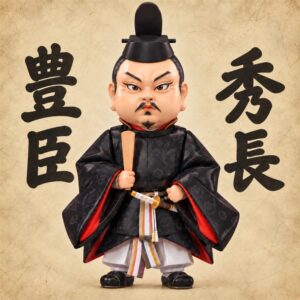
.png)
Image: An illustration based on his portrait. All illustrations in this article are imaginative.
Toyotomi Hideyoshi unified Japan—and one of the minds behind that success was Kuroda Kanbei (1546–1604). He is also known by his personal name, Kuroda Yoshitaka, and by the name he took after becoming a lay monk, Kuroda Josui.
Famous as one of Hideyoshi's two great “strategists” alongside Takenaka Hanbei, he lived a life unlike any other warlord's: he spent about a year locked up in an enemy castle, and he became a Christian, baptized as Simeon.
This article focuses on what kind of person he really was, along with his relationship with Takenaka Hanbei, his imprisonment and lame leg, his death, and his descendants—separating what records from his own time confirm from stories created later.
Key points are tagged: [Fact] confirmed by records from the period, [Widely accepted] supported by most historians, [Debated] competing theories, [Unknown] not known from any source, and [Legend] later stories or folklore. A tag like [Fact: Shinchō Kōki] or [Legend: Kuroda Kafu] names the source.
.jpg)
I am Uesugi Kenshin. Today's subject is the clever man who served Hideyoshi. He is often seen as a sharp, untrustworthy schemer—but trace the records, and a surprising side of him appears.
.jpg)
I'm Date Masamune! I've heard Lord Hideyoshi feared Lord Kanbei as “the next ruler of Japan.” Is that true?
.jpg)
We shall check that, too. The more famous a story, the more carefully we must test it.
Who Was Kuroda Kanbei?
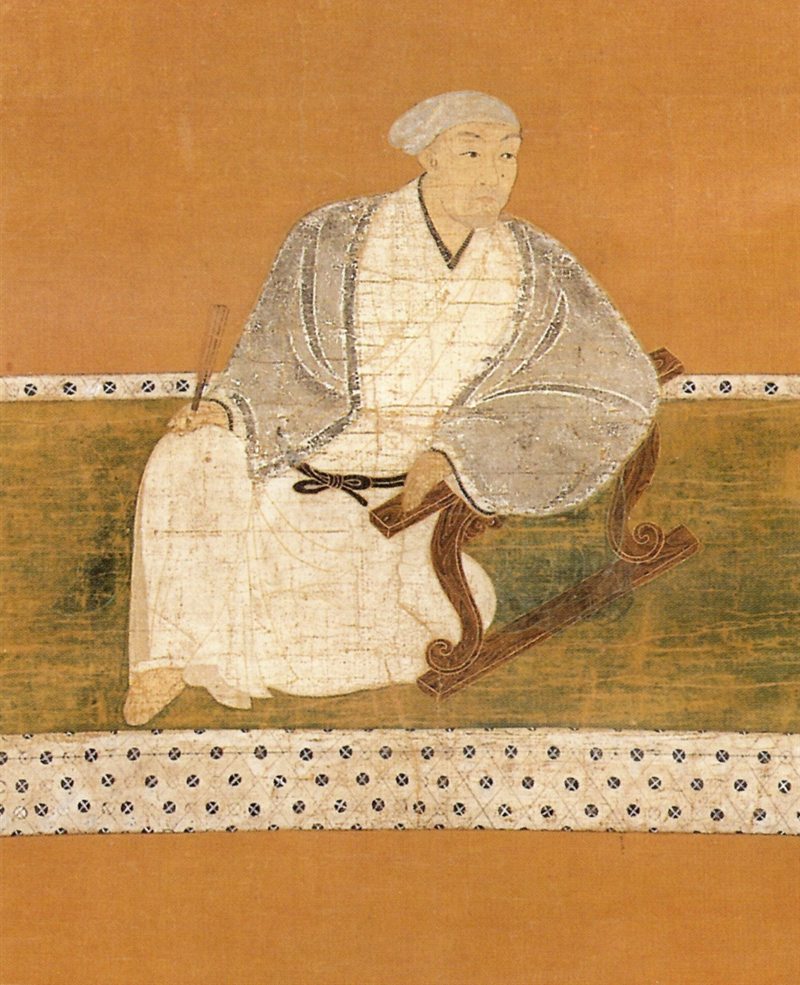
Image: “Portrait of Josui Koji” (1604), Sōfuku-ji Temple, Fukuoka. Painted in the year he died, it shows him in his later years, wearing a hood.
In a nutshell, Kuroda Kanbei was “the strategist and negotiator at Hideyoshi's side who helped him unify Japan.” He did not just fight; time and again he walked into enemy castles and talked their defenders into surrendering.
Three Things That Show His Character
- One wife for life: he never took a concubine, staying with his wife Teru alone—rare for a warlord of his day
- No taste for luxury: a letter survives in which the lord Mōri Terumoto tells his retainers to keep Kanbei's welcome simple, to suit his tastes
- He repaid kindness: he later took into the Kuroda family the son of a man who had looked after him in prison
Jump to the part you want to read:
- His relationship with Takenaka Hanbei
- His imprisonment and lame leg
- Stories that reveal his character
- How he died
- His descendants
Quick Profile
| Item | Details | Reliability |
| Lived | 1546–1604 | [Fact] |
| Birthplace | Himeji, Harima province (today's Himeji, Hyōgo) | [Widely accepted] |
| Names | Kanbei (common name); Yoshitaka (personal name); Josui (name as a lay monk) | [Fact] |
| Lords served | Kodera Masamoto → Oda Nobunaga → Toyotomi Hideyoshi → Tokugawa Ieyasu | [Fact] |
| Main castles | Himeji Castle → Nakatsu Castle (Ōita) | [Fact] |
| Wife | Kushihashi Teru (no concubines) | [Widely accepted] |
| Children | Nagamasa (eldest son), Kumanosuke (second son) | [Fact] |
| Religion | Christian (baptismal name Simeon) | [Fact] |
| Family crest | Fuji-tomoe (wisteria swirl), kokumochi (black disc) | [Widely accepted] |
| Death | Illness (the disease is unknown), aged 57 | [Fact] |
Kanbei, Yoshitaka, Josui: One Man, Three Names
| Name | Reading | What kind of name? |
| Kanbei (官兵衛) | KAHN-bay | His everyday name—and the one he is best known by |
| Yoshitaka (孝高) | yo-shee-TAH-kah | His personal name (earlier Suketaka, then another spelling of Yoshitaka) |
| Josui (如水) | JOE-swee | The name he took when he shaved his head as a lay monk in 1593 |
| Kodera Kanbei | ko-DEH-rah | As a young man he used the surname of his lords, the Kodera family |
“Kuroda Kanbei,” “Kuroda Yoshitaka,” and “Kuroda Josui” are all the same man [Fact]. In his youth he used the surname Kodera, granted by his lords; he seems to have started calling himself Kuroda around 1580 [Widely accepted].
As for “Josui,” the Jesuit missionary Luís Fróis wrote that Kanbei, saying all his power and achievements had vanished like bubbles on water, named himself “Josui”—“like water” [Fact: Fróis, Historia de Japam]. He had just angered Hideyoshi when he took the name. Another theory links it to the Chinese classic Laozi: “The highest good is like water” [Debated].
His Relationship with Takenaka Hanbei
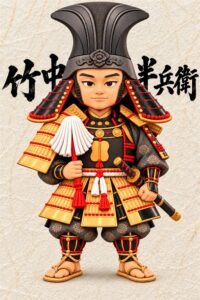
-683x1024.png)
Image: Takenaka Hanbei (illustration)
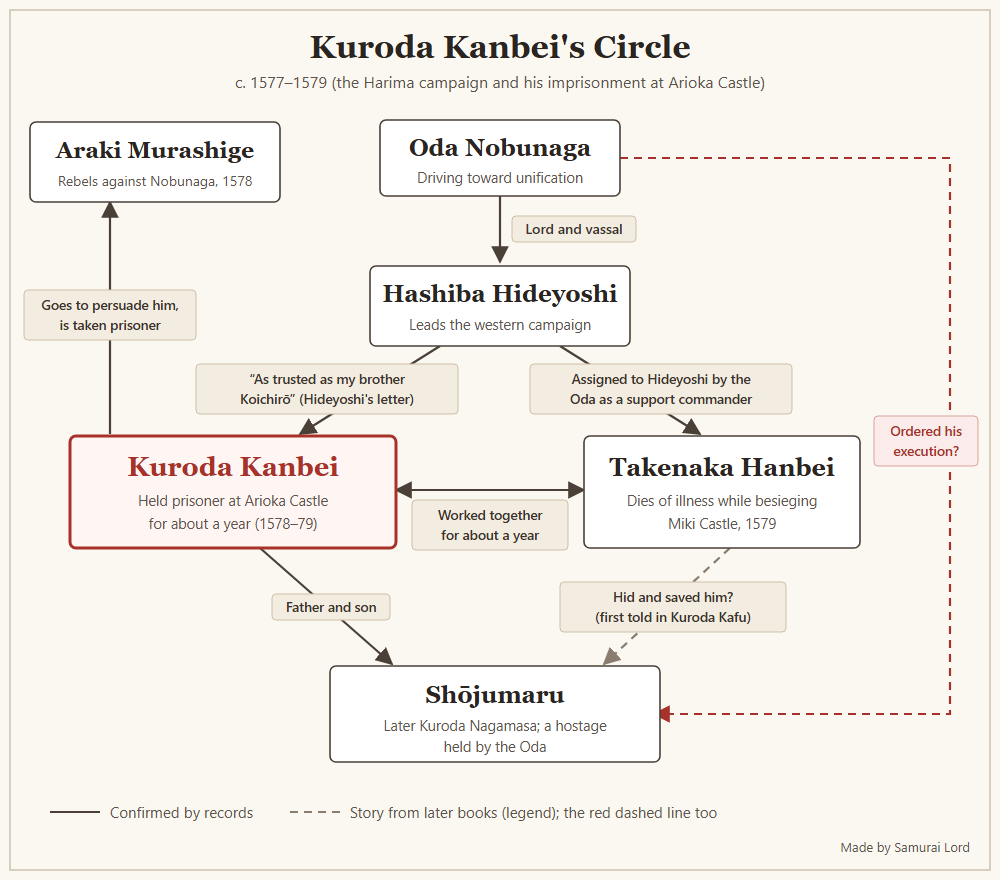
Image: Kuroda Kanbei's circle (made by Samurai Lord). Tap or click the image to enlarge it.
In short, Kanbei and Takenaka Hanbei were fellow advisers who supported Hideyoshi at the same time, and later generations called them “the Two Hyōe” (Ryō-bei), after the “-bei” in both their names [Widely accepted]. But they worked together for only about a year, and much of the “genius strategist duo” image was created in the Edo period and later.
Sources: Shinchō Kōki; research on Kuroda Yoshitaka (Nakano Hitoshi, Kuroda Yoshitaka, 2022, and others)
Only About a Year Together
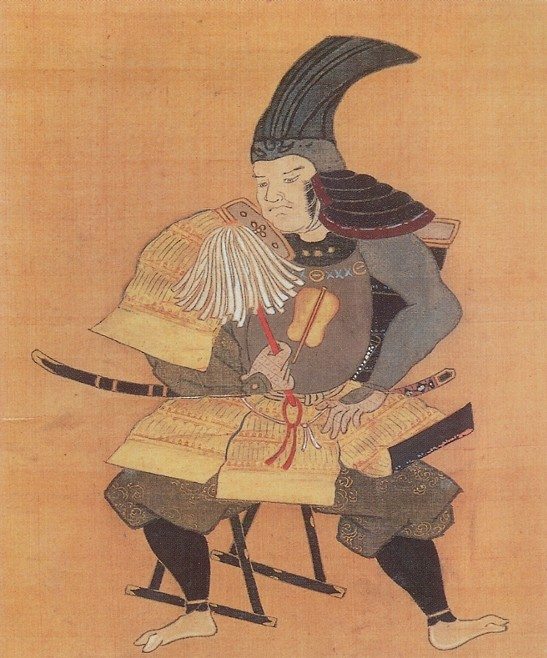
Image: Portrait of Takenaka Hanbei (Zendō-ji Temple, Tarui, Gifu)
The Shinchō Kōki, a chronicle by one of Nobunaga's retainers, confirms that the two served on the same battlefield: in 1577, during Hideyoshi's Harima campaign, Kanbei and Hanbei captured Sayo Castle (Hyōgo) together [Fact: Shinchō Kōki].
But in late 1578, Kanbei was imprisoned in Araki Murashige's Arioka Castle (see the next section). And in July 1579, while Kanbei was still in his cell, Hanbei died of illness on campaign at the siege of Miki Castle [Fact]. So the two stood side by side for only about a year.
Also, “strategist” (gunshi) was not an actual job title at the time. Kanbei planned and negotiated as one of Hideyoshi's own retainers, while Hanbei seems to have been a support commander (yoriki) assigned to Hideyoshi by the Oda [Widely accepted].
| Item | Kuroda Kanbei | Takenaka Hanbei |
| Lived | 1546–1604 | 1544–1579 |
| From | Harima (Hyōgo) | Mino (Gifu) |
| Tie to Hideyoshi | Hideyoshi's retainer, planning and negotiating | Probably a support commander assigned by the Oda |
| Famous stories | His imprisonment; advising the “Great Return from Chūgoku” | Seizing Inabayama Castle; saving young Shōjumaru |
| Records from the time | Many letters survive | Few—much about him is unclear |
For more on Hanbei's death, family, and graves, see Who Was Takenaka Hanbei (Shigeharu)? Hideyoshi's Strategist, His Death & Descendants.
Did Hanbei Save Kanbei's Son from Nobunaga?
Here is the famous story. When Kanbei failed to come back from Arioka Castle, Nobunaga decided he had switched sides and ordered the death of Kanbei's son Shōjumaru (the future Kuroda Nagamasa), who was being held as a hostage. Hanbei secretly hid the boy on his own lands and saved his life.
The story goes on to say that the Kuroda family adopted the Takenaka family crest out of gratitude, and that Kanbei later sponsored the coming-of-age ceremony of Hanbei's son.
However, this story first appears in the Kuroda Kafu, a family history compiled by the Kuroda in 1688. It cannot be confirmed in records from the time, and many historians think it was likely created later [Legend: Kuroda Kafu].
.jpg)
What!? That famous story isn't in any reliable record?
It is a fine tale. But the finer the tale, the more often it was made up afterward. Remember that.
Why Was Kanbei Imprisoned—and How Did He Become Lame?
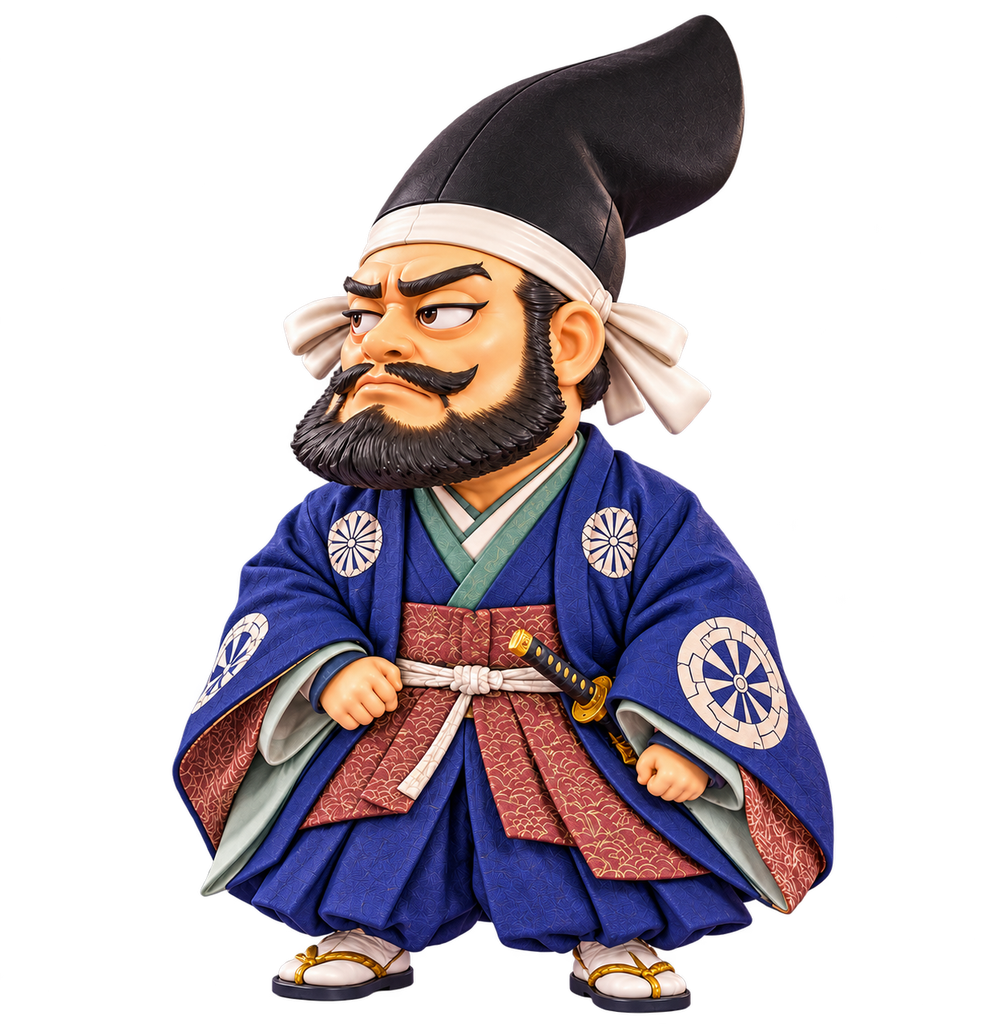
Image: Araki Murashige (illustration)
In 1578, Araki Murashige, a senior Oda commander, rebelled against Nobunaga and shut himself up in Arioka Castle (Itami, Hyōgo). Kanbei's own lord, Kodera Masamoto, was about to join the revolt, so Kanbei went into Arioka Castle to talk Murashige out of it. The talks failed, and he was locked up inside the castle [Fact].
He was rescued in late 1579, just before Arioka Castle fell; his retainer Kuriyama Zensuke (Toshiyasu) is said to have brought him out. He had been a prisoner for about a year [Fact].
Sources: research on Kuroda Yoshitaka (Owada Tetsuo, Kuroda Josui, 2012; Nakano Hitoshi, Kuroda Yoshitaka, 2022)
Was His Leg Really Damaged?
After so long in a cramped cell, Kanbei is said to have come out with a disabled leg [Widely accepted]. A story also says he was left with a bad skin disease on his head [Legend].
However, the oldest source for the claim that he “commanded his troops from a palanquin ever after” is Kuroda Josui Den, a biography published in 1916 [Debated]. His portraits show him with one knee raised, leaning on an armrest, which is sometimes explained as a sign of his bad leg—but this was a standard pose in portraits of poets, and Kanbei, who wrote poetry, was probably painted the same way [Widely accepted].
Repaying a Jailer's Kindness
Among those who looked after Kanbei at Arioka Castle was said to be Katō Shigenori, one of Murashige's retainers. Kanbei later took Shigenori's son into the Kuroda family and raised him like a brother to Nagamasa. This son became Kuroda Kazushige, whose line, the Minagi Kuroda family, served as senior retainers of the Fukuoka domain throughout the Edo period [Widely accepted].
Even with Araki Murashige, the man who imprisoned him, Kanbei kept in touch after both came to serve Hideyoshi; copies of letters between them are said to survive [Widely accepted].
Staying on good terms with the man who threw him in a cell… I am not sure I could do the same.
A whole year in prison, and he remembered kindness instead of holding a grudge. What a generous man!
Stories That Reveal His Character
.png)
Many stories describe Kanbei's character, but stories found in records from his own time and stories that first appear in books written long after are not equally reliable. Below, each story is shown with where it comes from.
Stories Found in Records from His Time
- One wife for life: there is no record of Kanbei having a concubine; he had his sons Nagamasa and Kumanosuke with his wife Teru
[Widely accepted]. This was true before he became a Christian, so it seems to have been his own choice rather than a matter of faith—an unusual marriage for a warlord of his time - “Keep his welcome simple”: before the Kyushu campaign, Mōri Terumoto told a retainer in a letter to prepare for Kanbei's arrival “lightly, to suit his household's style”
[Fact: Mōri Terumoto's letter] - A Christian who helped missionaries: he was baptized around 1585 as Simeon, and even after Hideyoshi banned Christianity, he arranged meetings between missionaries and Hideyoshi and worked to improve their treatment
[Fact: Fróis, Historia de Japam] - He forbade his retainers to follow him in death: before he died, he banned junshi, the custom of retainers killing themselves when their lord died
[Widely accepted] - A lover of poetry and tea: he studied the tea ceremony with Sen no Rikyū, and a record of linked-verse (renga) poetry shows him exchanging verses with someone believed to be his wife Teru
[Widely accepted]
Note that Terumoto's letter only shows an instruction to “keep things simple.” Reading this as proof that Kanbei was a modest man who disliked luxury is our interpretation. What the letter does show is that his tastes were well known—enough for another great lord to take them into account.
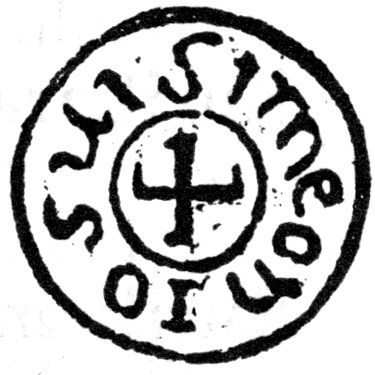
Image: Kuroda Josui's seal. Around the cross are the letters “SIMEON IOSUI”—Simeon Josui.
Stories from Later Books (Legends)
The following stories cannot be confirmed in records from his time; they come from books and anecdote collections written in the Edo period and later [Legend]. They are included here as stories that shaped his image.
- He never had a retainer put to death: when he scolded someone, he scolded hard—but afterward he gave them a small errand so no bad feelings lingered
- Why he sold his things to his retainers: instead of giving away things he no longer used, he sold them cheaply. “I can't give something to everyone, so gifts would be unfair. If I sell them, only those who want them will buy”
- A pledge carried to the next world: as young men, his senior retainers Kuriyama Zensuke and Mori Tahei swore an oath as sworn brothers at his request. On his deathbed, Kanbei laughed and tucked the oath into his robe: “They kept their promise to the end—I'll take it with me to the afterlife”
[Legend: Kokyō Monogatari] - Cold on purpose in his last days: as death approached, he began scolding his retainers harshly. When Nagamasa protested, he explained: “I'm doing it so they will want your rule to begin as soon as possible”
Not Just Kind: The Hard Side of a Warlord
Kanbei was also a warlord of a violent age. In the 1581 siege of Tottori Castle, he took part in a brutal starvation siege that drove local people into the castle so its food would run out faster [Widely accepted]. In 1588, the Kii clan of Buzen, who refused to submit to the Kuroda, was destroyed: with Hideyoshi's approval, Nagamasa had their leader killed at Nakatsu Castle, and Kanbei is said to have killed the hostage son, Kii Tomofusa [Widely accepted].
Kind and earnest on one hand, coldly decisive when his goals demanded it on the other—Kanbei was both.
Are His Famous Quotes Real?
A saying often credited to Kanbei is: “Fear the punishment of your lord more than that of the gods, and fear the punishment of your retainers and the farmers more than that of your lord.” But there is no record from his own time showing that he actually said it [Legend].
The “Five Precepts of Water” (Mizu Gokun) are also widely attributed to Josui in Japan. However, a study by the National Diet Library found that the oldest known source is a 1929 issue of the magazine King, and there is no evidence that Josui wrote them. The link probably comes from the “water” (sui) in his name [Folk belief].
Source: National Diet Library, Collaborative Reference Database (on the origin of the “Five Precepts of Water”)
A saying weighs more when a famous man said it. That is why later people love to put words in a great warlord's mouth.
I really thought the Five Precepts of Water were his! You never know until you check.
Life and Achievements: A Timeline
| Year | Event | Notes |
| 1546 | Born in Himeji, Harima | His father, Kuroda Mototaka, was a senior retainer of the Kodera family |
| c. 1567 | Becomes head of the family and marries Kushihashi Teru | Put in charge of Himeji Castle |
| 1575 | Urges his lord Kodera Masamoto to side with Oda Nobunaga | Meets Nobunaga at Gifu Castle |
| 1577 | Hands over the main keep of Himeji Castle to Hideyoshi | Sends his son Shōjumaru as a hostage |
| 1578 | Imprisoned at Arioka Castle | Fails to persuade Araki Murashige |
| 1579 | Rescued from Arioka Castle | Takenaka Hanbei dies that summer |
| 1582 | Honnō-ji Incident → Great Return from Chūgoku → Battle of Yamazaki | His second son Kumanosuke is born |
| c. 1585 | Baptized as a Christian | Baptismal name Simeon |
| 1587 | After the Kyushu campaign, becomes lord of six districts of Buzen (about 120,000 koku) | Begins building Nakatsu Castle |
| 1589 | Hands the headship to Nagamasa | Continues serving at Hideyoshi's side |
| 1590 | Enters Odawara Castle and persuades the Hōjō to surrender | Hideyoshi praises his work in a letter |
| 1593 | Angers Hideyoshi during the invasion of Korea and becomes a lay monk | Takes the name “Josui” |
| 1597 | His second son Kumanosuke dies at sea | On his way to Korea |
| 1600 | Sekigahara campaign: raises an army in Kyushu and wins the Battle of Ishigakibaru | His son Nagamasa shines at Sekigahara |
| 1604 | Dies at his residence in Fushimi, Kyoto | Buried with Christian rites |
1. Opening Harima to Hideyoshi with Himeji Castle
When Hideyoshi entered Harima (Hyōgo) in 1577, Kanbei handed over the main keep of his own Himeji Castle and moved into the second bailey to support the campaign [Widely accepted]. Himeji became Hideyoshi's base for the conquest of western Japan.
2. The Honnō-ji Incident and the “Great Return”
When Nobunaga was killed in the Honnō-ji Incident of 1582, Hideyoshi was besieging Takamatsu Castle in Bitchū (Okayama). A famous story says that Kanbei told the shaken Hideyoshi, “Your moment of fortune has come,” and urged him to make peace with the Mōri and race back toward Kyoto—the “Great Return from Chūgoku” [Legend: Rōjin Zatsuwa].
The oldest source for this story is the Rōjin Zatsuwa, a collection of recollections compiled in the early Edo period. What is certain is that Kanbei returned with Hideyoshi and took up position on Mount Tennō with Hideyoshi's brother Hidenaga at the Battle of Yamazaki [Widely accepted].
3. Winning Without a Fight: The Surrender of Odawara
Kanbei's greatest talent was persuading enemies to give up without a fight. In the Odawara campaign of 1590, he went into Odawara Castle himself and convinced the Hōjō leaders, Ujimasa and Ujinao, to open the castle [Fact]. In a letter to Nagamasa, Hideyoshi credited Kanbei's efforts with ending the campaign [Fact: Hideyoshi's letter].
In thanks, Hōjō Ujinao is said to have given him the famous sword “Nikkō Ichimonji” and the chronicle Azuma Kagami [Widely accepted].
4. Nakatsu Castle and the Name “Fukuoka”
For his part in the Kyushu campaign of 1587, he received six districts of Buzen (Ōita and Fukuoka prefectures), about 120,000 koku, and built Nakatsu Castle (Nakatsu, Ōita) [Fact]. This was a small reward for his service, and missionary records say Hideyoshi cut it back because Kanbei was a Christian [Widely accepted].
There is also a famous story that Hideyoshi feared Kanbei as “the man who would take the realm after me” and so kept his lands small. But this comes from the Meishō Genkōroku, compiled in the 1850s–60s, and cannot be confirmed in records from his time [Legend: Meishō Genkōroku].
Masamune, here is your answer. “Feared by Hideyoshi” comes from a book written centuries later. The missionaries of his own time say his lands were small because he was a Christian.
I see! So it might have been his faith, not fear, that kept his reward small.
After Sekigahara, the Kuroda moved to Chikuzen (Fukuoka Prefecture). The name of their new castle town, “Fukuoka,” is said to come from Fukuoka in Bizen province (Setouchi, Okayama), a place linked to the Kuroda ancestors [Widely accepted].
His Wife Teru and His Son Kuroda Nagamasa
Teru: A Wife Who Was His Only One
Kanbei's wife, Kushihashi Teru, was born in 1553 to the Kushihashi family, lords of Shikata Castle in Harima, and married Kanbei around 1567 [Fact]. Her name has traditionally been read “Teru,” but in 2013 an old document marked with the reading “Mitsu” was found at Ennō-ji Temple in Fukuoka [Widely accepted].
While her husband and son became Christians, Teru remained a devoted Pure Land Buddhist. Just before the Battle of Sekigahara in 1600, she was being held in Osaka as a hostage when Kuroda retainers rescued her and brought her back to Nakatsu [Widely accepted]. After Kanbei's death she became a nun, and she died in 1627 [Fact].
Nagamasa: First Lord of Fukuoka
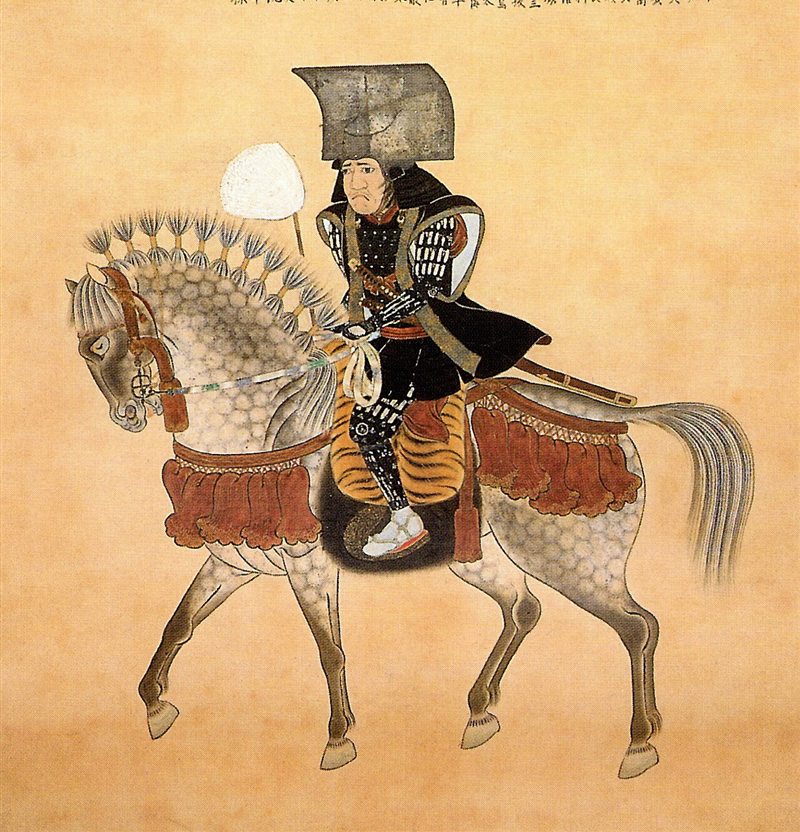
Image: Portrait of Kuroda Nagamasa (detail, Fukuoka City Museum)
Kanbei's eldest son, Kuroda Nagamasa (1568–1623), was called Shōjumaru as a boy and was held as a hostage by the Oda [Fact]. After taking over from his father, he fought in the Kyushu campaign and the invasion of Korea, and at the Battle of Sekigahara in 1600 he was one of the key figures of the Eastern Army. As a reward he received Chikuzen, worth over 520,000 koku, and became the first lord of the Fukuoka domain [Fact].
Kanbei's second son, Kumanosuke, died in 1597 while still in his teens, when his ship sank in a storm on the way to visit his father and brother, who were fighting in Korea [Fact].
One wife, two sons—and to lose one of them at sea must have been bitter indeed.
What Did Kanbei Do at Sekigahara?
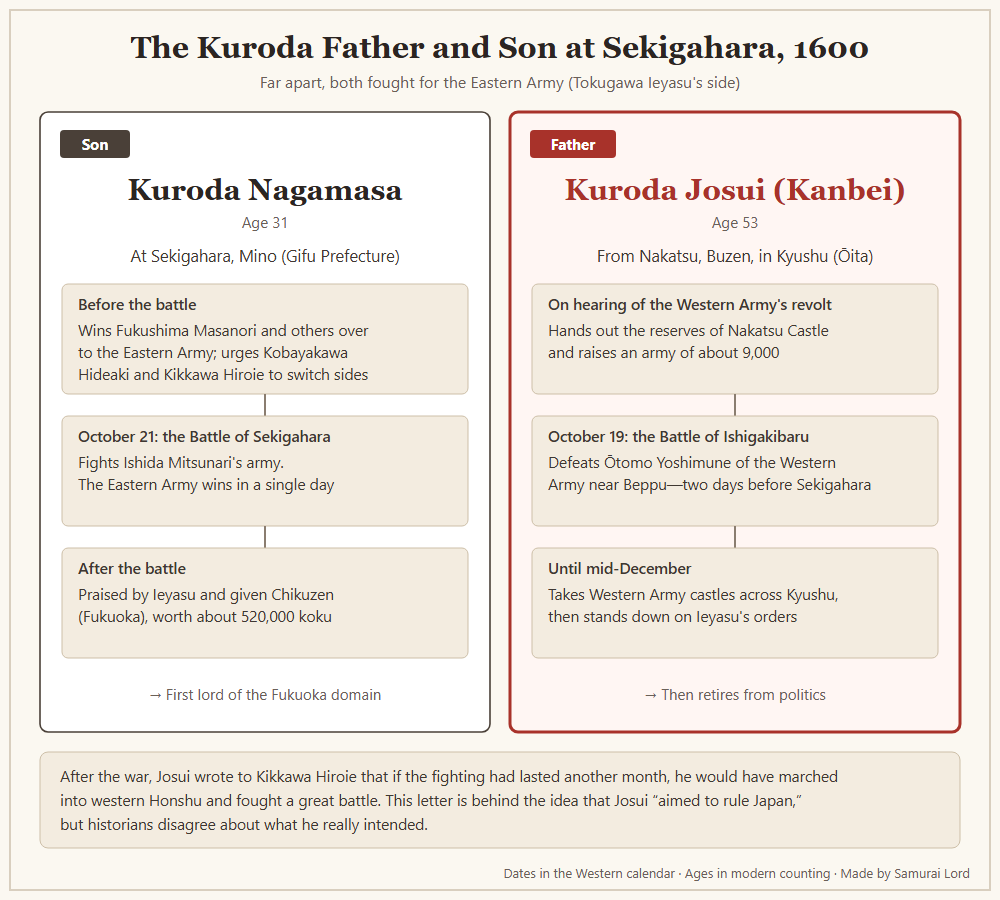
Image: The Kuroda father and son at Sekigahara, 1600 (made by Samurai Lord). Tap or click the image to enlarge it.
Which side was Kanbei on at Sekigahara? The Eastern Army—Tokugawa Ieyasu's side [Fact]. But it was his son Nagamasa who fought at Sekigahara itself; Kanbei (now Josui) was fighting in Kyushu.
When he learned of the Western Army's uprising, Josui handed out the gold and silver stored at Nakatsu Castle to raise an army of about 9,000. On October 19, 1600—two days before the main battle at Sekigahara—he defeated Ōtomo Yoshimune of the Western Army at the Battle of Ishigakibaru (Beppu, Ōita) [Fact]. He went on to capture one Western Army castle after another in Kyushu, until he stood down in December on Ieyasu's orders [Fact].
Among the men who fought in Josui's army at this time was probably a young Miyamoto Musashi, together with his father Shinmen Munisai. Read more in our article on Miyamoto Musashi.
Did He Want to Rule Japan?
After the war, Josui wrote to Kikkawa Hiroie of the Mōri family that if the fighting had lasted another month, he would have marched into western Honshu and fought a great battle [Fact: letter to Kikkawa Hiroie]. This letter is behind the idea that “Josui was aiming for the realm,” but historians disagree about what he really intended [Debated].
A famous story says that when Nagamasa reported that Ieyasu had shaken his right hand in thanks, Josui snapped, “And what was your left hand doing?”—meaning, why didn't you kill Ieyasu with it? But this story comes from biographies of the late 1800s and early 1900s and cannot be treated as history [Fiction].
I've seen the “left hand” scene in a drama! So that was invented later, too.
How Did Kanbei Die?
.png)
The Short Answer
- He died of illness at his residence in Fushimi, Kyoto, on April 19, 1604 (the 20th day of the 3rd month of Keichō 9)
[Fact] - He was 57 (59 by the traditional Japanese count)
[Fact] - The disease was never recorded, so we do not know what it was
[Unknown]
Sources: missionary records (Jesuit reports); Suwa Katsunori, Kuroda Kanbei (2013); Nakano Hitoshi, Kuroda Yoshitaka (2022)
After Sekigahara, Ieyasu offered Josui a reward as well, but he is said to have declined and lived quietly, away from politics [Widely accepted]. In his last years he went back and forth between Fukuoka and Kyoto, and about six months before his death he stayed at the Arima hot springs for his health [Widely accepted].
According to missionary records, as death approached Josui had his rosary and prayers placed on his chest and left instructions: “carry my body to the priests in Hakata,” and “Nagamasa should show goodwill to the priests in his domain” [Fact: missionary records]. The missionaries in Hakata buried him with Christian rites, and Nagamasa later held a Buddhist funeral as well [Fact: missionary records].
His death poem, as it has come down to us [Legend]:
Omoioku / koto no ha nakute / tsui ni yuku / michi wa mayowaji / naru ni makasete
“I leave behind no words. On this final road, I will not lose my way—I'll let things be as they will.”
Some websites claim he died of a particular disease, but no record supports this [Folk belief].
A man said to have eyed the whole realm, ending with “I'll let things be as they will.” A fine way to go.
Descendants, Family Crest, Helmet, and Places to Visit
Does Kanbei Have Living Descendants?
The Kuroda family continued as lords of the Fukuoka domain, founded by Nagamasa, until the Meiji era [Fact]. However, only the lords up to the sixth, Kuroda Tsugitaka, were Kanbei's blood descendants; from the seventh lord on, heirs were adopted from the Hitotsubashi Tokugawa and other families [Fact].
So Kanbei has no descendants through the male line. Through daughters, however, his blood is said to have spread into other daimyo families.[Widely accepted].
The Minagi Kuroda family, founded by the son of Katō Shigenori—the man who looked after Kanbei in prison—also continued as senior retainers of the Fukuoka domain [Widely accepted].
The Kuroda Family Crest: Fuji-tomoe

Image: Kuroda fuji-tomoe (based on an image by Mukai, CC BY-SA 3.0, Wikimedia Commons, with colors inverted)
The Kuroda family crest is the fuji-tomoe, wisteria flowers and leaves curled into a swirl [Widely accepted]. The family also used the kokumochi, a plain black disc. A story says this disc came from Takenaka Hanbei's family, but it is not certain [Legend].
Helmet and Swords
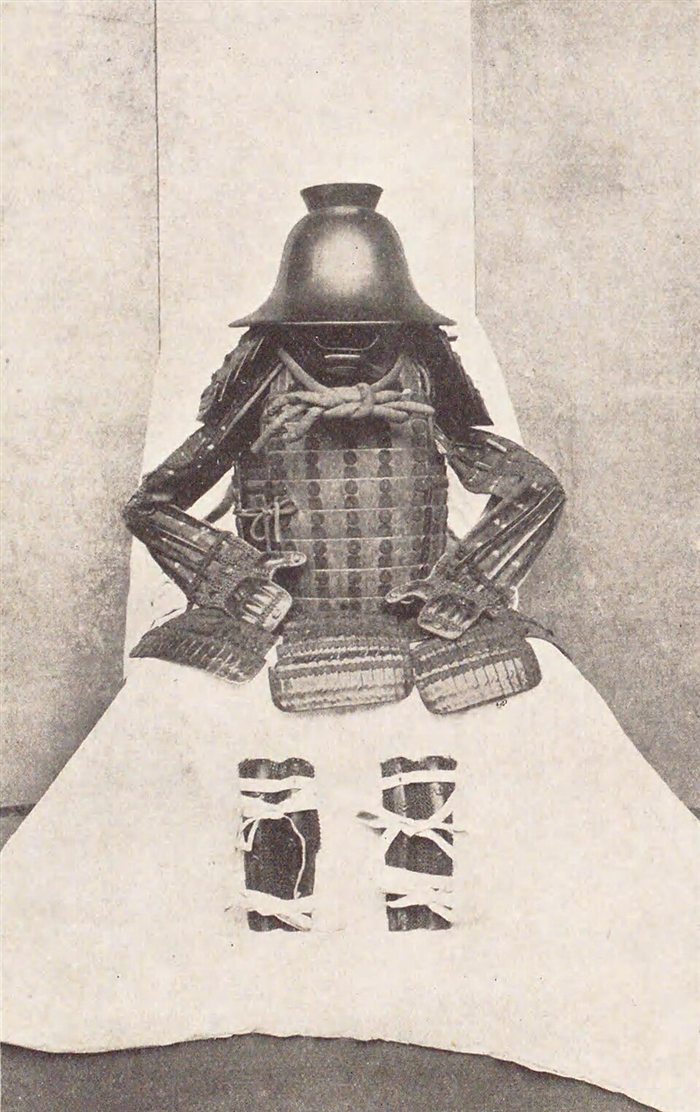
Image: A suit of armor said to have belonged to Kuroda Yoshitaka (photo from Kuroda Josui Den, 1916)
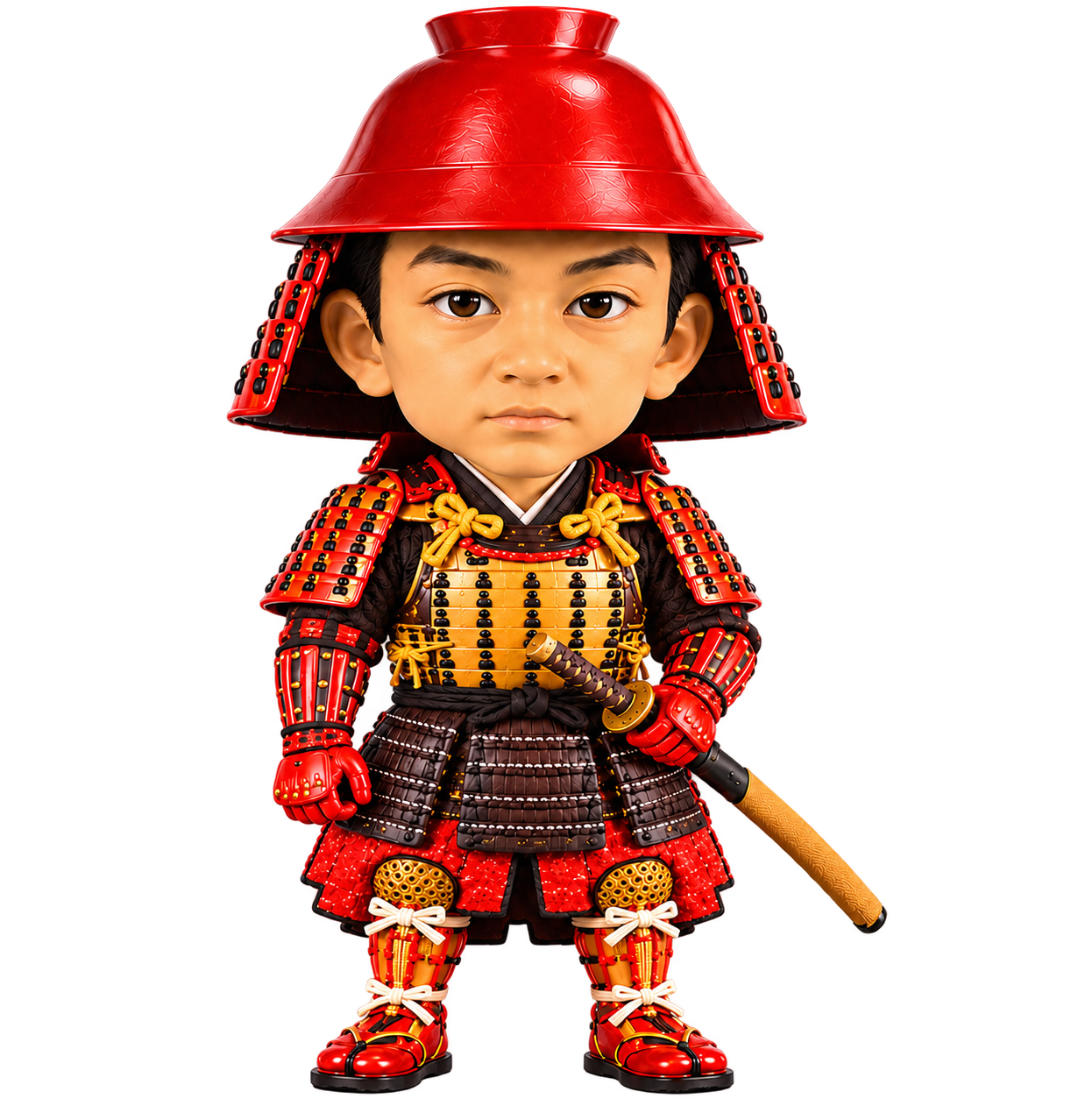
Kanbei's best-known helmet is the gōsu-nari kabuto, shaped like an upturned lidded bowl. The helmet said to be his own was given to his retainer Kuriyama Zensuke on his deathbed and is now at the Morioka History and Culture Museum in Iwate [Widely accepted]. The Fukuoka City Museum has a helmet of the same shape made by a later lord in Kanbei's memory [Widely accepted].
Among his swords, the National Treasures “Heshikiri Hasebe,” said to be a gift from Nobunaga, and “Nikkō Ichimonji,” a gift from Hōjō Ujinao at Odawara, are both held by the Fukuoka City Museum [Widely accepted].
Places to Visit and His Grave
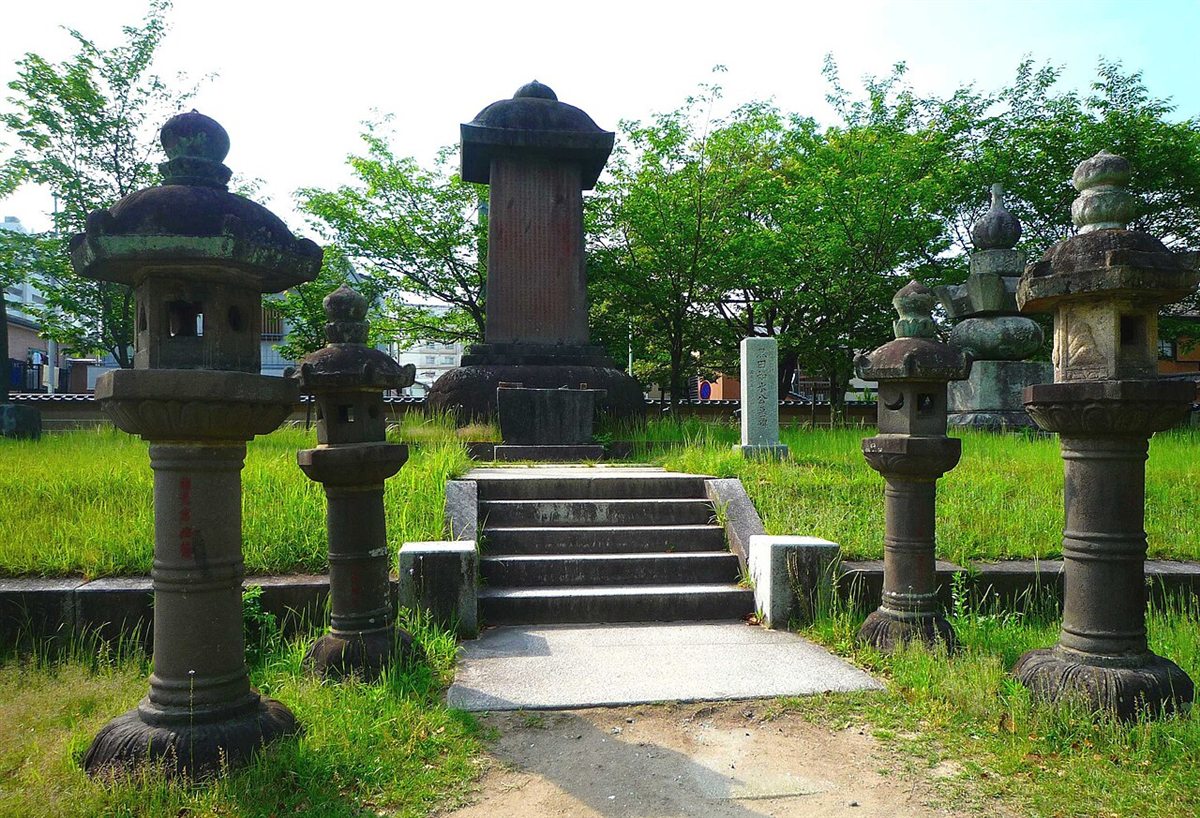
Image: The Kuroda family graves at Sōfuku-ji Temple, Hakata, Fukuoka, where Josui is buried. Photo: Heartoftheworld (CC BY-SA 4.0, Wikimedia Commons)
- Himeji Castle (Himeji, Hyōgo): in his hometown; he was its keeper as a young man and handed its main keep to Hideyoshi (the current keep was built in the early Edo period by Ikeda Terumasa)
- Nakatsu Castle (Nakatsu, Ōita): built when he became lord of Buzen
- Fukuoka Castle ruins (Chūō Ward, Fukuoka): built by Nagamasa and Josui; Josui lived in a residence there in his last years
- Sōfuku-ji Temple (Hakata Ward, Fukuoka): the Kuroda family temple, with Josui's grave
- Ryōkō-in (a sub-temple of Daitoku-ji, Kyoto): built by Nagamasa to pray for his father
- Terumo Shrine (Nishi Park, Fukuoka): a shrine dedicated to Josui and Nagamasa
Frequently Asked Questions (FAQ)
Are Kuroda Kanbei, Kuroda Yoshitaka, and Kuroda Josui the same person?
Yes. “Kanbei” was his everyday name, “Yoshitaka” his personal name, and “Josui” the name he took when he became a lay monk in 1593.
Was Kuroda Kanbei a Christian?
Yes. He was baptized around 1585 with the name Simeon. Even after Hideyoshi banned Christianity, he helped the missionaries, and he was buried with Christian rites according to missionary records.
How and when did Kuroda Kanbei die?
He died of illness at his residence in Fushimi, Kyoto, on April 19, 1604, aged 57 (59 by Japanese count). The disease is not recorded.
What was the relationship between Kuroda Kanbei and Takenaka Hanbei?
Both advised Hideyoshi, and later generations called them “the Two Hyōe.” But they worked together for only about a year, because Kanbei was imprisoned in 1578 and Hanbei died in 1579.
Did Kuroda Kanbei fight at Sekigahara?
No. His son Nagamasa fought at Sekigahara for the Eastern Army. Kanbei, by then called Josui, raised his own army and fought for the Eastern side in Kyushu, winning the Battle of Ishigakibaru.
Is there a TV drama about Kuroda Kanbei?
Yes. He is the hero of NHK's 2014 historical drama Gunshi Kanbei (“Kanbei the Strategist”), and he also appears in the 2026 drama Toyotomi Kyōdai!
Sources & How This Article Was Written
This article is based mainly on the following records and research:
- Shinchō Kōki (Ōta Gyūichi): on his meeting with Nobunaga and the capture of Sayo Castle with Hanbei
- Letters by Hideyoshi, Mōri Terumoto, and Josui himself: Hideyoshi's “like my brother Koichirō” letter, Terumoto's “keep it simple” letter, Josui's letter to Kikkawa Hiroie, and others
- Luís Fróis, Historia de Japam, and other missionary records: on the name “Josui,” his life as a Christian, and his death and burial
- Books written in the Edo period and later (Kuroda Kafu, 1688; Rōjin Zatsuwa; Kokyō Monogatari; Meishō Genkōroku; biographies from around 1900): the source of the Shōjumaru story, the “Great Return” advice, and stories about his character, labeled
[Legend]or[Fiction]in this article - Modern research: Owada Tetsuo, Kuroda Josui (Minerva Shobō, 2012); Suwa Katsunori, Kuroda Kanbei (Chūkō Shinsho, 2013); Nakano Hitoshi, Kuroda Yoshitaka (Yoshikawa Kōbunkan, 2022)—all in Japanese
- National Diet Library, Collaborative Reference Database: on the origin of the “Five Precepts of Water”
- Images: the portrait of Josui (Sōfuku-ji), the portrait of Takenaka Hanbei (Zendō-ji), the portrait of Kuroda Nagamasa (Fukuoka City Museum), Josui's seal, and the 1916 photo of his armor are public-domain images from Wikimedia Commons; the photo of the graves at Sōfuku-ji is by Heartoftheworld and the family crest by Mukai, both under CC BY-SA licenses. The diagrams and illustrations are original to Samurai Lord
What the Labels Mean
[Fact]Confirmed by sources from the period ([Fact: …]names the source)[Widely accepted]The view held by most historians[Debated]Historians disagree[Unknown]No source tells us[Legend][Fiction][Folk belief]Stories created later, or claims with little evidence ([Legend: …]names the book where the story appears)
This article was written by the Samurai Lord editorial team and is revised as new research and reader feedback come in. If you spot an error, please let us know through our contact form (in Japanese) and we will check and correct it.
Summary: Who Was Kuroda Kanbei?

Kuroda Kanbei was the strategist and negotiator who helped Hideyoshi unify Japan, and who fought one last campaign in Kyushu during the Sekigahara war.
Much of his image as a “genius strategist” or an “ambitious man who aimed for the realm” was created later. Records from his own time show a man who stayed with one wife, disliked luxury, and repaid kindness—and who, as a warlord of a violent age, could also make ruthless decisions.
To learn more, read about the man he served in Who Was Toyotomi Hideyoshi? Life, Death & Six Fingers Explained, and about Hideyoshi's brother, who fought beside Kanbei at Mount Tennō, in Who Was Toyotomi Hidenaga? Hideyoshi's Brother, Wife, Death & Family Tree.
Clever men are feared, and their stories grow. But the Kanbei of the records was a deeply human man who never forgot a kindness and cherished his wife.
The “surprisingly kind” Kanbei—I like him even more now! Next, I want to learn about Takenaka Hanbei!
Read in Japanese
This article is also available in Japanese: 黒田官兵衛とは?竹中半兵衛との関係・幽閉・死因・子孫を史実で解説