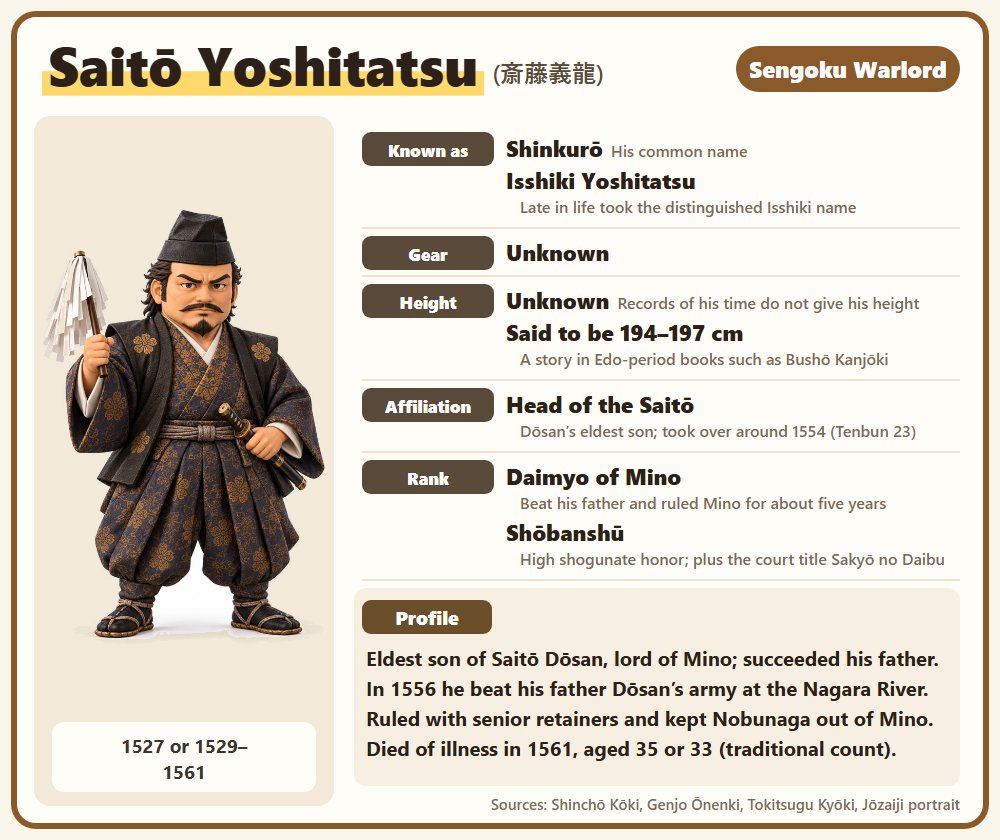
Saitō Yoshitatsu was a daimyo (regional lord) who ruled Mino Province (today's southern Gifu Prefecture) in the Sengoku period. He was the eldest son of Saitō Dōsan, known as "the Viper of Mino," and in 1556 (Kōji 2) he defeated his father's army at the Battle of the Nagara River.
For the next five years or so, Yoshitatsu ruled Mino, won a high standing from the shogun's house, and in his last years took the family name "Isshiki" [Widely accepted]. Oda Nobunaga, Dōsan's son-in-law, could not take Mino while Yoshitatsu lived. But Yoshitatsu died of illness in 1561 (Eiroku 4).
This article explains what Yoshitatsu did, how and at what age he died, and why he fought his father.
Historical dates give the Western year with the Japanese era; months and days follow the Japanese lunisolar calendar unless otherwise stated. Modern dates use the Gregorian calendar. Ages use the traditional Japanese count, in which a person was counted as one at birth and gained a year at the start of each new year in the Japanese calendar.
Key points are tagged: [Fact] confirmed by records from the time, [Widely accepted] a view widely accepted by researchers, [Debated] accounts or interpretations differ, [Unknown] not established from the sources we checked, [Legend] stories found in later records or traditions, and [Folk belief] popular claims with little evidence.

I am Uesugi Kenshin. Today's story is about Saitō Yoshitatsu, the son of Saitō Dōsan.

I'm Date Masamune! He's the one who defeated his own father, right?

He is often seen that way, but historians have praised the way he governed Mino.
The Short Answers
- How is his name read? Saitō Yoshitatsu (the second character of his name is sometimes written in its simplified form, 義竜)
- What did he do? He defeated his father Dōsan at the Battle of the Nagara River and ruled Mino for about five years (more)
- How did he die? Of illness. Which illness is not recorded in the records from the time that we checked (more)
- When and at what age? On the 11th day of the 5th month of 1561 (Eiroku 4). Some sources give his age as 35 by the traditional count, others as 33 (more)
- Was he Dōsan's real son? The story that his real father was Toki Yorinori comes from Edo-period books
[Folk belief](more)
Three Things We Learn by Comparing the Sources
- What the records say about his death: a table of four records, from a diary of the time to Edo-period books, showing what each says about how he died (more)
- Did Dōsan praise his son at the end? A story found in another book by the author of the Shinchō Kōki, with a short Japanese excerpt and an English translation (more)
- A capable ruler? The council of six senior retainers, the shogunate's honor of Shōbanshū, and the change of his family name to Isshiki (more)
Jump to the part you want to read:
- Who was Saitō Yoshitatsu, and what did he do?
- How did Saitō Yoshitatsu die? When and at what age?
- Why did Yoshitatsu fight his father Dōsan?
- Was Yoshitatsu really 197 cm tall?
- Yoshitatsu, Oda Nobunaga and Akechi Mitsuhide
- Was Yoshitatsu a capable ruler? His government and the name Isshiki
- His family: his mother, his wife and his son Tatsuoki
- Yoshitatsu in TV dramas
- FAQ
The labels such as [Fact] and [Debated] show how certain each point is (their meanings are listed at the end of the article).
Who Was Saitō Yoshitatsu, and What Did He Do?
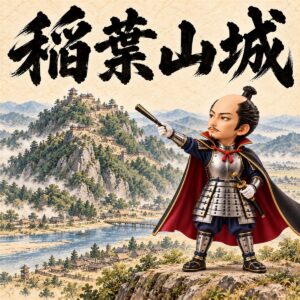
In a single sentence, Saitō Yoshitatsu was "the daimyo who defeated his father Dōsan to become master of Mino, held the province together for about five years, and kept Nobunaga from taking it". His base was Inabayama Castle (later Gifu Castle).
Here is his life in broad outline:
- Becomes head of the family: around 1554 (Tenbun 23), he succeeds his father Dōsan as head of the Saitō family
[Widely accepted] - Kills his brothers: in Kōji 1 (1555–56), he has his two younger brothers, his father's favorites, killed
- Defeats his father: in 1556 (Kōji 2), he defeats his father Dōsan's army at the Battle of the Nagara River
- Rules the province: he governs through documents issued jointly by his senior retainers, and receives the honor of Shōbanshū from the shogunate. In his last years he uses the name Isshiki
- Rivalry with Nobunaga: he fights Nobunaga, Dōsan's son-in-law, and holds Mino as long as he lives
- Dies of illness: in 1561 (Eiroku 4)
| Item | Details |
| Names | Common name Shinkurō. Personal names 利尚 → Hanka → Takamasa → Yoshitatsu. In his last years, Isshiki Yoshitatsu (more) |
| Born | 1527 (Daiei 7) or 1529 (Kyōroku 2), depending on the source [Debated] |
| Father | Saitō Dōsan [Widely accepted] (the story that he was "the son of Toki Yorinori" comes from later times; more) |
| Mother | Unknown [Unknown] |
| Base | Inabayama Castle (later Gifu Castle) [Fact] |
| Died | 11th day of the 5th month of 1561 (Eiroku 4) [Widely accepted] |
| Cause of death | Illness (which illness is unknown) |
| Successor | His son Tatsuoki |
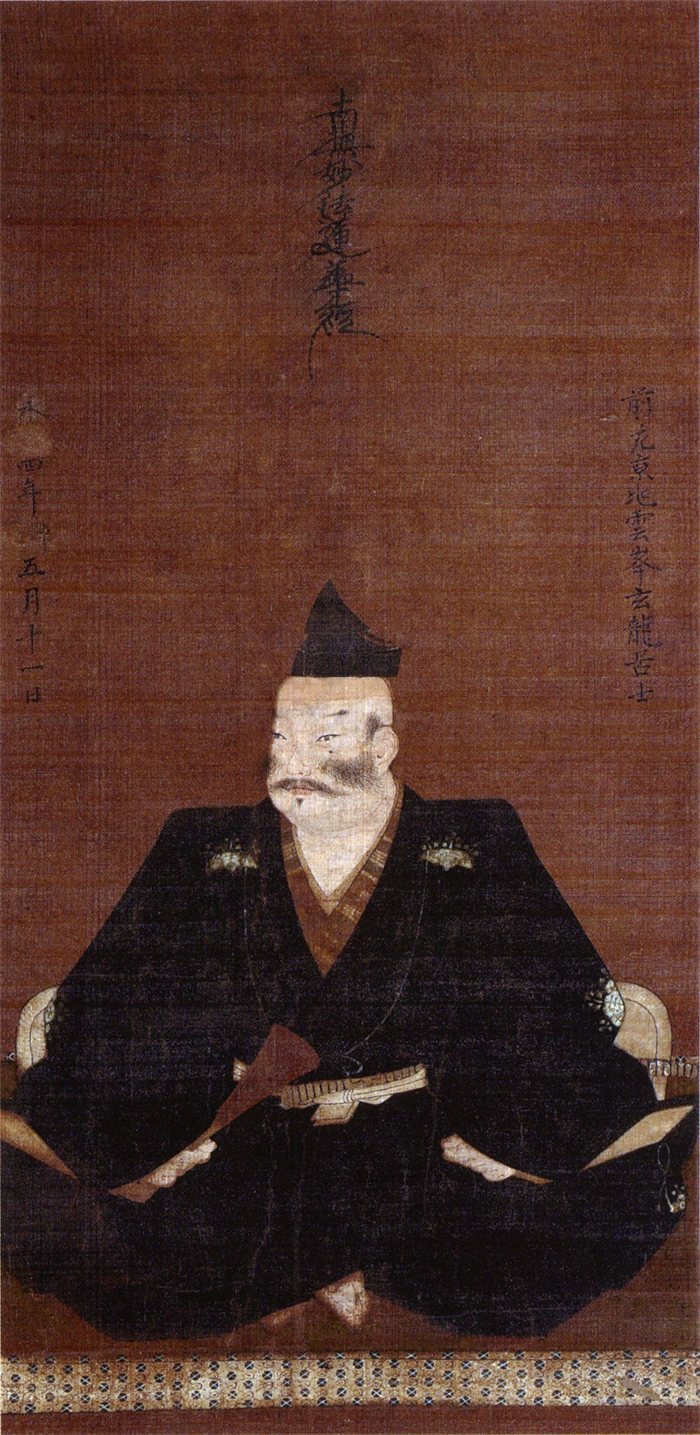
Image: Portrait of Saitō Yoshitatsu, handed down at Jōzaiji temple in Gifu City; an Important Cultural Property of Japan. Wikimedia Commons (public domain; from a plate in the Nagahama Castle History Museum's catalogue Sengoku Daimyō Azai-shi to Kita-Ōmi, 2008)
According to Gifu Prefecture's explanation, this portrait is thought to have been painted after Yoshitatsu's death, for a memorial service held twelve or sixteen years after his death (known in Japan as the 13th or 17th memorial observance), showing him as he was in his prime. It bears the date of his death, "the 11th day of the 5th month of Eiroku 4," and his Buddhist name after taking vows, 雲峯玄竜居士.
Incidentally, "Saitō Yoshitatsu" is the name best known today, but at different times he called himself "Hanka" and "Takamasa," and in his last years "Isshiki Yoshitatsu." His changes of name are summarized in a chart in the chapter on whether he was capable.
How Did Saitō Yoshitatsu Die? When and at What Age?
To give the conclusion first: Saitō Yoshitatsu died of illness on the 11th day of the 5th month of 1561 (Eiroku 4). That he died of illness is also recorded by a Kyoto monk of the time [Widely accepted]. The date comes from the date written on the portrait at Jōzaiji and similar sources [Widely accepted].
However, which illness it was is not written in the records from the time that we checked [Unknown]. Many explanations of his death can be found online and elsewhere, but if we sort them by the original records, they look like this:
What Did the Records Say About His Death?
| Record (who, when) | What it says | Points to note |
| Genjo Ōnenki (record of a monk of Daigoji temple in Kyoto; written at the time) | "Nagai, the master of Inabayama in Mino, is said to have died of illness" | Hearsay recorded under the 6th month of Eiroku 4. If "Nagai, the master of Inabayama" is taken to be Yoshitatsu, this is a record from the time reporting his death from illness [Widely accepted]. It gives neither the date of death nor the illness |
| Letter of Kaisen Jōki (a Zen monk of Mino; written at the time) | Yoshitatsu's "unexpected death" | Kaisen had clashed with Yoshitatsu and left the province, and wrote that the death might be heaven's punishment. This is the writer's own view, not a medical explanation |
| Ōta Gyūichi, Taikōsama Gunki no Uchi (the autograph copy is thought to date from around 1610) | Says that Yoshitatsu, his wife and his child died of a strange illness said to be caused by possession by a fox | Another book by the author of the Shinchō Kōki. It tells the story as retribution for killing a parent. It does not give a medical name for the illness |
| Edo-period books (Nōyō Shoshi Denki and others) | "He was struck by illness and died" | No name of the illness is given |
The key clues are two records from the time: the Genjo Ōnenki and Kaisen's letter. Note that the chronicle reports hearsay, and Kaisen's letter reflects his hostility toward Yoshitatsu. The Genjo Ōnenki reports a death from illness, and Kaisen's letter calls it an "unexpected death." From the passages we checked, we cannot tell what the illness was or how long he was ill before he died.
Ōta Gyūichi's book presents the story of Dōsan and Yoshitatsu as a moral lesson that "one who kills a parent will be repaid." The story that his wife and child died around the same time is likewise what this book tells.
How Old Was Saitō Yoshitatsu When He Died?
Because his birth year is given as either 1527 (Daiei 7) or 1529 (Kyōroku 2), his age at death is given as either 35 by the traditional count or 33 by the traditional count [Debated]. The age of 35 is found in Edo-period books such as the Nōyō Shoshi Denki. An explanation introducing the research of the historian Kinoshita Satoshi gives 33.
In today's way of counting, he died in his early thirties, just five years after defeating his father Dōsan.
Why Is the Illness Unknown? What About the Hansen's Disease Theory?
In the passages from his time that we checked, the records say only "died of illness" or "unexpected death," and no symptoms are described. Some later books simply report illness, while Ōta Gyūichi tells a story of fox possession. None of these accounts allows us to identify the disease, so the illness is still unknown.
Online and elsewhere, one also sees the claim that he had Hansen's disease (leprosy). In the sources we checked, however, we found nothing that supports this claim [Folk belief].
A Note on Hansen's Disease
- Hansen's disease is an infection caused by the bacterium Mycobacterium leprae. It does not spread easily, and today it can be cured with established treatment
- Under Japan's national isolation policy, not only patients but also their families long suffered severe prejudice and discrimination
- An illness cannot be linked to a person's deeds or treated as a "punishment" (based on the Japanese Ministry of Health, Labour and Welfare's information page on Hansen's disease)
What Were His Last Words?
Edo-period books record a Zen verse said to be his last words (a death poem) [Legend]. Whether he really left these words cannot be confirmed from records of the time.
Source Box ①: The Words Said to Be Yoshitatsu's Death Verse
Source
The Nōyō Shoshi Denki and other Edo-period books (National Diet Library Digital Collections)
Quotation
「三十余年 守護人天 刹那一句 仏祖不伝」
Translation of the first half
For thirty-odd years, I have protected humans and heavenly beings.
The second half
It speaks of a phrase of a single instant and of the Buddhas and patriarchs not passing it on. Its precise meaning is open to interpretation
About the words
Ninden (人天) is a Buddhist term for humans and heavenly beings
What Happened to Mino After His Death?
Yoshitatsu was succeeded by his son Tatsuoki, who is said to have been 14 by the traditional count at the time [Widely accepted].
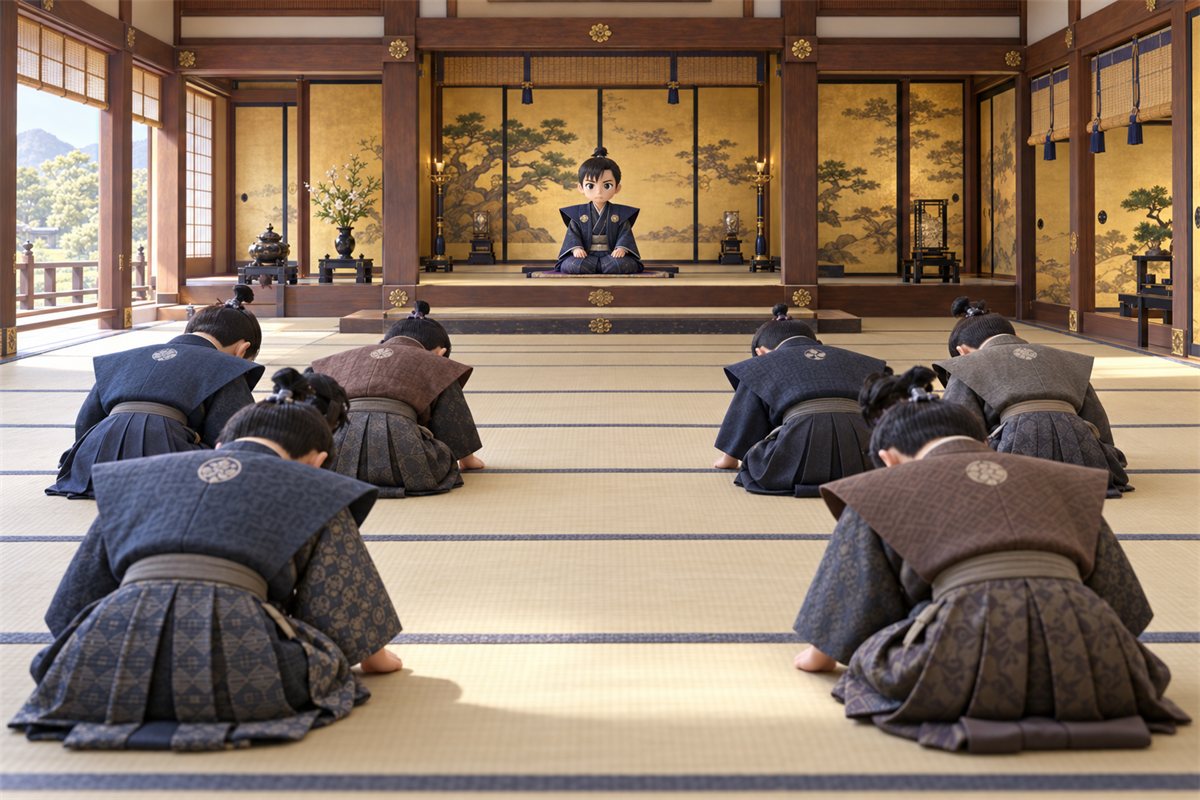
Image: Tatsuoki, who became head of the family at 14 by the traditional count
According to the Shinchō Kōki, on the 13th day of the 5th month, two days after Yoshitatsu's death, Nobunaga crossed the Kiso and Hida rivers by boat and invaded western Mino, and on the next day, the 14th, he defeated the Mino army at Moribe (in today's Anpachi, Gifu Prefecture). This battle is also known as the one in which Maeda Toshiie, who had been banished by Nobunaga, distinguished himself and was forgiven.
What We Know and What We Don't
- We know: he died of illness in 1561 (Eiroku 4), and Nobunaga invaded Mino right after
- We don't know: what the illness was; his birth year and his exact age at death
Why Did Yoshitatsu Fight His Father Dōsan?
Yoshitatsu succeeded his father Dōsan as head of the family around 1554 (Tenbun 23) [Widely accepted]. Dōsan, however, seems to have kept much of his power afterward, and a rift grew between father and son.
The Shinchō Kōki describes how the conflict began:
- Dōsan was convinced that his eldest son Yoshitatsu was a fool, and favored only his younger sons, Magoshirō and Kiheiji, as clever
- He had his third son, Kiheiji, take the distinguished family name Isshiki
- The younger brothers came to look down on their elder brother Yoshitatsu
Yoshitatsu responded with a bold move. According to the Shinchō Kōki, from the 13th day of the 10th month of Tenbun 24 (1555) he pretended to be seriously ill and shut himself away in the inner rooms of his residence. Then on the 22nd day of the 11th month of Kōji 1 (January 1556 in the Julian calendar; the era name had changed in the meantime), while Dōsan had moved to a residence at the foot of the mountain, Yoshitatsu sent his kinsman 長井道利 as messenger to call his two brothers, saying, "I do not have long to live, and I wish to speak with you," and had his retainers kill them.
That year had a leap 10th month (an extra month added to the Japanese calendar), so his pretended illness lasted more than two months.
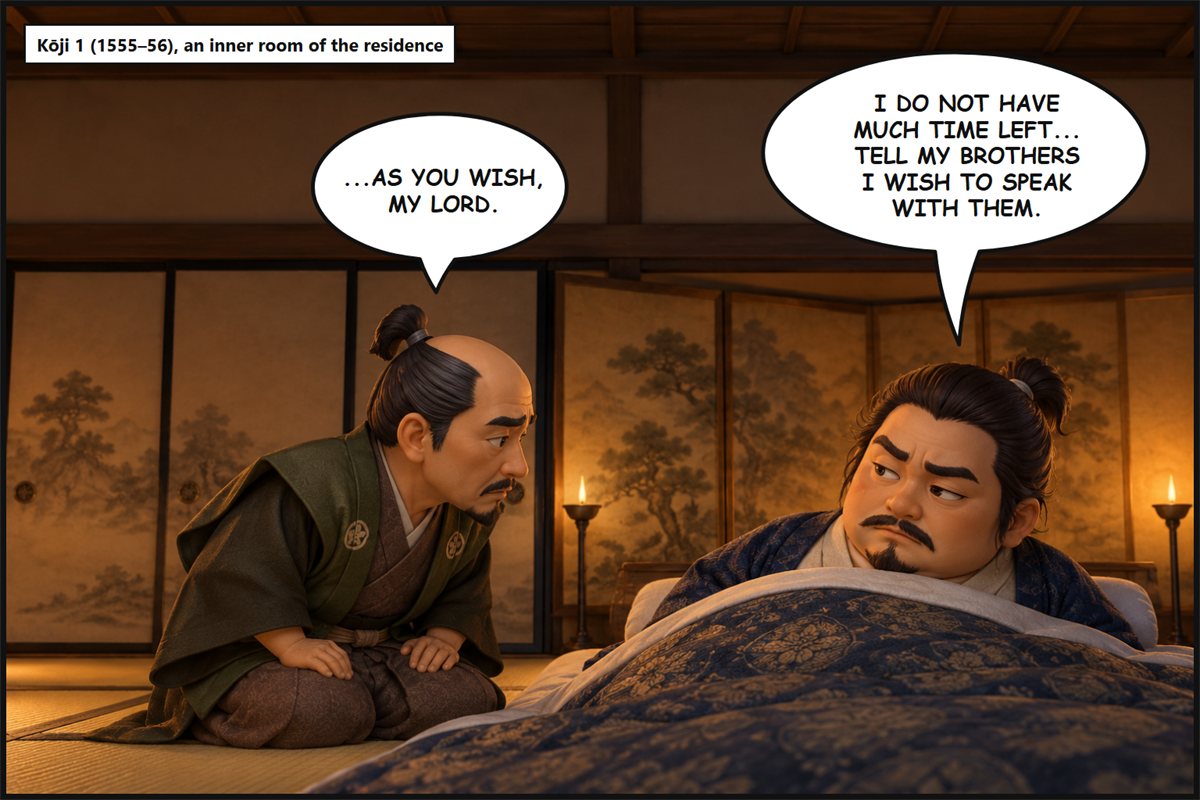
Image: Yoshitatsu, pretending to be ill, gives his kinsman 長井道利 a message for his brothers
Defeating His Father Dōsan at the Battle of the Nagara River
When he learned that his sons had been killed, Dōsan gathered troops, left Inabayama and withdrew into the mountains of Yamagata to the north (today's Yamagata City, Gifu Prefecture). Ōta Gyūichi writes that the warriors of the province all gathered to Yoshitatsu, and that Dōsan's forces gradually dwindled.
Then, on the 20th day of the 4th month of 1556 (Kōji 2), the two armies fought by the Nagara River. According to the Shinchō Kōki, Yoshitatsu's first wave crossed the river and attacked, and then Yoshitatsu himself crossed with his main army. The Shinchō Kōki says that Dōsan was killed in this battle. However, it was Yoshitatsu's retainers who killed Dōsan; Yoshitatsu did not do it with his own hands. The course of the battle is explained in detail in our article on Saitō Dōsan.
Did Dōsan Praise Yoshitatsu at the End?
Another work by Ōta Gyūichi, the Taikōsama Gunki no Uchi, contains a story not found in the Shinchō Kōki: seeing the fine movements of Yoshitatsu's army as it crossed the river, Dōsan could not help praising his son.
Source Box ②: Dōsan's Words in the Taikōsama Gunki no Uchi
Source
Ōta Gyūichi, Taikōsama Gunki no Uchi (the surviving autograph copy, owned by Keio University, is thought to date from around 1610, in the Keichō era. We follow the transcription in a 2011 paper by Okuda Hisashi)
Quotation (excerpt)
「さすか、たうさんかこにて候。みののくに、おさむへきもの也」
Translation
He is indeed Dōsan's son. He is fit to rule the province of Mino.
What this record tells us, and what it does not
Gyūichi also writes that Dōsan went on to say "I was wrong," and that all who heard it wept. But this story is not in the Shinchō Kōki, and the researcher Okuda Hisashi points out that Gyūichi may have added it. Whether Dōsan really said this is not known
The manga panel below is a scene based on this story in the Taikōsama Gunki no Uchi [Legend].
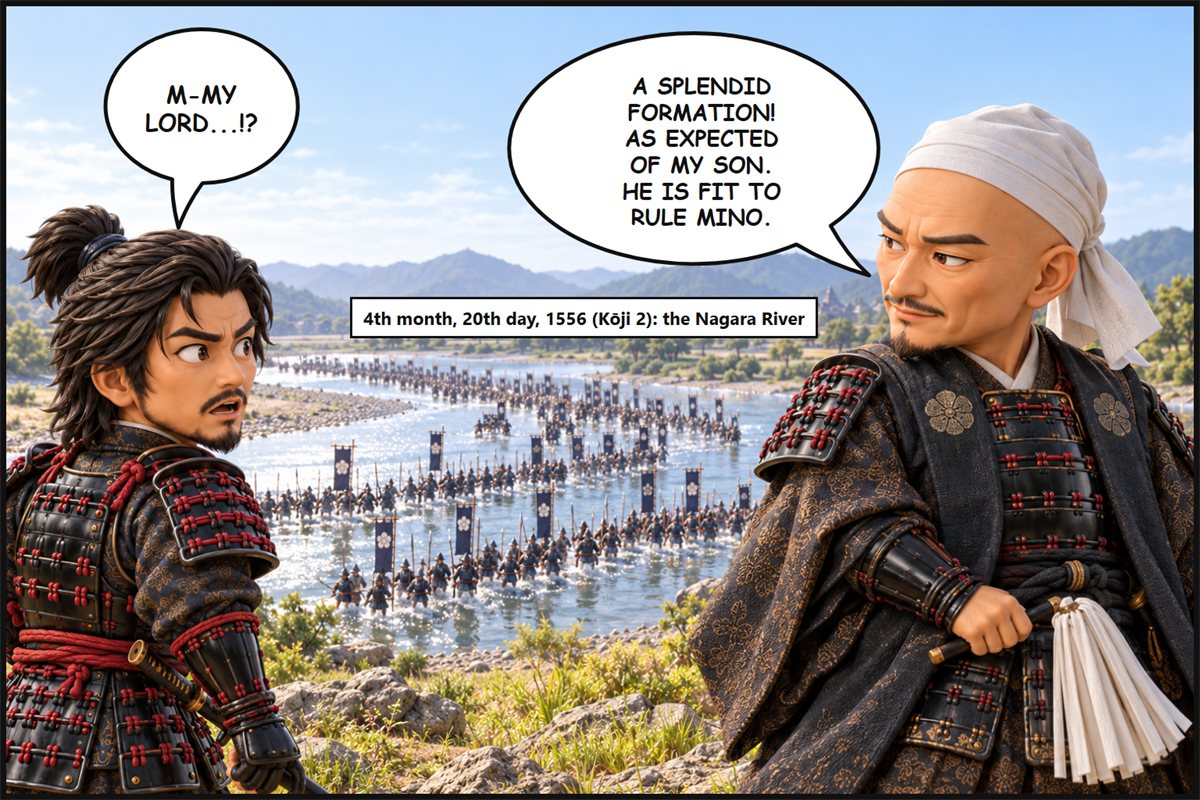
Image: Dōsan, by the Nagara River, impressed by the sight of Yoshitatsu's army crossing the river
The Mystery of the Name "Hanka"
The Shinchō Kōki says that after killing his father at the Nagara River, Yoshitatsu called himself "Hanka" (范可). Gyūichi explains that in ancient China there was a man called Hanka who killed his father yet was regarded as a dutiful son. He then contrasts that story with Yoshitatsu's act, which he harshly condemns as unfilial.
However, a prohibition notice (a document setting out rules to protect a temple) addressed to Mieji temple (Gifu City) and dated to the 12th month of Kōji 1 (early 1556 in the Julian calendar), introduced in the Gifu Shishi (1928), already bears the name "Hanka." That was right after he had killed his brothers, and before the Battle of the Nagara River in the 4th month of Kōji 2 (in the Julian calendar, both the notice and the battle fall in 1556). We cannot simply call either account "false," but at least on paper, he was already using this name before the battle with his father.
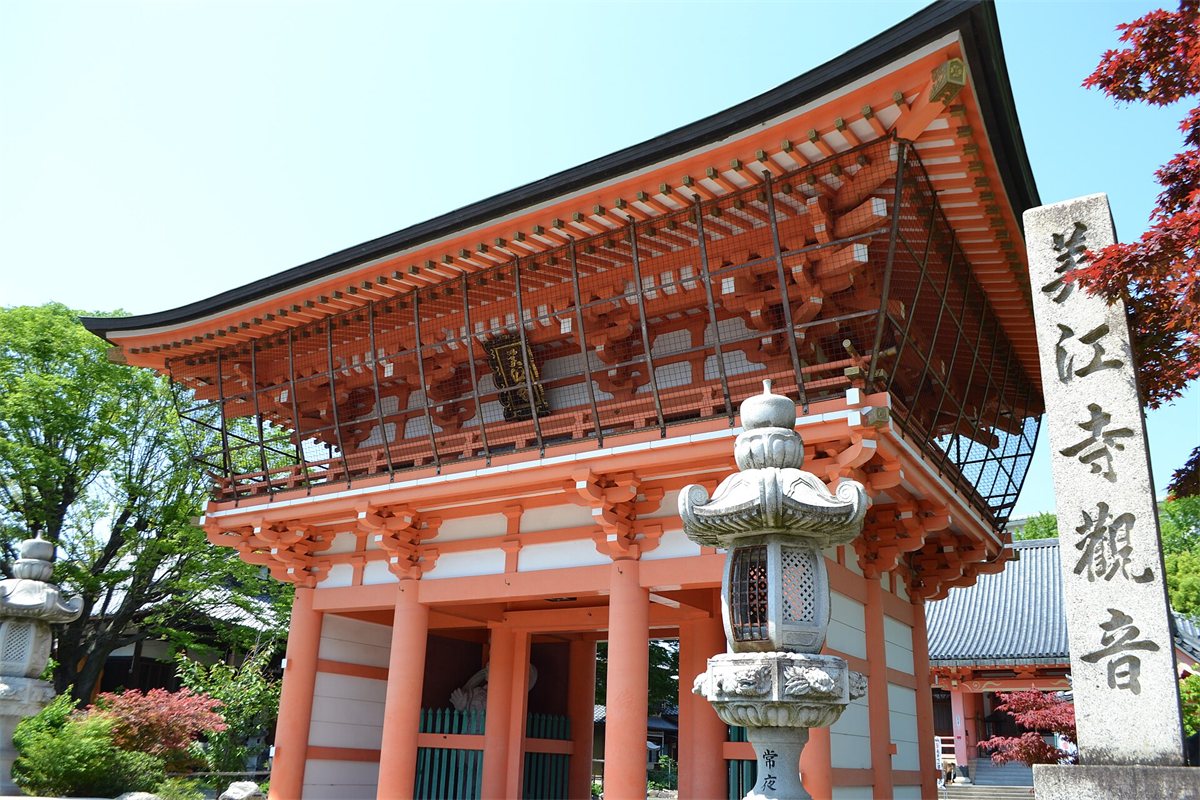
Image: Mieji temple in Mieji-chō, Gifu City. The Gifu Shishi (1928) introduces the prohibition notice bearing the name "Hanka" as a document of this temple. Wikimedia Commons (photo: 先従隗始, CC BY-SA 4.0)
Was Yoshitatsu Not Really Dōsan's Son?
There is a story that "Yoshitatsu was really the son of Toki Yorinori, Dōsan's lord." According to this story, his mother, Miyoshino, was already pregnant with Yorinori's child when she was given to Dōsan. But this story comes from Edo-period books [Folk belief].
The Itsuya no Kakimono of 1669 (Kanbun 9) shows that by the early Edo period (around 1630), old people of Mino were already saying it was "doubtful whether he was the son of Lord Toki or of Dōsan." That alone, however, cannot establish his parentage. On the other hand, a letter written in 1560 (Eiroku 3), during Yoshitatsu's lifetime, by Rokkaku Jōtei, daimyo of Ōmi, treats Yoshitatsu as Dōsan's son.
What We Know and What We Don't
- We know: Yoshitatsu had his two younger brothers killed and defeated his father Dōsan's army at the Battle of the Nagara River
- We don't know: whether Dōsan really praised Yoshitatsu; what father and son each really thought
Was Saitō Yoshitatsu Really 197 cm Tall?
It is often said that Yoshitatsu was "a giant 197 cm (about 6 ft 6 in) tall." The source is the Bushō Kanjōki, an Edo-period collection of anecdotes. It says that his mother was about six shaku (about 182 cm, or 6 ft) tall, and that Yoshitatsu was six shaku four or five sun (about 194–197 cm, or 6 ft 4 in to 6 ft 6 in) [Legend]. The Okinagusa of around 1791 (Kansei 3) tells the same story, giving "six shaku five sun (about 197 cm)."
An explanation of Gifu Castle (in the Japan Tourism Agency's multilingual commentary database) also gives "197 cm," but the figure comes from such Edo-period books, not from any record of an actual measurement. We found no description of his height in the records from his own time that we checked [Unknown].
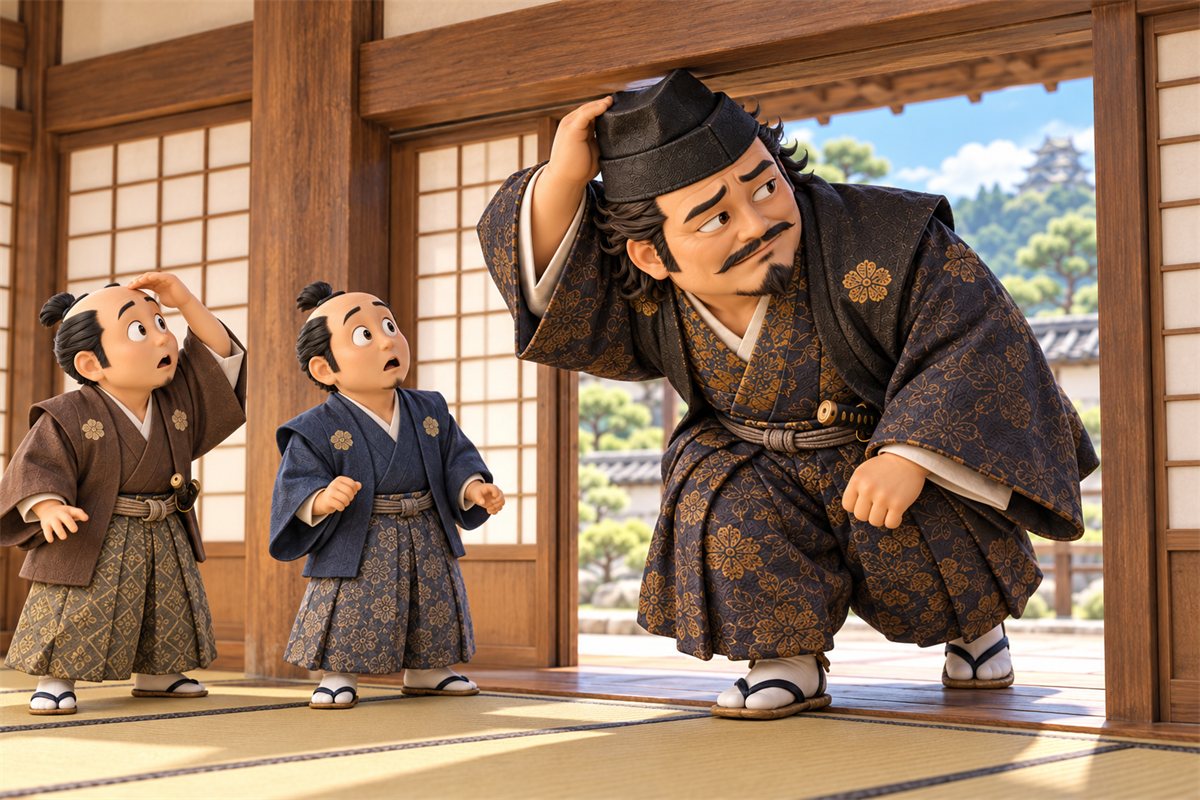
Image: The giant Yoshitatsu stooping at the entrance of a room (a story told in Edo-period books)
The same book also says that although Yoshitatsu looked slow-witted, he was in fact very clever, took good care of his retainers and won people's hearts [Legend].
197 cm? That's as tall as a basketball player today!
But that is a story from an Edo-period book, not a measured record.
Yoshitatsu, Oda Nobunaga and Akechi Mitsuhide
Nobunaga was the husband of Dōsan's daughter (Nōhime). To Yoshitatsu, then, Nobunaga was his sister's husband and the man who had taken his father Dōsan's side. At the time of the Battle of the Nagara River, Nobunaga set out to help Dōsan but arrived too late, and withdrew to Owari, guarding the rear himself while pursued by Yoshitatsu's forces (Shinchō Kōki).
After that, Yoshitatsu and Nobunaga remained enemies. The records tell stories such as these:
- Yoshitatsu plotted with Nobunaga's half-brother Oda Nobuhiro to seize Kiyosu Castle while Nobunaga was away on campaign. Nobunaga noticed and the plan failed (Shinchō Kōki; no year given)
- He allied with Oda Ise-no-kami of Iwakura Castle in Owari against Nobunaga
[Widely accepted] - While Nobunaga was in Kyoto, assassins came from Mino (Shinchō Kōki; who sent them is not stated; more)
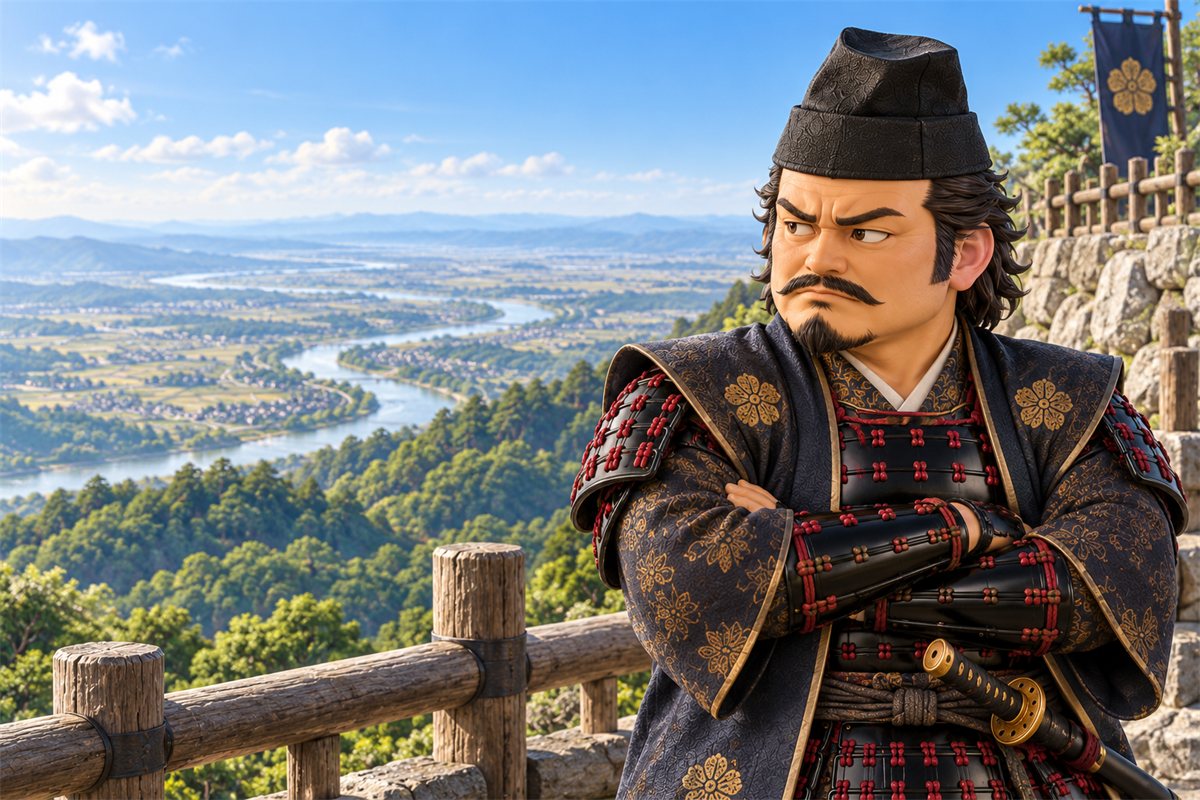
Image: Yoshitatsu glaring from Inabayama Castle toward Owari
Did Yoshitatsu Send Assassins After Nobunaga?
The Shinchō Kōki tells this story: when Nobunaga went up to Kyoto, Niwa Hyōzō, a retainer of Nagoya Yagorō of Kiyosu, grew suspicious of a group of five or six leading men from Mino (about thirty with their attendants) and looked into them. He learned that they "had come up to kill Nobunaga," and that they had even discussed shooting him with guns. However, the Shinchō Kōki does not name the person who sent the assassins. Many explanations say it was Yoshitatsu, but the records do not allow us to say so for certain. The event is usually dated to 1559 (Eiroku 2), but this section of the Shinchō Kōki does not give the year either.
Was Nobunaga Afraid of Yoshitatsu?
Some explanations say that "Nobunaga feared Yoshitatsu," but we have not found any record of the time that says so. What the records do show is that Nobunaga could not take Mino while Yoshitatsu was alive.
When Yoshitatsu died, Nobunaga invaded western Mino two days later (the Battle of Moribe). Even so, the conquest of Mino took time, and Inabayama Castle fell only in 1567 (Eiroku 10), in Tatsuoki's time [Widely accepted]. Nobunaga named the place "Gifu" and made it his base for unifying the country (see our articles on Oda Nobunaga and Inabayama Castle).
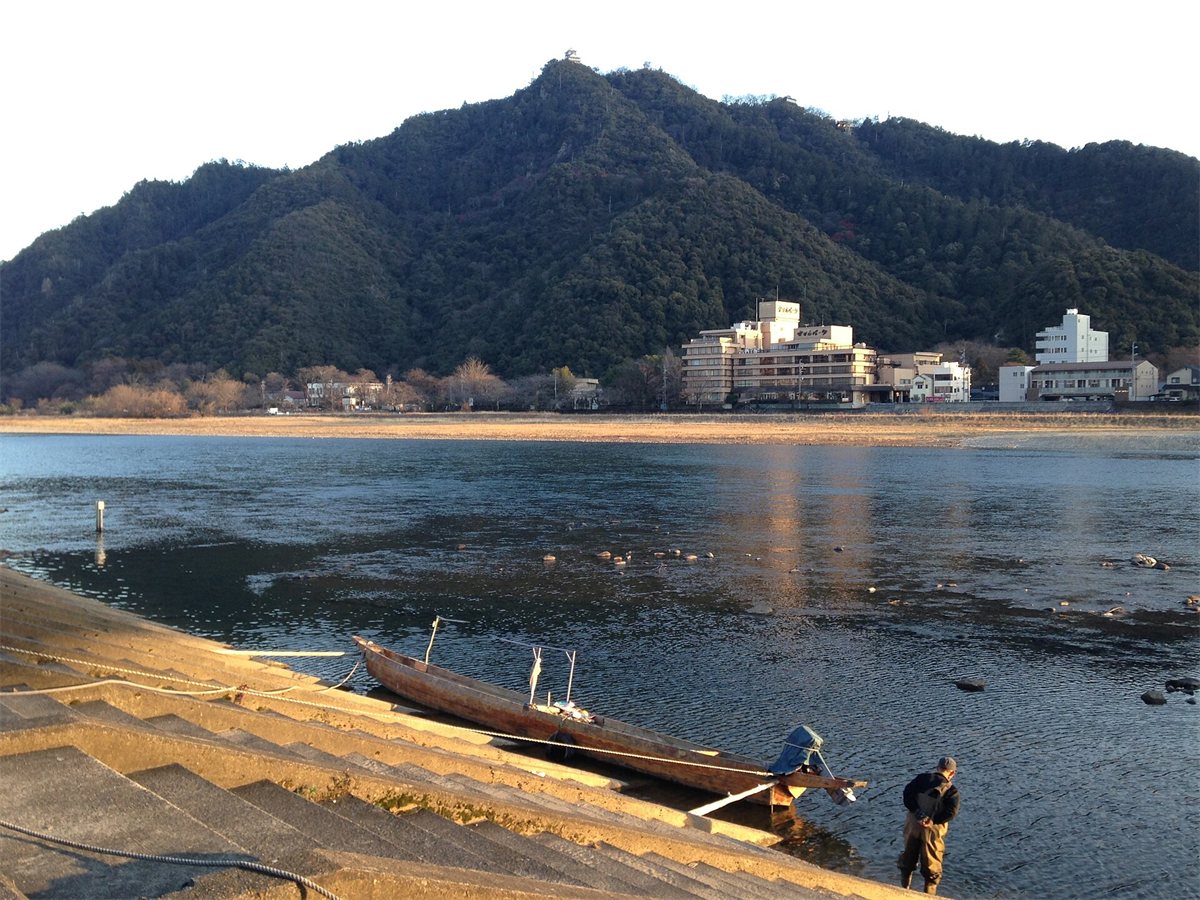
Image: The Nagara River and Mt. Kinka. On the summit stands today's Gifu Castle, built on the site of Inabayama Castle (the keep was rebuilt in the Shōwa era). Wikimedia Commons (photo: そらみみ, CC BY-SA 3.0)
What Was His Relationship with Akechi Mitsuhide?
The Mino no Kuni Shokyūki, an Edo-period book, says that in the 9th month of 1556 (Kōji 2), after the Battle of the Nagara River, Akechi Mitsuyasu (said to be Mitsuhide's uncle), who had sided with Dōsan, held out in Akechi Castle; Yoshitatsu's army attacked and took the castle, and Mitsuhide escaped [Legend].
However, Mitsuhide's name first appears in reliable records in 1566 (Eiroku 9). How Mitsuhide may have been connected with Yoshitatsu in Mino before then cannot be known from the records of the time [Unknown]. For more, see our article on Akechi Mitsuhide.
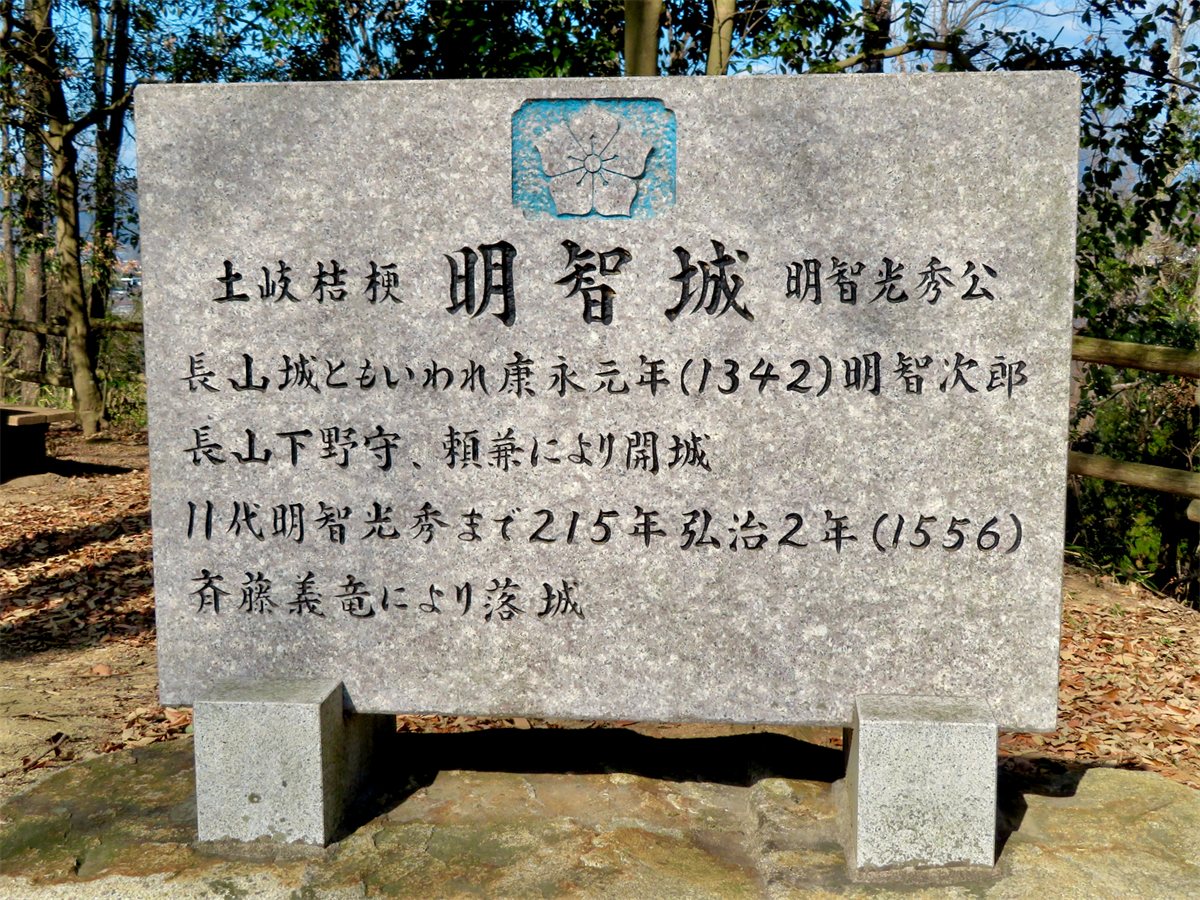
Image: The monument in Akechi Castle Ruins Park, Kani, Gifu Prefecture. It is inscribed "fell to Saitō Yoshitatsu in 1556 (Kōji 2)," but this is what Edo-period books and similar sources tell. Wikimedia Commons (photo: KKPCW, CC BY-SA 4.0)
What We Know and What We Don't
- We know: Yoshitatsu and Nobunaga were enemies, and Nobunaga could not take Mino while Yoshitatsu lived
- We don't know: whether it was Yoshitatsu who sent the assassins; how Yoshitatsu and Mitsuhide were connected
Was Saitō Yoshitatsu a Capable Ruler? His Government and the Name Isshiki
To give the conclusion first: the way Yoshitatsu governed his province is rated highly by historians [Widely accepted]. A Japanese biographical dictionary also says that he "held off Oda Nobunaga's invasions well" (Nihon Jinmei Daijiten). There are three main points on which he is rated highly, and one thing that did not go well.
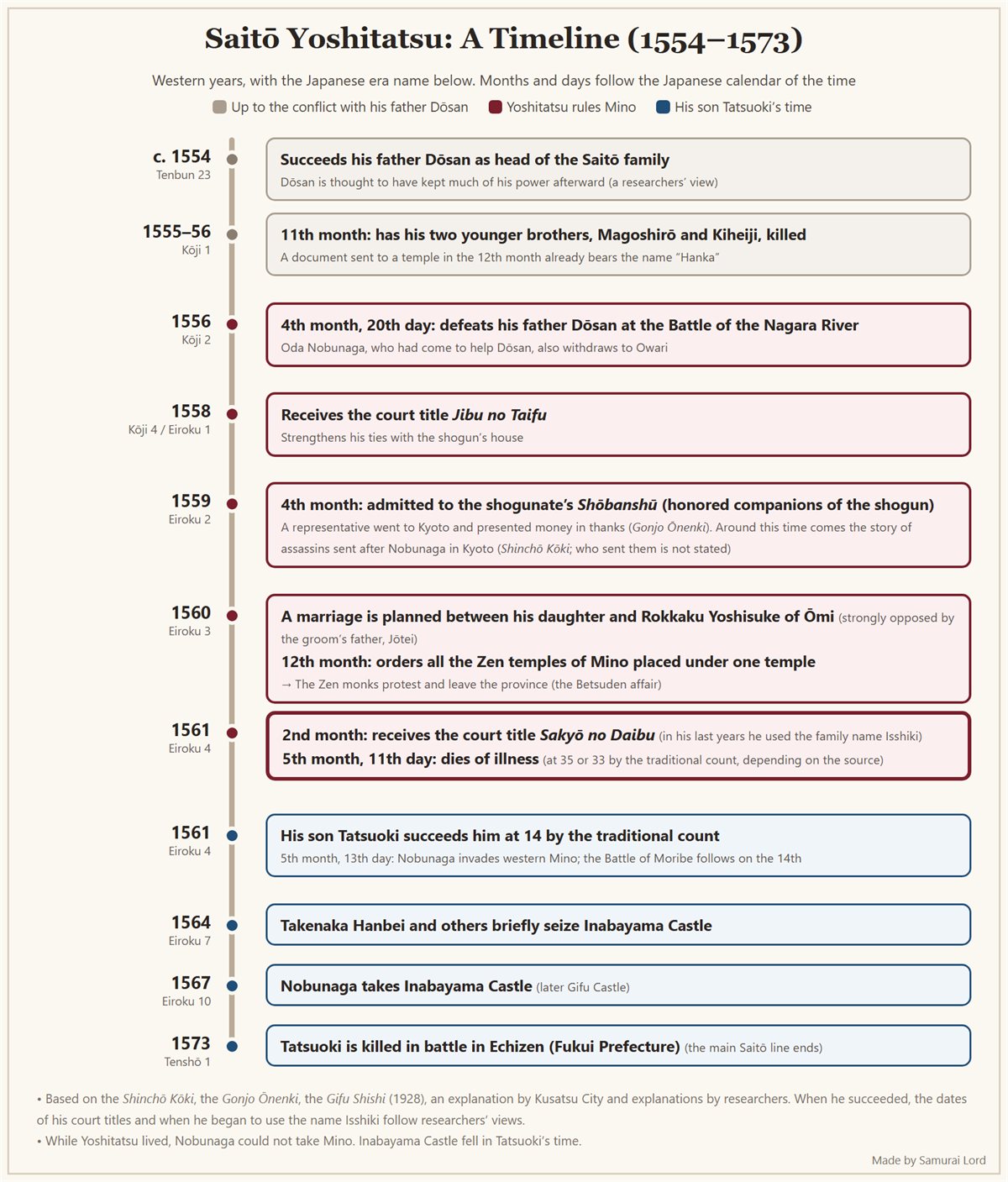
Image: Timeline of Saitō Yoshitatsu (made by Samurai Lord based on the Shinchō Kōki, the Genjo Ōnenki and other sources). Tap (click) the image to enlarge it
① Governing Through Documents Signed by Six Senior Retainers
Research has shown that in Yoshitatsu's time, six senior retainers issued documents jointly and took charge of government [Widely accepted]. They were Hineno Hironari, 竹腰尚光, 日比野清実, 長井衛安, Kuwabara Naomoto (later Ujiie Bokuzen) and Andō Morinari (names in Japanese characters are given as written, because we have not verified how they are read). Rather than relying only on Yoshitatsu's own orders, it seems to have been a system in which the senior retainers ran the province together.
For Yoshitatsu, who had become master of the province by killing his father, holding his senior retainers together must have mattered more than anything.
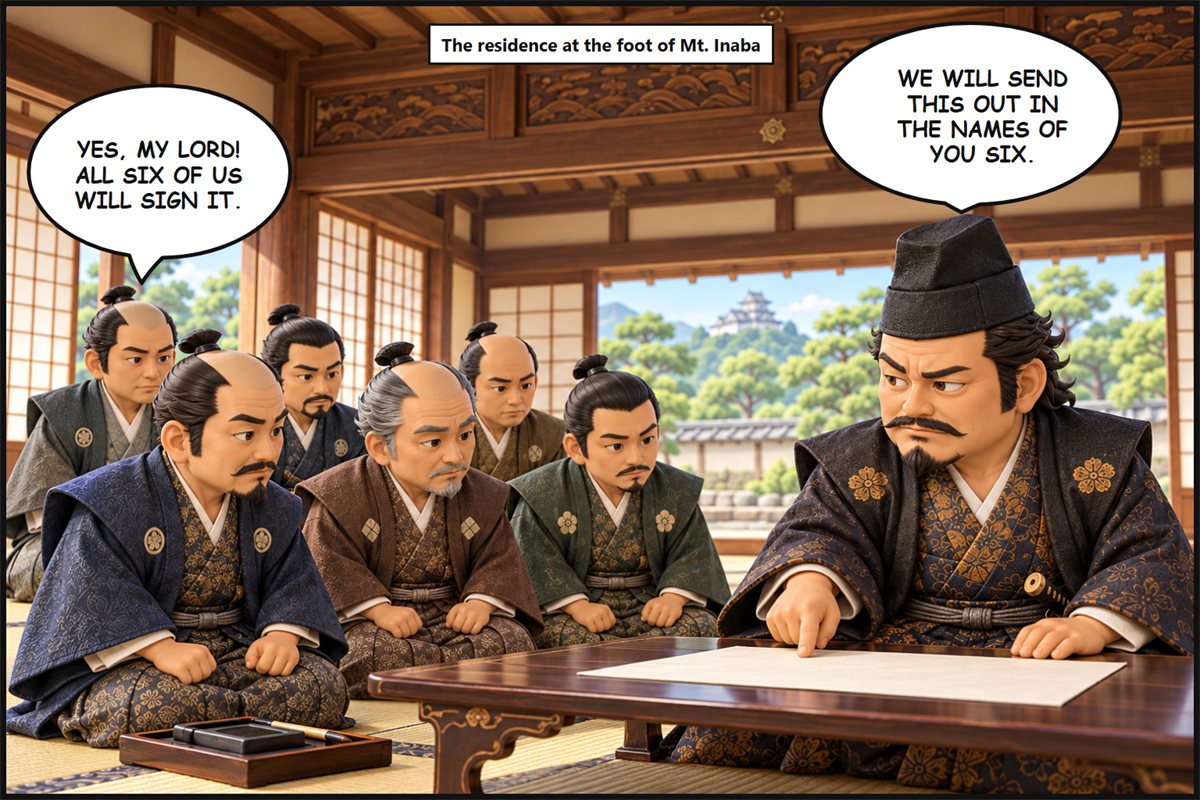
Image: Yoshitatsu preparing a document to be issued jointly by six senior retainers
② Winning High Honors from the Shogun's House
Yoshitatsu strengthened his ties with the imperial court and the shogunate in Kyoto, and gained the following positions. Note that titles from the court and honors within the shogunate are different things.
| Year | Position gained | What it was |
| 1558 (Kōji 4 / Eiroku 1) | Jibu no Taifu | A court title [Widely accepted] |
| 4th month of 1559 (Eiroku 2) | Shōbanshū | A high honor in the shogunate. Members could sit with the shogun at banquets and similar occasions; it was granted only to families of high rank [Fact] |
| 2nd month of 1561 (Eiroku 4) | Sakyō no Daibu | A court title. His portrait also calls him "former Sakyō no Daibu" [Widely accepted] |
On the Shōbanshū, the Genjo Ōnenki, the record of a monk of Daigoji temple in Kyoto, says, in summary, that "Saitō, the son of Dōsan of Mino, was granted the status of Shōbanshū, and his representative went up to Kyoto and presented a gift of money in thanks." Note that the person this entry says went to Kyoto was a representative, not Yoshitatsu himself. It shows that Yoshitatsu, who had killed his father, was recognized by the shogunate as a daimyo.
In the same month of that same year, I too, then Nagao Kagetora of Echigo, went up to Kyoto. Yoshitatsu was deepening his ties with the shogun's house at about the same time as I was.
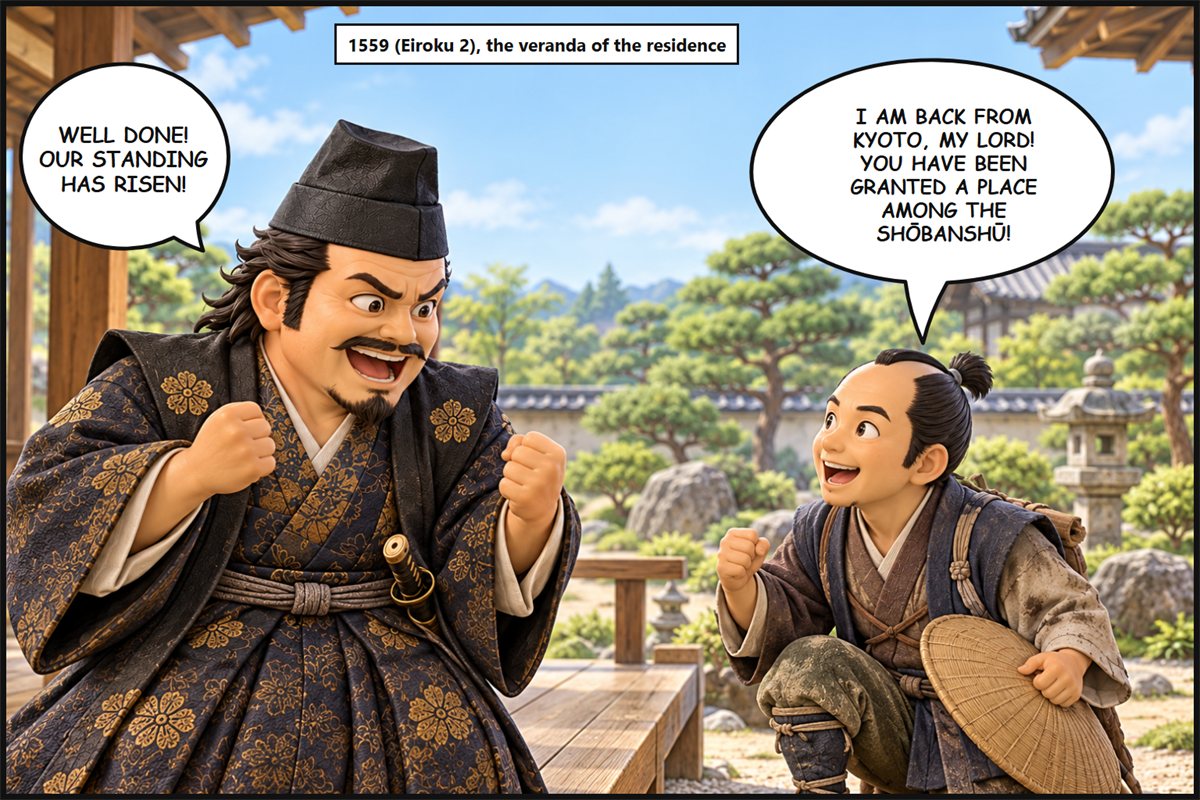
Image: Yoshitatsu delighted at the news that he is to join the Shōbanshū
③ Why Did He Take the Name Isshiki?
In his last years, Yoshitatsu changed his family name from Saitō to Isshiki. The diary of a court noble, the Tokitsugu Kyōki, refers to him in 1569 (Eiroku 12) as "the late Isshiki Yoshitatsu" [Fact].
The Isshiki were a distinguished branch of the Ashikaga shogun's family, ranked above the Toki, who had been the governors of Mino. The reason is not clearly recorded, but the historian Kinoshita Satoshi thinks it was to show a standing above the Toki. Some Edo-period books explain that it was to cut his ties with Dōsan [Legend]. However, we could not confirm any record in which Yoshitatsu himself gave his reason. He is also said to have had his senior retainers change their family names to those of the Isshiki family's retainers; Kuwabara Naomoto becoming "Ujiie" is one example.
Exactly when he began to use the name Isshiki cannot be settled from the sources we checked.
How His Names Changed
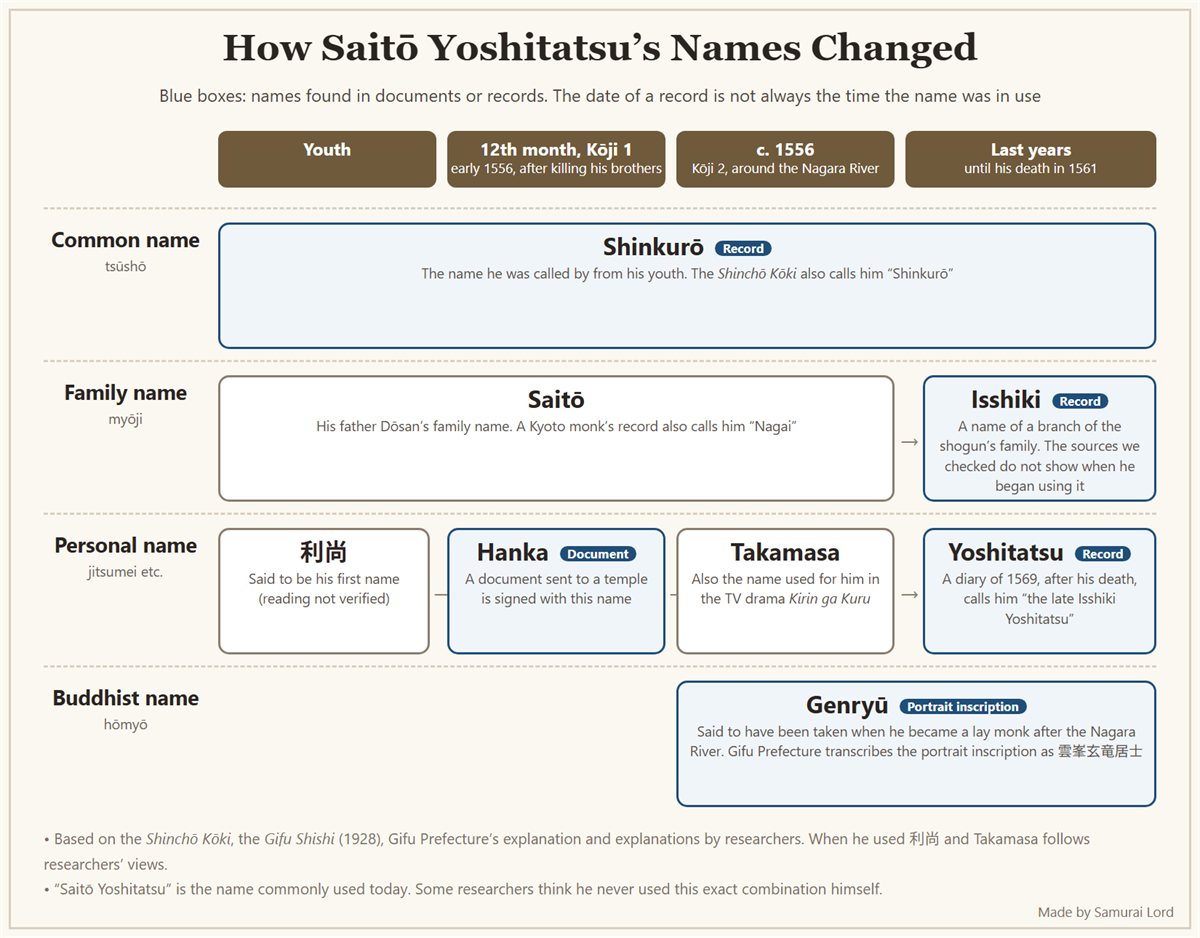
Image: How Saitō Yoshitatsu's names changed (made by Samurai Lord based on the Shinchō Kōki, the Gifu Shishi (1928), Gifu Prefecture's explanation and other sources). Tap (click) the image to enlarge it
"Saitō Yoshitatsu" is the name best known today, but some researchers think he never actually used this exact combination himself. "Takamasa," the name of his younger years, was also used for him in the TV drama Kirin ga Kuru.
What Did Not Go Well: The Betsuden Affair
Yoshitatsu held a Zen monk named Betsuden in high regard. He built a temple called 伝灯護国寺 (伝灯寺 for short; we have not verified how the name is read) near his castle town and welcomed Betsuden as the monk who founded it, called kaisan (founding abbot). Then, in the 12th month of 1560 (Eiroku 3), he ordered that all the Zen temples of Mino be placed under 伝灯寺 [Widely accepted]. His aim seems to have been to bring the province's temples under a temple he trusted, and so tighten his rule.
Kaisen Jōki and the other Zen monks of Mino, however, strongly opposed this and left the province. Myōshinji temple in Kyoto also refused to recognize Betsuden. It was not a battle, but this uproar, which turned the province's important temples against him, is called the "Betsuden affair" (Betsuden no Ran). Yoshitatsu asked the shogun to raise the rank of 伝灯寺, but he died before this was achieved.
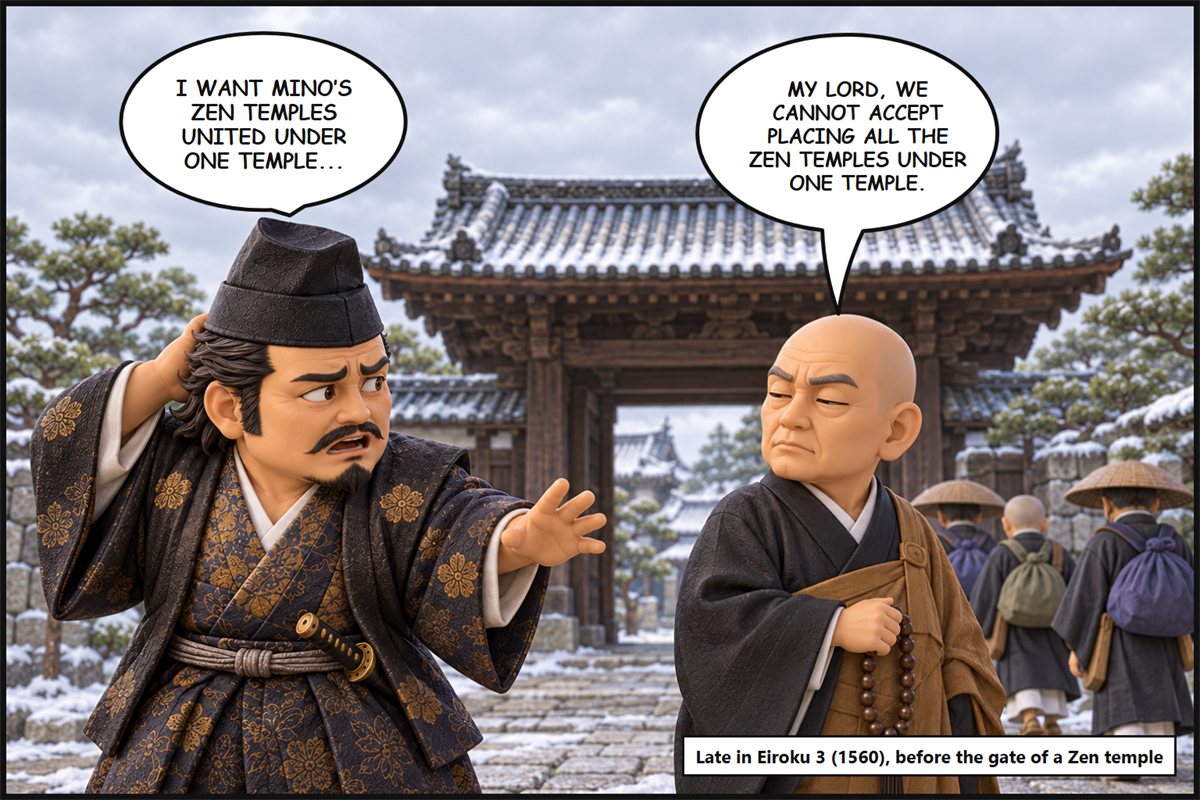
Image: A Zen monk leaving the province in protest against the order to unite the Zen temples, and a troubled Yoshitatsu
What We Know and What We Don't
- We know: senior retainers issued documents jointly; he received the honor of Shōbanshū from the shogunate; he took the name Isshiki in his last years; his order to unite the Zen temples set him against the Zen monks
- We don't know: when he began to use the name Isshiki, and exactly why
Saitō Yoshitatsu's Family: His Mother, His Wife and His Son Tatsuoki
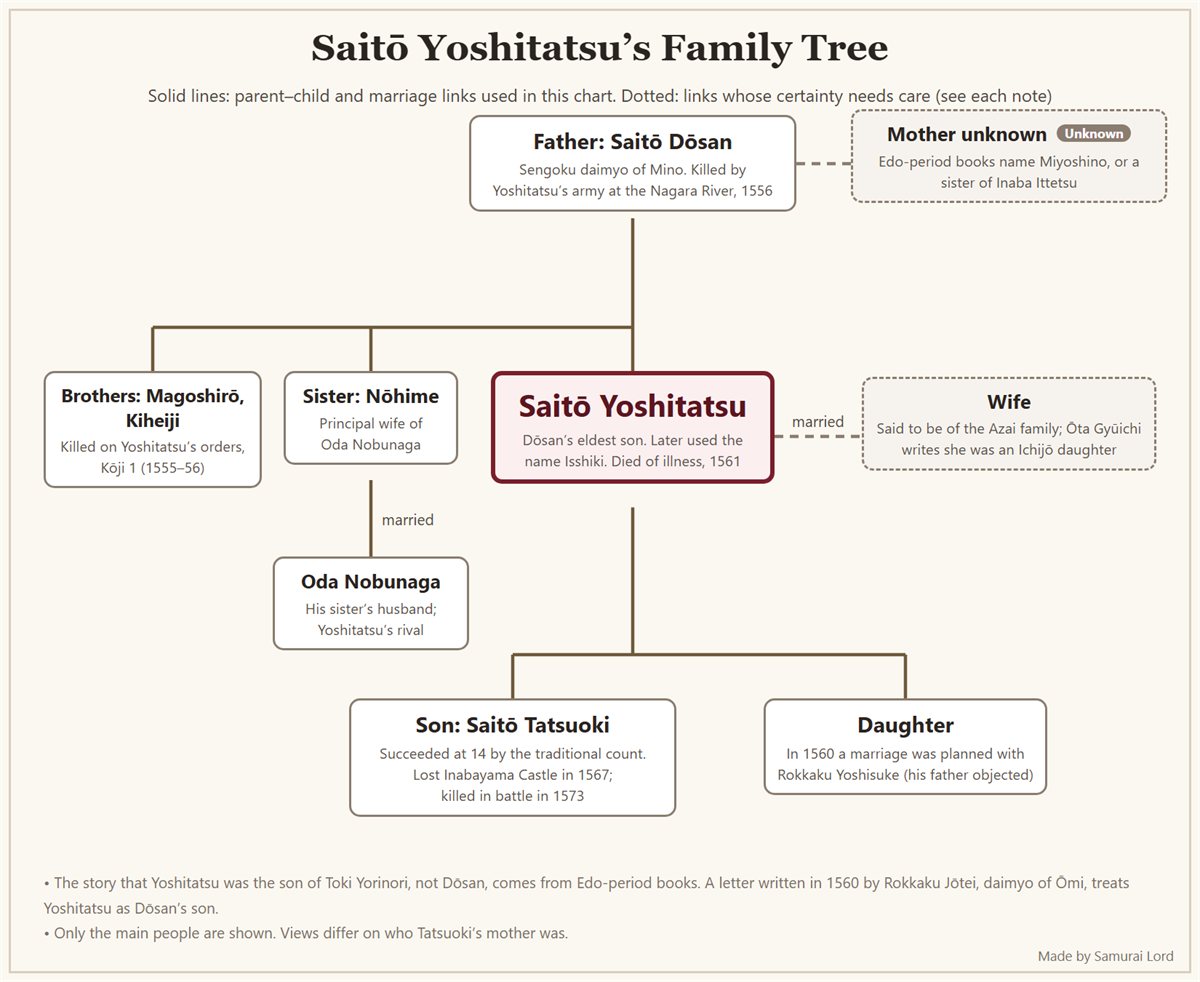
Image: Saitō Yoshitatsu's family tree (solid lines show the parent–child and marriage links used in this chart; dotted lines show links whose certainty needs care; made by Samurai Lord). Tap (click) the image to enlarge it
Yoshitatsu's father was Saitō Dōsan. His younger brothers were Magoshirō and Kiheiji, whom Yoshitatsu had killed. One of his sisters was the woman who became Oda Nobunaga's principal wife (Nōhime).
His mother is not known from the records of the time [Unknown]. Edo-period books say either that she was Miyoshino, said to have been a concubine of Toki Yorinori, or that she was a sister of Dōsan's retainer Inaba Ittetsu [Legend].
As for his wife, some say she was from the Azai family, and Ōta Gyūichi writes that she was "a daughter of the Ichijō family" [Debated]. She is sometimes introduced as "Lady Ōmi" (Ōmi no Kata), but in Edo-period books this name appears as that of his son Tatsuoki's wife, and we could not confirm any basis for using it as the name of Yoshitatsu's wife. A court noble's diary records that in 1569 (Eiroku 12), after Yoshitatsu's death, his widow was still alive and was asked by Nobunaga to hand over a tea jar (see our article on Nōhime).
What Became of His Son Tatsuoki?
Tatsuoki, who succeeded Yoshitatsu, became head of the Saitō family at 14 by the traditional count [Widely accepted]. But in 1564 (Eiroku 7), retainers including Takenaka Hanbei briefly seized Inabayama Castle (see our article on Takenaka Hanbei), and in 1567 (Eiroku 10) Nobunaga took Inabayama Castle, and Tatsuoki lost Mino.
Tatsuoki went on fighting Nobunaga and turned to Asakura Yoshikage of Echizen (today's Fukui Prefecture), but in 1573 (Tenshō 1) he was killed in battle in Echizen.
Does Saitō Yoshitatsu Have Descendants?
The main line of the Saitō as daimyo ended with Tatsuoki's death. In the sources we checked, we could not confirm any descendants of Yoshitatsu living today.
His Grave and Related Places
The family temple of the Saitō (the temple that holds memorial services for the family's ancestors) is Jōzaiji in Kajikawa-chō, Gifu City. Yoshitatsu's portrait (an Important Cultural Property) is handed down there; a reproduction is usually on view.
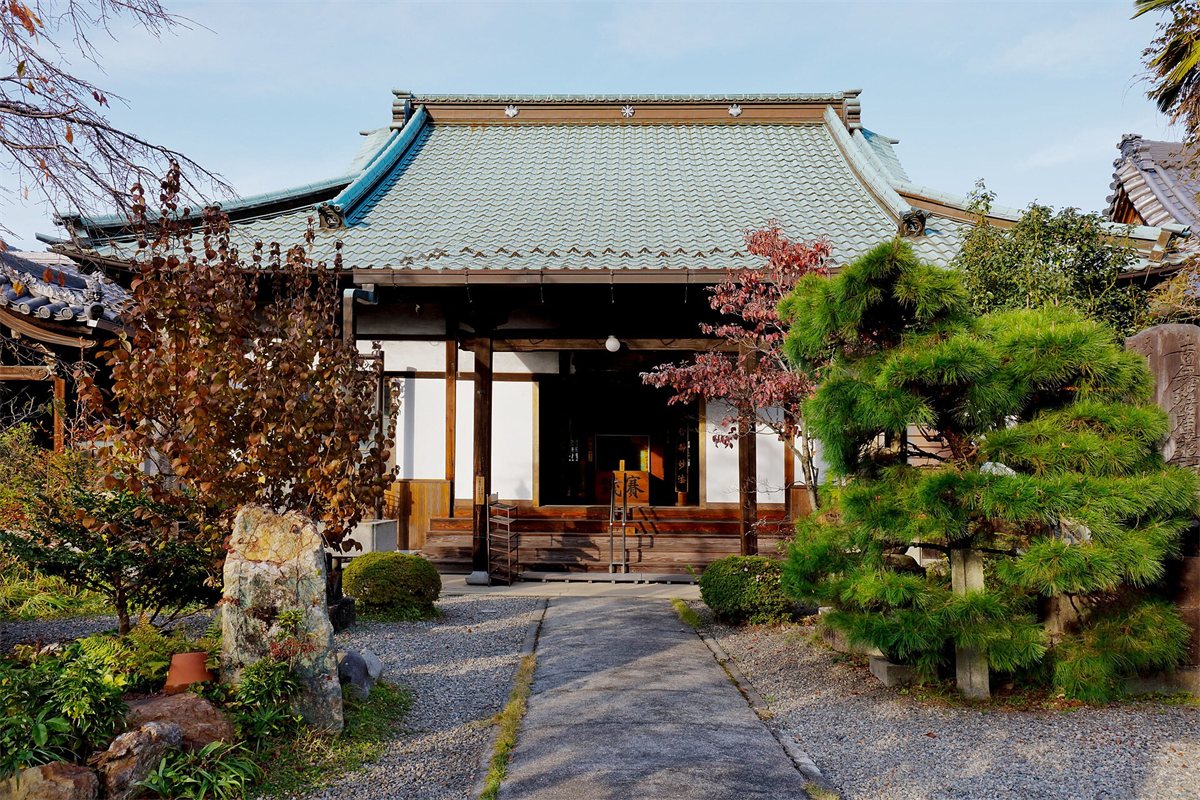
Image: The main hall of Jōzaiji in Kajikawa-chō, Gifu City. Wikimedia Commons (photo: 杉山宣嗣, CC BY-SA 4.0)
| Place | What is there today | Connection with Yoshitatsu |
| Jōzaiji (Kajikawa-chō, Gifu City) | Main hall, five-tiered stone pagodas of the Saitō family, the portrait (usually shown as a reproduction) | The Saitō family temple, where his portrait is handed down |
| Inabayama Castle (Mt. Kinka, Gifu City) | The keep of Gifu Castle and the castle ruins | Yoshitatsu's base [Fact]. According to Gifu City, the keep has been closed for earthquake-proofing work and new exhibits since May 19, 2026, and is scheduled to stay closed until the end of October 2027 |
| Mieji (Mieji-chō, Gifu City) | The temple and its gate | The temple said to have kept the prohibition notice bearing the name "Hanka" |
| Akechi Castle ruins (Kani) | Castle ruins park and monument | Said to have been attacked by Yoshitatsu's army [Legend] |
| Moribe (Anpachi) | Moribe River battlefield Yakushi Hall | Where Nobunaga and the Mino army fought right after Yoshitatsu's death |
What We Know and What We Don't
- We know: his father was Dōsan; his son Tatsuoki succeeded him; his sister married Nobunaga
- We don't know: who his mother and his wife were
Yoshitatsu in TV Dramas
In NHK's 2026 historical drama Toyotomi Kyōdai! (Toyotomi Brothers!), Saitō Yoshitatsu appears from the first episode (broadcast January 4, 2026) as the daimyo of Mino plotting to have Nobunaga assassinated. This is thought to draw on the assassin story in the Shinchō Kōki, which does not name who sent the assassins (more). The real Yoshitatsu died in 1561 (Eiroku 4), about two years after that story (more).
"Saitō Takamasa," who appeared in the 2020 historical drama Kirin ga Kuru, is the same person as Yoshitatsu. Yoshitatsu seems to have called himself "Takamasa" when young, and the drama used this name.
FAQ
How do you read 斎藤義龍?
It is read "Saitō Yoshitatsu." The name is sometimes written 斎藤義竜, with a simplified form of the last character.
When did Saitō Yoshitatsu die?
He died of illness on the 11th day of the 5th month of 1561 (Eiroku 4). In the Western calendar, this is June 23, 1561 (Julian calendar) (more).
What was Saitō Yoshitatsu's family crest?
In the sources we checked, we found no record or belonging from his time that shows the crest Yoshitatsu used
[Unknown]. For the "double standing waves" crest (二頭立波) known as that of his father Dōsan, too, we could not confirm in the sources we checked that Dōsan actually used it (see Dōsan's crest).
Did Saitō Yoshitatsu leave a death poem?
Edo-period books record a Zen verse said to be his death poem
[Legend]. Whether he really left these words cannot be confirmed (more).
Is Saitō Takamasa in Kirin ga Kuru the same person as Yoshitatsu?
Yes. Yoshitatsu seems to have called himself "Takamasa" when young. However, the relationships between characters in the drama include much invention (more).
Where is Saitō Yoshitatsu's grave?
The Saitō family temple is Jōzaiji in Gifu City, where there are five-tiered stone pagodas of the Saitō family. However, we could not find any official source clearly showing where Yoshitatsu himself is buried (more).
Is there a portrait of Saitō Yoshitatsu?
Yes. The portrait of Saitō Yoshitatsu handed down at Jōzaiji in Gifu City is, together with that of his father Dōsan, an Important Cultural Property of Japan. It is thought to have been painted after his death (more).
Summary: Who Was Saitō Yoshitatsu?
Saitō Yoshitatsu was Saitō Dōsan's eldest son. In 1556 (Kōji 2), he defeated his father's army at the Battle of the Nagara River and went on to rule Mino. He is known for killing his father, but in the five or so years that followed he governed through documents issued jointly by his senior retainers, received the honor of Shōbanshū from the shogunate, and in his last years took the distinguished name Isshiki.
Oda Nobunaga, Dōsan's son-in-law, could not take Mino while Yoshitatsu lived. But Yoshitatsu died of illness on the 11th day of the 5th month of 1561 (Eiroku 4). The records from his time that we checked do not identify the illness.
Yoshitatsu is often portrayed as "the villain who killed his father," but following the records reveals a daimyo who held his province together in a short time.
For the people involved, see also our articles on Saitō Dōsan, Nōhime, Oda Nobunaga, Akechi Mitsuhide, Takenaka Hanbei and Maeda Toshiie.
He killed his father, but his ability to govern a province seems to have been real.

If he had lived a little longer, Nobunaga's story might have turned out differently!
Sources & How This Article Was Written
This article is based mainly on the following records and references:
- Records from the time: Genjo Ōnenki (in Shiseki Shūran; National Diet Library Digital Collections); a letter of Kaisen Jōki (as quoted in the Gifu Shishi, 1928); the prohibition notice addressed to Mieji (same); Tokitsugu Kyōki; a copy of the Rokkaku Jōtei letter (based on Kusatsu City's explanation)
- Material made after his death: the ink inscription on the portrait of Saitō Yoshitatsu at Jōzaiji, which Gifu Prefecture considers to have been painted for a later memorial service (based on Gifu Prefecture's explanation)
- Somewhat later and later records: Ōta Gyūichi, Shinchō Kōki, opening book (1881 printed edition on Wikisource; available in English as The Chronicle of Lord Nobunaga, translated by J. S. A. Elisonas and J. P. Lamers, Brill, 2011); Ōta Gyūichi, Taikōsama Gunki no Uchi (transcription in Okuda Hisashi's paper); Itsuya no Kakimono (as cited in Hagihara Daisuke's paper); Nōyō Shoshi Denki, Mino no Kuni Shokyūki, Bushō Kanjōki and Okinagusa (National Diet Library Digital Collections)
- Studies (in Japanese; titles translated by us): Okuda Hisashi, "The Story of Saitō Dōsan and Yoshitatsu in the Printed Tenshō Gunki" (Ajia Gakka Nenpō no. 4, Otemon Gakuin University, 2011); Hagihara Daisuke, "The Tradition of Saitō Dōsan's 'Seizure of the Province' Recorded in the Itsuya no Kakimono" (Kagahan Kenkyū no. 12, 2022); Gifu Shishi (1928); the views of Kinoshita Satoshi, Saitō-shi Yondai (2020), as introduced by others; Nihon Jinmei Daijiten (Kotobank)
- Official materials (in Japanese unless noted): Gifu Prefecture, "Portraits of Saitō Dōsan and Saitō Yoshitatsu"; Japan Tourism Agency, multilingual commentary database, "Successive Lords of Gifu Castle 4: Saitō Yoshitatsu"; Kusatsu City, "An Angry Letter Reveals a Surprising Profile" (2020); Ministry of Health, Labour and Welfare, "Information on Hansen's Disease"; Gifu City, "Notice of the Long-Term Closure of the Gifu Castle Keep" (May 15, 2026); Agency for Cultural Affairs, Database of National Cultural Properties, "Taikōsama Gunki no Uchi"; guides by the Gifu Prefecture Tourism Federation and the Gifu Convention & Visitors Bureau
- On the drama: press reports on the first episode of Toyotomi Kyōdai! (January 2026)
- Images: the portrait of Saitō Yoshitatsu (public domain) and the photos of Mieji (先従隗始, CC BY-SA 4.0), Gifu Castle from a distance (そらみみ, CC BY-SA 3.0), the Akechi Castle monument (KKPCW, CC BY-SA 4.0) and the main hall of Jōzaiji (杉山宣嗣, CC BY-SA 4.0) are from Wikimedia Commons. The timeline, name chart, family tree, manga panels and illustrations are original works by Samurai Lord
What the Labels Mean
[Fact]Confirmed by sources from the time ([Fact: …]names the source)[Widely accepted]A view widely accepted by researchers[Debated]Accounts or interpretations differ[Unknown]Not established from the sources we checked[Legend]Stories found in later records or traditions[Folk belief]Popular claims with little evidence
We keep "what a record says" separate from "what actually happened." What is written in records compiled in later times is named in the text by the name of the record, and is not all treated as [Fact]. Translations of the source excerpts in this article are by the Samurai Lord editorial team.
This article was written by the Samurai Lord editorial team and is revised as new research and reader feedback come in. If you spot an error, please let us know through our contact form (in Japanese) and we will check and correct it.
Read in Japanese
This article is also available in Japanese: 斎藤義龍とは何をした人?死因や道三との対立、有能といわれる理由を解説!