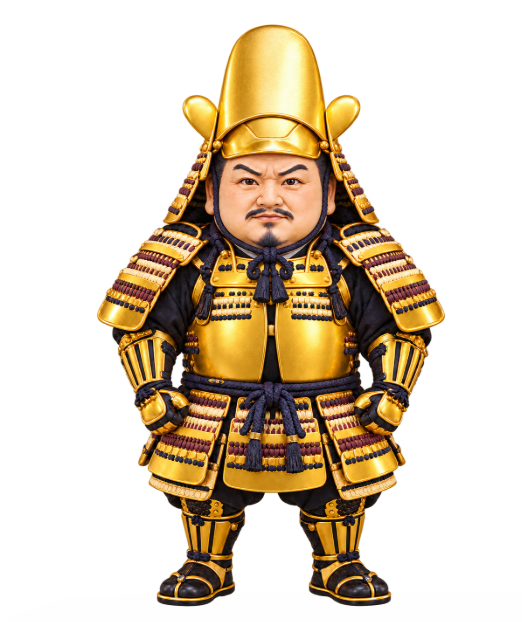
Image: An illustration of Tokugawa Ieyasu. All illustrations in this article are imaginative.
He spent his childhood as a hostage, survived one brush with death after another, and ended up founding the shogunate that ruled Japan for over 250 years. That was Tokugawa Ieyasu. The system he built became the foundation of the long peace of the Edo period.
Yet Ieyasu is also surrounded by famous stories that turn out to be shaky when you check where they come from: that he died from eating tempura, that he soiled himself in panic after a defeat, that his motto was "If the cuckoo won't sing, wait until it does." This article covers what he achieved, how he died, his character, his life, his wives and descendants, his famous sayings, and his grave—separating what records from his own time confirm from stories created later.
Key points are tagged: [Fact] confirmed by records from the period, [Widely accepted] supported by most historians, [Debated] competing theories, [Unknown] not known from any source, and [Legend], [Fiction], or [Folk belief] for later stories. A tag like [Legend: Tokugawa Jikki] names the book where a story appears.
.jpg)
I am Uesugi Kenshin. Today's subject is the man who outlasted everyone in the Warring States period. Unlike Nobunaga or Hideyoshi, he was a man of patience.
.jpg)
I'm Date Masamune! Is it true that Lord Ieyasu died from eating too much tempura?
.jpg)
That is what many people ask. But the story is not so simple. Let us go through it step by step.
What We Know (Key Points)
- What did he do? He won the Battle of Sekigahara, founded the Tokugawa (Edo) shogunate in 1603, and destroyed the Toyotomi family at Osaka, laying the groundwork for over 250 years of Tokugawa rule
[Fact](more) - How did he die? He died of illness at Sunpu Castle (Shizuoka) in 1616. A popular story links his illness to a fried sea bream dish, but the cause of death is not certain; stomach cancer is a widely cited theory
[Debated](more) - What was he like? He was obsessed with his health and even mixed his own medicines. He was thrifty and keen on learning and publishing
[Widely accepted](more) - Where is his grave? As he wished, he was first buried on Mount Kunō in Shizuoka and enshrined at Nikkō the following year: today's Kunōzan Tōshō-gū and Nikkō Tōshō-gū
[Fact](more) - Does he have descendants today? Yes. The main Tokugawa house still exists; since 2023 its head has been Tokugawa Iehiro, the 19th in the line
[Fact](more)
Jump to the part you want to read:
- How did he die? Was it the tempura?
- What was he like? Surprising sides of Ieyasu
- His life and timeline: from hostage to ruler
- His wives and the Tsukiyama incident
- His descendants and family tree
- Are his famous sayings real?
- Where is he buried? Nikkō and Kunōzan
Who Was Tokugawa Ieyasu? Three Achievements and Basic Facts
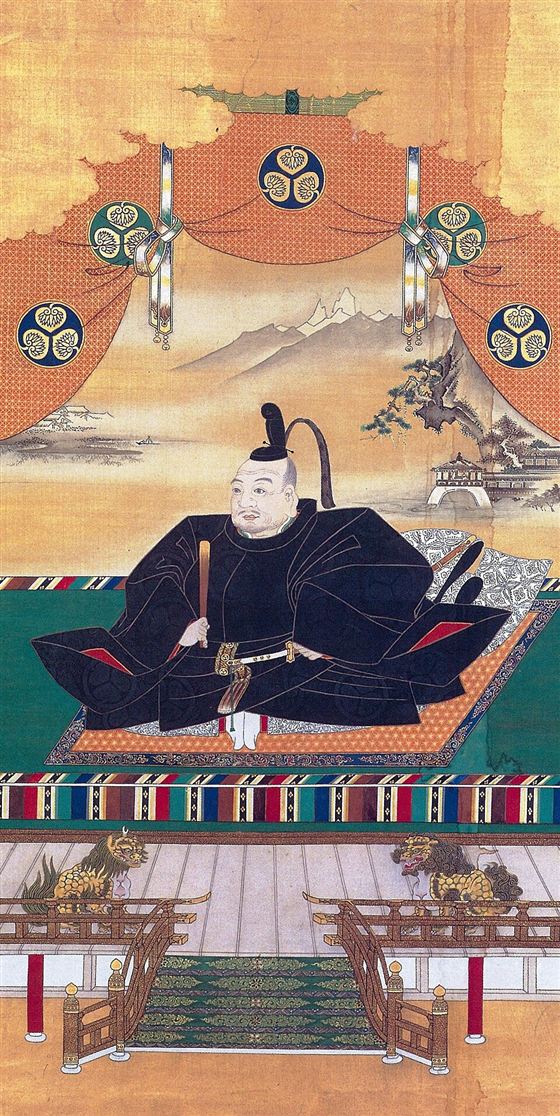
Image: Portrait of Tokugawa Ieyasu by Kanō Tan'yū (Osaka Castle Museum). It shows Ieyasu as he was worshipped after his death, as the deity Tōshō Daigongen.
In a nutshell, Tokugawa Ieyasu was "the warlord who survived the Sengoku (Warring States) period, founded the Edo shogunate, and laid the foundation for more than 250 years of Tokugawa rule." Together with Oda Nobunaga and Toyotomi Hideyoshi, he is counted as one of Japan's "Three Unifiers," and he was the first shogun of the Tokugawa (Edo) shogunate. A shogun was the military ruler of Japan, appointed by the emperor.
Ieyasu's Three Achievements
- He won Sekigahara and took control of the country (1600): after Hideyoshi's death, he defeated the Western Army of Ishida Mitsunari and others, and gained real power over Japan
[Fact] - He became shogun and founded the Edo shogunate (1603): he became head of the warrior class and made Edo (today's Tokyo) the center of government
[Fact] - He made sure Tokugawa rule would last (1605–1616): he handed the title of shogun to his son Hidetada to show it would stay in the family, destroyed the Toyotomi family at Osaka, and issued laws to control the daimyo (feudal lords)
[Fact]
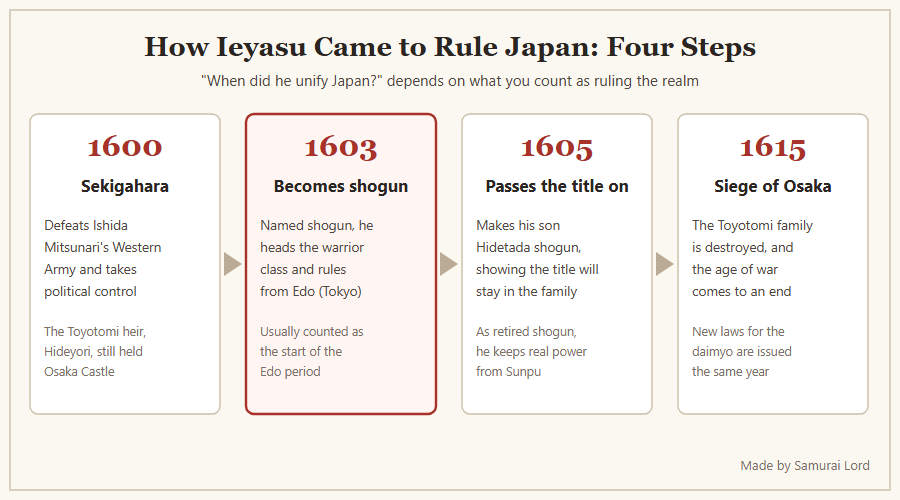
Image: How Ieyasu came to rule Japan in four steps (made by Samurai Lord). Tap or click to enlarge.
"When did Ieyasu unify Japan?" has no single answer. He took political control at Sekigahara in 1600, founded the shogunate in 1603, and ended the last great war when the Toyotomi fell in 1615. It depends on which of these you count as ruling the realm.
Three Things That Show His Character
- He was obsessed with his health: he read medical books, mixed his own medicines, and gave medicine to his retainers
[Fact] - He was thrifty: many stories tell how he disliked luxury, and he left an enormous fortune in gold and silver when he died
[Widely accepted] - He loved learning: he read classics such as the Azuma Kagami and had books printed with movable type
[Fact]
Read more in the chapter on his character.
Quick Profile
| Item | Details | Reliability |
| Lived | January 31, 1543 – June 1, 1616 | [Fact] |
| Birthplace | Okazaki Castle, Mikawa Province (Okazaki, Aichi Prefecture) | [Fact] |
| Parents | Father Matsudaira Hirotada; mother Odai no Kata (daughter of Mizuno Tadamasa) | [Fact] |
| Names | Takechiyo → Matsudaira Motonobu → Motoyasu → Ieyasu → Tokugawa Ieyasu | [Fact] |
| Main castles | Okazaki, Hamamatsu, Sunpu (Shizuoka), Edo | [Fact] |
| Titles | First Tokugawa shogun (1603); Grand Minister of State (Daijō-daijin) shortly before his death | [Fact] |
| Wives | Two official wives, Lady Tsukiyama and Lady Asahi; about 20 concubines | [Widely accepted] |
| Children | Said to be 11 sons and 5 daughters, including the 2nd shogun, Hidetada | [Widely accepted] |
| Crest | Three hollyhock leaves (mitsuba-aoi) | [Fact] |
| Grave | Kunōzan Tōshō-gū (Shizuoka) and Nikkō Tōshō-gū (Tochigi) | [Fact] |
| Cause of death | Illness (not certain; stomach cancer is a common theory) | [Debated] |
When did he live, and which shogun was he?
Ieyasu was born in the middle of the Sengoku period and died at the start of the Edo period. Appointed shogun in 1603, he was the first shogun of the Tokugawa shogunate, and every shogun after him, down to the 15th, Yoshinobu, was his descendant [Fact].
He was about nine years younger than Oda Nobunaga (born 1534) and about six years younger than Toyotomi Hideyoshi (born 1537). Simply outliving both of them was one of the big reasons he ended up on top.
His changing names: from Takechiyo to Tokugawa Ieyasu
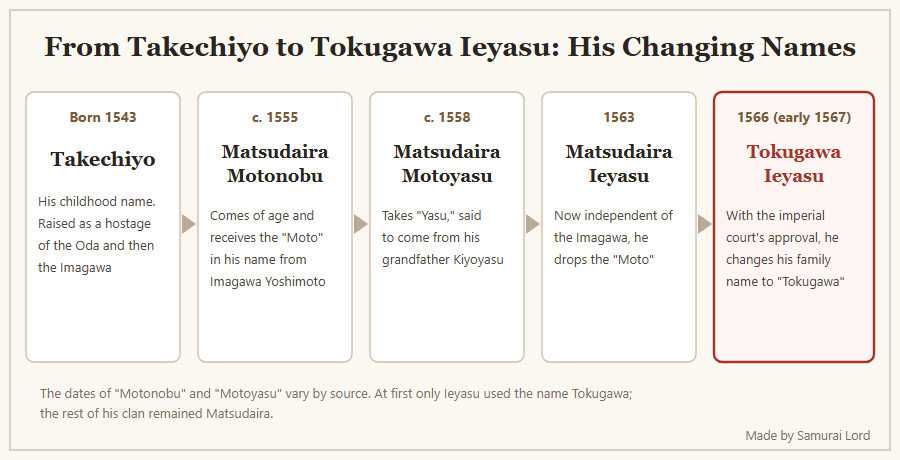
Image: Ieyasu's changing names (made by Samurai Lord). Tap or click to enlarge.
Like many warriors of his time, Ieyasu changed his name several times. As a child he was Takechiyo. When he came of age under the Imagawa family, he received the character "Moto" from Imagawa Yoshimoto and became Motonobu, then Motoyasu. After breaking away from the Imagawa, he became Ieyasu in 1563, and at the end of 1566 by the Japanese calendar (early 1567), with the imperial court's approval, he changed his family name from Matsudaira to Tokugawa [Fact].
When was his birthday?
The standard date of his birth is the 26th day of the 12th month of Tenbun 11, which is January 31, 1543 in the Western calendar [Widely accepted]. However, a prayer document Ieyasu wrote himself gives an age that points to the following year, so some historians think he was born a year later [Debated].
How true are the famous stories? A quick guide
Ieyasu is surrounded by well-known stories whose sources turn out to be weak. Here are the main ones; each is explained in its own section.
| Famous story | What can be confirmed | What cannot be confirmed / caution |
| He died from tempura (see death) | He fell ill on the night of a falconry outing; a story says he ate a fried sea bream dish around then | Whether the dish actually caused his death |
| The "frowning portrait" was a reminder of defeat (see Mikatagahara) | A portrait of Ieyasu grimacing is held at the Tokugawa Art Museum | That Ieyasu had it painted after his defeat at Mikatagahara |
| He soiled himself in panic (see Mikatagahara) | A similar story appears in the Edo-period Mikawa Go-fudoki | Any confirmation in records of his own time (and it is not even set at the main battle) |
| "Wait until the cuckoo sings" (see character) | The verse appears in the Kasshi Yawa, a late Edo-period essay collection | Whether Ieyasu ever said it |
| His testament, "Life is like a long journey with a heavy load" (see sayings) | How it was placed in Tōshō-gū shrines and spread in the Meiji era | Any basis for calling it Ieyasu's own words |
| He was secretly replaced by a body double (see trivia) | The theory appears in a 1902 book and in local legends | Any reliable record of a switch |
How Did Tokugawa Ieyasu Die? Was It Tempura? How Old Was He?
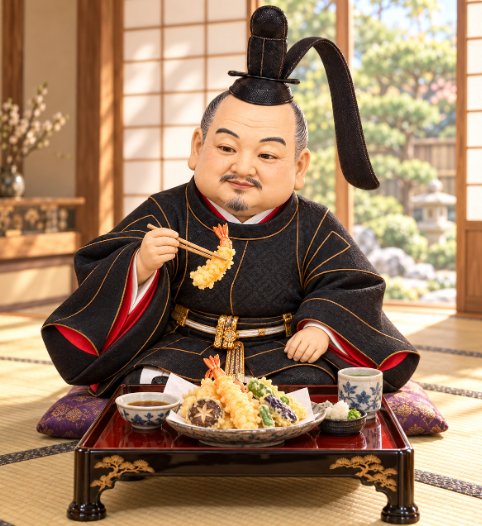
Image: An imaginative illustration of Ieyasu and tempura in his later years. It is not a reconstruction of the sea bream dish in the records.
The Short Answer
- Ieyasu died of illness at Sunpu Castle (Shizuoka) on June 1, 1616 (the 17th day of the 4th month of Genna 2). He was 73 by Western reckoning (75 by the traditional Japanese count)
[Fact] - Because he fell ill on the night of a falconry outing early that year, a famous story blames a fried sea bream dish he ate around then. However, it cannot be confirmed that the dish caused his death
[Debated] - Based on the records of his symptoms, stomach cancer is a widely cited explanation
[Debated]
Sources: National Archives of Japan, "Ieyasu's Illness" (online exhibition); the Tokugawa Jikki; the Honkō Kokushi Nikki
What do the records say about the tempura story?
On the 21st day of the first month of 1616, Ieyasu went falconry hunting at Tanaka (Fujieda, Shizuoka) and suddenly fell ill that night [Widely accepted]. Around this time, according to the Tokugawa Jikki—a history compiled by the shogunate in the 19th century—the wealthy Kyoto merchant Chaya Shirōjirō told him about a dish then fashionable in Kyoto, sea bream fried in kaya-nut oil with grated garlic chives, and Ieyasu tried it [Legend: Tokugawa Jikki].
This was not tempura with a batter coating as we know it today, but something closer to plain deep-fried fish. Either way, the records cannot tell us whether the dish triggered his illness or simply happened at the same time. Ieyasu died about three months later.
Why do people think it was stomach cancer?
The Tokugawa Jikki describes Ieyasu losing weight rapidly and having a lump in his abdomen. Because such symptoms are common in stomach cancer, doctors who have studied the records have also suggested that he died of it [Debated].
Still, no one in his day could diagnose the illness in modern terms, so stomach cancer is not certain. There is also a theory that ingredients in the medicines he took every day harmed his health [Debated].
Did he really make his own medicine?
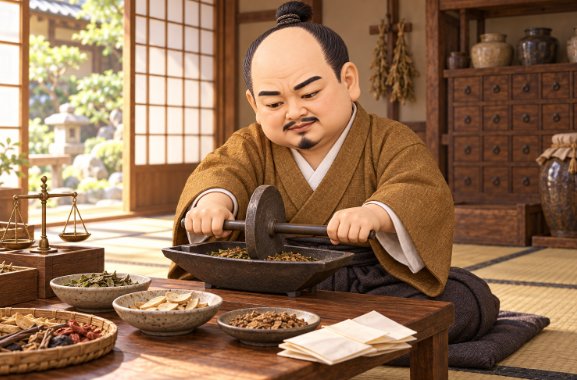
Image: An imaginative illustration of Ieyasu grinding medicinal herbs
Ieyasu knew a great deal about medicine and mixed his own remedies [Fact]. A story says that in his final illness he refused the medicine prescribed by his physician Katayama Sōtetsu, kept taking his own, and banished Sōtetsu to Shinano (Nagano) when the doctor objected [Legend].
It is an interesting twist that a man so careful about his health may, at the very end, have trusted his own judgment too much.
His last wishes and death
Sensing his end, Ieyasu called his senior retainer Honda Masazumi and the monks Tenkai and Sūden on May 17 (the 2nd day of the 4th month) and gave instructions for after his death [Fact]. According to Sūden's diary, the Honkō Kokushi Nikki, he asked that his body be laid to rest on Mount Kunō in Suruga, his funeral be held at Zōjō-ji in Edo, his memorial tablet be placed at Daiju-ji in Mikawa, and that after the first anniversary of his death a small shrine be built on Mount Nikkō where he would be enshrined as a deity [Fact: Honkō Kokushi Nikki].
As he wished, his body was taken to Mount Kunō on the night he died, and he was enshrined at Nikkō the following year. See the chapter on his grave.
How old was he when he died?
Ieyasu died at 73 by Western reckoning (75 by the traditional Japanese count, in which a person is one year old at birth) [Fact]. That was a very long life for the time: he was 57 at Sekigahara and 71–72 during the Siege of Osaka. Living so long was a big part of how he came to rule Japan.
.jpg)
So we can't say the tempura did it. But I never knew he made his own medicine!
A man more concerned with his health than anyone. Perhaps that is why he trusted his own medicine to the very end.
What Was Tokugawa Ieyasu Like? Surprising Sides of His Character
"Patient." "A sly old raccoon dog." Ieyasu has many images. Here we look at the records in the order "what the record says → what we can read from it → what we cannot know."
Side 1: A health enthusiast
- What the record says: Ieyasu read Chinese medical books, such as the pharmacopoeia known in Japan as the Wazai Kyokuhō, and mixed his own medicines; the tools he used survive. He often sent medicine to retainers, daimyo, and court nobles who fell ill
[Fact] - What we can read from it: he is said to have seen falconry not as mere sport but as exercise for his health
[Legend]. He seems to have understood well how much a long life mattered - What we cannot know: many stories say he ate simple food and never overate, but most come from Edo-period anecdote collections
Side 2: A thrifty man
- What the record says: when a retainer tried to please him by serving rice with a little barley on top in summer, Ieyasu is said to have scolded him: he could not eat well while the common people were struggling
[Legend] - What we can read from it: Ieyasu left a huge fortune in gold and silver when he died, so he clearly disliked waste and valued savings
[Widely accepted] - What we cannot know: most of these anecdotes come from Edo-period books written to praise him, so they cannot simply be taken as fact
Side 3: A lover of learning—and of new things
Ieyasu enjoyed reading the Azuma Kagami (a chronicle of the Kamakura shogunate) and Chinese classics, and had books printed with wooden and then bronze movable type [Fact]. He also learned about the West from William Adams, the English navigator known in Japan as Miura Anjin, whom he made a samurai with his own estate, and he collected imported clocks and eyeglasses [Fact].
Did Ieyasu say "Wait until the cuckoo sings"?
"If the cuckoo won't sing, kill it" (Nobunaga); "make it sing" (Hideyoshi); "wait until it sings" (Ieyasu)—these famous verses sum up the three unifiers' personalities using the hototogisu, a kind of cuckoo.
But Ieyasu never composed his. The verses come from the Kasshi Yawa, an essay collection by Matsura Seizan, a former daimyo of Hirado, written in the late Edo period, where the three are listed with no author named [Folk belief: Kasshi Yawa]. The verse captures Ieyasu's image as a patient man, but it is a later comparison, not his own words.
Where does the "sly old raccoon dog" image come from?
Ieyasu is often called a tanuki oyaji, a "sly old raccoon dog" (in Japanese folklore, the tanuki is a trickster). The image is thought to come from how he pushed the Toyotomi into the Siege of Osaka and then used the peace terms to fill in Osaka Castle's moats—events later stressed as cunning schemes [Widely accepted]. Historians disagree on whether this image fits the real Ieyasu [Debated].
Patience and cunning alike were tools for surviving the age of war. You cannot sum up Ieyasu with only one of them.
So the cuckoo verse wasn't his either…!
Tokugawa Ieyasu's Life: From Hostage to Ruler of Japan
First, here is the big picture. Ages are by Western reckoning.
| Year | Age | Event |
| 1543 | 0 | Born at Okazaki Castle in Mikawa |
| 1547 | 4 | Seized while being sent to the Imagawa and held hostage by the Oda instead |
| 1549 | 6 | Exchanged for a hostage and sent to the Imagawa at Sunpu |
| 1560 | 17 | After Imagawa Yoshimoto is killed at Okehazama, returns to Okazaki and becomes independent |
| 1562 | 19 | Allies with Oda Nobunaga (the Kiyosu alliance) |
| 1563 | 20 | Revolt of the Ikkō Buddhist sect in Mikawa (to 1564) |
| 1567 | 23 | Changes his family name to Tokugawa (the 12th month of 1566 in the Japanese calendar) |
| 1570 | 27 | Moves to Hamamatsu Castle; Battle of Anegawa |
| 1573 | 29 | Battle of Mikatagahara: badly defeated by Takeda Shingen (January 1573) |
| 1575 | 32 | With Nobunaga, defeats Takeda Katsuyori at Nagashino |
| 1579 | 36 | The Tsukiyama incident: loses his first wife and eldest son |
| 1582 | 39 | Honnō-ji Incident: escapes from Sakai through Iga back to Mikawa |
| 1584 | 41 | Fights Hideyoshi at Komaki and Nagakute |
| 1586 | 43 | Marries Hideyoshi's sister Asahi and submits to Hideyoshi at Osaka Castle |
| 1590 | 47 | Moved to the Kantō region; enters Edo Castle |
| 1600 | 57 | Wins the Battle of Sekigahara |
| 1603 | 60 | Becomes shogun and founds the Edo shogunate |
| 1605 | 62 | Hands the shogunate to Hidetada; later moves to Sunpu as "retired shogun" (Ōgosho) |
| 1614–15 | 71–72 | Siege of Osaka: destroys the Toyotomi family |
| 1616 | 73 | Becomes Grand Minister of State; dies at Sunpu Castle on June 1 |
A childhood as a hostage
Ieyasu's father, Matsudaira Hirotada, was a minor lord squeezed between the powerful Imagawa to the east and the Oda to the west. As a small child, Ieyasu was seized on his way to the Imagawa as a hostage and handed to the Oda instead; later he was exchanged and sent to the Imagawa capital of Sunpu [Fact]. Being a hostage did not mean living in a cell: under the Imagawa he received an education, came of age, and married a woman from an Imagawa branch family, the future Lady Tsukiyama [Widely accepted].
Okehazama, independence, and the alliance with Nobunaga
When Imagawa Yoshimoto was killed at the Battle of Okehazama in 1560, Ieyasu returned to Okazaki and became independent, and in 1562 he allied with Oda Nobunaga (the Kiyosu alliance) [Fact]. The alliance lasted 20 years, until Nobunaga's death, with Ieyasu fighting at Nobunaga's side in many campaigns. Read more in our article on Oda Nobunaga.
A story says that after Okehazama, Ieyasu was about to take his own life at Daiju-ji Temple in Okazaki when the head priest stopped him with the words Onri edo, gongu jōdo—"leave this defiled world and seek the Pure Land." Ieyasu is said to have used the phrase on his battle flags afterward [Legend].
The Battle of Mikatagahara: the frowning portrait and the "soiled himself" story
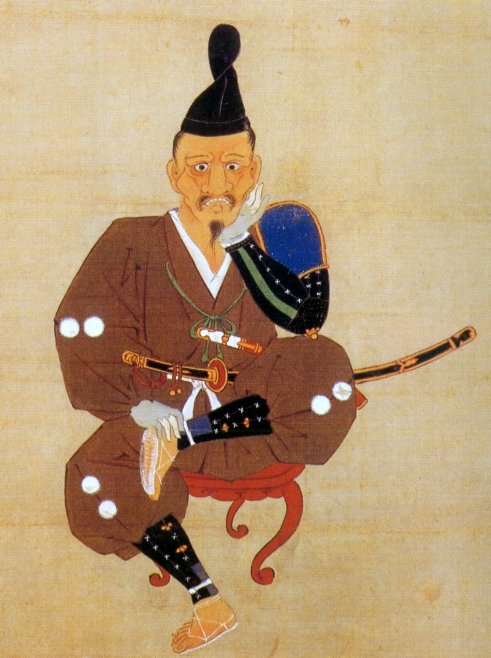
Image: Portrait of Tokugawa Ieyasu after the Battle of Mikatagahara, known as the shikami-zō or "frowning portrait" (Tokugawa Art Museum, Nagoya)
On January 25, 1573 (the 22nd day of the 12th month of Genki 3), Ieyasu took on Takeda Shingen's great army at Mikatagahara near Hamamatsu Castle and was badly beaten [Fact]. He barely escaped back to the castle. The battle is counted among the three greatest dangers of his life.
A famous story says Ieyasu had this unflattering portrait painted so that he would never forget the bitterness of defeat. But research at the Tokugawa Art Museum has shown that the painting first appears in records only in 1780, and that it was linked to Mikatagahara only in the 20th century (Hara Fumihiko, 2015) [Widely accepted].
.png)
Image: An imaginative illustration of Ieyasu in the pose of the frowning portrait
Another story says that Ieyasu was so frightened that he soiled himself in the saddle and was mocked by a retainer. It appears in the Edo-period Mikawa Go-fudoki, but there it is set at an earlier skirmish at Hitokotozaka, not at the main battle, and it is not found in records from his own time [Legend: Mikawa Go-fudoki]. The famous comeback—"It's not dung, it's grilled miso!"—was also added later [Legend].
The Tsukiyama incident (1579)
In 1579, Ieyasu lost his first wife, Lady Tsukiyama, and his eldest son, Nobuyasu. See the chapter on his wives.
The Honnō-ji Incident and the escape through Iga
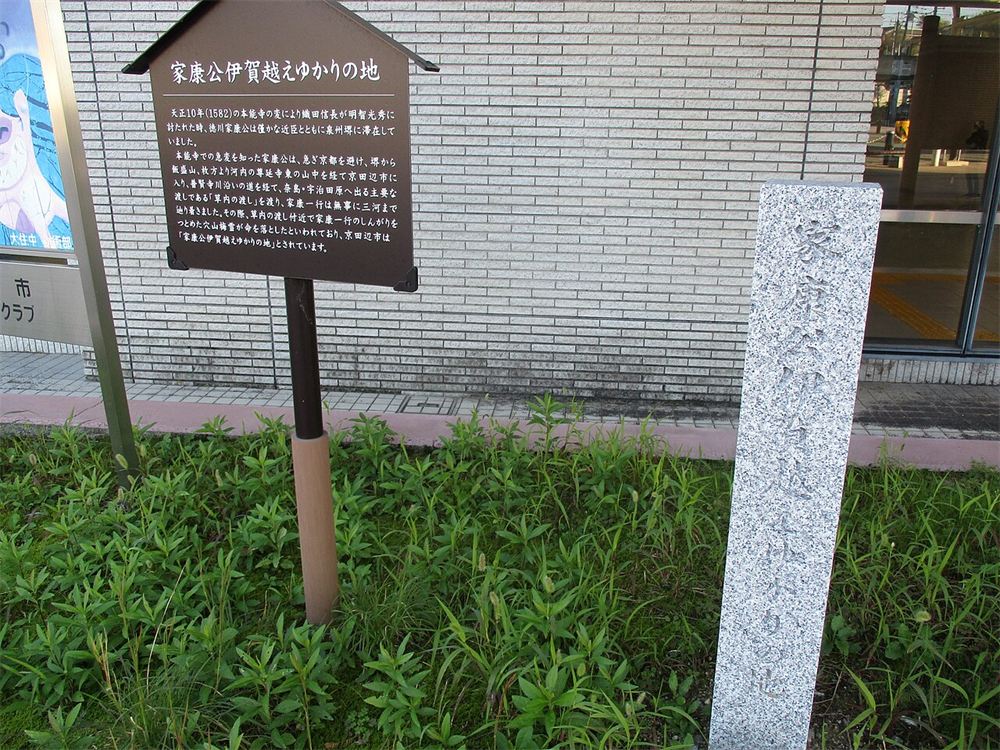
Image: Marker for "Ieyasu's escape through Iga" in front of Miyamaki Station, Kyōtanabe, Kyoto. Photo: Asset utilitist (CC0 / Wikimedia Commons)
When the Honnō-ji Incident broke out on June 21, 1582, Ieyasu was sightseeing in Sakai (Osaka) with only a small escort. He hurried across the mountains of Iga (Mie) and took a boat from Ise back to Mikawa. This dash, known as the Shinkun Iga-goe ("the divine lord's crossing of Iga"), is counted among the greatest crises of his life [Fact]. The exact route is debated [Debated]. For the incident itself, see our article on Akechi Mitsuhide.
Komaki and Nagakute, and submission to Hideyoshi
After Nobunaga's death, Hashiba (later Toyotomi) Hideyoshi took control, and in 1584 Ieyasu fought him at Komaki and Nagakute, winning the main clash in the field [Fact]. In the end, however, Hideyoshi married his sister Asahi to Ieyasu and even sent his own mother as a hostage, and in 1586 Ieyasu submitted to Hideyoshi at Osaka Castle [Fact]. See our article on Toyotomi Hideyoshi and, for Hideyoshi's brother who hosted Ieyasu in Osaka, our article on Toyotomi Hidenaga.
The move to Kantō and Edo
In 1590, after the Hōjō family fell, Hideyoshi moved Ieyasu from his lands along the Tōkai coast to the Kantō region. Ieyasu entered Edo Castle, which would become the heart of his future shogunate [Fact].
The Battle of Sekigahara (1600)
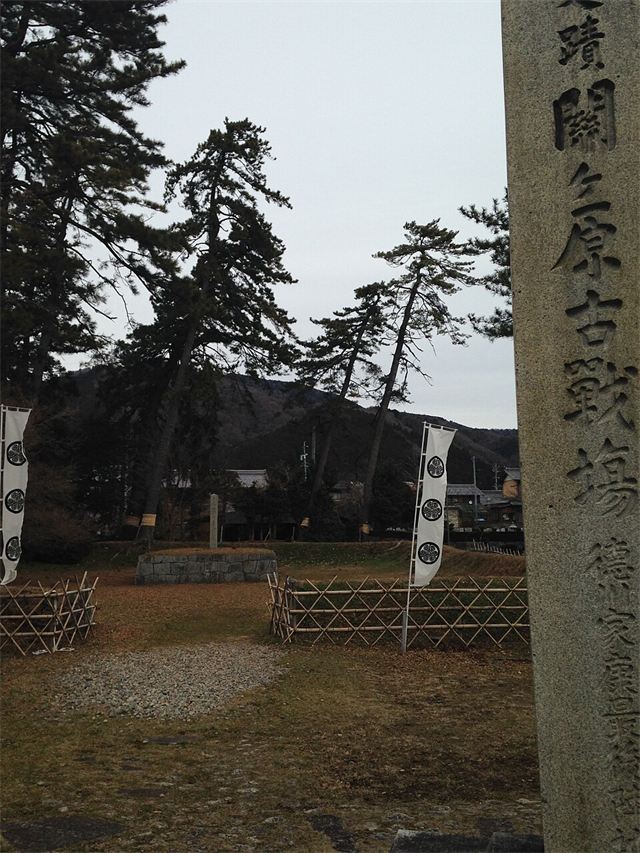
Image: Site of Ieyasu's final command post at Sekigahara (Sekigahara, Gifu). Photo: そらみみ (CC BY-SA 3.0 / Wikimedia Commons)
When Hideyoshi died in 1598, Ieyasu, the most senior of the five regents (Go-Tairō) of the Toyotomi government, grew ever more powerful. He clashed with Ishida Mitsunari and his allies, and on October 21, 1600, the two sides met at Sekigahara in Mino. Ieyasu's Eastern Army won in a single day, and he took real control of Japan [Fact]. Kuroda Nagamasa fought prominently for him, while Nagamasa's father Josui (Kanbei) fought in Kyushu—see our article on Kuroda Kanbei.
Becoming shogun and founding the Edo shogunate (1603)
In 1603 the emperor appointed Ieyasu shogun, and he founded the Edo shogunate [Fact]. Just two years later he handed the title to his son Hidetada, showing everyone that the shogunate would stay in the Tokugawa family. He himself moved to Sunpu Castle as Ōgosho, the retired shogun, and kept real power until his death [Fact].
The Siege of Osaka and the fall of the Toyotomi (1614–15)
Seizing on the inscription on a temple bell at Hōkō-ji in Kyoto ("may the state be peaceful and secure," which split the characters of his name), Ieyasu deepened the conflict with Toyotomi Hideyori, attacked Osaka Castle in the winter campaign of 1614 and the summer campaign of 1615, and destroyed the Toyotomi family [Fact]. The swordsman Miyamoto Musashi served with the Tokugawa forces of Mizuno Katsunari during this campaign, as troop lists of the time confirm—see our article on Miyamoto Musashi.
After Osaka, Ieyasu issued laws to control the daimyo and the imperial court, completing the framework of Tokugawa rule. In 1616 he was named Grand Minister of State, and soon afterward he died at Sunpu Castle [Fact].
Starting as a hostage and ending as ruler of Japan—what a life!
Defeated, betrayed, yet he waited when he had to wait and moved when he had to move. That was Ieyasu's strength.
Nobunaga, Hideyoshi, and Ieyasu: How Were the Three Unifiers Different?
Ieyasu is known, with Oda Nobunaga and Toyotomi Hideyoshi, as one of the "Three Unifiers." All three came from what is now Aichi Prefecture, and their lives were closely intertwined as they brought the age of war to an end.
| Item | Oda Nobunaga | Toyotomi Hideyoshi | Tokugawa Ieyasu |
| Born | 1534, Owari | 1537, Owari | 1543, Mikawa |
| Role in unification | Opened the road to unification | Unified the whole country | Founded the Edo shogunate and the long peace |
| Relation to Ieyasu | Ally for 20 years (Kiyosu alliance) | Fought him, then submitted and became the senior regent | — |
| Death | 1582, took his own life at Honnō-ji | 1598, died of illness at Fushimi Castle | 1616, died of illness at Sunpu Castle |
Ieyasu worked with Nobunaga as a near-equal ally for many years. He fought Hideyoshi once, then submitted and supported his government as a senior lord. After Hideyoshi's death, he took control at Sekigahara and finally destroyed the Toyotomi. Ieyasu's rule was built on what Nobunaga and Hideyoshi had already achieved.
The cuckoo verses neatly capture the three men's differences, but remember that they are a later comparison, not their own words.
How Many Wives Did Tokugawa Ieyasu Have? Lady Tsukiyama and the Tsukiyama Incident
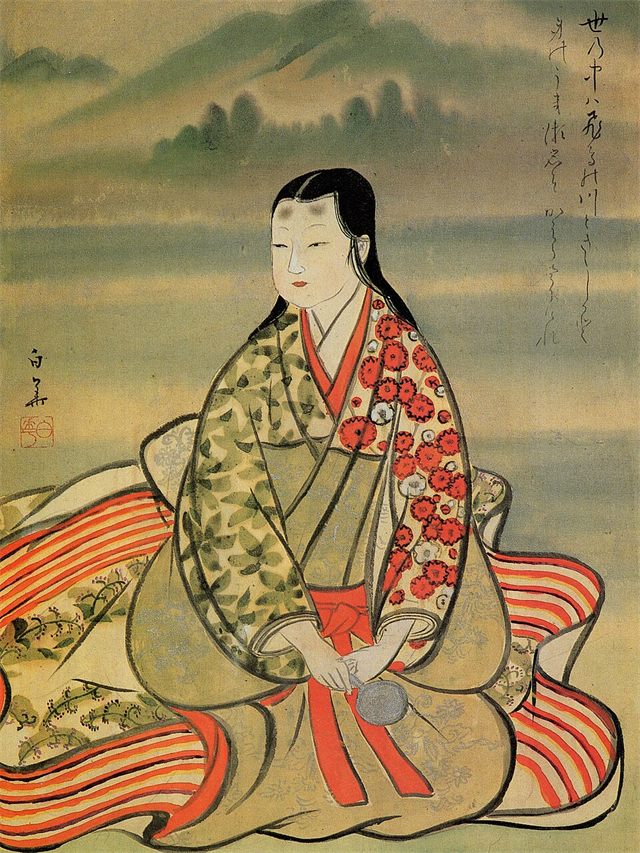
Image: Portrait of Lady Tsukiyama (Sairai-in Temple, Hamamatsu; a modern work)
The Short Answer
- Ieyasu had two official wives (seishitsu): Lady Tsukiyama and Lady Asahi
[Fact] - The number of concubines depends on how you count, but about 20 are known by name
[Widely accepted] - His first wife, Lady Tsukiyama, died in 1579 together with their eldest son, Nobuyasu, in what is called the Tsukiyama incident
[Fact]
His two official wives
| Wife | Who she was | What happened to her |
| Lady Tsukiyama (Sena) | Daughter of the Sekiguchi, a branch of the Imagawa family; married Ieyasu while he lived with the Imagawa | Mother of his eldest son Nobuyasu and eldest daughter Kame; killed in 1579 |
| Lady Asahi | Toyotomi Hideyoshi's younger sister | Married Ieyasu in 1586 to bind him to Hideyoshi; died in 1590 |
Main concubines and children
His concubines included Saigō no Tsubone (Oai), mother of the 2nd shogun Hidetada; Okame, mother of Yoshinao, founder of the Owari Tokugawa house; Yōju-in (Oman), mother of Yorinobu and Yorifusa, founders of the Kii and Mito Tokugawa houses; and Acha no Tsubone, who supported him in his later years [Widely accepted]. He is said to have had 11 sons and 5 daughters. The main ones are:
| Child | Mother | Later life |
| Nobuyasu (1st son) | Lady Tsukiyama | Forced to commit seppuku in 1579, aged 20 |
| Yūki Hideyasu (2nd son) | Chōshō-in | Adopted by Hideyoshi, then heir to the Yūki family; founder of the Echizen Matsudaira |
| Hidetada (3rd son) | Oai (Saigō no Tsubone) | 2nd Tokugawa shogun |
| Yoshinao (9th son) | Okame (Sōō-in) | Founder of the Owari Tokugawa house |
| Yorinobu (10th son) | Yōju-in (Oman) | Founder of the Kii Tokugawa house; grandfather of the 8th shogun, Yoshimune |
| Yorifusa (11th son) | Yōju-in (Oman) | Founder of the Mito Tokugawa house; father of Tokugawa Mitsukuni |
What was the Tsukiyama incident (1579)?
In 1579, Ieyasu's first wife, Lady Tsukiyama, was killed by his retainers in Tōtōmi (today's Hamamatsu), and his eldest son Nobuyasu was forced to commit seppuku (ritual suicide) at Futamata Castle [Fact]. Why Ieyasu let his wife and heir die has been explained differently over time.
| View | What it says | Main basis |
| The traditional view | Nobuyasu's wife Tokuhime, Nobunaga's daughter, complained to her father about Nobuyasu and Lady Tsukiyama, and Nobunaga ordered Ieyasu to deal with them | The Mikawa Monogatari by Ōkubo Tadataka (early 1600s) and others |
| The view of recent research | Ieyasu clashed with Nobuyasu and Lady Tsukiyama, partly over relations with the Takeda family, and decided their fate himself | Re-reading of records from the time by historians such as Kuroda Motoki and Shiba Hiroyuki |
No record from the time clearly says that Nobunaga ordered Ieyasu to kill them. For this reason, more historians now think it was Ieyasu's own decision. How far Nobunaga's wishes played a part is still debated [Debated].
Lady Tsukiyama was once portrayed as a scheming villain, but that image too owes much to later stories [Legend].
Losing his wife and son… Lord Ieyasu had such painful times too.
It was an age when a family might have to be sacrificed to save the house. One of the heaviest events of his life.
Does Tokugawa Ieyasu Have Descendants Today? Family Tree and "Descendants"
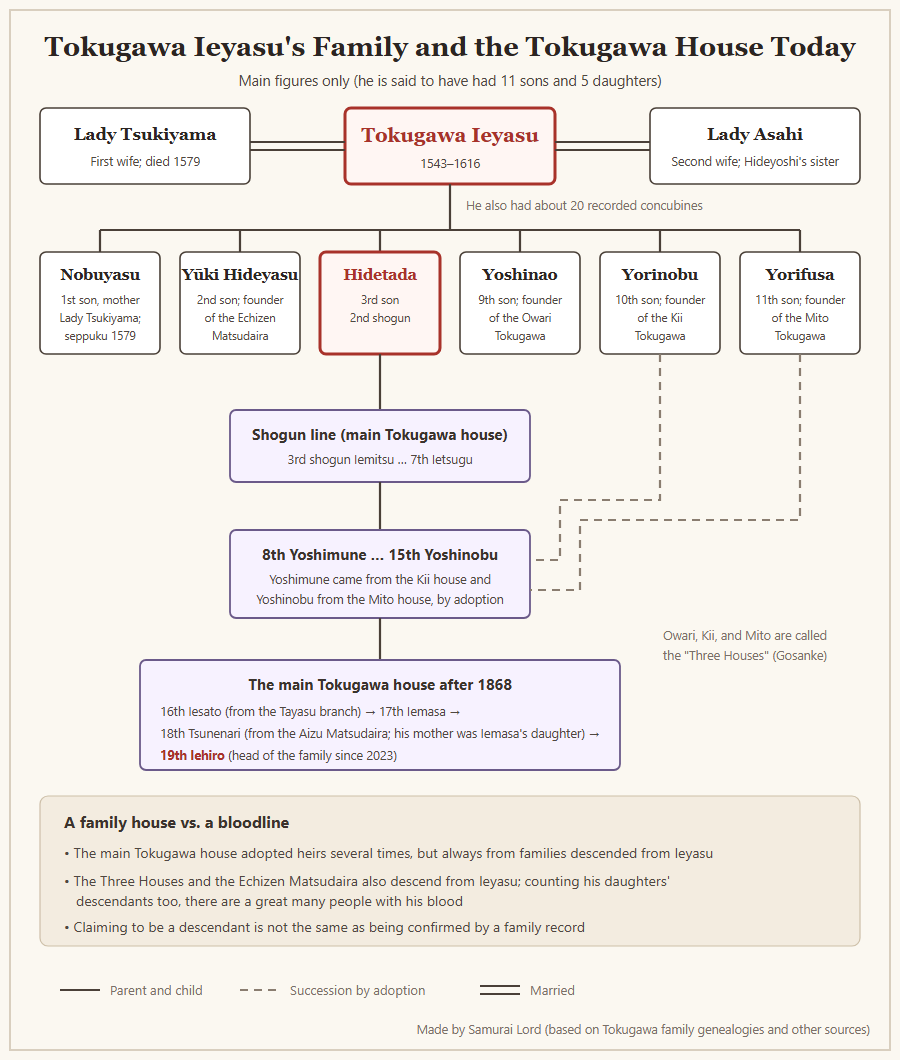
Image: Tokugawa Ieyasu's family and the Tokugawa house today (made by Samurai Lord). Tap or click to enlarge.
The Short Answer
- Ieyasu has many descendants today. The main Tokugawa house still exists, and since January 2023 its head has been Tokugawa Iehiro, the 19th in the line
[Fact] - The Three Houses (Gosanke) of Owari, Kii, and Mito were also founded by his sons
[Fact]
Sources: Tokugawa family genealogies; news reports on the change of head of the main Tokugawa house (2022–2023)
A family house vs. a bloodline
The main Tokugawa house adopted heirs several times, both in the Edo period and after. The 8th shogun, Yoshimune, came from the Kii house, and the 15th, Yoshinobu, from the Mito house. After 1868, the 16th head, Iesato, came from the Tayasu branch, and the 18th, Tsunenari, from the Aizu Matsudaira family [Fact].
But all of them came from families descended from Ieyasu, so his blood still runs in the heads of the main house today [Widely accepted]. A house continuing is not always the same as a bloodline continuing, but in the main Tokugawa house, both have continued.
People who claim to be his descendants
Since Ieyasu had 16 children, his descendants—counting those through his daughters—are very numerous. Some people in the public eye say they descend from him, but such claims usually rest on family stories rather than published genealogies [Unknown]. "Unconfirmed" does not mean "untrue," but a bloodline confirmed in records and a family tradition should be kept apart.
Are Tokugawa Ieyasu's Famous Sayings Real? "Life Is Like a Long Journey with a Heavy Load"
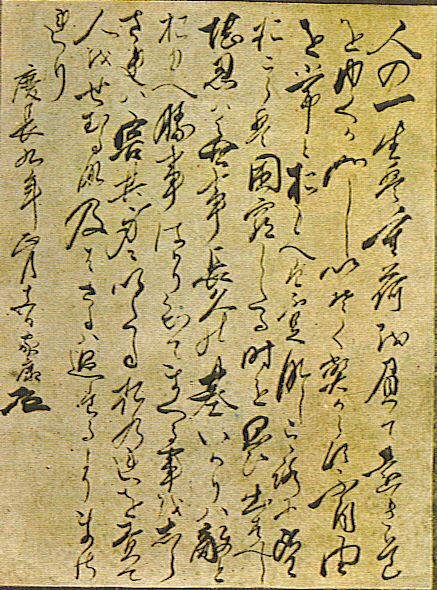
Image: The "Testament of Lord Tōshō" held at Nikkō Tōshō-gū (from a 1934 photo book). It bears a date of 1604 and Ieyasu's signature mark, but it is thought to have been made in the Meiji era.
The Short Answer
- The "Testament of Lord Tōshō," which begins "Life is like a long journey with a heavy load; do not hurry," is widely known as Ieyasu's last teaching
- But it is thought to have been put together in the Meiji era by Ikeda Matsunosuke, a former shogunate retainer, based on "Hito no Imashime," a text attributed to Tokugawa Mitsukuni, and there is no basis for calling it Ieyasu's own words
[Widely accepted]
Sources: Watanabe Daimon, "Ieyasu's Testament Was a Later Creation" (Gentosha plus, in Japanese) and others
How did the testament spread?
The text compiled by Ikeda Matsunosuke was placed in Nikkō Tōshō-gū and other Tōshō-gū shrines by Takahashi Deishū and other former shogunate retainers, and it became widely known as Ieyasu's testament [Widely accepted]. Even the source text, "Hito no Imashime," may not really be by Mitsukuni [Unknown].
Lines such as "Think of hardship as normal, and you will not feel want" and "Patience is the foundation of lasting peace" fit Ieyasu's life so well that many people accepted them. They can still be appreciated as lessons, but they should not be quoted as Ieyasu's own words.
Sayings attributed to Ieyasu
Many other sayings are attributed to Ieyasu, but most come from Edo-period anecdote collections written to praise him [Legend]. Even the story that he called his retainers his greatest treasure cannot be confirmed in records of his time. When you see a "famous quote," it is worth checking which book it comes from.
Tokugawa Ieyasu's Crest, Banner, and Armor
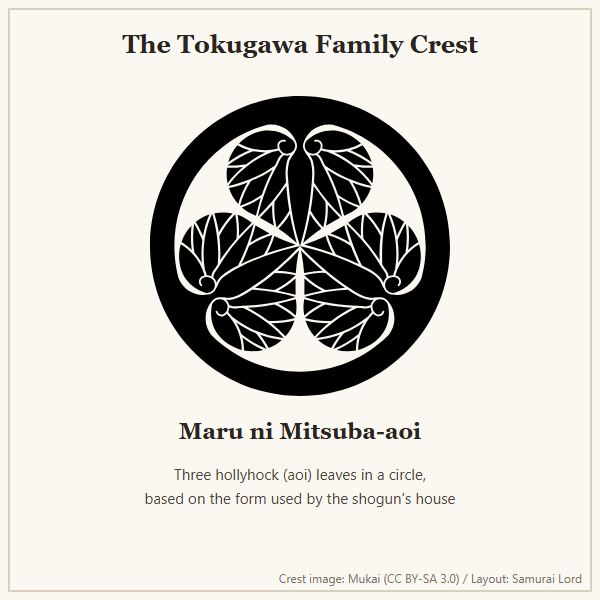
Image: The Tokugawa crest, three hollyhock leaves in a circle (based on an image by Mukai, CC BY-SA 3.0; made by Samurai Lord)
The crest: three hollyhock leaves
The Tokugawa family crest is the mitsuba-aoi, three leaves of the aoi plant (often translated "hollyhock," though it is actually a wild ginger) [Fact]. It is said to come from the hollyhock crest the Matsudaira family already used; its origin is linked to the Kamo Shrines of Kyoto and other theories [Debated]. In the Edo period it became a special crest that only the shogun's family and a few related houses could use.
The banner: "Leave this defiled world, seek the Pure Land"
Ieyasu's best-known banner reads Onri edo, gongu jōdo, a phrase from Pure Land Buddhism meaning "leave this defiled world and seek the Pure Land." He is said to have received it from the head priest of Daiju-ji after Okehazama [Legend].
The Kindami and Shida armors
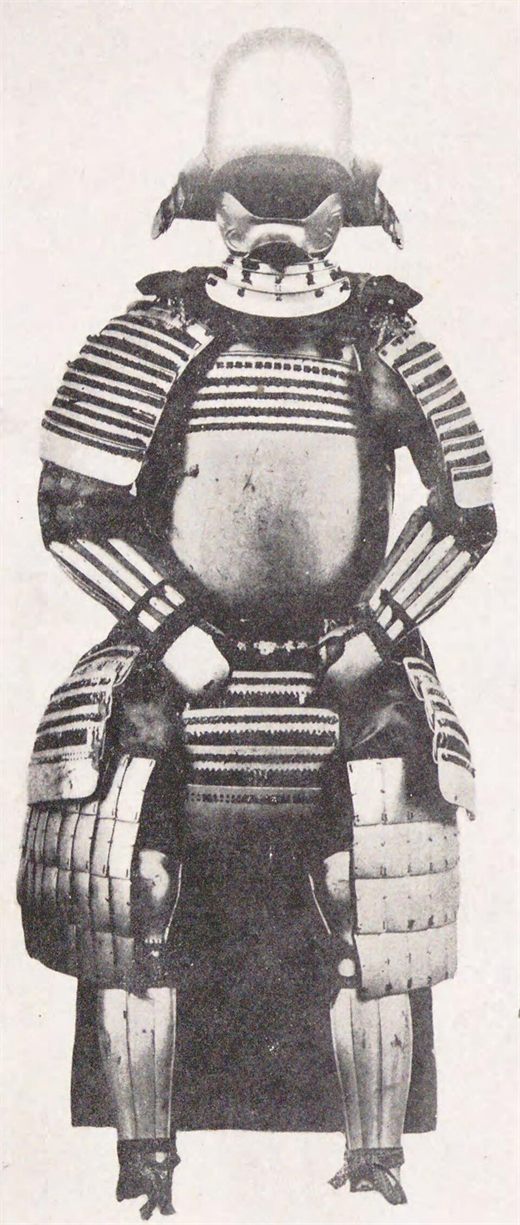
Image: The Kindami armor (Kunōzan Tōshō-gū, Shizuoka; Important Cultural Property). From the 1932 Kokushi Daizukan.
Ieyasu's most famous armor is the Kindami armor, lacquered gold all over. It is said to be the armor he wore as a young man when he carried supplies into Ōdaka Castle just before the Battle of Okehazama, and it survives at Kunōzan Tōshō-gū [Legend].
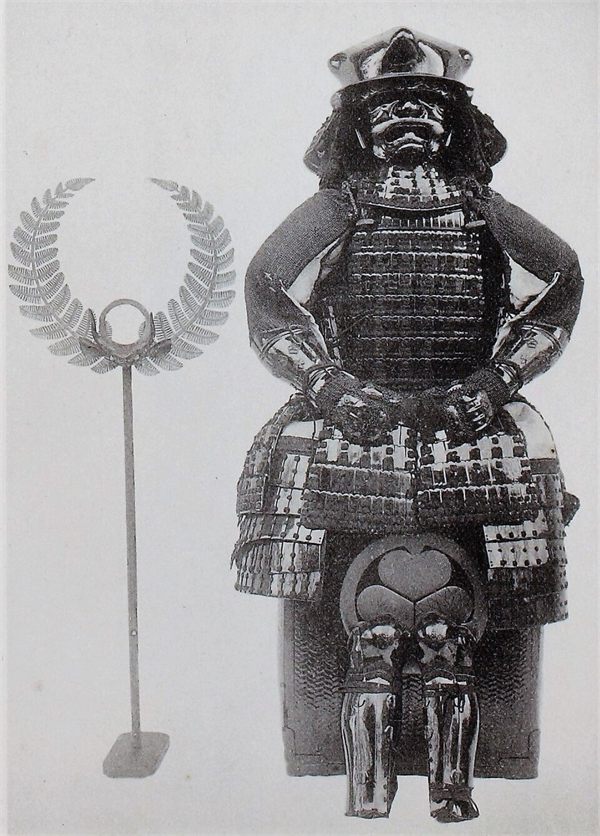
Image: The Shida armor (Kunōzan Tōshō-gū; Important Cultural Property). From the 1915 Bijutsu Gahō.
Another famous suit is the Shida armor, whose helmet bears a crest shaped like a fern (shida) leaf. It is said to have been worn at Sekigahara, and a story says Ieyasu had it made after seeing it in a dream [Legend].
Where Is Tokugawa Ieyasu Buried? Nikkō Tōshō-gū and Kunōzan Tōshō-gū
The Short Answer
- As he wished, Ieyasu was buried on Mount Kunō (Shizuoka) on the night he died, and Kunōzan Tōshō-gū was built there
[Fact] - The following year, 1617, the 2nd shogun Hidetada enshrined him at Nikkō (Tochigi), the origin of Nikkō Tōshō-gū
[Fact] - Where his remains lie today is explained differently by the two shrines and has never been settled
[Debated]
Kunōzan Tōshō-gū
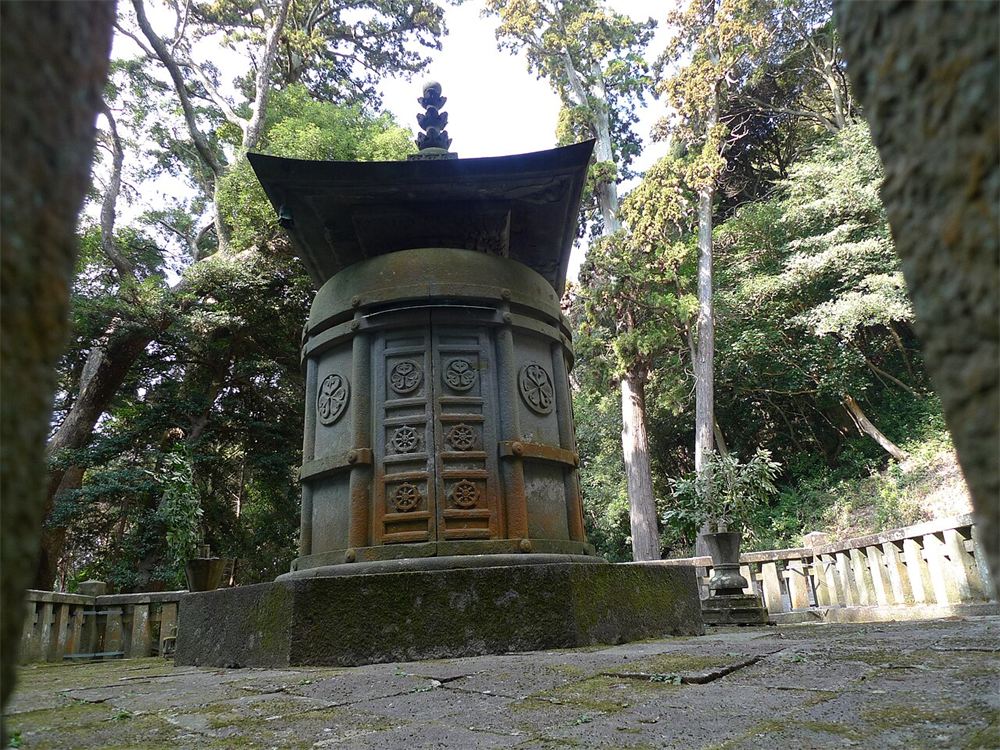
Image: The stone pagoda at Ieyasu's tomb, Kunōzan Tōshō-gū. Photo: Motokoka (CC BY-SA 4.0 / Wikimedia Commons)
Kunōzan Tōshō-gū was built on Mount Kunō on Hidetada's orders, the year after Ieyasu died. The shrine explains that Ieyasu's remains were buried on Mount Kunō, and that at Nikkō his spirit was ceremonially divided and enshrined (kanjō).
Nikkō Tōshō-gū
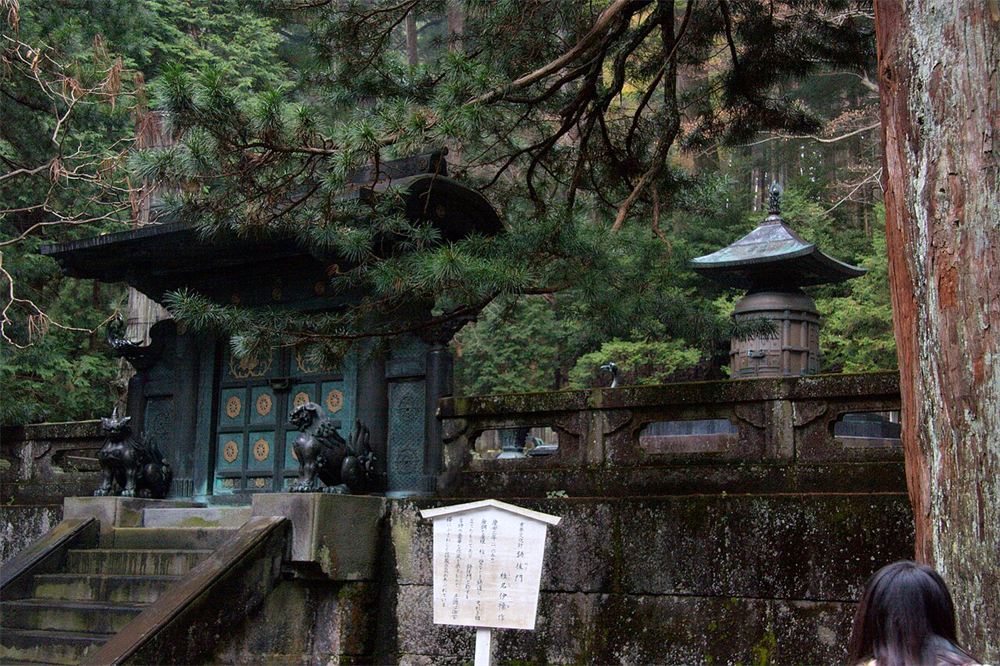
Image: The pagoda at the inner shrine of Nikkō Tōshō-gū. Photo: KimonBerlin (CC BY-SA 2.0 / Wikimedia Commons)
Nikkō Tōshō-gū explains that, following his will, Ieyasu was moved from Mount Kunō to Nikkō and enshrined there in the spring of 1617, after the first anniversary of his death. Most of the shrine's dazzling buildings today were rebuilt on the orders of the 3rd shogun, Iemitsu.
Why Nikkō? A common explanation is that Nikkō lies due north of Edo, so Ieyasu could guard Edo and the Kantō from there—but Ieyasu himself never wrote down his reasons [Debated].
Places connected with Ieyasu
| Place | Location | Connection |
| Okazaki Castle | Okazaki, Aichi | Where he was born; his base after independence |
| Daiju-ji Temple | Okazaki, Aichi | Family temple of the Matsudaira; holds his memorial tablet as he wished |
| Hamamatsu Castle | Hamamatsu, Shizuoka | His castle for about 17 years from 1570 |
| Sunpu Castle | Shizuoka, Shizuoka | Where he spent his boyhood and old age, and where he died |
| Edo Castle | Chiyoda, Tokyo (today's Imperial Palace) | His seat from 1590; the heart of the shogunate |
| Kunōzan Tōshō-gū | Shizuoka, Shizuoka | Where he was first buried |
| Nikkō Tōshō-gū | Nikkō, Tochigi | Where he was enshrined the next year |
| Zōjō-ji Temple | Minato, Tokyo | Where his funeral was held, as he wished |
Did Ieyasu Have a Body Double? Height, Looks, and Favorite Food
Was Ieyasu replaced by a body double?
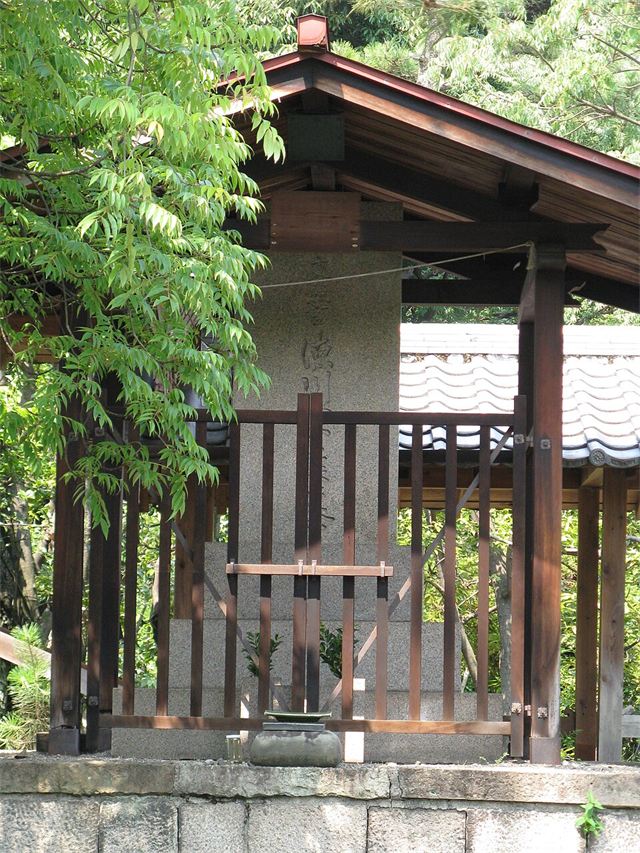
Image: Stone monument said to be Ieyasu's grave at Nanshū-ji Temple, Sakai, Osaka. Photo: KENPEI (CC BY-SA 3.0 / Wikimedia Commons)
One theory says the real Ieyasu died partway through his life and was replaced by a body double. The best-known versions are the switch proposed in 1902 by Muraoka Sōichirō in his book Shigi: Tokugawa Ieyasu Jiseki, and the legend that Ieyasu was killed in the summer campaign at Osaka and secretly buried at Nanshū-ji in Sakai [Folk belief].
There is no reliable record of any switch, and historians do not support the theory. In the Nanshū-ji legend, Gotō Matabei—the warrior said to have speared Ieyasu—had in fact already died in battle the day before, so the story does not add up [Folk belief].
How tall was he, and what did he look like?
Judging from the size of a robe he wore, Ieyasu is estimated to have been about 155–160 cm (5 ft 1 in to 5 ft 3 in) tall [Widely accepted]. The Spaniard Rodrigo de Vivero, who met him, described him as an old man of medium height with a dignified, pleasant face, and noted that he was stout [Fact: Rodrigo de Vivero's account]. The plump figure in his portraits may be close to how he looked in old age.
What did he like to eat?
Ieyasu is said to have liked barley rice and fish and often ate simmered vegetables, keeping the simple diet of his days on campaign even after he came to power [Legend].
Frequently Asked Questions
Which shogun was Tokugawa Ieyasu?
He was the first shogun of the Tokugawa (Edo) shogunate. He became shogun in 1603 and handed the title to his son Hidetada, the 2nd shogun, in 1605.
When did Tokugawa Ieyasu unify Japan?
It depends on what you count. He took political control at Sekigahara in 1600, founded the shogunate in 1603, and ended the last major war by destroying the Toyotomi at Osaka in 1615.
How old was Tokugawa Ieyasu when he died?
He died in 1616 at the age of 73 (75 by the traditional Japanese count), a very long life for his time.
Is Toranaga in Shōgun based on Tokugawa Ieyasu?
Yes. Lord Yoshii Toranaga in James Clavell's novel Shōgun (1975) and its TV adaptations, including the 2024 series, was inspired by Ieyasu, and the English pilot John Blackthorne by William Adams, who really did serve Ieyasu. But the story is fiction: names, events, and characters were changed freely, so it should not be read as history.
Did William Adams really become a samurai under Ieyasu?
Yes. The English navigator William Adams reached Japan in 1600, became one of Ieyasu's advisers on ships and foreign affairs, and was given samurai status and an estate on the Miura Peninsula. In Japan he is known as Miura Anjin, "the pilot of Miura."
How much older were Hideyoshi and Nobunaga than Ieyasu?
Hideyoshi was born in 1537 and Ieyasu in January 1543, so Ieyasu was about six years younger. Nobunaga (born 1534) was about nine years older than Ieyasu.
Summary: Who Was Tokugawa Ieyasu?
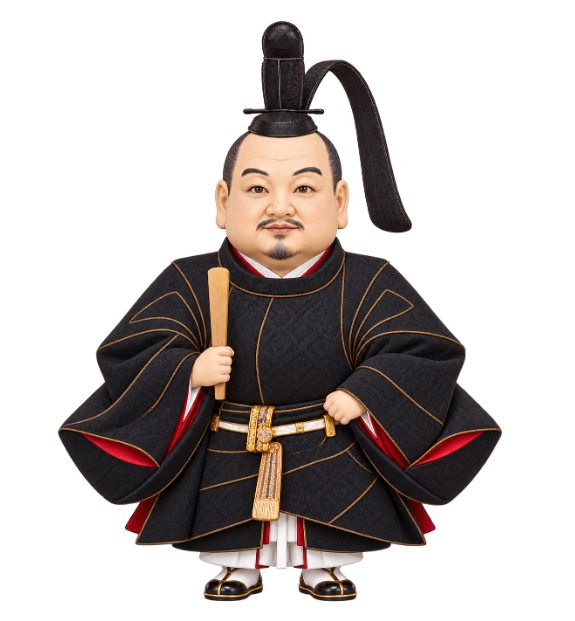
Tokugawa Ieyasu was a warlord who spent his childhood as a hostage, survived crises such as the defeat at Mikatagahara and the escape through Iga, won the Battle of Sekigahara, and founded the Edo shogunate in 1603. He passed the shogunate to Hidetada early, destroyed the Toyotomi at Osaka, and laid the foundation for over 250 years of Tokugawa rule.
At the same time, many famous stories about him—the tempura that killed him, the origin of the frowning portrait, the cuckoo verse, the "long journey with a heavy load" testament—were created or embellished later. The records show a more human Ieyasu: a man unusually careful about his health, who valued thrift and learning.
To learn more about the people of his time, read about his ally Oda Nobunaga, Toyotomi Hideyoshi, to whom he later submitted, and Hideyoshi's brother Toyotomi Hidenaga, Akechi Mitsuhide, who caused the Honnō-ji Incident, and Kuroda Kanbei, who fought in Kyushu at the time of Sekigahara.
The realm went not to the man who grabbed it fastest, but to the one who survived to the end. That is what Ieyasu's life teaches.
So many famous stories came later! The Ieyasu in the records feels much more real to me.
Sources & How This Article Was Written
This article is based mainly on the following records and research:
- Records from his own time: the Honkō Kokushi Nikki (Sūden), the Shinchō Kōki (Ōta Gyūichi), the Ietada Nikki (Matsudaira Ietada), Ieyasu's letters and documents, and Rodrigo de Vivero's account of Japan
- Books compiled in the Edo period and later: the Tokugawa Jikki, the Mikawa Monogatari (Ōkubo Tadataka), the Mikawa Go-fudoki, the Kasshi Yawa (Matsura Seizan), Edo-period anecdote collections, and others—the source of many anecdotes, labeled
[Legend]or[Folk belief]in this article - Research and references: National Archives of Japan, "Tokugawa Ieyasu: His Life as Seen through the Shogunal Library" (online exhibition); research at the Tokugawa Art Museum (Hara Fumihiko on the frowning portrait, 2015); Watanabe Daimon's article (Gentosha plus); studies of the Tsukiyama incident by Kuroda Motoki, Shiba Hiroyuki, and others; the histories published by Kunōzan Tōshō-gū and Nikkō Tōshō-gū; the National Diet Library's Collaborative Reference Database; news reports on the head of the Tokugawa house—all in Japanese
- Images: the portrait by Kanō Tan'yū (Osaka Castle Museum), the frowning portrait (Tokugawa Art Museum), the portrait of Lady Tsukiyama (Sairai-in), and the old photos of the testament and the Kindami and Shida armors are public-domain images from Wikimedia Commons; the photo of the Iga marker (by Asset utilitist) is CC0; the photos of the Sekigahara command post (by そらみみ) and Nanshū-ji (by KENPEI) and the crest (by Mukai) are under CC BY-SA 3.0; the photo of the Kunōzan pagoda (by Motokoka) is CC BY-SA 4.0; and the photo of the Nikkō pagoda (by KimonBerlin) is CC BY-SA 2.0. The charts and illustrations are original to Samurai Lord
What the Labels Mean
[Fact]Confirmed by sources from the period ([Fact: …]names the source)[Widely accepted]The view held by most historians[Debated]Historians disagree[Unknown]No source tells us[Legend][Fiction][Folk belief]Stories created later, or claims with little evidence ([Legend: …]names the book where the story appears)
This article was written by the Samurai Lord editorial team and is revised as new research and reader feedback come in. If you spot an error, please let us know through our contact form (in Japanese) and we will check and correct it.
Read in Japanese
This article is also available in Japanese: 徳川家康とは何をした人?死因・性格・墓・子孫を史実で解説