Ask anyone to name the most famous warlord of Japan's Sengoku period—the “Warring States” era of the 15th and 16th centuries—and the answer is almost always Oda Nobunaga (1534–1582).
But if someone asks, “So what did he actually do?” it can be surprisingly hard to answer.
This article explains Nobunaga's life, achievements, and death, along with his family crest, famous words, height, and favorite foods—and even Yasuke, the African man who served him—all based on historical sources.
To help you tell history from legend, key points are tagged: [Fact] confirmed by historical records, [Widely accepted] supported by most historians, [Debated] several competing theories, and [Legend] later stories, dramas, or folklore.
.jpg)
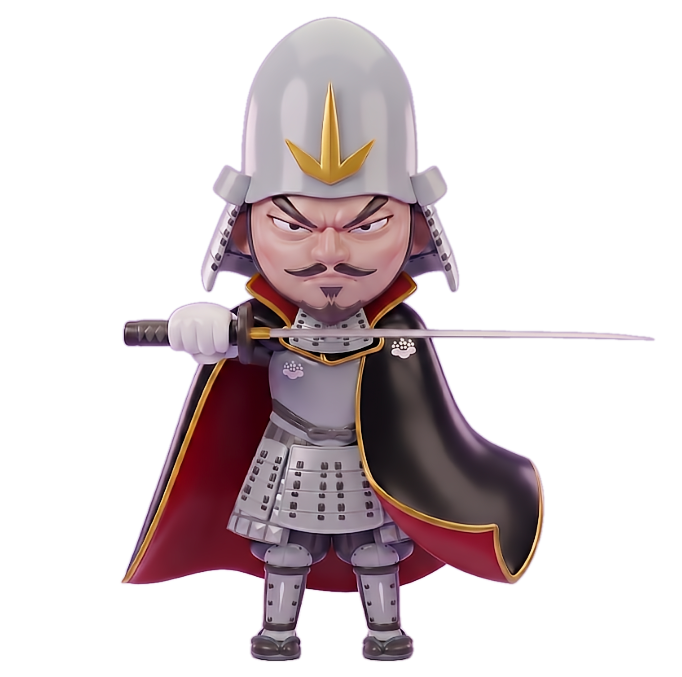
I am Uesugi Kenshin. I lived in the same age as Nobunaga—a rival of sorts, you might say. Today, young Masamune and I will be your guides to this man.
.jpg)
I'm Date Masamune! When Lord Nobunaga died, I was only fifteen. So I'll be the one asking all the simple questions. Kenshin, lead the way!
What Did Oda Nobunaga Do?

In a word, Oda Nobunaga was “a reformer who brought Japan's age of civil war to the brink of its end.”
Key Events
Youth ⇒ Prime ⇒ Middle age
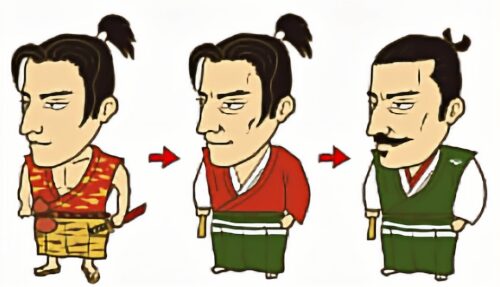
- Started out as a minor daimyo (feudal lord) in Owari Province (today's western Aichi Prefecture)
- Became famous overnight by defeating the powerful warlord Imagawa Yoshimoto at the Battle of Okehazama
- Expanded his power through new methods, such as firearms and economic policies
- Ended the Muromachi (Ashikaga) shogunate and came closer than anyone to unifying Japan
- Fell before reaching his goal when his retainer Akechi Mitsuhide rebelled (the Honnō-ji Incident)
.jpg)
I see—“a reformer who was one step away from ruling all of Japan.” …And the one who stood in the way of that last step was Akechi Mitsuhide, right?
.jpg)
Exactly. Let us go through it step by step.
Profile at a Glance
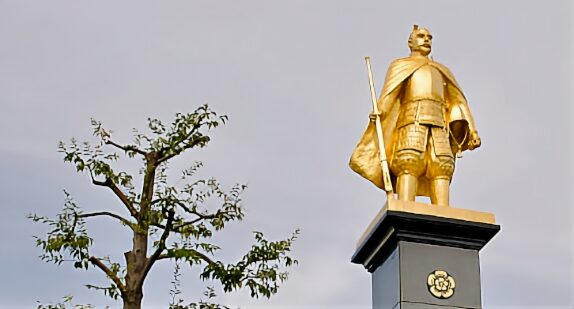
Image: Golden statue of Oda Nobunaga
*You will often see the claim that Nobunaga stood 180 cm (5'11") tall, but it has little basis[Legend]. Based on life-size wooden statues, his armor, and the records of the Portuguese missionary Luís Fróis—who described him as “of medium height and slender build”—the mainstream estimate today is around 166–170 cm[Widely accepted].
Oda Nobunaga's Life: A Timeline
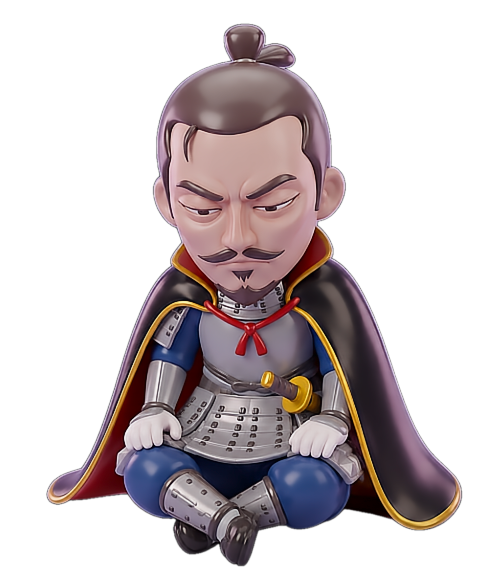
*Ages are approximate, counted the modern way (year minus 1534). Under the traditional Japanese system, add one year.
Nobunaga's life was one long string of choices like this: never lean on old authority, use whatever works, and cut away whatever stands in the way. He even made use of a shogun—then threw him out in the end.
But that ruthless practicality is exactly what made his rise to power so fast, isn't it?
What Made Him Great? Nobunaga's Three Big Achievements
1. He Defeated a Stronger Rival at Okehazama (How the Battle Was Fought Is Debated)
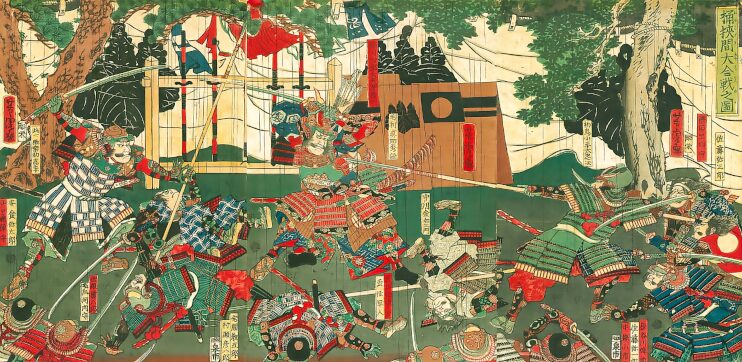
Image: “The Great Battle of Okehazama” by Utagawa Yoshitora
In 1560, Nobunaga defeated and killed the powerful warlord Imagawa Yoshimoto with only a small force. This was the Battle of Okehazama, and this single victory made his name known throughout Japan.
However, the famous image of a “surprise attack by a tiny army” is thought to include embellishments from later war chronicles, and historians still debate how the battle was actually fought[Debated].
2. He Used Firearms in an Organized Way (the “Three-Line Volley” Is Legend)
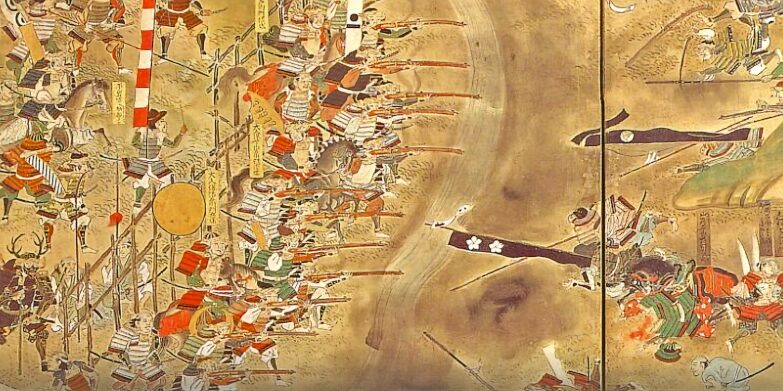
Image: Folding screen of the Battle of Nagashino
At the Battle of Nagashino in 1575, the allied armies of Nobunaga and Tokugawa Ieyasu defeated the Takeda forces using large numbers of guns [Fact].
On the other hand, the famous “three-line volley” (three ranks of 1,000 gunners taking turns to fire), long familiar from Japanese textbooks, is widely thought to be a later invention, and the number of guns is also disputed.[Debated]
3. He Built Systems That Kept the Economy Moving (Rakuichi Rakuza)

Image: Rakuchū Rakugai-zu (Scenes in and around Kyoto)
Through rakuichi rakuza (“free markets, open guilds,” which let merchants trade freely) and by abolishing toll barriers, he improved the flow of people and money. Similar policies existed before Nobunaga, but he carried them out on a large scale[Widely accepted].
So he wasn't just strong in battle—he was a man of economics, too. Who knew!
What Was Oda Nobunaga's Personality Like?
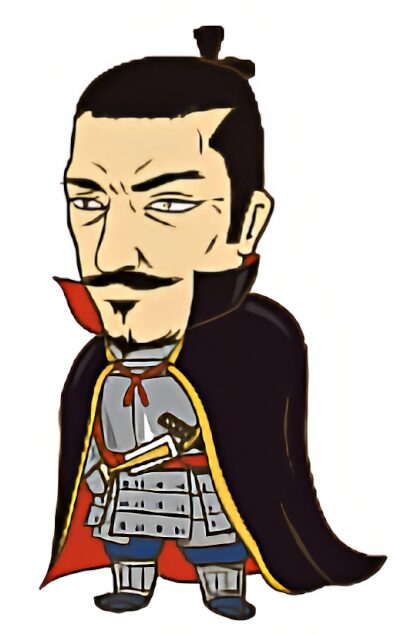
Historical records and the accounts of Luís Fróis portray Nobunaga as rational, fond of new things, and impatient[Widely accepted]. He also showed a strong interest in goods and culture from Europe, which the Japanese of the time called Nanban (“southern”) lands.
At the same time, he was extremely harsh toward those who opposed him, as seen in the burning of Mount Hiei [Fact].
However, recent archaeological excavations have led some historians to reconsider how large the destruction actually was.[Debated]
Some call him “cruel,” others “rational.” Both are probably true. How a man looks depends on where you stand.
Little-Known Sides of Nobunaga
A Sweet Tooth? The Story of Konpeitō
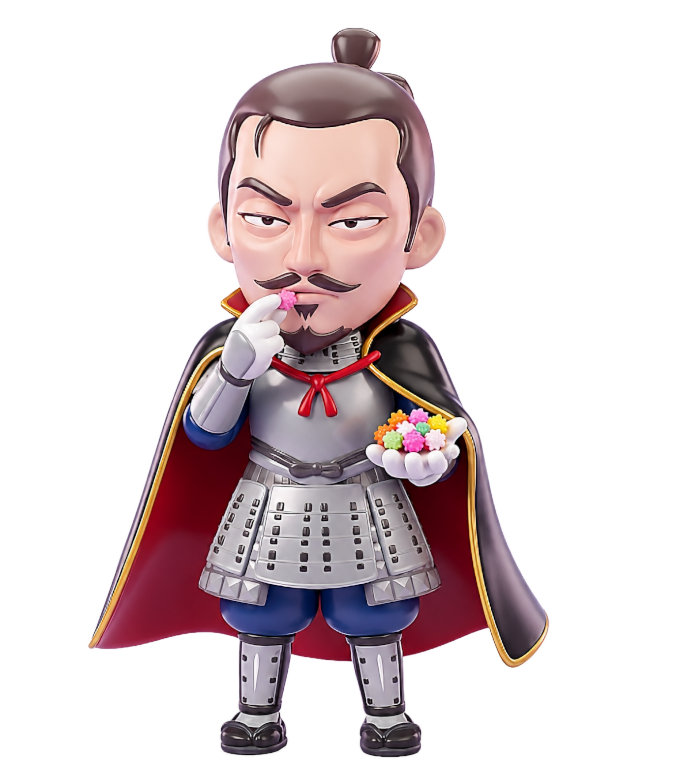
In 1569, when the missionary Luís Fróis met Nobunaga in Kyoto, he is said to have presented him with konpeitō (sugar candy) in a glass flask.
Nobunaga is said to have been delighted by this rare European sweet. In fact, he reportedly loved sweets such as dried persimmons, and he even used them as rewards and gifts.
A Fan of Strong Flavors [Likely legend]
According to an anecdote about one of his cooks, Nobunaga dismissed refined, lightly seasoned Kyoto-style cooking as “watery” and preferred salty, strongly flavored food. He was also a practical man who often made do with yuzuke (rice with hot water poured over it) for a quick meal.
He Loved Sumo
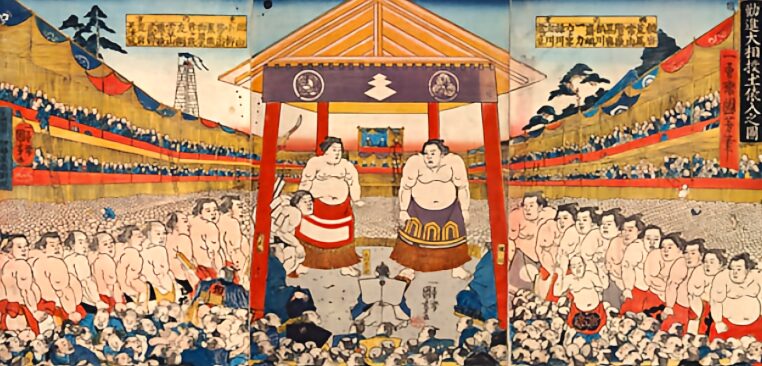
Image: Kanjin Ōzumō Dohyō-iri no Zu (Sumo Ring-Entering Ceremony) by Utagawa Kuniyoshi
Nobunaga was a great fan of sumo wrestling. The Shinchō Kōki (The Chronicle of Lord Nobunaga, written by his retainer Ōta Gyūichi) records that he held large sumo tournaments, including one at Azuchi in 1578 that gathered about 1,500 wrestlers [Fact].
Candy and sumo!? He was the mighty conqueror of the Warring States, yet that makes him feel a little more human.
He had a human side, did he not? It is these glimpses of the real man that make history worth remembering.
Who Was Yasuke? The African Man Who Served Nobunaga
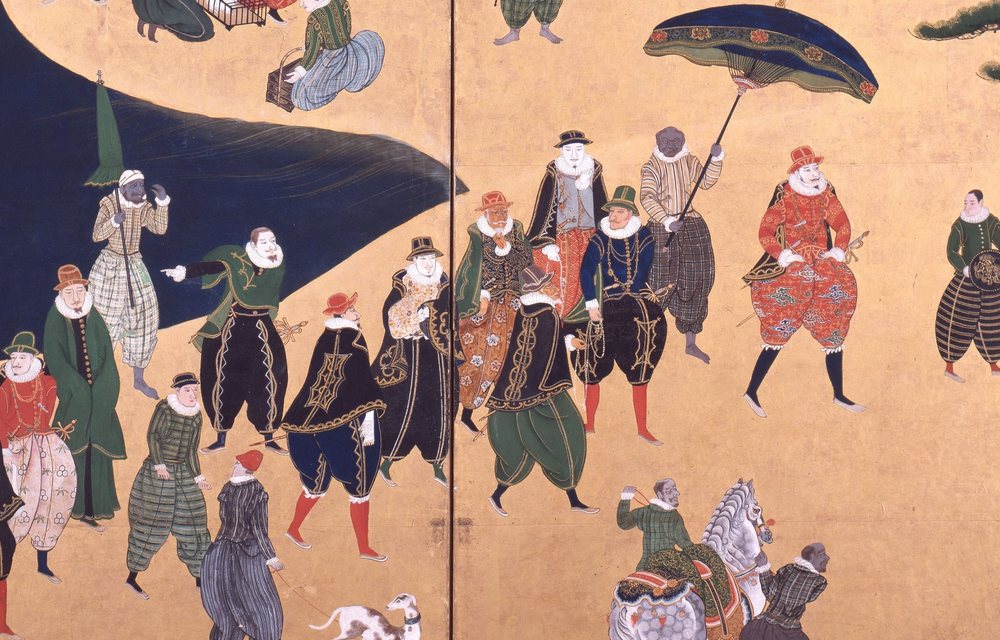
Image: Detail of a Nanban byōbu (a folding screen depicting Portuguese visitors to Japan) showing an African attendant. This is not a portrait of Yasuke himself.
Who Was Yasuke?
- He originally came to Japan with the Jesuit missionary Alessandro Valignano
[Widely accepted] - Nobunaga took a strong interest in Yasuke, paid him a stipend, and kept him in his service
[Fact: Ietada's Diary] - In its own words, the Shinchō Kōki describes Yasuke as “black as an ox” and “stronger than ten men”
[Fact]
“Was Yasuke a samurai?” has become a hotly debated question in recent years, but in reality it is difficult to determine his exact status from the historical sources. Some researchers read the gift of a residence and a sword as a sign that he was treated as a retainer, while others take a more cautious view. [Debated]
The residence and the sword are mentioned in only one manuscript of the Shinchō Kōki. For what the records actually say, see Who Was Yasuke? His Life, Samurai Status and Fate.
According to Jesuit reports, Yasuke was captured by Mitsuhide's troops during the Honnō-ji Incident and handed over to the Jesuits, but what became of him after that is unknown. [Debated]
Cause of Death and Final Moments: The Honnō-ji Incident
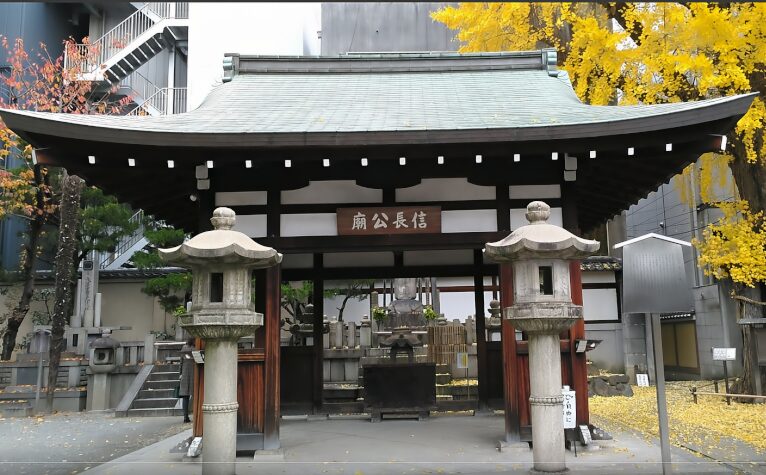
Image: Mausoleum of Oda Nobunaga at Honnō-ji temple
On June 21, 1582 (the 2nd day of the 6th month in the Japanese calendar of the time), Nobunaga was staying at Honnō-ji temple in Kyoto when he was attacked by the rebel forces of his own retainer, Akechi Mitsuhide, and he is said to have taken his own life. [Fact]
This is the Honnō-ji Incident. Nobunaga's body is said never to have been found. [Fact] He was 49 by the traditional Japanese count.
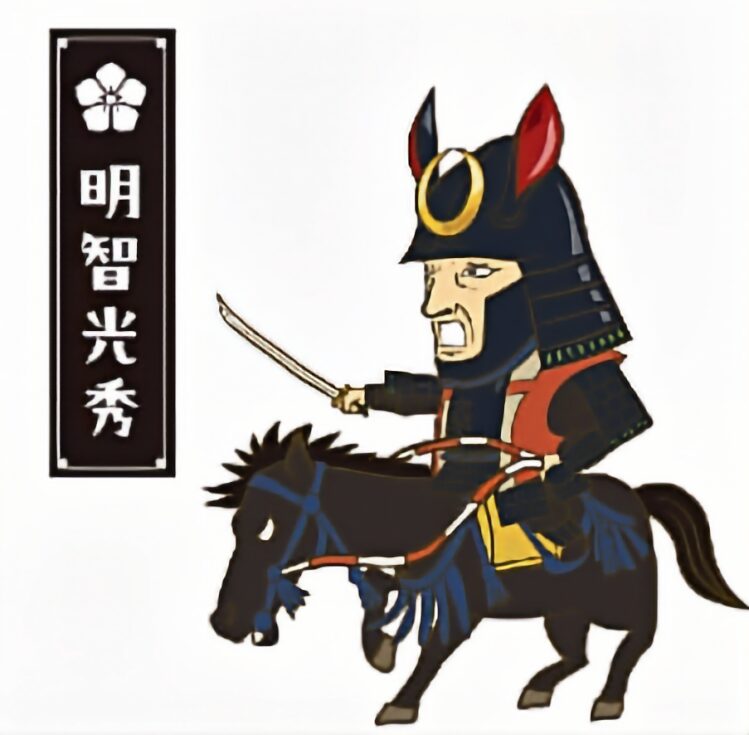
Image: Akechi Mitsuhide
• Many “mastermind” theories exist (the imperial court, Ashikaga Yoshiaki, Hashiba [Toyotomi] Hideyoshi, Tokugawa Ieyasu, the Jesuits…), but none has decisive evidence, and the standard view is that Mitsuhide acted on his own.[Debated]
• Mitsuhide's motive—a grudge, ambition, fear for his future, and more—also remains unsettled.[Debated]
• There is also a survival theory claiming that Nobunaga secretly escaped, but it has little basis and is best enjoyed as historical romance.[Legend / folklore]
Just one step away—and then betrayed by one of his own… In the Warring States, you truly never knew what would happen until the very end.
Family Crest, Famous Words, and Other Questions
His Family Crest: Oda Mokkō
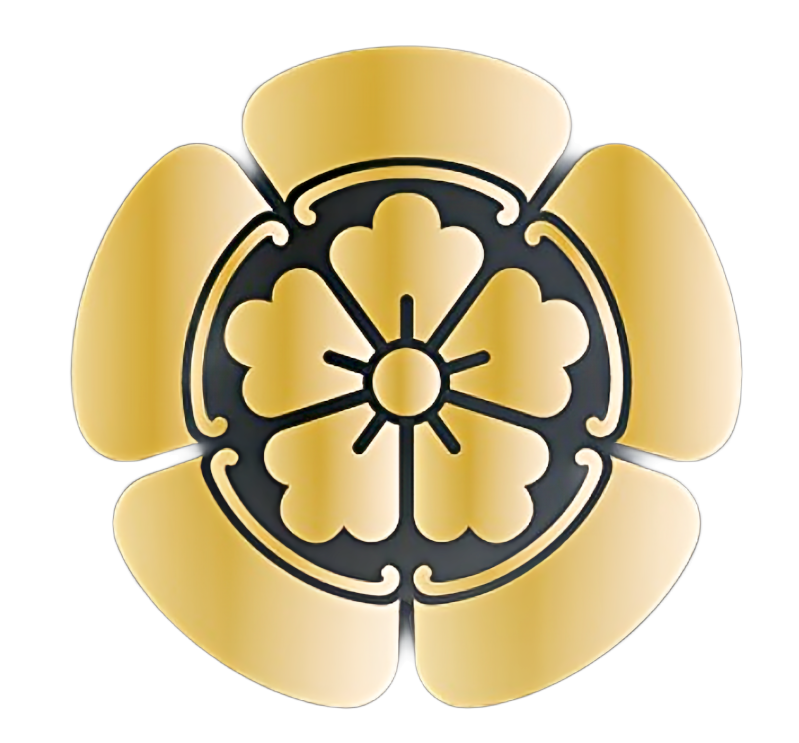
Nobunaga's best-known crest is the mokkō design, said to be a stylized cross-section of a gourd or cucumber. He is also said to have used several different crests over his lifetime.
The Famous Line “Fifty Years of Human Life”
Nobunaga loved to dance a passage from Atsumori, a piece of kōwaka-mai (a form of ballad drama): “Ningen gojū-nen, gekaten no uchi wo kurabureba…” (“Fifty years of human life—compared with the ages of the heavens, they are but a fleeting dream…”). The words speak of how short life is, and they have become famous as an expression of Nobunaga's view of life and death.
*Many people assume that “Fifty years of human life” is a line Nobunaga wrote himself, but it is a passage from Atsumori, not his own creation [Fact].
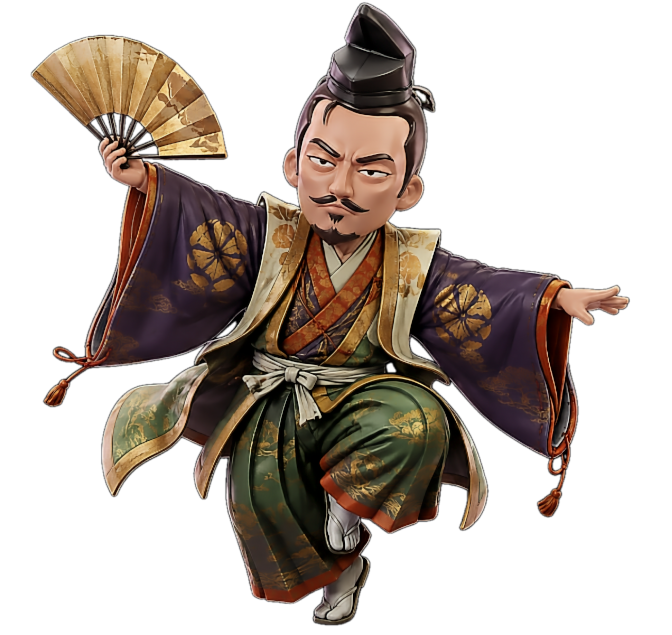
Did He Really Say “If the Cuckoo Won't Sing, Kill It”? [Legend / fiction]
That verse was created in the Edo period (1603–1868) as one of a famous set of three verses comparing Nobunaga, Hideyoshi, and Ieyasu. It is not something Nobunaga actually said; it spread because it captures his personality so well.
Key People in Nobunaga's Life
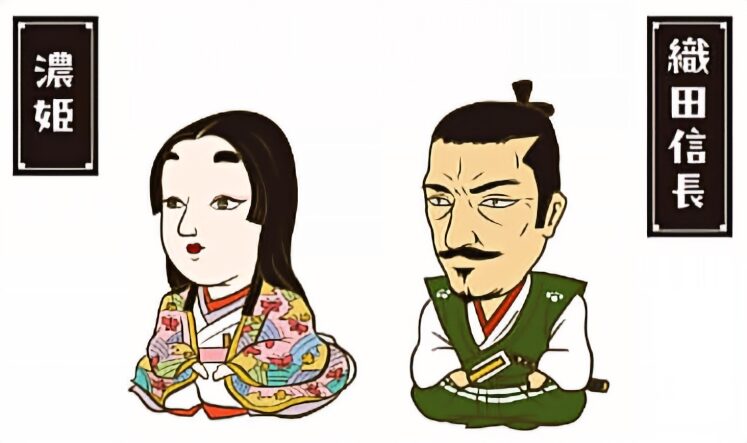
Image: Nōhime (left) and Oda Nobunaga (right)
Castles and Historic Sites to Visit
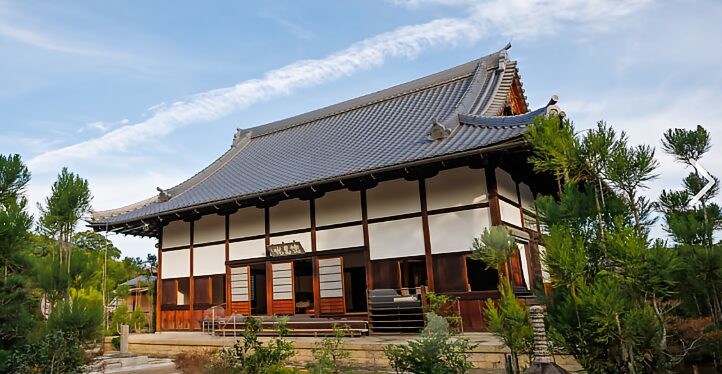
Image: Sōken-in, a subtemple of Daitoku-ji
- Kiyosu Castle / Gifu Castle / Azuchi Castle ruins: Visit them in order to trace how Nobunaga's base moved over the years
- Today's Honnō-ji was moved to a different location after the incident, so it is not the actual site where Nobunaga died
- Graves: Several temples in Kyoto honor Nobunaga, including Sōken-in at Daitoku-ji and Amida-ji
Frequently Asked Questions (FAQ)
What did Oda Nobunaga do?
He was a reformer who expanded his power during the Sengoku period, ended the Muromachi shogunate, and came closer than anyone to unifying Japan.
When did Oda Nobunaga live?
He lived from 1534 to 1582, during the Sengoku (Warring States) period and into the Azuchi-Momoyama period.
How did Oda Nobunaga die?
In 1582, during the Honnō-ji Incident, he was attacked by his retainer Akechi Mitsuhide and took his own life.
How old was he when he died?
He was 49 by the traditional Japanese count (about 48 in modern terms).
Who was Oda Nobunaga's wife?
His principal wife was Nōhime (also known as Kichō), believed to be the daughter of Saitō Dōsan.
Did he write the famous line “Fifty years of human life”?
No. It is a passage from the kōwaka-mai piece Atsumori, which Nobunaga loved to dance.
How tall was Oda Nobunaga?
He is estimated to have been about 166–170 cm (5'5"–5'7"), which was tall for his time. (The popular 180 cm claim has little basis.)
Does Oda Nobunaga have living descendants?
He is believed to have descendants. For example, the Japanese figure skater Nobunari Oda says he is descended from Nobunaga (whether the line is direct is debated).
Was Yasuke a real samurai?
His exact status is hard to determine from the surviving sources. He was given a residence and a sword, which some historians see as treatment similar to a retainer's, while others are more cautious.
Is it true that Nobunaga survived?
There is little evidence for it, and it cannot be called historical fact. It is best enjoyed as a romantic legend.
Summary: Who Was Oda Nobunaga?
Oda Nobunaga was a reformer who refused to be bound by old authority, moved his era forward with new systems, and came within one step of unifying Japan.
Know both sides of him—his rational, ruthless streak and the human side that loved konpeitō and sumo—and a clearer picture of the man comes into view.
Nobunaga is famous mostly for how he died—but the truly fascinating part is how he lived.
Agreed! Next, I'd love to learn about Toyotomi Hideyoshi, who carried on Nobunaga's work, and Akechi Mitsuhide, the man who brought him down.
Read in Japanese
This article is also available in Japanese: 織田信長とは?死因・性格・家紋・名言から弥助まで史実をわかりやすく解説