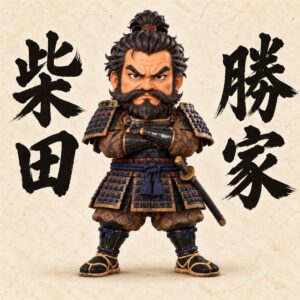
Image: An illustration of Oichi. All illustrations in this article are creative works based on the records and portraits; faces, clothing and settings are imagined.
Oichi, often called Oichi no Kata ("Lady Oichi"), was the younger sister of Oda Nobunaga, the warlord who came close to uniting Japan in the sixteenth century. She was married first to Azai Nagamasa, a lord in Ōmi Province (today's Shiga Prefecture), and had three daughters with him. After Nagamasa turned against Nobunaga and was destroyed, she married Shibata Katsuie, one of the Oda family's top generals, and in 1583 she died with him when his castle fell.
Her three daughters went on to marry into the most powerful families of the age: the eldest became the mother of Toyotomi Hideyoshi's heir, and the youngest became the wife of the second Tokugawa shogun. Novels and TV dramas have made Oichi a tragic heroine and "the most beautiful woman of the Warring States." Yet the records about her own life are surprisingly few. This article sets out what records from her time say, what later books added, and what remains unknown.
Key points are tagged: [Fact] confirmed by records from Oichi's own time, [Widely accepted] held by most historians, [Debated] historians disagree, [Unknown] not known from any source, and [Legend] or [Folk belief] for later stories and popular claims. A tag like [Fact: Shibata Taijiki] names the record.
.jpg)
I am Uesugi Kenshin. Today's subject lived through the fall of two castles in the Warring States period.
.jpg)
I'm Date Masamune! I've heard Lady Oichi was a great beauty. Is that true?
.jpg)
Where that story comes from is part of the tale. Let us look at the records.
The Short Answers
- Who was she? Oda Nobunaga's younger sister, and the wife first of Azai Nagamasa and then of Shibata Katsuie. Most sources call her Nobunaga's sister; a few Edo-period books say she was his cousin
[Widely accepted](more) - How did she die? In 1583, when Toyotomi (then Hashiba) Hideyoshi stormed Kitanoshō Castle, she died there with her husband Katsuie
[Fact: Shibata Taijiki]. She is said to have been 37, but that age comes from later records (more) - Her daughters? Chacha (Yodo-dono), Hatsu and Gō, who married Toyotomi Hideyoshi, Kyōgoku Takatsugu and Tokugawa Hidetada
[Fact](more) - Her descendants? Her grandchildren include Toyotomi Hideyori and the third shogun, Tokugawa Iemitsu; her great-granddaughter became Empress Meishō
[Fact](more)
Jump to the part you want to read:
- Who was Oichi? Quick profile
- How did Oichi die? The fall of Kitanoshō Castle
- Oichi's three daughters: Chacha, Hatsu and Gō
- Oichi's family tree and descendants
- First marriage: Azai Nagamasa
- Second marriage: Shibata Katsuie
- Was Oichi a great beauty? Her portrait
Who Was Oichi? Quick Profile
In a nutshell, Oichi was "Oda Nobunaga's sister, who was married off to an ally, survived the fall of two castles, and died beside her second husband, Shibata Katsuie".
A few terms come up often in this article:
- The Sengoku period: Japan's "Warring States" era, from the late fifteenth to the late sixteenth century, when regional lords (daimyo) fought for power
- Oda Nobunaga (1534–1582): Oichi's brother, the warlord who brought much of central Japan under his control before he was killed at Honnō-ji in 1582
- Toyotomi Hideyoshi (1537–1598): Nobunaga's general, who took over his power and unified Japan. He was called Hashiba Hideyoshi in 1583
- "no Kata": an honorific for a lady of high rank, something like "Lady"
| Item | Details | Reliability |
| Name | Ichi (市), traditionally. "Oichi no Kata" and "Odani no Kata" are later names; no record from her time gives her personal name | [Widely accepted] |
| Born | 1547 is the traditional year, worked back from her age at death in later records; 1549 and 1550 have also been suggested | [Debated] |
| Parents | Daughter of Oda Nobuhide, lord of Owari Province; her mother is unknown | [Widely accepted] |
| Brother | Oda Nobunaga. Usually described as his younger sister; some Edo-period books call her his cousin | [Widely accepted] |
| First husband | Azai Nagamasa, lord of Odani Castle in Ōmi. Married probably in late 1567 or early 1568 | [Fact] |
| Second husband | Shibata Katsuie, lord of Kitanoshō Castle in Echizen. Married in 1582 | [Fact] |
| Children | Three daughters: Chacha (Yodo-dono), Hatsu (Jōkōin) and Gō (Sūgen'in) | [Fact] |
| Died | June 14, 1583 (Tenshō 11, 4th month, 24th day), at Kitanoshō Castle in today's Fukui | [Fact] |
| Cause of death, age | Died with Katsuie as the castle fell, usually described as suicide. Said to be 37 | [Widely accepted] |
| Grave | Saikō-ji Temple in Fukui, among other places | — |
Was "Oichi" her real name?
"O" is a polite prefix and "no Kata" an honorific, so her name is given as Ichi. However, no record from her own time spells out her personal name; "Ichi" comes from later writings [Widely accepted]. Because she lived at Odani Castle, she is also called "Odani no Kata," the Lady of Odani.
Was she Nobunaga's sister or his cousin?
Oichi is usually described as a daughter of Oda Nobuhide and the younger sister of Nobunaga [Widely accepted], and Japanese encyclopedias generally treat her that way. A few books from the Edo period (1603–1868), such as the Iki Shōden, a collection of biographies of shoguns' mothers and wives, call her Nobunaga's cousin instead [Debated]. Her mother's name is unknown [Unknown].
Either way, she was a daughter of the Oda family, married off as part of Nobunaga's plans.
How Did Oichi Die? The Fall of Kitanoshō Castle
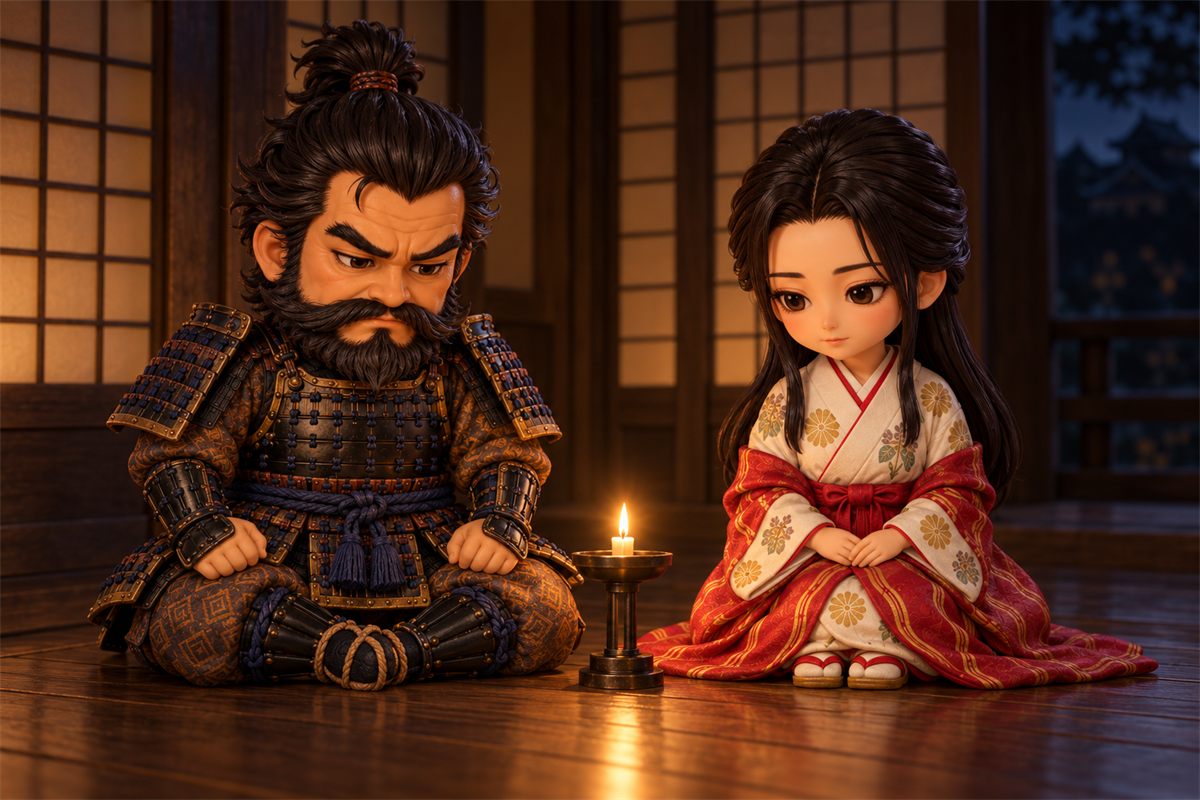
Image: An imagined scene of Katsuie and Oichi on the last night at Kitanoshō Castle. Faces, clothing and the room are imagined.
Oichi died on June 14, 1583 (the 24th day of the 4th month of Tenshō 11 in the Japanese calendar), at Kitanoshō Castle in Echizen, in today's city of Fukui. Her second husband, Shibata Katsuie, had been defeated by Hideyoshi, and when his castle was surrounded and stormed, she died with him [Fact]. Here is how it came to that.
From Nobunaga's death to the siege
- June 1582: Nobunaga is killed in the Honnō-ji Incident. The Oda family's leading generals meet at Kiyosu Castle to decide on his successor and divide his lands (the Kiyosu Conference)
- Late summer 1582 (the 8th month in the Japanese calendar): Oichi marries Shibata Katsuie and moves to his castle, Kitanoshō
- Late 1582 onward: the rivalry between Katsuie and Hideyoshi within the Oda camp grows into open conflict
- June 1583: Hideyoshi defeats Katsuie at the Battle of Shizugatake in Ōmi; Katsuie falls back to Kitanoshō
- June 13–14, 1583: Hideyoshi's army surrounds Kitanoshō, and the castle falls
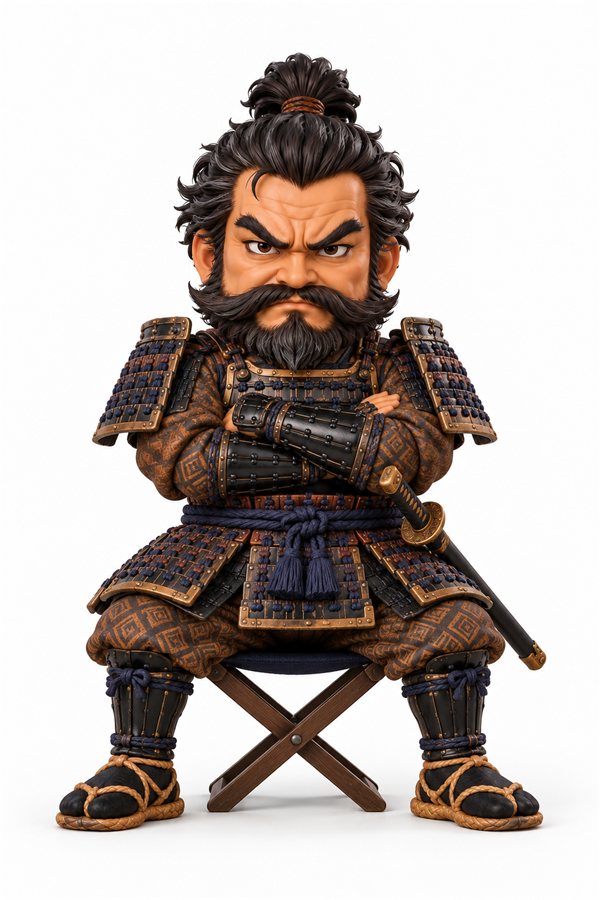
Image: An illustration of Shibata Katsuie.
Kitanoshō was the great castle Katsuie had built as his base for the Hokuriku region from 1575. In a letter to Kobayakawa Takakage of the Mōri family, dated the 15th day of the 5th month of 1583, Hideyoshi described the castle's keep as having "nine stories," suggesting a very tall tower [Fact: Mōri family documents]. Excavations, however, have not yet found the remains of the keep itself.
The last night and the daughters' escape
With the castle surrounded, Katsuie is said to have held a last banquet with his family and retainers to say farewell [Widely accepted: Shibata Taijiki]. Later accounts such as the Taikōki (1620s) add that Katsuie urged Oichi to leave the castle, but she refused and chose to die with him [Legend].
Her three daughters, Chacha, Hatsu and Gō, were sent out of the castle and handed over to Hideyoshi [Widely accepted]. Some argue that it was Nobunaga's son Oda Nobukatsu, not Hideyoshi, who took them in [Debated]. The Edo-period Keishin-in Bumi adds that Oichi wrote to Hideyoshi asking him to look after her daughters [Legend: Keishin-in Bumi].
.jpg)
So at least her daughters were saved...
Yes. And those three daughters would go on to shape the history of both the Toyotomi and the Tokugawa.
What was the cause of her death, and how old was she?
Oichi's death is usually described as suicide. The Shibata Taijiki, written in the same year by Ōmura Yūko, a writer in Hideyoshi's service, says that Katsuie stabbed his wife and family members and then cut open his own belly [Widely accepted: Shibata Taijiki]. So her death is described both as suicide and as dying at Katsuie's hand at her own wish.
She is said to have been 37 years old (by the traditional Japanese count), but this comes from later records. Since her year of birth is uncertain, her exact age cannot be confirmed [Widely accepted].
Keep in mind that the Shibata Taijiki was written to celebrate Hideyoshi's victory, and it may dramatize Katsuie's end. It should be read alongside other records.
Oichi's death poem
Source Box 1: The death poems of Oichi and Katsuie
Source: Ōmura Yūko, Shibata Taijiki (also called Shibata Kassenki; probably written in 1583), and other accounts
Oichi: 「さらぬだに 打ちぬる程も 夏の夜の 夢路をさそふ 郭公(ほととぎす)かな」
Katsuie: 「夏の夜の 夢路はかなき 跡の名を 雲井にあげよ 山郭公(やまほととぎす)」
Our translation (Oichi): Even without this, the summer night is so short that one barely sleeps; yet the cuckoo's call seems to lure me down the path of dreams.
Our translation (Katsuie): My life was brief as a dream on a summer night; mountain cuckoo, carry my name up to the clouds.
What it tells us: the castle fell in early summer by the old calendar, when the hototogisu (lesser cuckoo) sings. The two poems answer each other with "summer night," "path of dreams" and "cuckoo." In some versions, Oichi's poem reads "lures me to parting" instead of "down the path of dreams."
There is no way to prove that the two of them actually composed these poems, but it matters that they appear in a record written in the year the castle fell [Widely accepted].
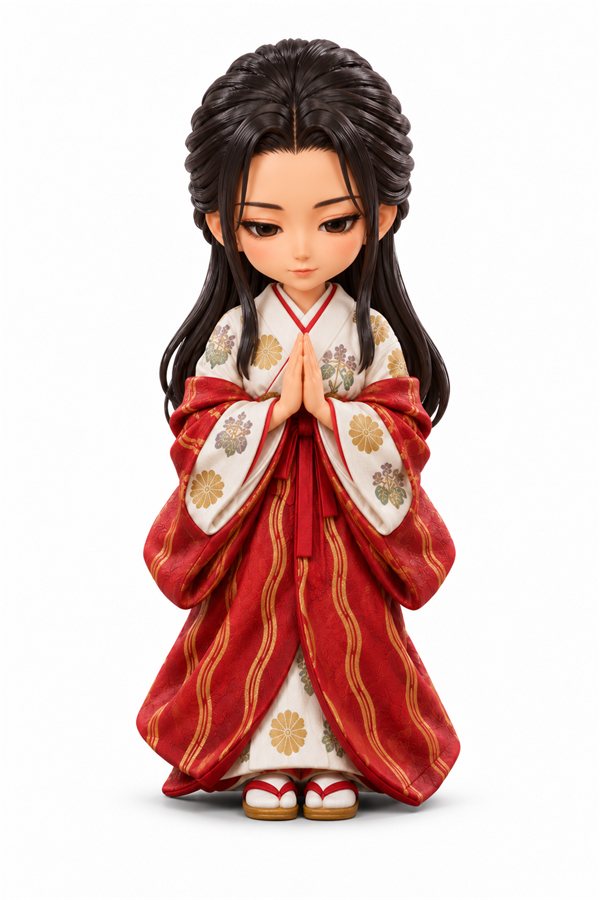
Image: An illustration of Oichi.
How much of the story is certain?
| Story | Source | Our verdict |
| Kitanoshō fell and Katsuie died | Hideyoshi's letter (1583); Shibata Taijiki (1583) | [Fact] |
| Oichi died with Katsuie | Shibata Taijiki and others | [Fact] |
| Katsuie held a farewell banquet | Shibata Taijiki and others | [Widely accepted] |
| Oichi refused to leave the castle | Taikōki and other later books | [Legend] |
| Her daughters were sent to Hideyoshi | Later records | [Widely accepted] |
| She wrote to Hideyoshi about her daughters | Keishin-in Bumi (Edo period) | [Legend] |
| She was 37 | Later records | [Widely accepted] |
Oichi's Three Daughters: Chacha, Hatsu and Gō
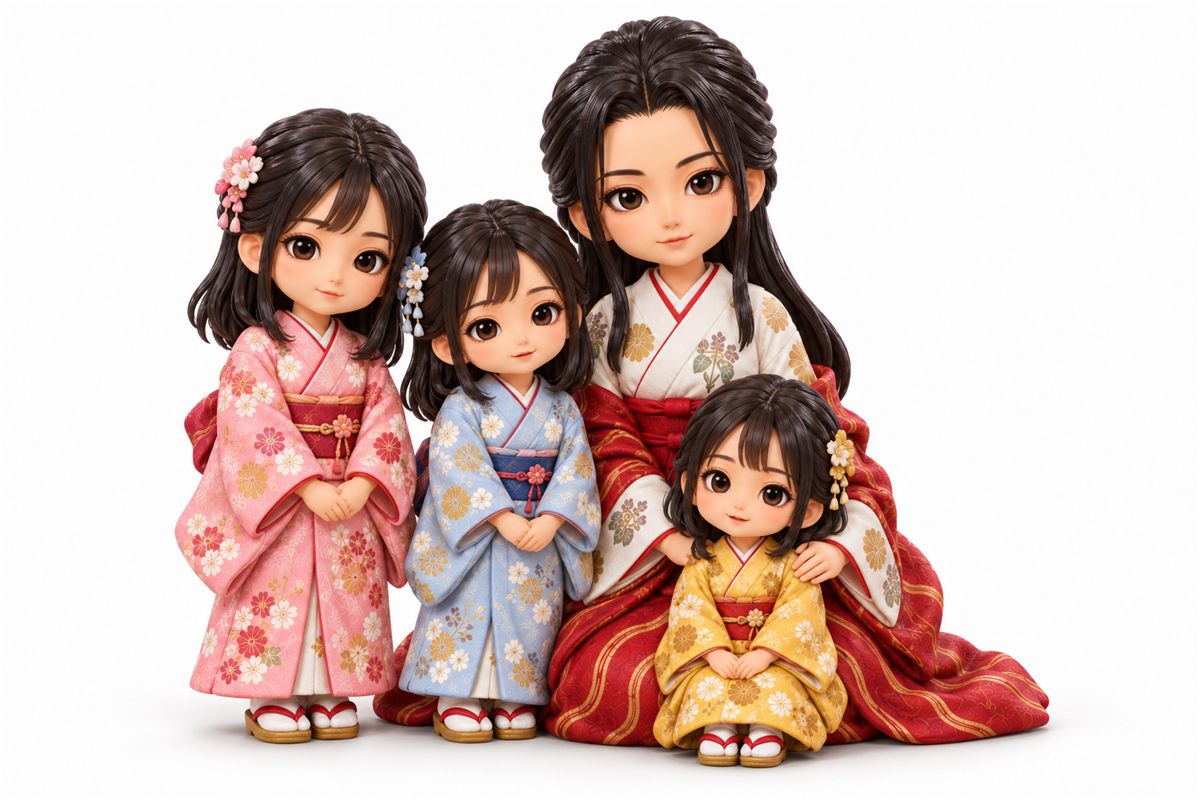
Image: An imagined illustration of Oichi and her three daughters.
Oichi and Azai Nagamasa had three daughters: Chacha (later Yodo-dono), Hatsu (later Jōkōin) and Gō (later Sūgen'in), known in Japan as the "Azai sisters." They survived the fall of two castles, Odani and Kitanoshō, and married into the families at the center of power [Fact].
| Daughter | Born | Husband | Later life |
| Chacha (Yodo-dono) | c. 1569 (debated) | Toyotomi Hideyoshi (as a consort) | Mother of Hideyori. After Hideyoshi's death, a leading figure of the Toyotomi house. Died with Hideyori at the fall of Osaka Castle in 1615 |
| Hatsu (Jōkōin) | c. 1570 (debated) | Kyōgoku Takatsugu (principal wife) | Became a nun after her husband's death. Served as a peace envoy between the Toyotomi and Tokugawa during the Siege of Osaka. Died 1633 |
| Gō (Sūgen'in) | 1573 | Tokugawa Hidetada (principal wife; her third marriage) | Wife of the second shogun and mother of Iemitsu and Masako. Died 1626 |
During the Siege of Osaka (1614–15), the eldest, Chacha, was on the Toyotomi side, while the youngest, Gō, was the shogun's wife. The middle sister, Hatsu, went between them to try to make peace [Fact].
Chacha (Yodo-dono): Hideyoshi's consort
Chacha became a consort of Hideyoshi, the man who had brought about her mother's death. She bore him a son, Tsurumatsu, in 1589 (he died in early childhood), and in 1593 his heir, Hideyori. After Hideyoshi died, she was the central figure of the Toyotomi house as Hideyori's mother, and in 1615 she died with Hideyori when Tokugawa Ieyasu took Osaka Castle [Fact]. The name "Yodo-dono" comes from Yodo Castle near Kyoto, which Hideyoshi gave her.
Fans of the TV series Shōgun (2024) may recognize her: the character Lady Ochiba, mother of the young heir, is based on Yodo-dono. The series is fiction built on real history [Fiction].
Hatsu (Jōkōin): the Kyōgoku family
Hatsu married Kyōgoku Takatsugu of the Kyōgoku family, an old and noble house that had once been the overlord of the Azai. At the Battle of Sekigahara (1600), Takatsugu held up part of the western army at Ōtsu Castle and was rewarded with the province of Wakasa (in today's Fukui). After his death, Hatsu became a Buddhist nun, taking the name Jōkōin, and during the Siege of Osaka she took part in the peace talks between her sisters' two sides [Fact].
Gō (Sūgen'in): wife of the shogun
Gō married three times. Her first husband is said to have been Saji Kazunari of Owari [Widely accepted]; her second was Hideyoshi's nephew Toyotomi Hidekatsu, with whom she had a daughter, Sadako. After Hidekatsu died of illness during the invasion of Korea, she married Tokugawa Ieyasu's son Hidetada in 1595. Hidetada became the second Tokugawa shogun, and Gō became the mother of the third shogun, Iemitsu, and of Masako, who became the consort of Emperor Go-Mizunoo [Fact].
Did Oichi have sons?
Nagamasa had sons too. The Shinchō Kōki, the chronicle of Nobunaga's deeds, records that after Odani fell, Nagamasa's ten-year-old eldest son was found in hiding and executed at Sekigahara in Mino [Fact: Shinchō Kōki]. Later books call this boy Manpukumaru.
Some reference works count "three daughters and two sons" as Oichi's children. But no record shows that she was the mother of Nagamasa's sons, and many historians think she was not [Debated]. What is certain is that she had three daughters.
Oichi's Family Tree and Descendants
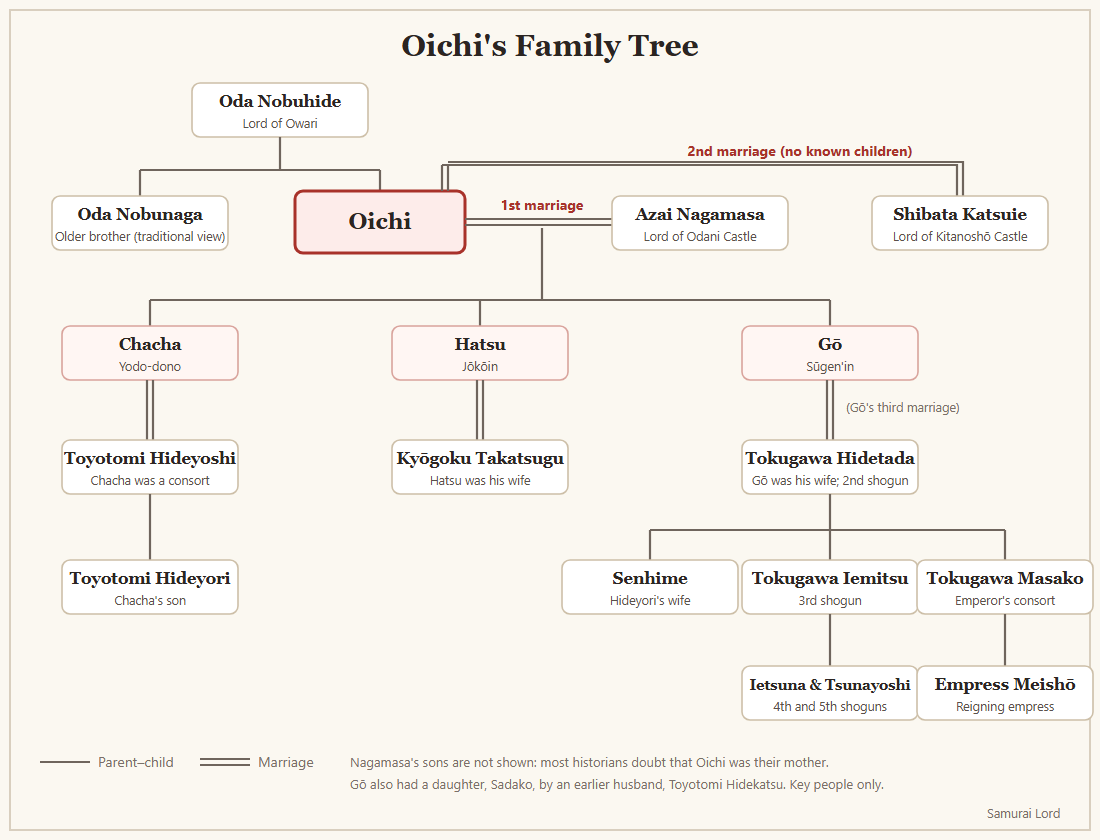
Image: Oichi's family tree, showing key people only (created by Samurai Lord). Tap or click the image to enlarge it.
Laid out as a family tree, Oichi's children and grandchildren read like a list of the most powerful people of the age.
- Children: Chacha (Yodo-dono), Hatsu (Jōkōin), Gō (Sūgen'in)
- Grandchildren: Toyotomi Hideyori (Chacha's son); Tokugawa Iemitsu (Gō's son, the third shogun); Tokugawa Masako (Gō's daughter, consort of Emperor Go-Mizunoo); Senhime (Gō's daughter, wife of Hideyori); Sadako (Gō's daughter, wife of the court noble Kujō Yukiie), and others
- Great-grandchildren: Empress Meishō (Masako's daughter, the first woman to reign as emperor in the Edo period); Tokugawa Ietsuna and Tsunayoshi (Iemitsu's sons, the fourth and fifth shoguns), and others
Following Gō's line, every Tokugawa shogun from the third, Iemitsu, to the seventh, Ietsugu, was a descendant of Oichi [Fact].
Iemitsu: grandson of both Oichi and Ieyasu
Because Gō married Tokugawa Ieyasu's son Hidetada, their son Iemitsu was a grandson of both Oichi and Ieyasu. The blood of Nobunaga's sister thus entered the Tokugawa shogunal line [Fact].
Does Oichi have living descendants?
Chacha's line through Hideyori ended after the Siege of Osaka. Hatsu is said to have had no children of her own. Gō, on the other hand, had many children with Hidetada, and her daughters married into the Maeda lords of Kaga, the Matsudaira of Echizen, the Kyōgoku family and the imperial court. Oichi's bloodline is thought to have continued through Gō's children [Widely accepted].
Claims that a particular person living today is "a descendant of Oichi," however, can only be checked by tracing each generation. In this article we go only as far as the records clearly show, into the early Edo period.
Timeline of Oichi's Life
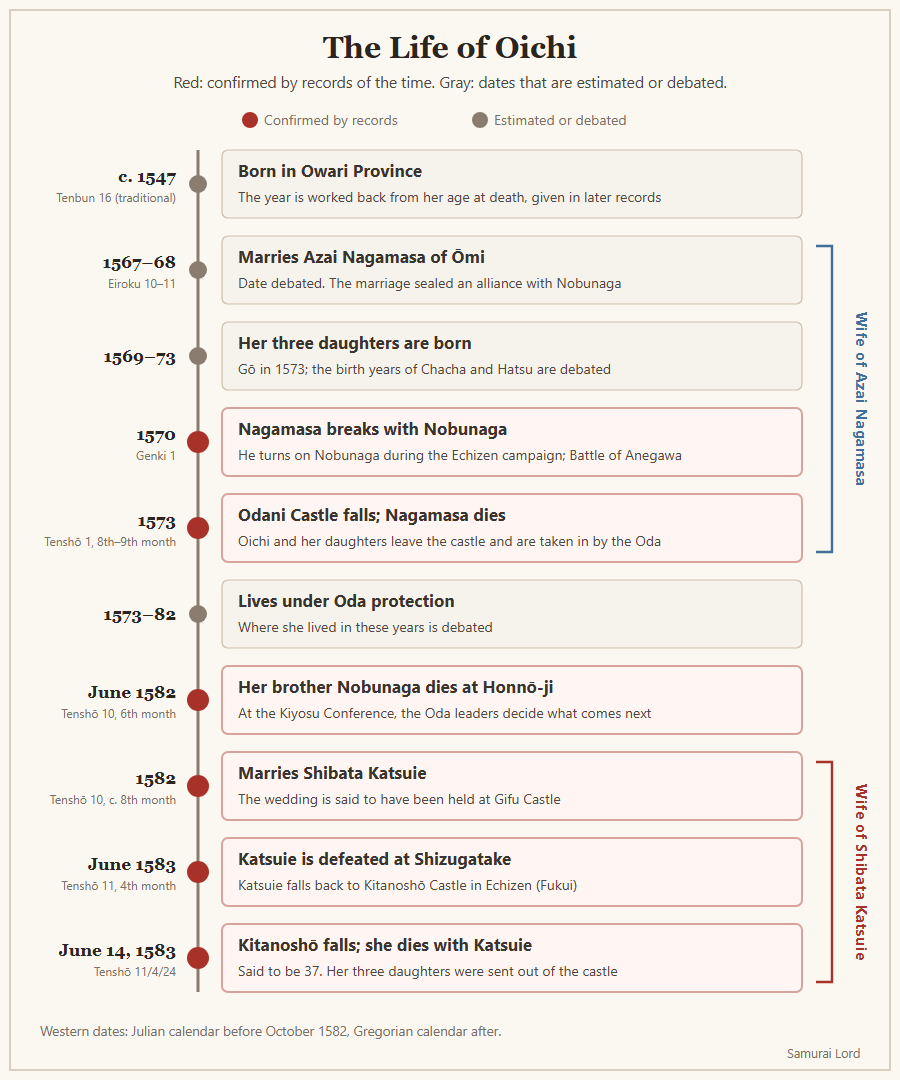
Image: Timeline of Oichi's life (created by Samurai Lord). Tap or click the image to enlarge it.
Oichi's life falls into four parts: her youth as a daughter of the Oda; her years as Azai Nagamasa's wife; her return to the Oda; and her brief marriage to Shibata Katsuie. Almost nothing is recorded about her life before her first marriage [Unknown].
First Marriage: Azai Nagamasa
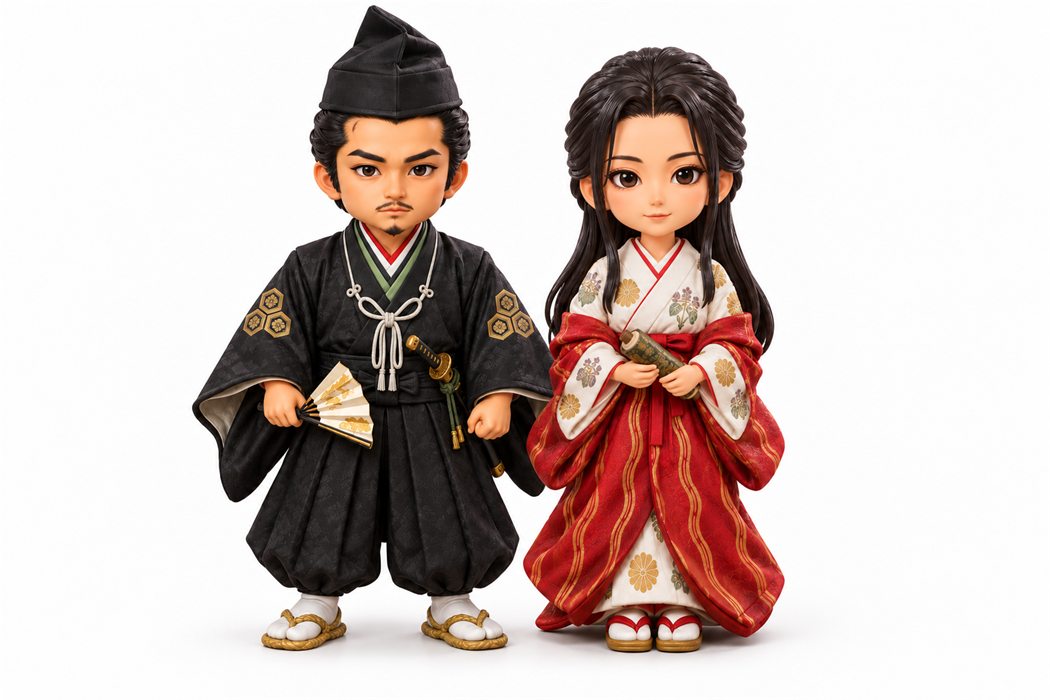
Image: An illustration of Azai Nagamasa and Oichi.
Oichi's first husband was Azai Nagamasa, the daimyo of northern Ōmi (northern Shiga Prefecture). His base was Odani Castle, in today's city of Nagahama, and he was the third head of the Azai family.
When did they marry?
The date is uncertain. It was once placed around 1564, and 1561 has also been suggested; today the most widely held view is late 1567 or early 1568 [Debated].
A marriage to seal an alliance
The marriage was a political match to bind the Azai to Nobunaga [Widely accepted]. Nobunaga had just taken Mino Province (Gifu) and was preparing to march on Kyoto, and northern Ōmi lay across his route. In 1568 he entered Kyoto with Ashikaga Yoshiaki, the claimant to the shogunate.
In political marriages of this era, a wife also served as a link between her own family and her husband's. Oichi would have stood between the Oda and the Azai.
Because they had three daughters, the couple is often said to have been close, but no record from their time tells us how they felt about each other [Unknown].

Image: An illustration of Azai Nagamasa.
Why did Nagamasa betray Nobunaga?
In the spring of 1570 (the 4th month of Genki 1), Nobunaga attacked Asakura Yoshikage of Echizen (Fukui). Nagamasa broke with Nobunaga, sided with the Asakura and threatened Nobunaga's rear. To avoid being trapped between two armies, Nobunaga hurried back to Kyoto, a retreat remembered as the "withdrawal from Kanegasaki" [Fact: Shinchō Kōki].
Why Nagamasa turned against Nobunaga is not clear. One common explanation is the Azai family's long ties with the Asakura [Debated]. That summer, the Oda and Tokugawa forces met the Azai and Asakura at the Battle of Anegawa.
The bag of beans: true or legend?
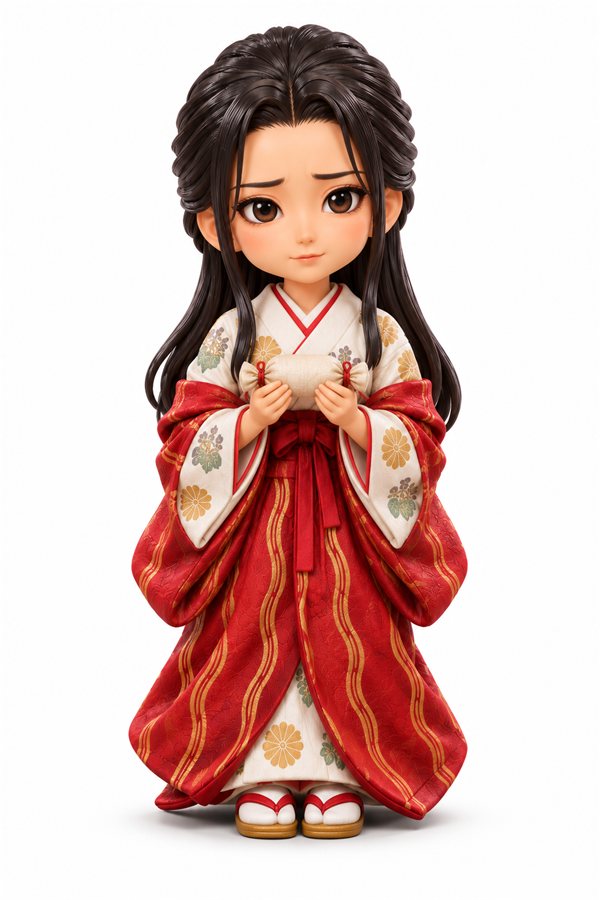
Image: An illustration based on the "bag of beans" legend; an imagined scene.
The best-known story about Oichi is the "bag of beans" (azuki-bukuro). When Nagamasa was about to betray Nobunaga, the story goes, Oichi sent her brother a gift of a bag of red beans tied shut at both ends, a hint that he was about to be caught like a rat in a bag, sealed in from both sides.
But the story first appears in Edo-period works such as the Asakura-ke ki, not in the Shinchō Kōki or any other record from the time. It cannot be confirmed as history [Legend].
What? That famous story can't be confirmed?
It is not in the Shinchō Kōki. Best to enjoy it as a well-made tale.
The fall of Odani Castle
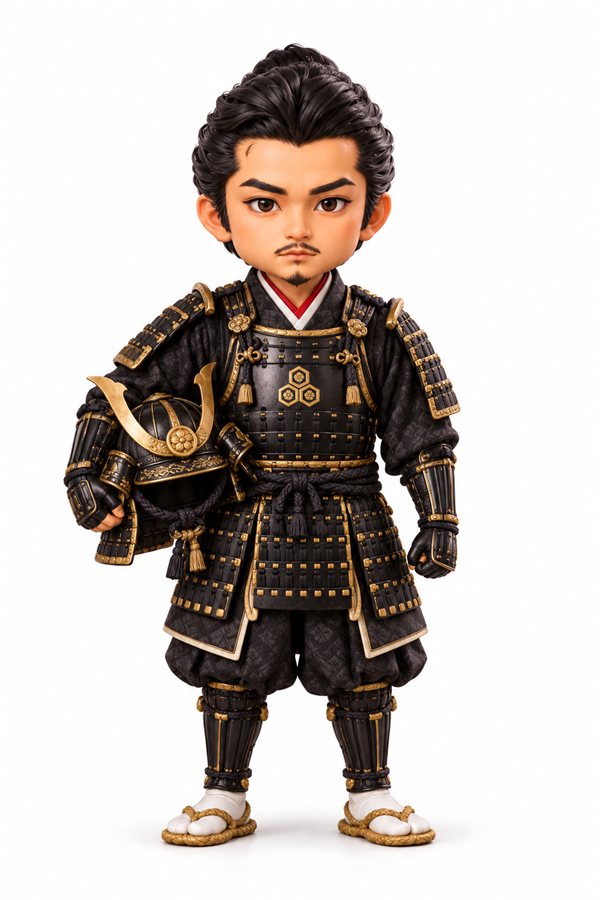
Image: An illustration of Azai Nagamasa in armor.
In the autumn of 1573 (the 8th month of Tenshō 1), Nobunaga chased an Asakura relief army back into Echizen and destroyed the Asakura family. He then turned back to Odani; Nagamasa's father, Hisamasa, and then Nagamasa himself took their own lives, and the Azai family came to an end [Fact: Shinchō Kōki]. Nagamasa's date of death is given as either the end of the 8th month or the 1st day of the 9th month; the inscription on his later portrait gives the 1st day of the 9th month.
Oichi and her three daughters left the castle before it fell and were taken in by the Oda [Widely accepted]. An Oda retainer, Fujikake Nagakatsu, is said to have led the four of them out [Legend].
Life after Odani
Where Oichi lived during the nine years between the fall of Odani and her second marriage is debated [Debated]. The traditional view is that she was placed in the care of Nobunaga's younger brother Oda Nobukane in Ise (Mie Prefecture). Another view holds that she lived at Moriyama Castle (in today's Nagoya) under Nobunaga's uncle Oda Nobutsugu, and moved to Nobunaga's Gifu Castle after Nobutsugu was killed in 1574. Either way, she and her daughters lived under Oda protection, and almost nothing is recorded about her in these years [Unknown].
Second Marriage: Shibata Katsuie

Image: An illustration of Shibata Katsuie.
Oichi's second husband was Shibata Katsuie, one of the Oda family's senior generals. He had served Nobunaga for many years and, from 1575, governed Echizen from Kitanoshō Castle as commander of the Hokuriku front.
Why did she marry Katsuie?
After Nobunaga was killed in June 1582, the Oda family's leading generals met at Kiyosu Castle to decide on his successor and divide his lands. Oichi married Katsuie soon afterward; the wedding is said to have taken place in the 8th month of 1582 at Gifu Castle, the seat of Nobunaga's third son, Oda Nobutaka [Widely accepted].
For Katsuie, the senior Oda general, marrying his late lord's sister carried great political weight. How Oichi herself felt about the marriage is not recorded [Unknown].
Who arranged it: Nobutaka or Hideyoshi?
The traditional view is that Oda Nobutaka, Katsuie's ally, arranged the marriage, and Japanese encyclopedias usually say so. Some historians argue that Hideyoshi also agreed to it [Debated].
How old was Katsuie?
Katsuie's birth year is also uncertain; 1522 is one suggestion [Debated]. If Oichi was born in 1547, he would have been more than twenty years older than she was, but neither birth year is certain.
Was Hideyoshi in love with Oichi?
Novels and dramas sometimes show Hideyoshi longing for Oichi and resenting Katsuie for winning her. No record from the time says anything about such feelings [Folk belief]. The idea probably grew later, partly because Hideyoshi went on to take Oichi's daughter Chacha as his consort.
So some scenes from dramas aren't in the records at all!
Enjoy a story as a story. But knowing where the invention begins makes it all the more interesting.
Was Oichi a Great Beauty? Her Portrait
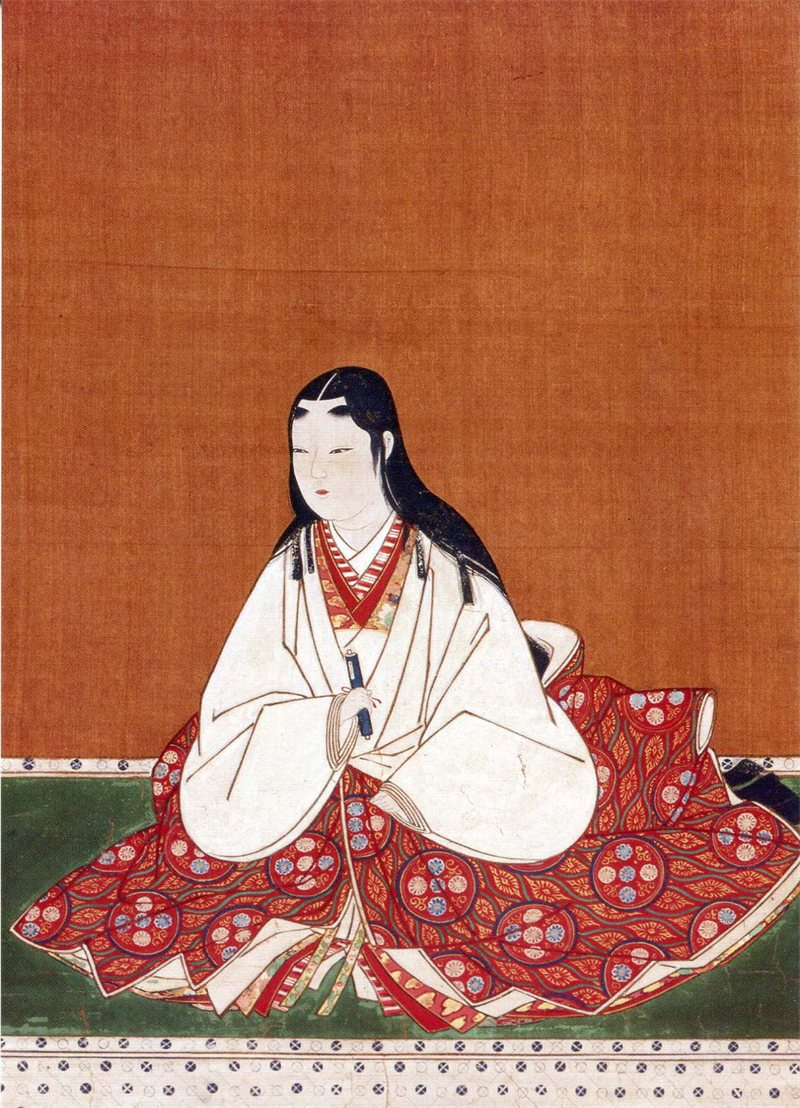
Image: Portrait of Azai Nagamasa's wife, traditionally identified as Oichi (Jimyō-in Temple, Mount Kōya). Public domain, via Wikimedia Commons.
The most important image of Oichi is the portrait of Azai Nagamasa's wife kept at Jimyō-in, a temple on Mount Kōya in Wakayama Prefecture. It shows a high-ranking woman of the Momoyama period in formal dress: a white kosode robe, with a richly patterned outer robe slipped down around her waist.
The portrait is identified as Oichi because it has been kept at Jimyō-in as a pair with the portrait of her husband, Azai Nagamasa [Widely accepted].
Did her daughter Chacha commission it?
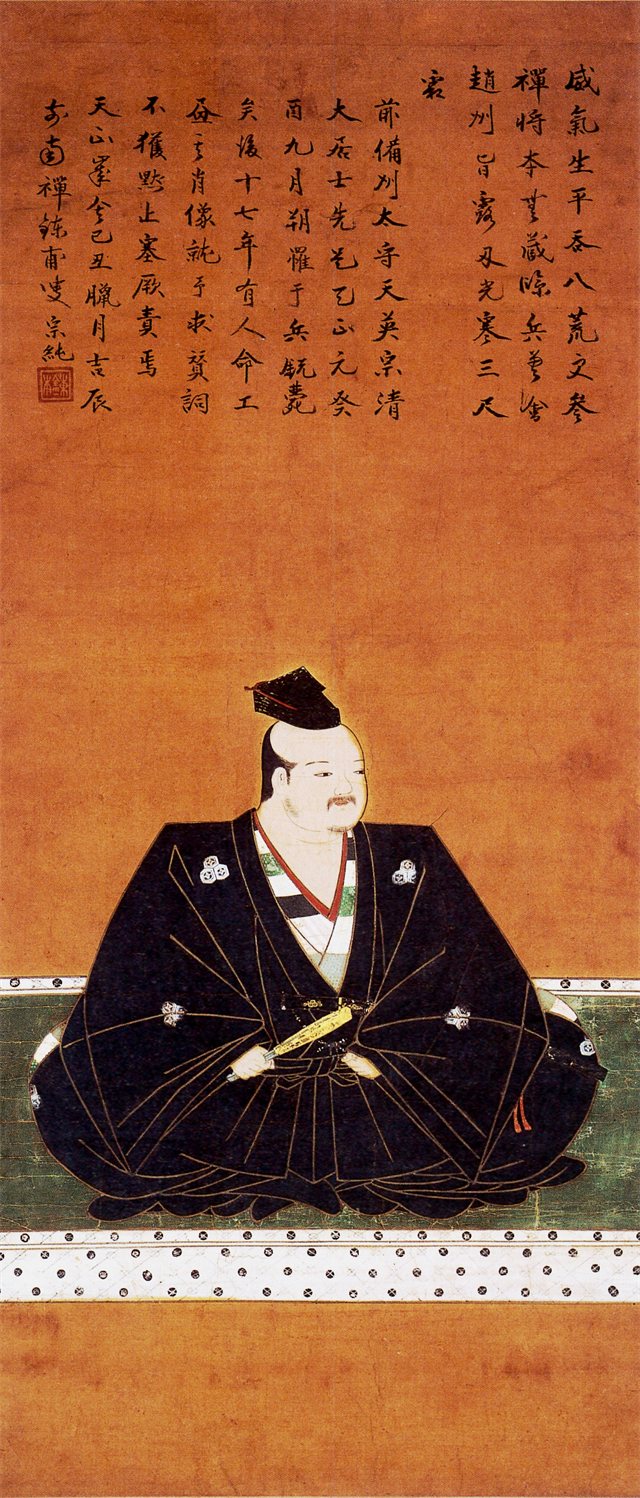
Image: Portrait of Azai Nagamasa (Jimyō-in Temple, Mount Kōya); the text at the top is the inscription. Public domain, via Wikimedia Commons.
Source Box 2: The inscription on Nagamasa's portrait
Source: the inscription (san) written above the portrait of Azai Nagamasa, Jimyō-in Temple
Summary: Nagamasa died in battle on the 1st day of the 9th month of the year mizunoto-tori (1573). Seventeen years later, someone had an artist paint his portrait and asked me to write an inscription. Dated the 12th month of Tenshō 17 (1589)
What it tells us: Nagamasa's portrait was painted in 1589, in the seventeenth year after his death. The inscription does not name the person who commissioned it, but it is thought to have been his daughter Chacha. 1589 was also the year of the seventh-year memorial for Oichi
For this reason, the portrait of Oichi is thought to have been painted at the same time, commissioned by Chacha for her father's and mother's memorial services [Widely accepted]. Since both were painted after the couple had died, no one knows how closely they resemble their subjects. Still, they are precious as portraits a daughter had made in memory of her parents.
Where does "the greatest beauty in the land" come from?
Oichi's reputation as "the greatest beauty in the land" comes from Edo-period books such as the Sofu Monogatari, which says she was known as the most beautiful woman of her day, and the Shizugatake Kassenki, which praises her noble bearing [Legend]. The Keishin-in Bumi even says that at 37 she looked no older than 22 or 23 [Legend].
No record from Oichi's own time describes her looks. Her beauty cannot be confirmed, but the stories suggest she left a strong impression on the people who remembered her.
Can a "reconstructed face" show what she looked like?
Japanese TV programs and others have created computer-generated "reconstructions" of Oichi's face based on her portrait. But since no one knows how faithfully the portrait shows her real face, such reconstructions are best seen as one more imagined image [Unknown].
Places Connected with Oichi
| Place | What it is | Location |
| Odani Castle ruins | The Azai family's castle, where Oichi lived with Nagamasa. A National Historic Site | Nagahama, Shiga |
| Kitanoshō Castle site and Shibata Park | Site of Katsuie's castle, with Shibata Shrine and a small shrine to the three Azai sisters | Fukui, Fukui |
| Saikō-ji Temple | A temple linked to the Shibata family, with the graves of Katsuie and Oichi | Fukui, Fukui |
| Jimyō-in Temple | Keeps the portraits of Azai Nagamasa and Oichi | Kōya, Wakayama |
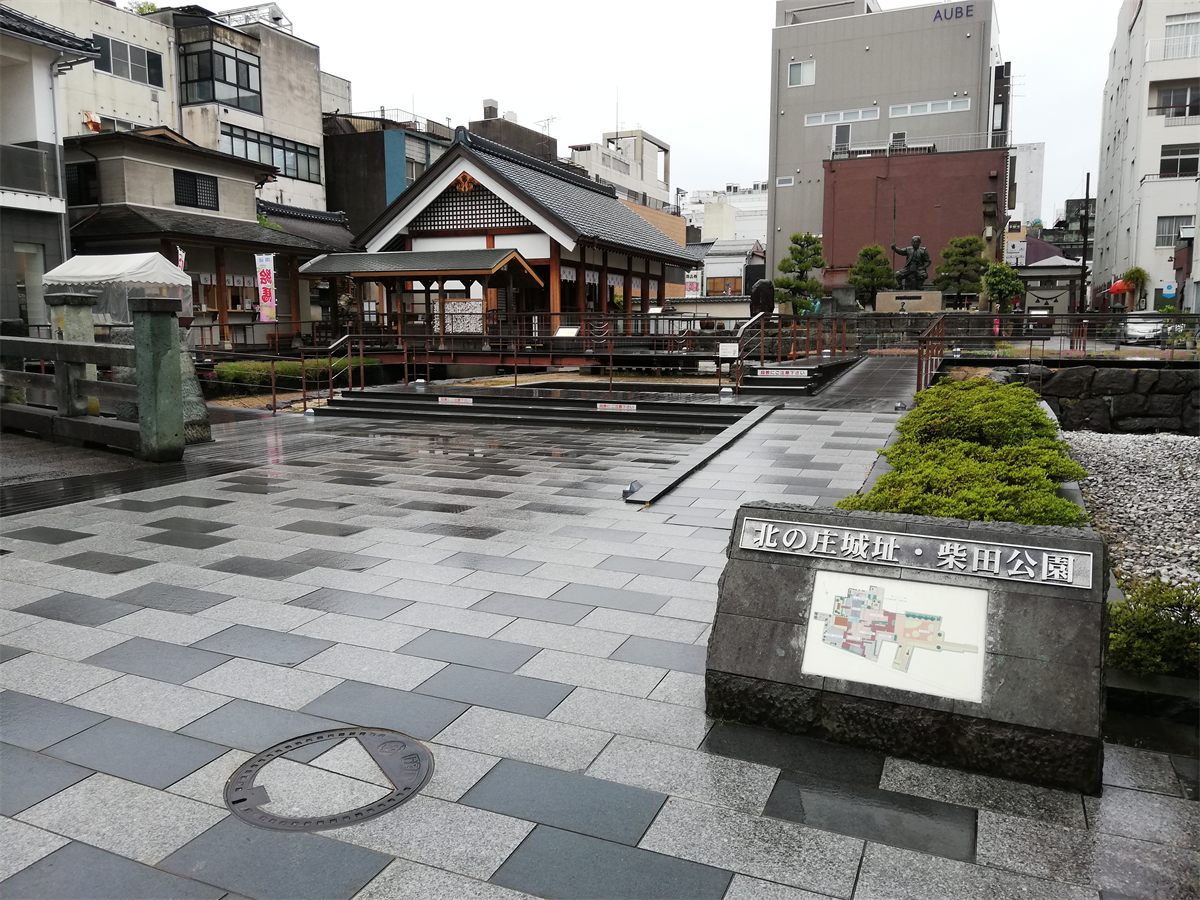
Image: The Kitanoshō Castle site and Shibata Park in Fukui, with Shibata Shrine and a statue of Shibata Katsuie in the background. Photo by 先従隗始, Wikimedia Commons (CC0).
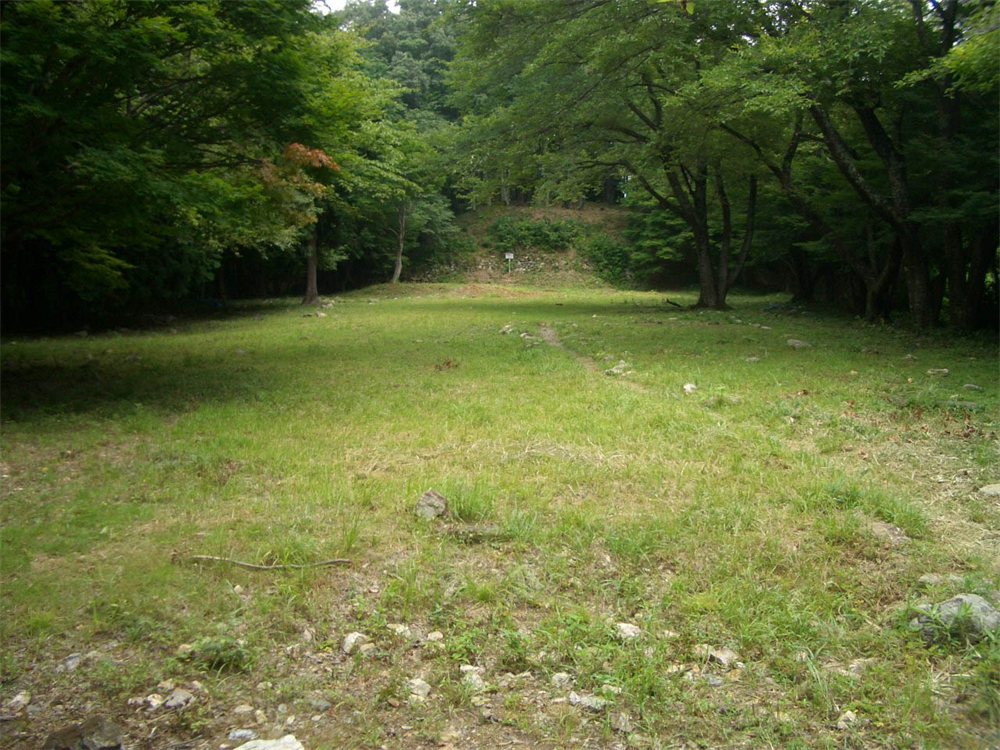
Image: The Senjōjiki enclosure at the Odani Castle ruins (Nagahama, Shiga). Photo by ブレイズマン, Wikimedia Commons (public domain).
Frequently Asked Questions
How was Oichi related to Oda Nobunaga?
She is usually described as his younger sister, a daughter of Oda Nobuhide; her mother is unknown. A few Edo-period books say she was Nobunaga's cousin.
How many children did Oichi have?
Three daughters with Azai Nagamasa: Chacha (Yodo-dono), Hatsu (Jōkōin) and Gō (Sūgen'in). Many historians doubt that she was the mother of Nagamasa's sons, such as Manpukumaru. She had no known children with Shibata Katsuie.
How old was Oichi when she died, and how did she die?
She died in 1583 when Kitanoshō Castle fell, together with her husband Shibata Katsuie. She is said to have been 37. Her death is usually described as suicide, but the Shibata Taijiki, written that same year, says Katsuie stabbed his wife and family and then took his own life.
Was Oichi really a great beauty?
Her reputation comes from Edo-period books. No record from her own time describes her looks, and her portrait was painted after her death.
Did Oichi have a connection with Tokugawa Ieyasu?
No record from the time shows a close relationship between them. But her daughter Gō married Ieyasu's son Hidetada, so the third shogun, Iemitsu, was a grandson of both Oichi and Ieyasu.
Is Lady Ochiba in Shōgun based on Oichi?
No. Lady Ochiba is based on Oichi's eldest daughter, Chacha (Yodo-dono), the mother of Hideyoshi's heir. The series is historical fiction.
Where is Oichi buried?
Saikō-ji Temple in Fukui has graves of Shibata Katsuie and Oichi. Shibata Shrine stands on the site of Kitanoshō Castle nearby.
Summary: Who Was Oichi?
Oichi was Oda Nobunaga's sister, who married Azai Nagamasa and bore him three daughters, survived the fall of two castles, and died beside her second husband, Shibata Katsuie, at Kitanoshō Castle.
Many of the best-known stories about her, from "the greatest beauty in the land" to the bag of beans, come from later books, and the records from her own time say little. Yet her three daughters were bound up with both the Toyotomi and the Tokugawa, and her bloodline reached the shoguns and the imperial throne.
For more on her brother, see our article on Oda Nobunaga; for the man who attacked Kitanoshō, see our article on Toyotomi Hideyoshi; and for Ieyasu, whose grandson Iemitsu was also Oichi's grandson, see our article on Tokugawa Ieyasu. The Honnō-ji Incident is covered in our article on Akechi Mitsuhide.
The records are few, yet a woman who lived through the great upheavals of the age comes clearly into view.
Now I want to know more about her daughters too!
Sources & How This Article Was Written
This article is based mainly on the following records and references:
- Records from Oichi's time: Ōta Gyūichi, Shinchō Kōki (available in English as The Chronicle of Lord Nobunaga, translated by J. S. A. Elisonas and J. P. Lamers, Brill, 2011); Hideyoshi's letter to Kobayakawa Takakage, dated the 15th day of the 5th month of Tenshō 11 (1583), in the Mōri family documents; Ōmura Yūko, Shibata Taijiki (also called Shibata Kassenki)
- Portraits: the portraits of Azai Nagamasa (inscription dated 1589) and of his wife, both at Jimyō-in Temple, Mount Kōya
- Later records (Edo period): Sofu Monogatari, Shizugatake Kassenki, Asakura-ke ki, Keishin-in Bumi, Iki Shōden, and Oze Hoan's Taikōki
- Reference works (in Japanese): Owada Tetsuo, "Odani no Kata," in Nihon Daihyakka Zensho (Nipponica) (Shogakukan); "Oichi no Kata," in Dejitaru-ban Nihon Jinmei Daijiten+Plus (Kodansha); Fukui City, exhibition notes for "The Castle and Town of Echizen Kitanoshō" (450th anniversary of the castle)
- Images: the portraits of Azai Nagamasa and his wife are public-domain images from Wikimedia Commons; the photos of the Kitanoshō and Odani castle sites are from Wikimedia Commons (CC0 and public domain). The timeline, family tree and illustrations are original to Samurai Lord
What the Labels Mean
[Fact]Confirmed by sources from Oichi's own time ([Fact: …]names the source)[Widely accepted]The view held by most historians ([Widely accepted: …]names the source)[Debated]Historians disagree[Unknown]No source tells us[Legend][Folk belief]Stories created later, or popular claims with little evidence
This article was written by the Samurai Lord editorial team and is revised as new research and reader feedback come in. If you spot an error, please let us know through our contact form (in Japanese) and we will check and correct it.
Read in Japanese
This article is also available in Japanese: お市の方とは?最後・娘・家系図と2人の夫を史料で解説